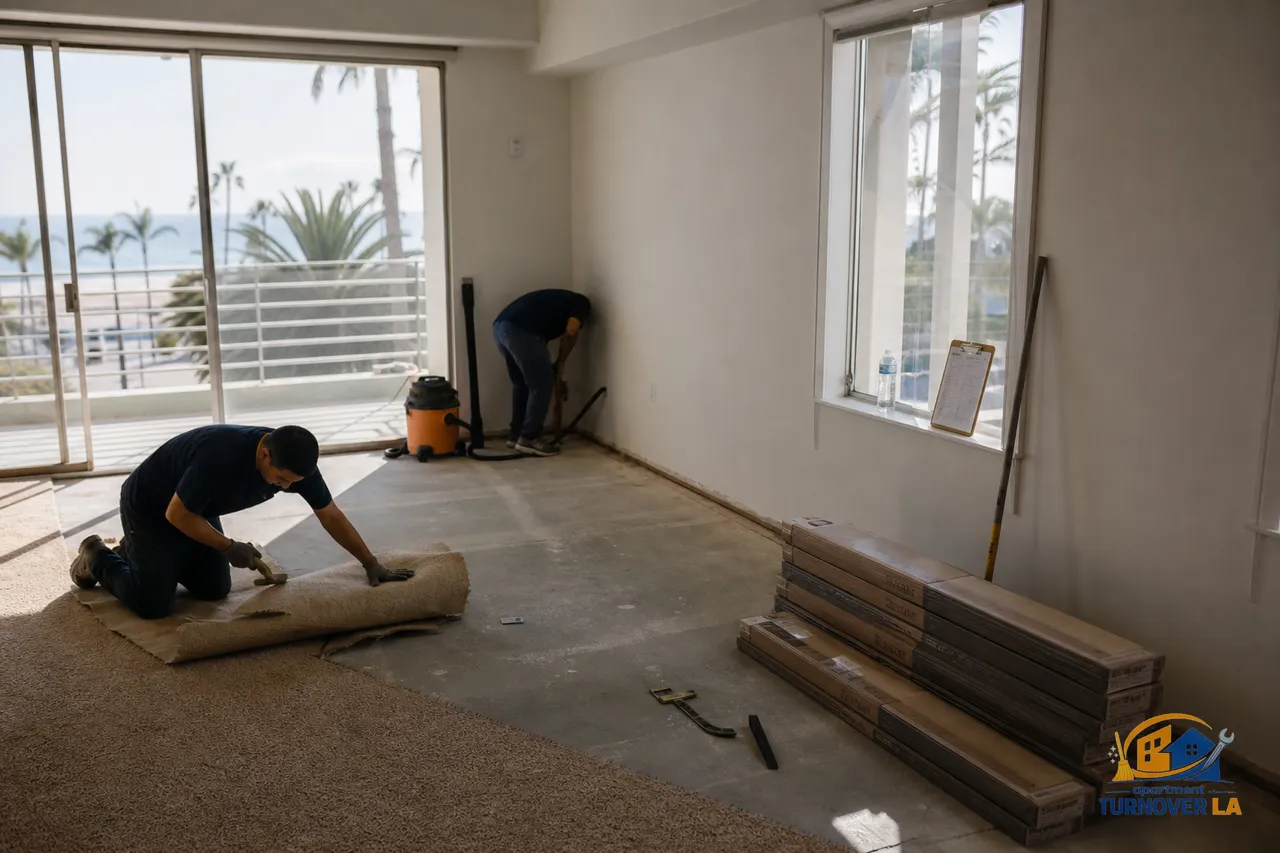
Quick answer: Luxury vinyl plank with a 12 to 20 mil wear layer is the best all-around choice for LA rentals. Across LA, installed LVP typically runs $7 to $11 per sq ft. TurnOver LA does not sell flooring installs, we handle prep, patch, cleanup, and turnover, from Make Ready 1 Bedroom $255 to Small drywall patch + texture $150 / patch, with a flat 48-hour turnaround.
Most LA rentals do best with luxury vinyl plank in common areas and bedrooms, plus tile or sheet vinyl in wet rooms. It handles water, cleans fast, and repairs without replacing full rooms. If you already have laminate, expect more frequent replacements than LVP in Los Angeles traffic and humidity swings.
Get instant quote in 30 seconds
Why is LVP the top choice for LA rentals today?
Luxury vinyl plank checks the boxes that matter in turnovers. It is waterproof against kitchen and bath splashes, it hides scuffs better than laminate, and single board swaps are fast when a tenant chips a plank. In LA buildings on slabs or gypcrete, floating click-lock installs avoid glue cures and can wrap in a day for a typical one bedroom. Color options that hide dust and pet hair help show units well from Santa Monica to Highland Park. Compared to carpet, LVP avoids odor retention and repeated pet damage disputes. Compared to hardwood, it avoids costly refinishing rounds. Most importantly, with standard quarter round and door trims, you keep your paint scope tight and re-rent faster.
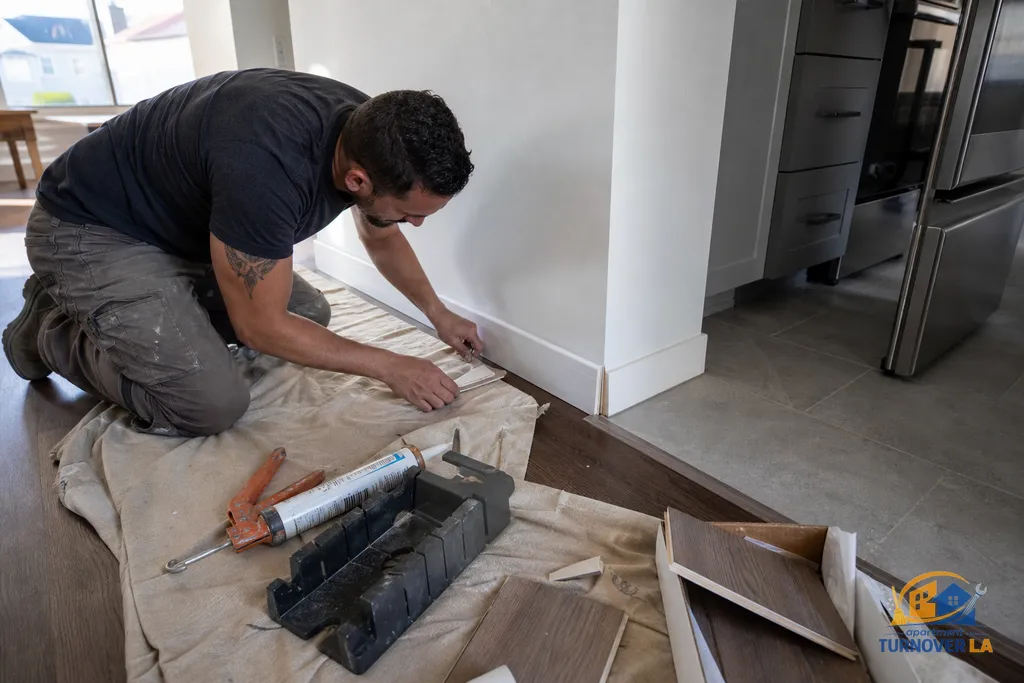
What specs should you pick for rental LVP in LA?
Choose a 12 mil wear layer minimum for bedrooms and a 20 mil wear layer for kitchens, entries, and living areas that see rolling suitcases and pet claws. Use click-lock floating planks with an attached underlayment rated for sound control where you have neighbors below. Lighter mid-tone grays and natural oaks hide dust and minor scratches better than very dark or very light tones. Keep a single SKU across your portfolio, then store 8 to 10 percent attic stock in each building labeled by unit, so a future board swap takes minutes, not weeks. In prewar Koreatown buildings with tight door clearances, confirm total height before install to avoid shaving multiple doors. For ground floor Venice and Marina del Rey units with higher moisture exposure at sliders, pick products with rigid cores that resist temperature swings near beach air.
Where should you still use tile or sheet vinyl in a rental?
Use porcelain tile in showers and tub surrounds for true waterproofing and long life. For small baths and laundry closets, quality sheet vinyl can be more forgiving of small subfloor imperfections, and seams are minimal in tight spaces. Kitchens in heavy-cook households can still do fine with 20 mil LVP, but if you have chronic leak history, tiled wet zones around dishwashers cut risk. Avoid tile in bedrooms and living rooms in upstairs units where impact noise frustrates neighbors. In older Hollywood and Westwood walk-ups without robust sound insulation, resilient LVP with a decent pad is a better bet outside wet rooms.
How often do landlords have to replace laminate flooring?
In practice across LA, laminate in rentals often needs replacement in 3 to 5 years because edges swell from mops or minor leaks. Tenants cannot spot-replace a plank easily once locking edges chip, and transitions heave at doorways. LVP in the same units tends to run 5 to 10 years with board swaps as needed. If your lease is strict about wet mopping and you install quality mats, laminate can last longer, but most turnovers reveal buckled boards in kitchens and baths. Once you calculate vacancy loss at $80 to $200 per day, an extra replacement cycle on laminate can erase any material savings.
Can tenants change flooring?
Not without permission in almost every lease. Unauthorized alterations can trigger restoration charges or deductions that must follow California rules. Under the California DCA Landlord-Tenant Guide, improvements require consent, and unauthorized work can be charged back if documented. LA rent stabilized tenancies also restrict material changes without owner approval under the LAHD Rent Stabilization Ordinance. Keep written policies and offer reasonable solutions like area rugs for sound, rather than allowing ad hoc flooring swaps.
Can a landlord charge you for flooring?
Yes, with documentation and proper accounting. Under California Civil Code §1950.5, landlords can deduct for cleaning, repair, and damage beyond normal wear and tear. You must separate damage from depreciation. Photos and invoices matter. Note that AB 12 (2023) security deposit cap limits deposit amounts for most tenancies, which means your flooring choice should emphasize easy spot repairs over large one-time replacements. See our guides on normal wear and tear and the 21 day deposit return rule for process details.
Need a turnover quote?
Send the unit address and your target date. We quote in 15 minutes.
Get an instant quoteWhat does flooring actually cost in LA right now?
Across Los Angeles, installed LVP typically runs $7 to $11 per square foot depending on wear layer, subfloor prep, and trims. Tile in wet rooms can run $12 to $22 per square foot installed, and carpet with pad is often $3.50 to $6.50 installed but carries odor and replacement risk. TurnOver LA does not sell flooring installs, but we handle the high-friction pieces around it. Unit cleanout and haul out runs 1 Bedroom $310 or 2 Bedroom $420. Make Ready includes floor detailing and surfaces, 1 Bedroom $255 or 2 Bedroom $335. If you need a toilet pulled and reset during bathroom work, a Half-day handyman punch list is $230. Small drywall patch + texture is $150 / patch, and if baseboards need paint after new quarter round, Repainting per room is $395 / room and Ceilings and baseboard/trim is $125. Every scope above carries a flat 48-hour turnaround.
How do I control vacancy loss during a flooring swap?
Plan the turn like a sequence, not a single task. Day 1 morning, cleanout and any demo. Midday, handyman handles transitions, door trimming checks, and pulls toilets if needed. Afternoon, paint touch-up at baseboards and doors. Your flooring vendor installs after prep. Day 2, Make Ready cleans dust, resets quarter round caulk lines, and stages the unit for photos. With vacancy loss running $80 to $200 per day in LA, compressing to a two day schedule protects rent. Our Make Ready service and handyman visit are built for that handoff timing. Get instant quote in 30 seconds
How much does drywall repair cost during a flooring project?
Flooring crews sometimes nick corners, baseboard caps, or closet walls. Across LA, a medium drywall repair with texture often runs $250 to $600 per patch in general handyman pricing. With TurnOver LA, Small drywall patch + texture is $150 / patch and Medium drywall repair is $240 / patch. If the room needs spot paint after trims, Repainting per room is $395 / room and Ceilings and baseboard/trim is $125. When you discover more items, a Half-day handyman punch list at $230 or a Full-day handyman punch list at $425 can clear the board in one visit.
Is carpet ever the right call in LA rentals?
Sometimes. For upstairs bedrooms in older buildings with thin floor assemblies, carpet reduces impact noise complaints. If you go that route, choose solution-dyed nylon with a modest pad to control height at doors. Plan on more frequent replacements and odor treatments between pet tenancies. For pet-heavy buildings in North Hollywood or Inglewood, many operators run LVP everywhere and use area rugs to control sound, which reduces odor risk at turnover.
Portfolio standards that cut flooring downtime and cost
- Standardize one LVP SKU and color across your portfolio, then keep 8 to 10 percent labeled attic stock in each building. 2) Use quarter round over existing baseboards to limit paint scope. 3) Pre-approve transitions and trims for every doorway and slider so crews do not stall on site. 4) Confirm door clearances before install, especially in older Koreatown and Mid-City properties. 5) Require a moisture check at sliders and kitchens on slabs. 6) Map which rooms get 20 mil versus 12 mil wear layer. 7) Photograph subfloor conditions before install to document deductions under deposit law. 8) Schedule Make Ready the day after install to sweep residual dust, clean smudges, and stage photos.
What does TurnOver LA do on flooring turns if you already have a flooring vendor?
We handle everything around the install so you do not lose days. Book a Unit cleanout / junk haul for tear-out debris at 1 Bedroom $310 or 2 Bedroom $420. If trims are damaged, a Half-day handyman punch list at $230 resets transitions and door stops. After install, Make Ready includes a deep clean and a 12 point photo report, with 1 Bedroom $255 or 2 Bedroom $335. If you need photo marketing fast, our TLA Launch Pad Media Package is $399 and can publish your listing the same day you get keys back to our crew.
What about deposit accounting and documentation for flooring?
Keep your scope tight and your paper trail clean. Before move out, photograph high traffic areas and thresholds. After install, photograph new trims and board seams. Under California Civil Code §1950.5, you must itemize deductions and cannot charge for normal wear. Our Make Ready includes a 12 point photo report that supports deposit accounting, and our guide to the 21 day deposit return rule walks you through the timeline. If you operate under LA rent stabilization, confirm any flooring change aligns with the LAHD Rent Stabilization Ordinance.