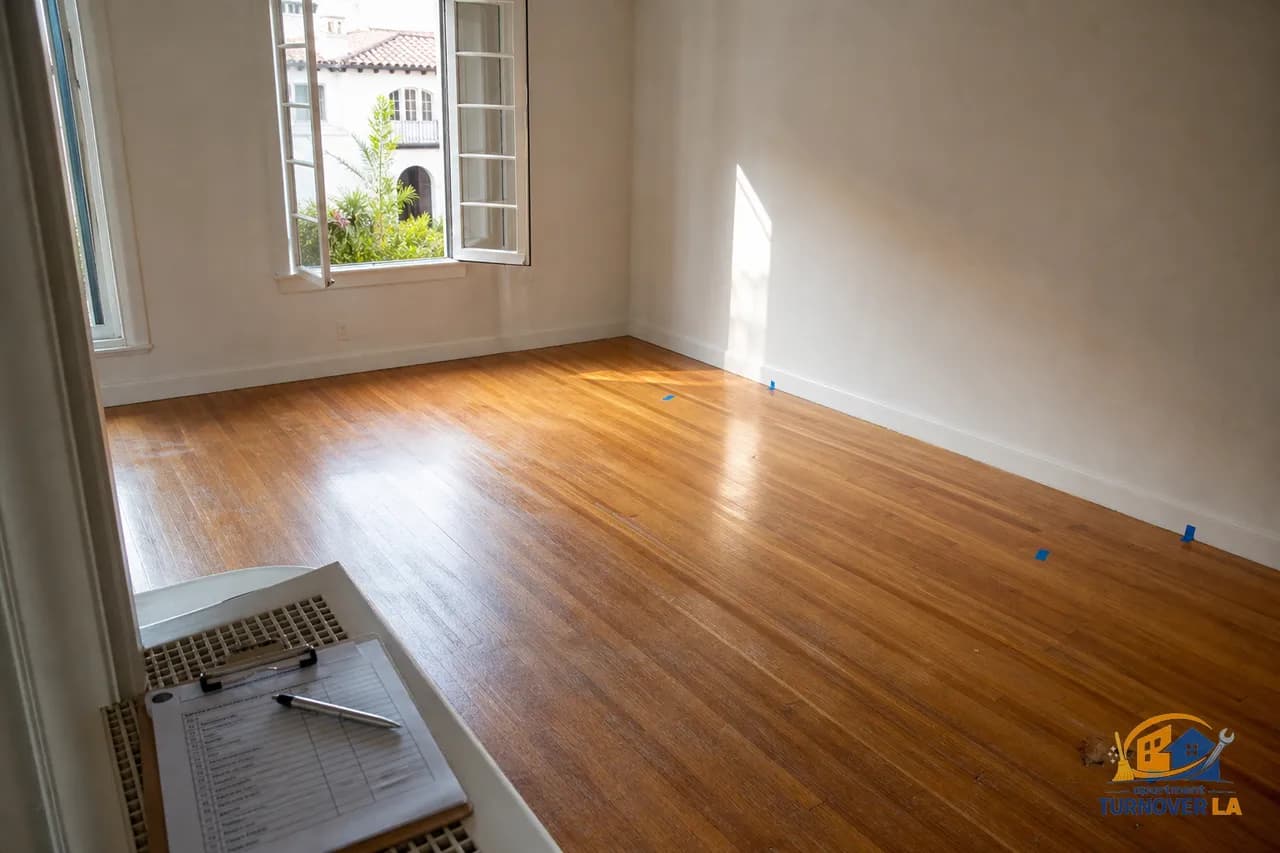
Quick answer: In California, a landlord can charge for flooring only when there is tenant-caused damage beyond normal wear, and charges must be reasonable and usually prorated by the floor’s age. Carpet often has a 5 to 7 year useful life, vinyl plank 10 to 15. The deposit accounting is due within 21 days. AB 12 caps most new deposits at one month of rent, which limits exposure.
If the floor is damaged beyond normal wear, the landlord can deduct the reasonable, depreciated cost of repair or replacement from the security deposit. They cannot charge for ordinary aging or for bringing an old floor up to brand new. The owner must provide an itemized statement with documentation. If you just want the unit back on market fast, Get instant quote in 30 seconds.
What can a landlord legally charge for flooring in California?
A landlord may charge for tenant-caused damage to floors that exceeds normal wear and tear, for example deep pet urine saturation, cigarette burns, large gouges in vinyl plank, or water damage from negligence. California Civil Code rules on security deposits require that deductions be reasonable, clearly itemized, and supported by invoices or estimates. See the law at California Civil Code §1950.5 and the state’s summary in the California DCA Landlord-Tenant Guide.
You cannot charge to replace an aging floor just because it looks tired, or to upgrade to a better product than was there. For flooring, most managers apply a useful life and prorate the tenant’s share based on remaining life. You must return any balance of the deposit and your itemized statement within 21 days.
How does proration and useful life work for carpet, vinyl, and wood?
California does not publish official lifespans, but LA owners commonly use practical ranges that courts accept as reasonable. Typical ranges are 5 to 7 years for carpet in rentals, 10 to 15 years for vinyl plank, and 10 years for a hardwood refinish cycle, with solid hardwood lasting longer overall. Tile often lasts 20 years or more when not cracked by structural movement.
Proration is straightforward. If carpet is 6 years old on a 7 year schedule and a tenant leaves a large iron burn, there is 1 year of life left, so the tenant’s responsibility is limited to about one seventh of the reasonable replacement cost of that area, plus labor if a patch cannot blend. If a plank floor at year 12 has a couple of deep gouges, often you would repair planks rather than replace the whole field, again limited by age and feasibility.
What is normal wear and tear versus damage on floors?
Normal wear and tear is aging that happens from ordinary use. Damage is avoidable harm or neglect. A few quick field examples help set the line in LA turns:
- Wear that is usually not chargeable: traffic lanes on older carpet, minor wood surface scuffs, light grout discoloration, sun fading near sliders, tiny nail holes at baseboards.
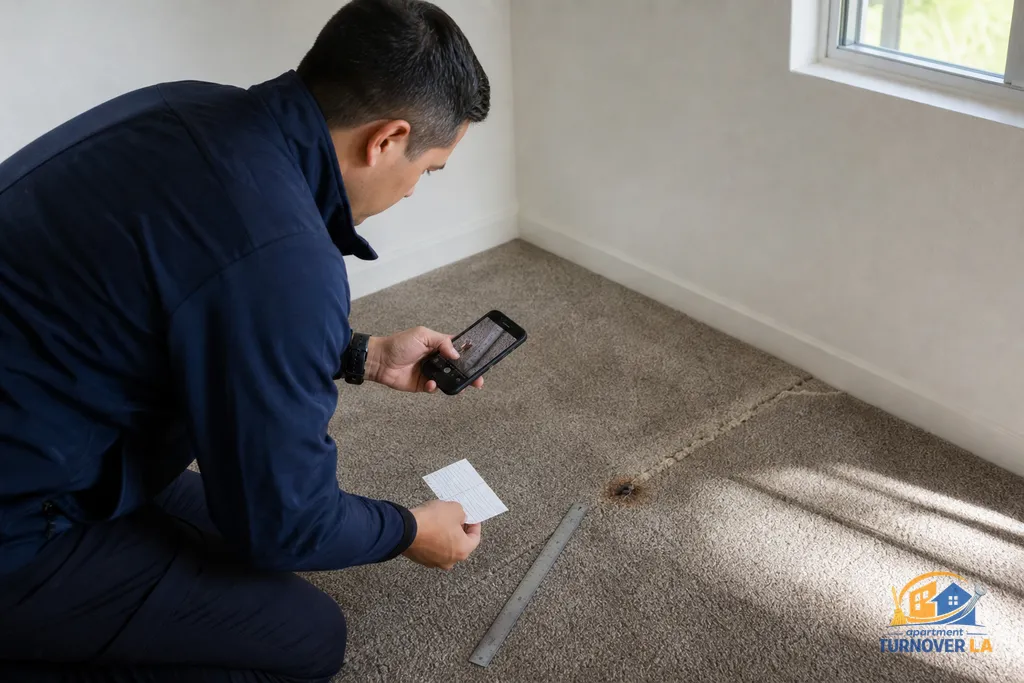
- Damage that is often chargeable: pet urine saturation that requires carpet pad replacement, iron burns, plank gouges from dragging appliances, water buckling from an unrepaired tenant leak, heavy paint spills.
For more detail on the distinction, see our guide to normal wear and tear in California. When in doubt, document the before and after and let the age of materials guide you.
Does LA’s Rent Stabilization Ordinance change flooring charges?
The LAHD Rent Stabilization Ordinance mainly governs rent ceilings, just cause, and certain relocation and habitability issues, not how you calculate damage deductions. Flooring charge rules still follow state law, particularly California Civil Code §1950.5. You must provide the 21 day itemized accounting and allow the pre-move out inspection if requested.
Two LA-specific notes matter. First, many RSO buildings owe annual interest on security deposits, which can slightly offset end-of-tenancy charges. See our explainer on security deposit interest. Second, noise complaints in older wood-frame buildings push many owners to keep carpet in bedrooms to meet neighbor expectations, which affects future wear and charge decisions.
What is the “80 20 carpet rule” in California?
There is no flooring deposit law called the 80 20 rule in California. In LA, the phrase usually refers to HOA house rules that require covering 80 percent of hard floors with rugs to control noise transmission. That is a building policy, not a damages formula. It does not authorize a landlord to charge a tenant 80 percent of floor replacement.
Some managers use simple internal rules of thumb, like heavy proration after the first few years of carpet life. That is fine if the math is reasonable and documented, but it is not a statute. Stick to useful life, actual damage, and clear evidence. If you need a fast, neutral assessment and turn, book a Make Ready deep clean with floor detailing and a 12 point photo report.
Can tenants change flooring?
Not without written consent. Tenants cannot permanently alter or replace flooring without approval. Even if they pay for it, you can require removal or restoration at move out, and you can charge if the work causes damage or violates code, HOA rules, or historic restrictions. In condos and some Westside HOAs, hard surface installs without proper underlayment can trigger noise violations.
The safe path is a written request with specs, an addendum that sets restoration terms, and proof of licensed installation and permits if required. If a tenant lays peel-and-stick over existing vinyl, you can usually require removal and repair. If the unit is turning and you want it market ready without scope creep, we can remove debris with a cleanout and junk haul and reset transitions during a handyman visit.
Need the unit turned before the next tenant?
We do the move-out clean and send you a photo report you can attach to the deposit itemization.
Get an instant quoteHow should landlords document and bill for floor damage in LA?
Here is a practical sequence that holds up under California’s rules and minimizes disputes.
Offer the pre-move out inspection. Civil Code requires that you offer it in writing. Give at least 48 hours notice and let the tenant fix listed items.
Capture pre-turn evidence. Take wide photos of each room and close-ups of issues with a ruler or card for scale. Note locations on a simple sketch or a marked photo.
Confirm age and useful life. Check your records for the install date or past invoices. If you do not have it, estimate based on condition and prior turnovers.
Get a repair-first scope. Replace only what you must. Patch carpet seams if feasible, replace isolated vinyl planks, or spot sand and coat hardwoods. If repair will look worse, note why.
Calculate proration. Apply your chosen useful life and charge only the remaining life share attributable to tenant damage. If the floor is at or near the end of life, that share will be low or zero.
Send the 21 day accounting. Provide an itemized statement, photos, receipts or good faith estimates, and any credit or interest applicable in RSO buildings. See our guide on the 21 day deposit return rules.
Turn the unit in 48 hours. The market penalty for delay is real. LA vacancy loss runs about 80 to 200 dollars per day depending on submarket. Our standard turn includes a Make Ready deep clean at published rates with floor detailing, and we can add painting and drywall touch-up or a handyman visit the same window. Get instant quote in 30 seconds.
What is the best flooring to put in a rental?
For LA apartments, consider LVP for most living areas, tile for baths and kitchens, and carpet in bedrooms where noise is a concern. Choose mid-tone, matte finishes that hide scuffs and dirt. Use matching transition profiles across the stack so you can swap planks or carpet tiles over time. In older upstairs units in Hollywood or Westwood, keeping carpet in bedrooms reduces noise complaints.
Balance life cycle and cleanability. LVP with a 20 mil wear layer holds up to dogs and chair casters. Carpet saves you from noise claims but needs more frequent replacement. Tile grout should be medium gray, not white. Whatever you pick, plan for touch-up and patching so you do not replace whole fields for a few bad spots.
How much does cleaning or minor repair cost compared with a full-floor project?
In many LA turns you can restore floors without a full refloor. Our Make Ready deep clean includes floor detailing and runs Studio 225 dollars, 1BR 255 dollars, 2BR 335 dollars, 3BR+ 425 dollars. Light paint or trim work around thresholds can be covered with Painting and Drywall touch-up at 200 dollars. Small punch items fit in a Handyman maintenance visit at 125 dollars.
If carpet remnants, tack strips, or old planks must be hauled, Cleanout pricing is Studio 200 dollars, 1BR 310 dollars, 2BR 420 dollars, 3BR+ 420 dollars, with extra load at 200 dollars. These small, fast scopes usually beat a full install on cost and time, especially with our flat 48 hour turnaround.
Sample LA scenarios that show how charges actually work
West Hollywood 6 year old carpet with a nickel sized iron burn in the bedroom. On a 7 year life schedule, you would consider a patch. If a patch will not blend, the tenant share is limited to the remaining life fraction, not the full room replacement.
Glendale LVP at year 9 with moving day gouges to three planks. Replace planks and charge the labor and materials limited by useful life. No charge for ordinary scuffing elsewhere.
Santa Monica bath tile with a long crack caused by slab movement, not by a dropped object. This is usually not chargeable to the tenant. You may need grout refresh, which falls under maintenance.
Koreatown hardwood with large water stains from a long, unreported aquarium leak. Refinish or board replacement may be appropriate, with proration applied to the refinish cycle rather than full wood replacement.
What do AB 12 and deposit timing change for flooring charges?
AB 12 caps most residential security deposits in California to one month of rent for leases entered after July 1, 2024, with limited exceptions. That means large, aggressive flooring deductions may exceed the deposit and require direct billing or small claims. Read the text at AB 12 (2023) security deposit cap.
Timing still matters. You must mail or deliver the itemized statement with receipts or good faith estimates and any deposit balance within 21 days. If you miss the deadline, you risk losing the right to deduct. The state’s summary is clear in the California DCA Landlord-Tenant Guide. For RSO buildings, check LAHD for any local notices at the LAHD Rent Stabilization Ordinance.
Turn the unit with speed and documentation, not overspending
The fastest way back to market is usually not a full-floor project. In a typical Downtown or Mid City one bedroom, every extra day vacant costs roughly 80 to 200 dollars. Our standard 48 hour window limits that loss and gets you photos of floor conditions as part of the 12 point report. Book a Make Ready deep clean, stack a handyman visit for transitions, and only escalate if repairs cannot blend.
You get a defensible file, a clean unit, and a fair path if a charge is due. If you need help scoping a tricky floor item, we can include detail shots in the report. Get instant quote in 30 seconds.