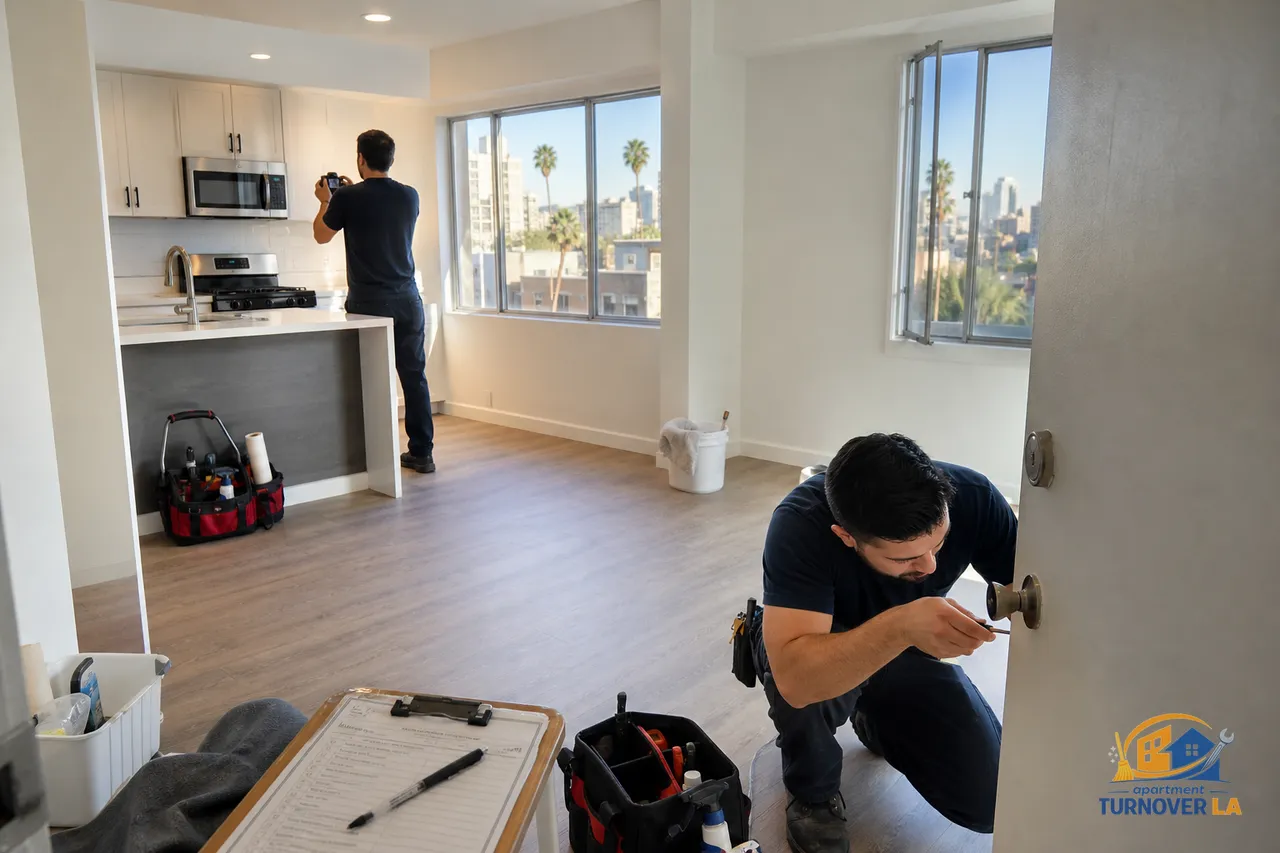
Quick answer: Slow maintenance and poor unit condition are the most common, fixable drivers of high tenant turnover in LA. When repairs drag past 3 to 7 days, renewal odds fall and online reviews push neighbors to shop. Tight, 48-hour make-readies and clear deposit handling reduce churn while cutting vacancy loss by $80 to $200 per day.
The single most common cause of high tenant turnover is slow or sloppy maintenance, especially around move-in and the final 60 days of a lease. Residents leave when repairs sit, common areas look tired, and the next-door unit takes weeks to re-list. A consistent 48-hour turn standard with documented cleaning and repairs is the simplest way to keep residents renewing. Get instant quote in 30 seconds
What is a common cause of high tenant turnover in LA?
The most common, fixable cause is delayed maintenance paired with poor unit condition at handoff. In practice that looks like sticky cabinets, missed paint touch-ups, slow plumbing fixes, and rekey delays. In Koreatown and Hollywood, we see non-renewals spike when work orders age past a week and when new listings show visible scuffs or odors. Residents read this as a management culture issue, not a one-off miss, and they shop alternatives before renewal notices go out.
Three specifics make this worse in LA: older stock with deferred maintenance, heavy move-in competition within a few blocks, and public reviews that mention cleanliness or repair speed. If a tenant’s first month involves waiting for basic fixes, the renewal is already in trouble.
What does turnover mean in renting?
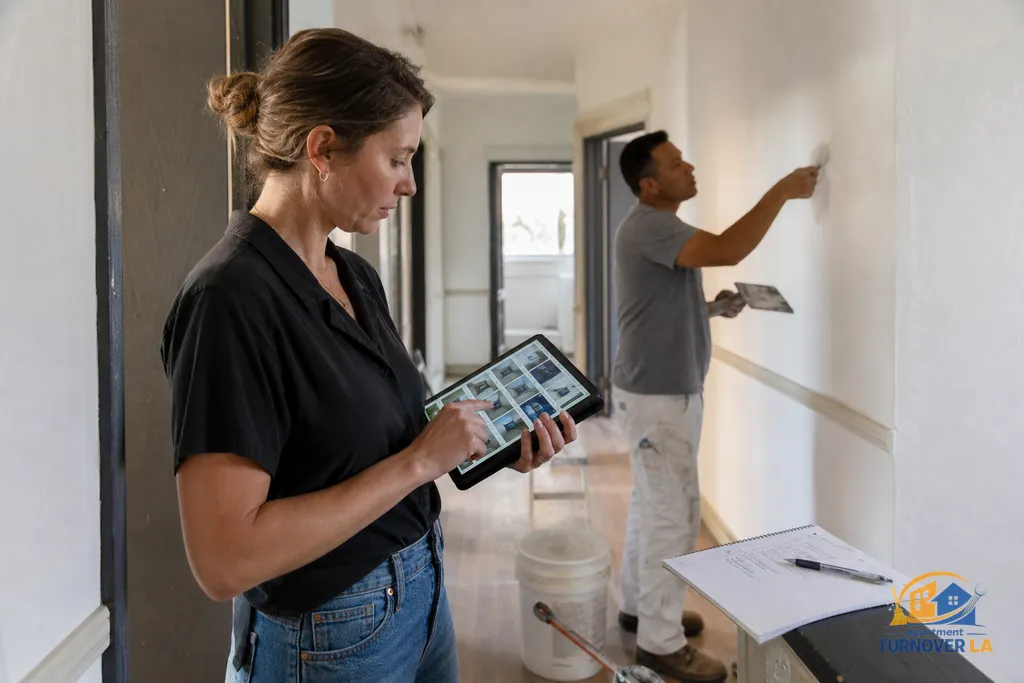
Turnover is the full cycle from a tenant’s notice to vacate through cleaning, repairs, rekey, and listing the unit again. Operationally, it includes the make-ready work, common area touch-ups, marketing photos, showings, application processing, and move-in prep. Each day of this cycle costs vacancy loss. In Los Angeles that baseline runs $80 to $200 per day depending on submarket and building class. Cutting days out of the cycle is the most reliable way to lift net operating income without raising rents.
If you want a simple starting point, standardize a 48-hour turn for average condition units. TurnOver LA books to that standard on every job. Our Make Ready includes a deep clean and a 12-point photo report so you can document condition and deductions correctly. See our Make Ready service details and set your baseline now.
Why does slow maintenance drive non-renewal?
Residents judge a building by how fast it addresses basic needs. A 72-hour faucet leak fix reads as care. A 3-week fix reads as indifference. That difference shows up in renewal math and in online reviews that other residents will read. In LA’s denser neighborhoods, neighbors compare notes in building group chats, which multiplies the impact of a single slow repair.
There are two friction points that amplify churn. First, a disappointing move-in condition sets expectations low. Second, a disputed or delayed deposit return confirms the story that management is not fair. Under California Civil Code §1950.5, you have 21 calendar days to return the deposit or a proper accounting with receipts. Missing that window or billing for normal wear and tear invites disputes and bad reviews that push other residents to leave.
How do make-ready delays create churn and vacancy loss?
Units that take longer than 48 to 72 hours to turn signal an operational problem that residents notice. They see unlisted, half-cleaned units on their floor and decide the building is behind. That narrative tends to surface right before renewal season. The cost is twofold. You lose days of rent today, and you lose a renewal later.
Across LA, a basic move-out deep clean for a 1 bedroom often runs $200 to $350 on the open market. With TurnOver LA, Make Ready is a flat 1 Bedroom $255, with a 48-hour turnaround, and it includes a 12-point photo report for documentation. If the previous tenant left bulk junk, market hauls can run $300 to $600 for a 1 bedroom. Our unit cleanout for a 1 Bedroom is $310, again on a 48-hour clock. Small paint and patch items that sit for a week are common triggers for complaints. Market pricing for a per-room repaint is often $300 to $700. We price Repainting per room at $395 / room, and Paint touch-up only at $200.
When managers quantify vacancy loss at $80 to $200 per day and compare that to a $200 to $425 turn line item, the math favors moving fast. Schedule a punch list before the keys come back and book the turn so your listing is live by day two. Get instant quote in 30 seconds
What is a good tenant turnover rate in LA apartments?
Context matters. For stabilized, professionally managed LA stock, an annual turnover rate in the 30 to 45 percent range is common. Well-run, rent-stabilized buildings can push lower due to inertia and pricing under market. Student or creative micro-markets, like parts of North Hollywood and DTLA, often run higher due to life stage moves.
If you are consistently above 50 percent, look first at response times, cleanliness at move-in, and deposit dispute frequency. Those are controllable. Market headwinds such as job moves and life changes are not. Cutting aged work orders and tightening your turn cycle usually moves the needle within one renewal season.
How do you calculate tenant turnover rate and downtime?
Use simple math you can track in a spreadsheet.
- Tenant turnover rate formula: number of move-outs in a period divided by average occupied units in the same period. Example: 18 move-outs divided by 120 average units equals 15 percent for the quarter.
- Average downtime per unit: total vacant days in a period divided by number of move-outs. Example: 270 vacant days divided by 18 move-outs equals 15 days average.
- Cost of downtime: average downtime multiplied by daily vacancy loss. Example: 15 days times $120 per day equals $1,800 per turn.
- Operations target: 48-hour make-ready on standard turns, under 5 business days for minor paint and patch, under 7 days for any multi-trade scope.
- Tracking tool: capture notice date, key return, job start, job finish, listing live, application approved, and move-in. Publish a weekly dashboard.
Need the unit turned before the next tenant?
We do the move-out clean and send you a photo report you can attach to the deposit itemization.
From $225 · 48-hour turnaround
Get an instant quoteWhich operational misses in LA quietly push people to leave?
Here are the seven misses we see most in Los Angeles buildings, including RSO stock and market-rate assets:
Slow closeout of small repairs. Cabinet fronts, shower caulk, and outlet plates sit for weeks. Book a Half-day handyman punch list at $230 to clear stacked items, or a Full-day handyman punch list at $425 for larger scopes. Residents notice the difference.
Untreated odors. Smoke or pet odor at move-in kills renewals a year later. See our guides on pet odor removal in Los Angeles and how to remove smoke smell from an apartment. Do it before listing.
Common area cleanliness. Halls and entries in Hollywood and Echo Park collect scuffs and dust. Quarterly paint touch-up and baseboard wipes prevent the run-down feel that makes people browse listings.
Rekey delays and package theft anxiety. Same-day is rare, but 48 hours is reasonable. We price Full apartment rekey (up to 2 locks) at $150 and Rekey first lock at $100. Pair that with camera visibility at entries.
Deposit friction. Mislabeling normal wear as damage or missing the 21-day return window under California Civil Code §1950.5 is a churn magnet. Share your accounting with photos from the 12-point report to reduce disputes. Review AB 12 (2023) security deposit cap for updated caps on deposits.
Parking miscommunication. In older Koreatown and Palms stock, unlabeled tandem stalls and tow confusion lead to angry, non-renewing households. Post clear stall maps and enforce consistently.
HVAC and noise issues. Units near Olympic or Sunset need sealing and MERV filter changes to keep street noise and soot in check. Cheap fixes like door sweeps and weatherstrip reduce complaints and keep renewals healthier.
Which policies and laws in LA affect turnover risk?
Two bodies of rules shape expectations. The LAHD Rent Stabilization Ordinance governs many older LA units, including notice, allowable rent increases, and just-cause. Even in non-RSO units, the habitability baseline and service of repairs create a standard residents expect. Statewide, California Civil Code §1950.5 defines deposit handling, including the 21-day return requirement and what proof is needed for deductions such as cleaning or repairs that go beyond normal wear and tear.
Recent changes under AB 12 (2023) security deposit cap also affect how you structure deposits for smaller units. Spend one hour with your leasing and accounting teams to align your make-ready documentation with these rules. The goal is fewer disputes and faster returns, which directly reduces turnover pressure.
References:
- LAHD Rent Stabilization Ordinance
- California Civil Code §1950.5
- California DCA Landlord-Tenant Guide
- AB 12 (2023) security deposit cap
How much does turnover cleaning cost in LA versus TurnOver LA?
Across LA, move-out cleaning for a studio to 2 bedroom often prices from $200 to $400, depending on condition and scope. With TurnOver LA, Make Ready is transparent and timed. The Make Ready package, which includes a deep clean and a 12-point photo report, is Studio $225, 1 Bedroom $255, 2 Bedroom $335, and 3BR or larger $425. We turn in 48 hours, no rush upcharge.
Painting and patching are similar. Market per-room repaint often lands at $300 to $700. Our Repainting per room is $395 / room, with Ceilings and baseboard or trim at $125 and Small drywall patch plus texture at $150 per patch. For light scopes, Paint touch-up only is $200.
Cleanouts vary widely by hauler. Market rates for a 1 bedroom run $300 to $600. We price Unit cleanout or junk haul at 1 Bedroom $310, with Additional junk load at $200 per load. Security steps are simple to price. Rekey first lock is $100, and a Full apartment rekey up to 2 locks is $150. If you need quick maintenance coverage, a General maintenance or safety visit is $125 or book a Half-day handyman punch list at $230. Get instant quote in 30 seconds
What is a turnover tenancy?
Operators sometimes use this to describe a lease period that exists only to transition from one tenant to the next. In practice it is not a separate legal tenancy in California. It is your internal window to clean, repair, rekey, and document. Keep it short. Aim for a 48-hour window on standard condition units, extend only when there is a defined, multi-trade scope like cabinet refinishing or several medium drywall repairs at $240 per patch.
What quick fixes reduce churn within 30 days?
If you need a fast correction before renewals go out, put these in place now:
- Pre-schedule make-ready before keys return. Lock in a 48-hour turn.
- Use a photographed checklist. Our Make Ready includes a 12-point photo report. File it with your deposit accounting to speed returns.
- Clear all aged work orders. One Half-day handyman punch list at $230 per unit closes the easy wins.
- Touch up halls and entries. Paint touch-up at $200 plus a baseboard wipe lifts first impressions immediately.
- Update lock workflow. Same-day scheduling is not required, but rekey within 48 hours. Full apartment rekey up to 2 locks is $150.
- Publish a weekly ops dashboard. Track notice dates, turn start and finish, listing live, and move-in.
- Add marketing photos. The TLA Launch Pad Media Package is $399 and helps fill the unit faster, which lowers visible vacancy and calms current residents.
How does a cleaner turn process cut deposit disputes?
Deposit fights are often documentation fights. A clean file with before and after photos, timestamps, and line-item invoices makes accounting simple and defensible. Under California Civil Code §1950.5 you must itemize deductions and return the balance within 21 days. That is easier when the only deductions are clearly beyond normal wear and tear. Pair your checklist with the California 21-day deposit return rules and the normal wear and tear in California guide so your staff stays aligned.
LA-specific tips that top off renewals
- In Westlake and Mid-City walk-ups, sweep and mop stairs on turn day so existing residents see progress, not dust.
- In Santa Monica and Venice, address salt air on hardware with a quick wipe and lubricant during the turn. Squeaks and sticky locks are small, but they read as neglect.
- In Downtown LA high-rises, coordinate freight elevator slots before you schedule paint. Idle crews and visible ladders in hallways do not help renewals.
Finally, measure what matters. Track 48-hour compliance on each turn, time-to-first-repair on new move-ins, and deposit return timing. Those three numbers predict turnover more reliably than any resident event calendar.
If you want to lock a 48-hour standard and remove surprises, book a turn. We will price it live and deliver on time. Get instant quote in 30 seconds