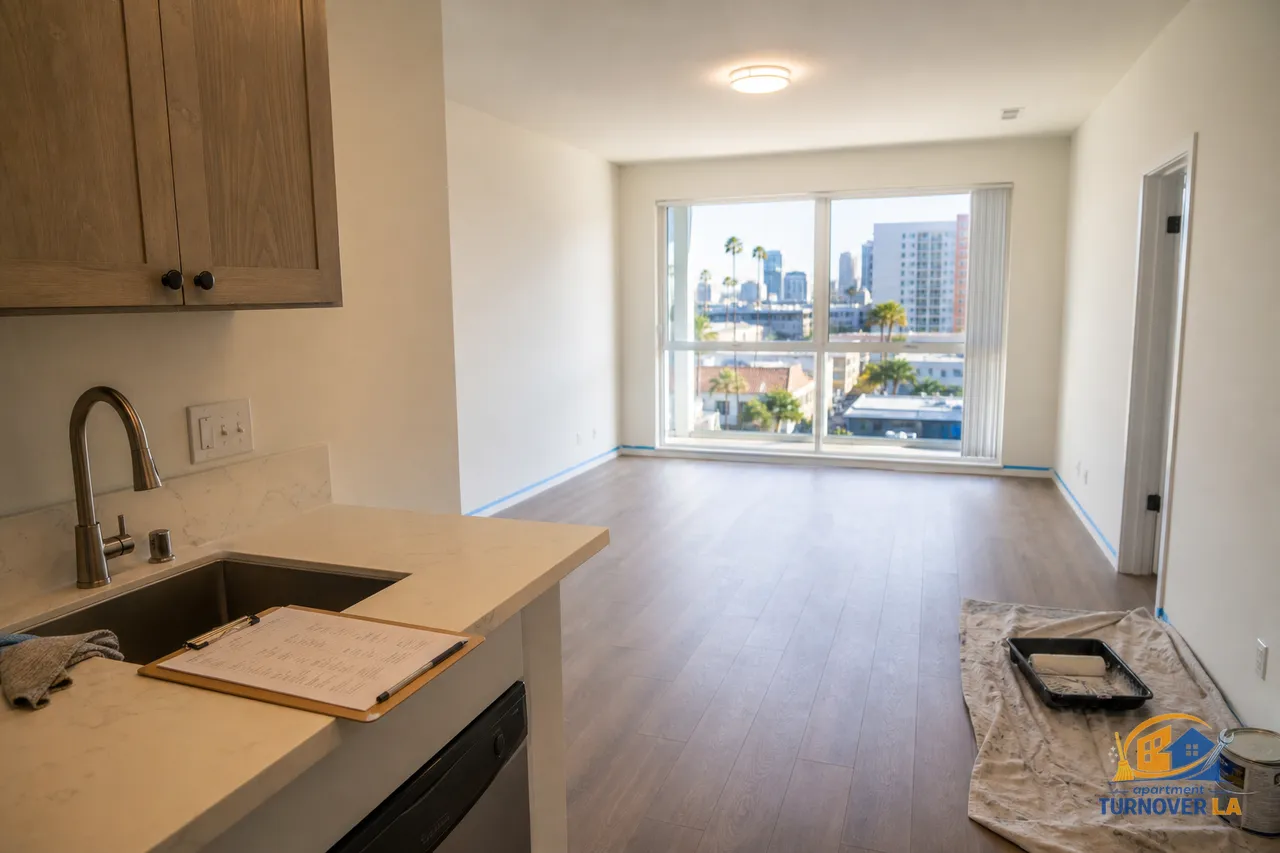
Quick answer: No, California law does not require landlords to repaint between tenants. LA’s Rent Stabilization Ordinance has no repaint mandate either. You may charge for repainting only when there is tenant-caused damage beyond normal wear, documented per California Civil Code §1950.5. In practice, many LA owners repaint about every 3 to 5 years, or sooner if there is smoke, odors, or heavy staining.
California does not impose a repaint-every-turnover rule. You can only charge a departing tenant for repainting when the condition exceeds normal wear, and you must itemize that in the 21-day accounting. If the walls are normally worn, repainting is an owner expense, not a charge to the tenant.
Get instant quote in 30 seconds
What does California law actually say about repainting between tenants?
California law is silent on a repaint requirement between tenancies. There is no code section that mandates fresh paint at turnover. The core statute that matters here is California Civil Code §1950.5, which governs security deposits and what you can deduct. The rule is simple: you can deduct for cleaning and repairs that return the unit to the same level of cleanliness and condition it had at move-in, excluding ordinary wear. Painting that is needed only because of ordinary wear is not chargeable to the tenant.
The state guides reinforce this approach. The California DCA Landlord-Tenant Guide and the California Tenants Guide both explain that landlords can deduct for damage beyond normal wear, and that they must provide receipts or an itemized statement within 21 days. No guide says repainting is mandatory at every vacancy.
Can a landlord charge a tenant for painting after move-out in California?
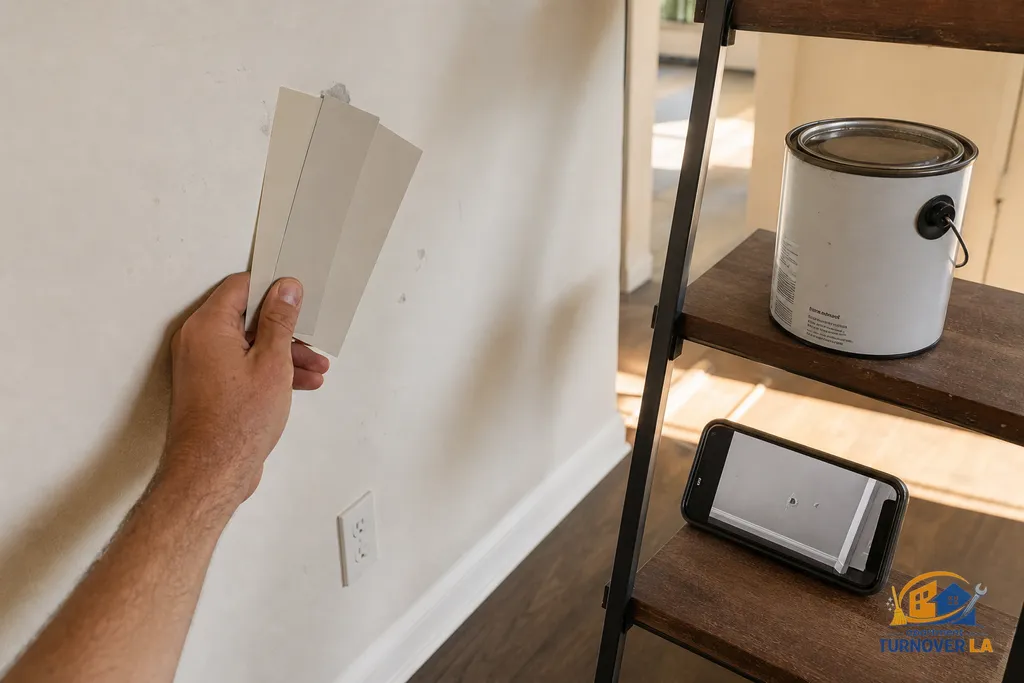
Yes, but only if the tenant caused damage beyond ordinary wear. Examples that typically justify a deduction include large wall gouges, unapproved color changes, heavy nicotine staining, marker or crayon on walls, or kitchen grease buildup that cannot be cleaned. Small nail holes, minor scuffs, sun fading, and slight burnishing are usually ordinary wear. Any deduction must be itemized with actual cost and scope, and sent within 21 days of move-out.
Useful life matters when you calculate charges. Paint does not last forever, so you prorate based on remaining useful life. Many operators use a practical life of 3 to 5 years for wall paint in LA traffic, even though the code does not list a number. If a tenant damaged a 4-year-old paint job, the recoverable portion is small. See the statute and state guides for the documentation rules.
How often should LA landlords repaint in practice?
There is no legal cycle, but operations drive a schedule. In high-sun coastal pockets like Santa Monica or Venice, flat or eggshell walls can chalk and fade faster, so owners often plan a full repaint every 3 to 4 years. In shaded or lower-traffic interiors like Mid-City or Glendale 1BRs with careful occupants, 5 to 7 years is common.
Marketability is the pivot. If scuffs, mismatched patches, or odors will extend vacancy by even 1 or 2 days, the paint decision becomes math. Typical vacancy loss in LA runs about 80 to 200 dollars per day depending on submarket. A quick touch-up can bridge to a full repaint at the next cycle and keep the unit moving without a rent concession.
How much do painters charge for apartments in LA today?
Across LA, interior vacancy painting is commonly priced per room for standard wall repaints. A typical market range is 300 to 600 dollars per room for walls only, more when you include ceilings, trim, repairs, or color changes. Some crews still quote per square foot, often 1.50 to 3.50 dollars for straightforward units, but room-based pricing is very common on apartment turns.
With TurnOver LA, repainting per room is 395 dollars per room. Paint touch-up only is 200 dollars. Ceilings and baseboard or trim are 125 dollars. Small drywall patch and texture is 150 dollars per patch, and medium drywall repair is 240 dollars per patch. We schedule every job on a flat 48-hour turnaround, with no rush fee.
Get instant quote in 30 seconds
How much does it cost to paint a 500 sq ft apartment in LA?
Market pricing for a 500 square foot studio or small 1BR varies by scope. Per-square-foot quotes often land between 750 and 1,750 dollars for walls, ceilings, and minor prep. Per-room quotes usually break down by the number of distinct rooms you repaint and whether trim or ceilings are included.
At TurnOver LA, you can estimate by line items. Many 1BRs involve two rooms for wall repainting at 395 dollars per room, or 790 dollars for walls. Add ceilings and baseboard or trim at 125 dollars if you want a full reset, and include patches as needed at 150 or 240 dollars per patch. Pairing that with a Make Ready clean helps the paint read correctly.
Do Los Angeles RSO or Santa Monica rules require fresh paint at turnover?
No. Neither the LAHD Rent Stabilization Ordinance nor Santa Monica’s rent control materials impose a fresh-paint-at-each-turn rule. Habitability still applies, so if paint is peeling, unsanitary, or creates a genuine health or safety issue, it must be addressed. For pre-1978 buildings, lead-safe practices can apply when disturbing old coatings, and owners should follow applicable guidance.
Operationally, RSO owners often use paint strategically to avoid rent-reduction arguments tied to diminished services. For example, a heavily mismatched touch-up in a living room might be legal but can be a leasing drag. In these cases, a partial repaint can pay for itself in days by preventing a rent cut request or prolonged vacancy.
What is the best repaint versus touch-up decision at move-out?
Use a simple decision tree that protects compliance and days-to-market:
- Walk the unit in daylight and photograph every wall at chest height, plus close-ups of damage, stains, and sheen mismatches.
- Wipe-test with a damp microfiber. If marks lift cleanly, prioritize cleaning over repaint.
- Check for odors. If smoke or pet odor remains after cleaning, plan to seal and repaint affected walls.
- Review color and sheen consistency. If touch-up will flash or telegraph, lean toward a partial or full repaint.
- Count repairs. If you have more than three patches in a room, a full room repaint usually reads better.
- Compare timeline to vacancy loss. A 200 dollar touch-up delivered inside 48 hours can save 160 to 400 dollars in lost rent.
- Document before and after with a dated photo log for the deposit file.
Need the walls done before you re-list?
Turnover painting, scuff removal and patching, with a photo record of the condition we left behind.
$395 per room · 48-hour turnaround
Get an instant quoteHow do you document paint to stay compliant with California’s 21-day rule?
Start with a signed move-in condition report that mentions paint condition by room and photos stored with timestamps. At move-out, collect comparable photos from the same angles and any close-ups of damage. Keep all invoices that show labor, materials, and the exact rooms repainted.
When you issue the 21-day accounting, include an itemized line for paint that explains what was repainted and why, and tie it to damage beyond ordinary wear. Attach copies of receipts or a good-faith estimate when permitted. For older paint, note your useful life method and proration. This practice aligns with California Civil Code §1950.5 and the state guides.
What does a full turnover paint pair well with to speed the flip?
Fresh paint works best when combined with a true make-ready clean. Grease, dust, and wall residue can distort color and sheen and make new paint look worse than it is. Our Make Ready package starts at Studio 225 dollars, 1 Bedroom 255 dollars, 2 Bedroom 335 dollars, and 3BR or larger 425 dollars, and it includes a 12-point photo report that documents paint and finish conditions.
If your unit needs minor fixes along with paint, a Half-day handyman punch list is 230 dollars and a Full-day punch list is 425 dollars. For rentals with drywall damage, add Small drywall patch and texture at 150 dollars per patch, or Medium drywall repair at 240 dollars per patch. For final marketing, the TLA Launch Pad Media Package is 399 dollars.
Can you really reduce vacancy days with touch-ups and standard colors?
Yes. Two operational moves outperform most others:
- Standardize color and sheen across your portfolio so touch-ups match and you avoid repainting whole rooms unnecessarily.
- Keep a labeled quart for each color in each unit and refresh it at every service visit.
In West Hollywood and Koreatown, we often save owners 1 to 2 vacancy days by executing a 200 dollar touch-up inside 48 hours and pairing it with Make Ready. The saved rent covers the scope, and the unit still shows clean.
Get instant quote in 30 seconds
LA market pricing versus TurnOver LA pricing at a glance
- Market per room repaint in LA: often 300 to 600 dollars for walls.
- TurnOver LA repainting per room: 395 dollars per room.
- Market touch-up call: 200 to 400 dollars depending on scope.
- TurnOver LA paint touch-up only: 200 dollars.
- Market drywall repairs: widely variable, often 150 to 400 dollars per patch.
- TurnOver LA small drywall patch and texture: 150 dollars per patch, medium 240 dollars per patch.
Practical examples for deposit decisions
- Tenant left black wall paint in bedroom without approval. Full room repaint is chargeable, with proration for paint age.
- Dozens of pin holes in living room after a 3-year tenancy. Fill and touch-up may be owner cost if it reads as normal wear.
- Smoke-stained kitchen ceiling after heavy frying. Cleaning and repaint are likely chargeable beyond normal wear if documented.
- Kid crayon drawings on hallway. Charge for repainting that wall or room, with useful life proration.
How TurnOver LA handles painting during a 48-hour flip
We stage prep on day one and final coat on day two, coordinated with cleaning. If the scope is partial, we sequence touch-ups first, then walk with daylight to confirm sheen match. If a wall fails under natural light, we convert that wall to a full pass. The goal is to beat vacancy loss and deliver a clean, compliant file with before and after photos.
- Repainting per room: 395 dollars per room
- Paint touch-up only: 200 dollars
- Ceilings and baseboard or trim: 125 dollars
- Make Ready clean with photo report: Studio 225 dollars, 1 Bedroom 255 dollars, 2 Bedroom 335 dollars, 3BR or larger 425 dollars
Pair any scope with our property management support to standardize colors, sheen, and documentation across the portfolio.
Related resources
- See the law on security deposit deductions in California Civil Code §1950.5.
- Read the LAHD Rent Stabilization Ordinance overview for local context.
- For timelines and documentation, review the California DCA Landlord-Tenant Guide and the California Tenants Guide.
- For wear questions, see our guide on ordinary wear and tear in California.
- For deposit deadlines, see our 21-day deposit return walkthrough.