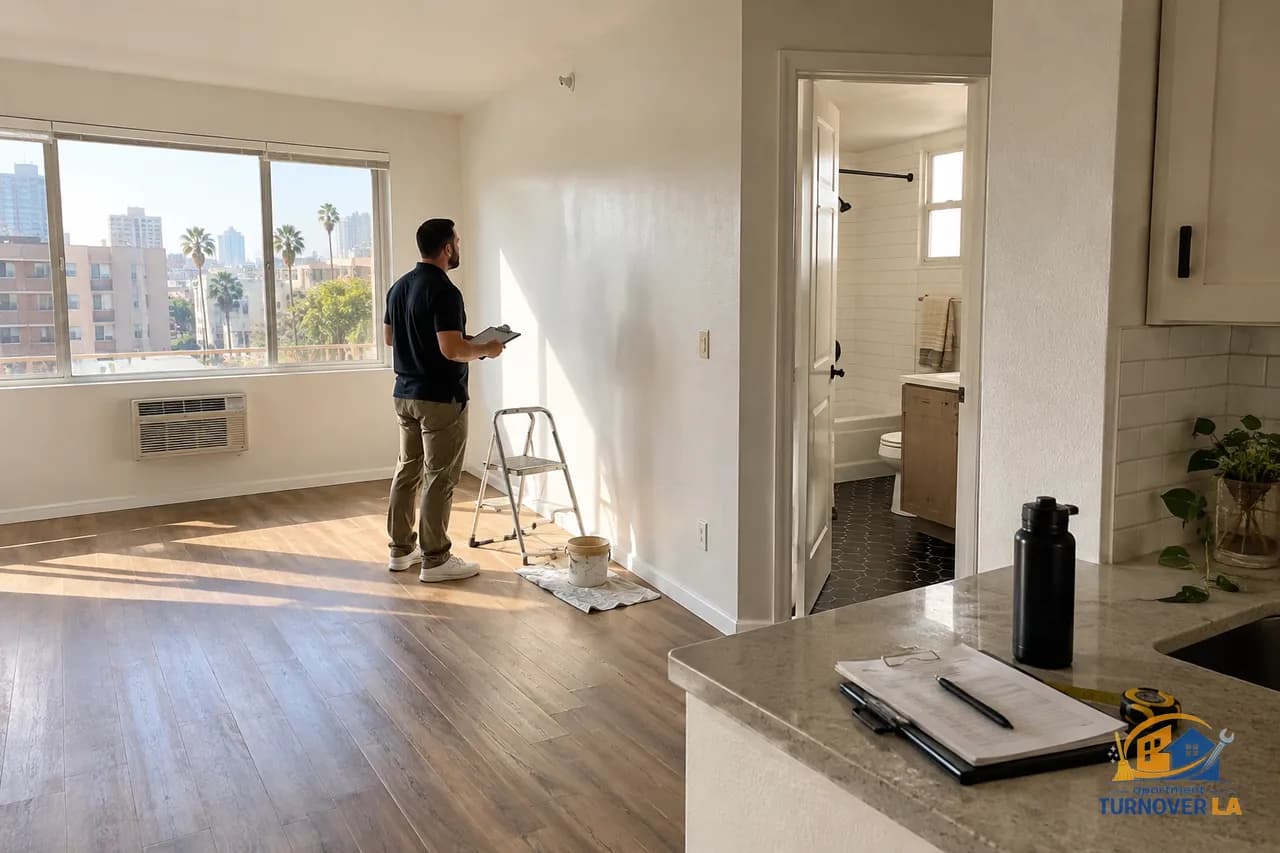
Quick answer: A good apartment turnover rate is usually below the 45.2% national reference point, but there is no single healthy number for every LA building. For a stable apartment property, track annual move outs by unit count, then pair that percentage with vacancy days. A 30% rate with fast 48-hour make ready work can outperform a lower rate that leaves units empty for weeks.
A good target depends on who rents your units, lease structure, and the age of the building. A 12-unit West LA building with long term residents should not be judged against a furnished, high mobility building near Hollywood. The useful goal is fewer avoidable move outs and fewer days between possession and a rent ready listing.
Get instant quote in 30 seconds
What does turnover mean in apartment renting?
Turnover is the full operating cycle that begins when a resident gives notice or returns possession and ends when the next resident can move in. It includes the vacancy itself, condition documentation, deposit accounting, cleaning, repairs, security work, marketing, screening, and lease execution. The turnover rate is the percentage of units that went through that cycle during a chosen period, usually one year.
Do not confuse turnover rate with vacancy rate. Vacancy rate measures how much of your inventory is empty at a point in time or over a period. Turnover rate measures how often households leave. A building can have frequent move outs but low vacancy when the owner turns units quickly. It can also have low turnover but costly vacancy if one empty unit sits for 45 days.
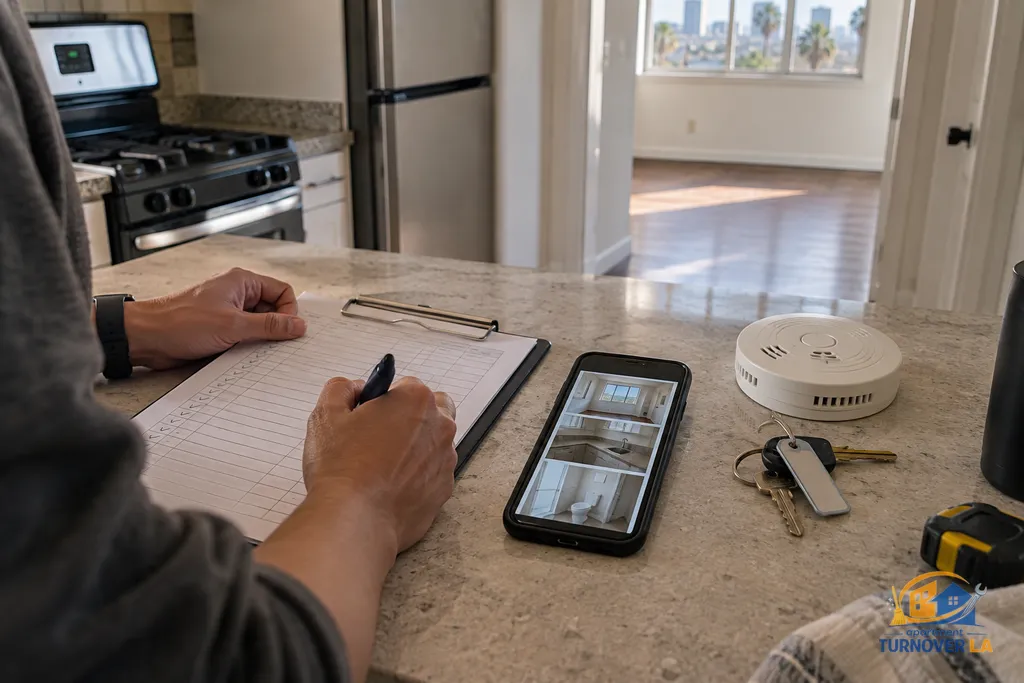
For the actual unit work, a Make Ready service combines a deep clean with a 12 point photo report. Those dated condition photos help separate a normal reset from work that needs owner approval, vendor scheduling, or a documented tenant charge.
What is a good apartment turnover rate?
For many conventional apartment buildings, a turnover rate below the 45.2% national figure cited in industry search results is a reasonable starting benchmark. It is only a starting point. A property running 25% to 35% annual turnover may be healthy if its tenant base is stable and its leases are renewing. A building above 45% deserves review, especially if the same complaints, pricing objections, parking issues, or maintenance delays appear in exit conversations.
Use comparable units, not a generic national number, when setting a target. Studios near job centers and campuses naturally turn more often than two bedroom homes occupied by families. Rent controlled and older LA stock can have very different resident tenure from newer, amenity driven buildings. The decision point is whether departures are expected life events or a pattern the operator can correct.
A practical operating threshold is this: investigate the cause when turnover rises for two consecutive renewal cycles, rather than reacting to one busy month. That avoids treating seasonal lease expirations as a retention failure.
How do you calculate apartment turnover rate accurately?
Calculate annual turnover rate by dividing the number of move outs during the period by the average number of occupied units, then multiply by 100. If a 20-unit property has six move outs in a year and stayed substantially occupied, its turnover rate is 30%. Keep a separate count for units that had more than one occupancy change, because one problematic unit can otherwise disappear inside a simple annual percentage.
Use this five step process:
- Set a fixed reporting period, usually the prior 12 months.
- Count completed resident move outs, not notices that were withdrawn.
- Use average occupied units if occupancy changed during the year.
- Divide move outs by average occupied units and multiply by 100.
- Record vacancy days and make ready days beside the percentage.
That fifth step is where the number becomes operational. Two buildings can both show 30% turnover, while one loses far more rent because repairs, keys, and cleaning were scheduled sequentially. At an LA vacancy loss baseline of $80 to $200 per day, a preventable five day delay can matter more than a small change in the annual rate.
For a broader worksheet covering the handoff after possession, use this apartment turnover checklist.
Is the 2% rule a good rule for apartment turnover?
No, the 2% rule is not a standard benchmark for apartment turnover. In rental investing, the phrase usually refers to a screening rule about expected monthly rent as a percentage of a property's purchase price. It does not tell you whether your residents are leaving too often, how long units are vacant, or what each turnover costs to complete.
Some operators also use 2% informally for a monthly maintenance or capital reserve discussion. That is still different from turnover rate. Mixing these measures creates bad decisions, such as delaying a needed repair because the annual turnover percentage looks acceptable, or blaming turnover when the actual problem is marketing lead volume.
Keep four numbers separate: annual move out percentage, average vacancy days, average make ready days, and average cost per completed turn. This lets an owner see whether the issue is retention, production speed, or unit condition. It also produces cleaner owner reporting for managers handling properties subject to the LAHD Rent Stabilization Ordinance, where careful records are part of sound operations.
Need the walls done before you re-list?
Turnover painting, scuff removal and patching, with a photo record of the condition we left behind.
$395 per room · 48-hour turnaround
Get an instant quoteHow long should an apartment turnover take?
A straightforward turnover should be planned as a 48-hour production window once the unit is vacant and access is available. That does not mean every apartment can be fully reset in two days. Water damage, a major drywall repair, material lead times, pest treatment, or an unresolved deposit inspection can extend the schedule. It does mean the manager should identify those exceptions immediately instead of discovering them after cleaning is complete.
The reliable sequence is possession and photos first, then cleanout if needed, maintenance and patching, paint, deep cleaning, security reset, final photos, and listing launch. Running these tasks in the wrong order creates rework. For example, painting after a final clean can leave dust on floors and fixtures. Rekeying before all vendors are finished can create access problems.
TurnOver LA provides a flat 48-hour turnaround on every job, without a rush or same-day upcharge. For recurring wall damage, schedule painting and drywall work early enough to allow texture and paint work before the final clean. For common patch decisions, see drywall patching for rental apartments in Los Angeles.
Get instant quote in 30 seconds
How does turnover rate affect the cost of an LA vacancy?
Turnover percentage is a leading indicator, but vacancy days are the cash result. Across LA, a basic professional one bedroom turnover clean commonly falls in the general market around $200 to $350, depending on condition and access. With TurnOver LA, a 1 Bedroom Make Ready is $255 and includes a deep clean plus a 12 point photo report, with a 48-hour turnaround.
The larger cost issue is not always the invoice. Every unresolved item can add days: furniture left behind, missing keys, unapproved paint, a leaking angle stop, or delayed inspection photos. At $80 to $200 per day in vacancy loss, an owner should ask whether a low bid is actually delaying listing readiness. This is especially important when a cleanout is involved, because abandoned furniture can block repair and cleaning access.
Labor and the crew's own supplies are included in a TurnOver LA quote. Paint, parts, and fixtures are identified at the on-site inspection and added to the final invoice only with owner approval. For a fuller view of the holding cost calculation, review property managers' vacancy loss in Los Angeles.
Which turnover details should managers review every month?
Review turnover by unit type, building, reason for move out, and days from possession to listing live. Monthly review catches patterns that an annual percentage hides. If one building has repeated complaints about appliance response or parking, that is a retention problem. If every unit waits three days for keys and another two days for vendor access, that is a process problem.
Also review deposit documentation separately from production. California security deposit accounting has its own deadlines and standards under California Civil Code §1950.5. Photo reports, invoices, and itemized condition notes should be organized at possession, not reconstructed after a former resident disputes charges.
The monthly report should show which work was normal wear, which was repairable damage, and which items were owner upgrades. That distinction protects the deposit process and prevents a manager from treating a cosmetic refresh as a turnover charge. It also helps estimate the next turn with more accuracy.
What is the practical goal for an apartment turnover program?
The practical goal is not zero turnover. Residents move for work, family, school, and changing household needs. The goal is predictable turnover: fewer preventable departures, a known scope on possession day, and a short path from vacant unit to marketable unit. A property with moderate turnover and disciplined execution is easier to budget, staff, and lease than a property with an attractive percentage but recurring surprises.
Start by calculating the past 12 months, segmenting the data by unit type, and identifying the top two causes of move out. Then track days to possession, days to rent ready, and days to lease. Those three clocks show where revenue is actually being lost. Use the findings to improve renewal conversations, maintenance response, and turnover sequencing before the next notice arrives.
When a unit is ready for the production phase, put cleaning, photo documentation, repairs, and final condition review into one schedule rather than a chain of vendor calls. That is how an apartment turnover rate becomes a usable management number instead of a number on a year end report.