Quick answer: Across Los Angeles, handyman work commonly runs about $75 to $150 per hour, often with a minimum visit charge. TurnOver LA prices rental turnover scope as a $125 general maintenance / safety visit, a $230 half-day handyman punch list, or a $425 full-day handyman punch list. Work is scheduled within 48 hours, and needed materials require your approval before billing.
For a landlord searching "handyman near me," the useful question is not just who is closest. It is who can document the unit condition, separate minor maintenance from specialty work, and finish an actionable punch list without creating another vacancy-day delay. Get instant quote in 30 seconds
How much does a handyman cost in Los Angeles?
Across LA, the general market commonly prices handyman labor at about $75 to $150 per hour, with minimum charges, parking, access, and scope affecting the final bill. That hourly model can be fine for a small owner-occupied task, but it is harder to control during a vacancy when several small defects are competing for attention. TurnOver LA uses fixed turnover options beside that market context: $125 for a general maintenance / safety visit, $230 for a half-day handyman punch list, and $425 for a full-day handyman punch list.
| Turnover need | Typical LA market context | TurnOver LA price |
|---|---|---|
| Small inspection and maintenance check | $75 to $150 hourly, often with a minimum | $125 general maintenance / safety visit |
| Several minor repair items | Hourly labor can expand with scope | $230 half-day handyman punch list |
| A fuller unit punch list | Multiple hourly blocks may be needed | $425 full-day handyman punch list |
The quote covers labor and the crew's own supplies. Paint, parts, fixtures, or other job materials are identified at the on-site inspection and added only with your approval.
What should a landlord expect from a handyman near me?
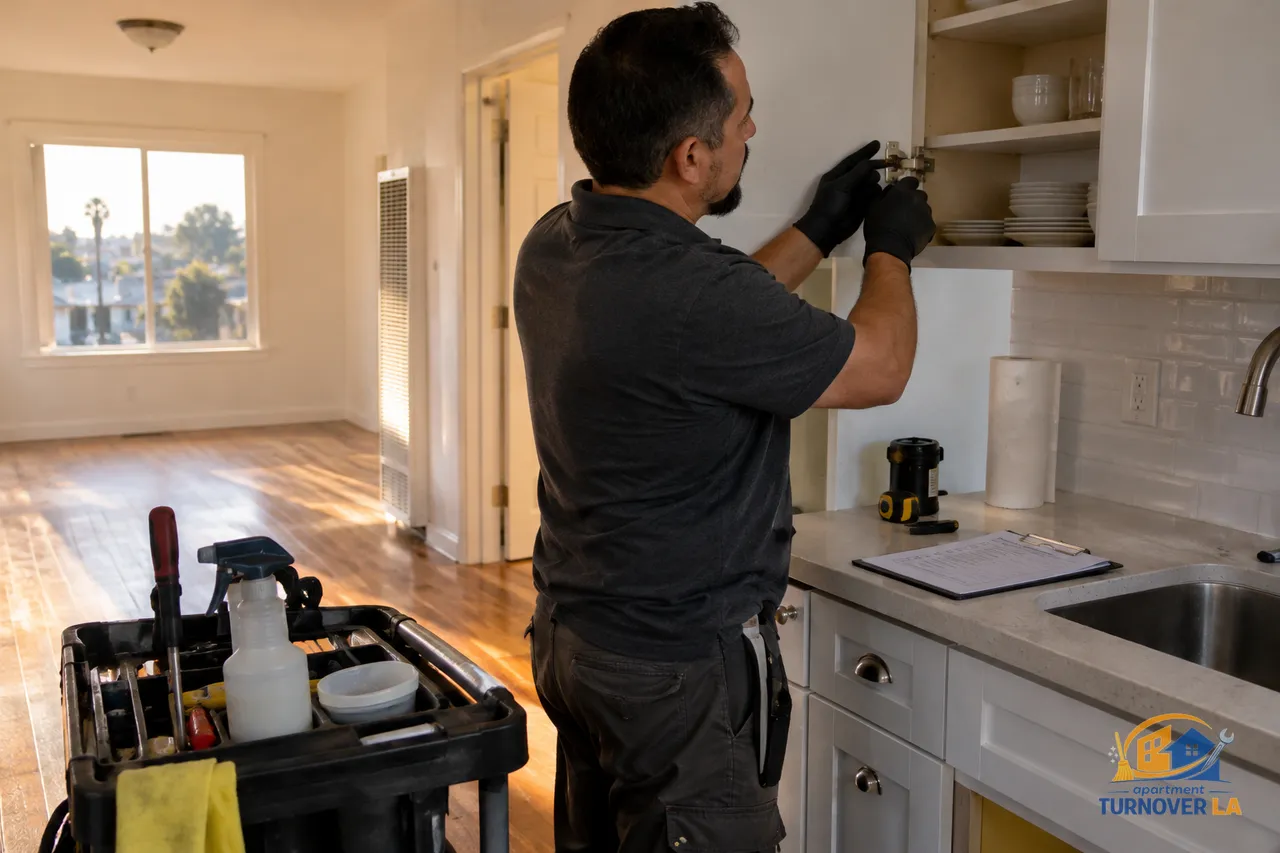
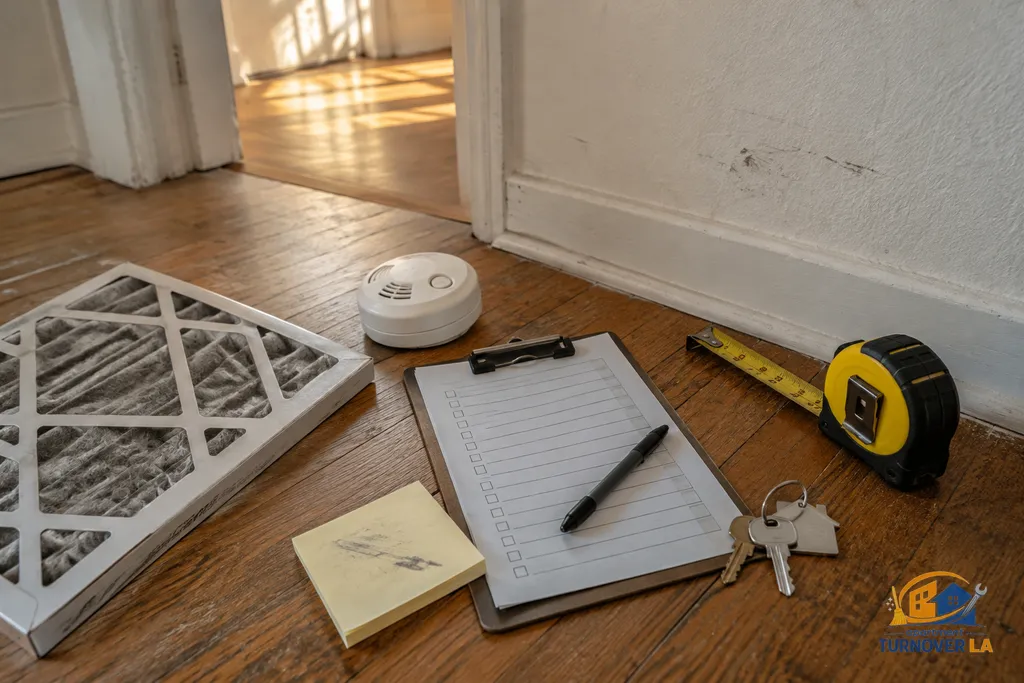
A turnover handyman should start with the items that could block leasing or create a safety concern, then work through appearance items that affect showings. In an LA unit, that commonly means checking latches, cabinet hinges, door closers, blinds, caulk gaps, loose outlet covers, smoke detector placement, filter access, and minor drywall damage. It also means noting what should not be treated as a casual fix, such as active leaks, electrical faults, structural damage, or gas-related issues.
For rental operations, a useful visit leaves an owner with a clear record of what was addressed, what requires a specialist, and what materials were approved. That is different from sending someone over for a vague list of "small stuff." TurnOver LA's handyman and general maintenance service is built around that turnover sequence, so the crew can work from a defined list instead of repeatedly resetting the scope.
Can handyman work be done in California without a license?
California permits limited small-job work without a contractor license when the applicable exemption requirements are met, but that is not blanket permission to perform every repair. A person should not represent themselves as licensed when they are not, and projects involving regulated trades, permits, major construction, or conditions outside a minor repair scope need the appropriate qualified professional. Licensing rules and exemption details can change, so owners should verify the current requirement before assigning work.
Operationally, the safer split is simple. Use general maintenance for minor non-specialty items, such as hardware adjustments, small fixture-related tasks, or cosmetic corrections. Escalate suspected electrical, plumbing, gas, structural, roofing, mold, or life-safety issues. A handyman should also stop rather than conceal a condition that needs further evaluation. That decision protects the unit, the resident, and the turnover schedule better than trying to force every issue through one trade.
Which rental repairs belong on a turnover punch list?
The best punch lists describe a location, condition, and expected result. "Fix bedroom" is not actionable. "Bedroom two closet door rubs at bottom track, adjust and test close" is. A standard rental list often includes these five groups:
- Doors, locks, strike plates, knobs, closet tracks, and latches.
- Cabinets, drawers, shelves, hinges, and loose trim.
- Blinds, screens, towel bars, toilet paper holders, and other hardware.
- Minor wall scuffs, nail holes, and drywall patches that need coordination with painting.
- Filters, smoke detector observations, basic safety checks, and access items.
A small drywall patch and texture is $150 per patch, while a medium drywall repair is $240 per patch. If walls need more than repair, TurnOver LA lists paint touch-up only at $200 and repainting per room at $395 / room. Pairing the repair punch list with the right painting scope prevents a clean unit from being marked up again by a later repair visit.
Need the walls done before you re-list?
Turnover painting, scuff removal and patching, with a photo record of the condition we left behind.
$395 per room · 48-hour turnaround
Get an instant quoteWhat are red flags when hiring a handyman for a vacant unit?
The first red flag is an estimate with no defined scope. If the provider cannot tell you whether the price covers labor, supplies, parts, access problems, and return trips, the lowest initial number may not be the lowest final cost. Another red flag is a promise to handle specialty work without discussing qualifications, permits, or the condition found on site. Vague assurances are especially risky in older LA buildings where a simple symptom can point to a larger issue.
Also watch for no written record of materials, no approval process for replacements, no condition photos, and no plan for key or unit access. For deposit-related damage, documentation matters as much as the repair itself. California's rules on itemization and supporting documentation are set out in California Civil Code §1950.5. Before making a charge decision, compare the move-out condition with the lease, inspection record, and the distinction between damage and ordinary aging described in this normal wear and tear guide.
How should you build a punch list before the crew arrives?
Start immediately after possession, while the move-out condition is still clear. Walk the unit room by room and take wide photos first, then close-ups of defects. Put safety and water concerns at the top, followed by access and security, then repair, paint, cleaning, and listing presentation. Note whether keys are available, whether utilities are active, and whether building rules limit parking, elevator use, or work hours. Those details matter in dense buildings in Hollywood, Koreatown, and Downtown LA.
Keep repairs in one list, but identify the trade or sequence beside each item. For example, patch drywall before final cleaning, and finish cabinet repair before paint touch-up. A clear list makes it easier to use a half-day or full-day scope appropriately. It also avoids sending cleaners back into a unit after dusty repair work. Get instant quote in 30 seconds
How do handyman repairs fit with cleaning, paint, and cleanout?
Repairs work best as part of a controlled turnover order, not as an isolated dispatch. If the prior resident left unwanted belongings, clear the unit first. TurnOver LA prices a unit cleanout / junk haul at $500, with an additional junk load at $500 / load. After access and repair issues are addressed, coordinate patching and paint, then complete the final clean. For a one-bedroom, Make Ready, which includes a deep clean and 12-point photo report, is $255.
This sequencing keeps the crew from repairing around boxes, painting after cleaning, or discovering a damaged lock when the next showing is already scheduled. It also gives the owner useful condition evidence. Review the broader workflow in the apartment turnover checklist and the practical case for using one vendor for cleaning, painting, and repairs. LA rent-stabilized properties also require owners to consider local rules, including the LAHD Rent Stabilization Ordinance, alongside the physical turnover plan.
What happens when a repair visit finds tenant damage?
A repair visit can identify a condition, but it does not automatically make that condition a proper tenant charge. Separate documented damage from normal wear, obtain the necessary repair information, and keep receipts, invoices, photos, and inspection records organized. California security-deposit rules have timing and documentation requirements, and the California DCA Landlord-Tenant Guide is a useful starting point for owners reviewing their process.
Do not delay a rent-ready repair while debating the accounting decision. The operational priority is to restore the unit safely and document the condition at the same time. In LA, a vacant day can cost roughly $80 to $200 depending on submarket, so an unresolved punch list has a real carrying cost. Use the work record to support the later deposit review, rather than leaving a damaged fixture in place until the accounting is settled.
What is the practical next step for an LA turnover repair?
Define the unit access, list the repair items by room, and identify anything that may require a specialist before the visit. For a few clear fixes, a $125 general maintenance / safety visit can establish the condition and next steps. For a grouped list of hardware, trim, blinds, doors, and similar work, the $230 half-day handyman punch list or $425 full-day handyman punch list creates a defined work window instead of open-ended hourly billing.
The goal is not to make every unit look newly renovated. It is to make the apartment safe, functional, cleanly presented, and ready to show without avoidable repeat trips. Materials remain subject to on-site identification and your approval, while labor and crew supplies are already covered by the quoted service. Get instant quote in 30 seconds