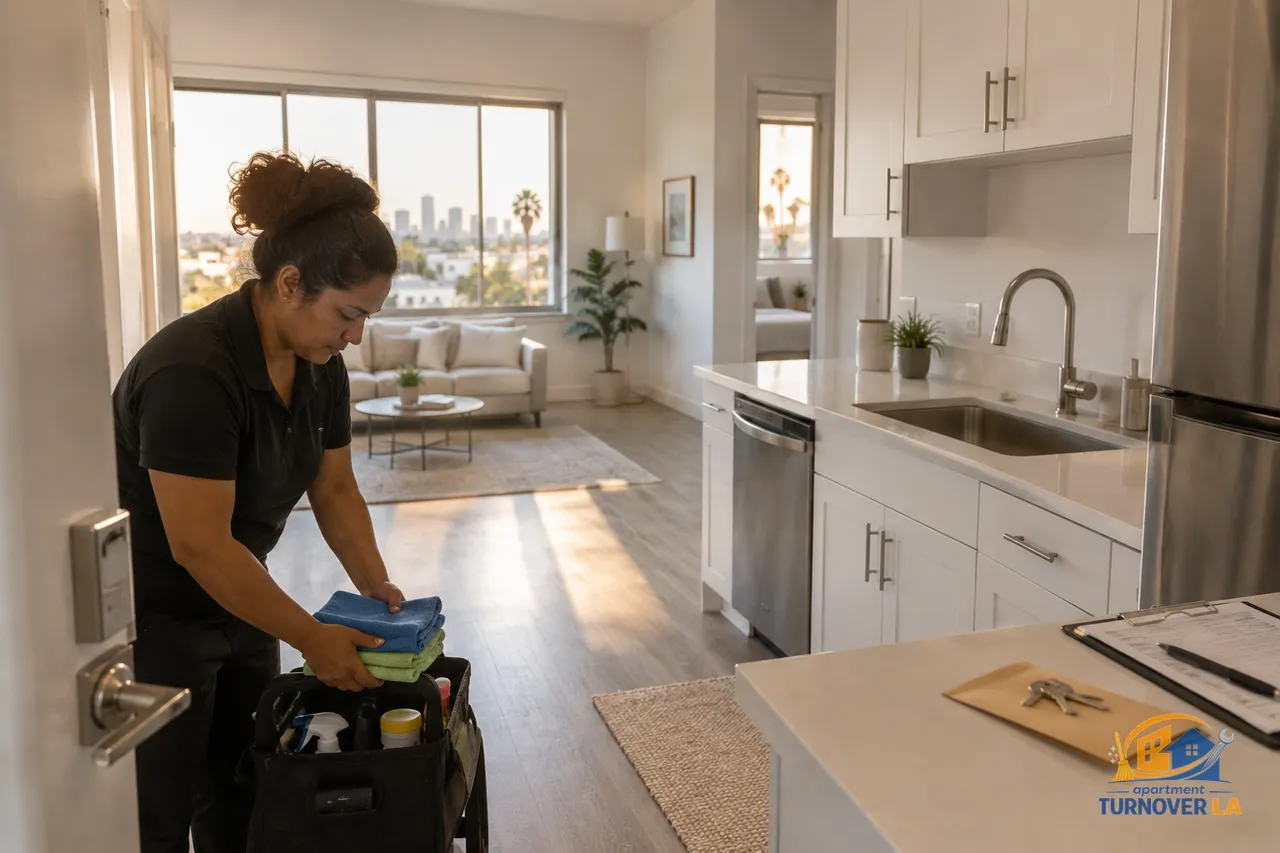
Quick answer: Tipping for a move-out clean is optional, not a required charge. If the crew handled a notably dirty unit, completed detailed work, or accommodated a difficult access window, $20 to $40 per cleaner is a practical LA range. A flat amount per cleaner is usually clearer than calculating a percentage after the job.
You do not need to tip simply because you booked a move-out cleaning. Tip when the result, effort, communication, or care with the unit warrants it, and keep that voluntary payment separate from the cleaning invoice and any tenant deposit accounting. Get instant quote in 30 seconds
Is tipping required for a move-out clean?
No. A tip is a discretionary thank-you, not a standard move-out cleaning fee or a condition of receiving competent service. The quoted cleaning charge should cover the agreed labor and the crew's own supplies. A cleaner should not expect a tip to make up for a vague scope, a missed item, or an invoice that changed without approval.
For owners and managers, it helps to separate three items in the turnover file: the vendor invoice, a voluntary gratuity paid from your own operating budget, and any tenant charge that is legally supportable. A tip is not a cleaning damage charge and should not be deducted from a departing resident's security deposit. California's deposit rules allow cleaning deductions only within the limits of California Civil Code §1950.5, not for an owner's optional gesture to a vendor.
If the work was merely adequate, paying the agreed invoice is enough. If it was excellent, a tip is appropriate but still optional.

What is a fair tip for a move-out cleaning crew?
For strong work, $20 to $40 per cleaner is an easy, fair flat amount for a one-time move-out clean. For a two-person team, that means $40 to $80 total. Use the lower end when the job was routine and completed as scoped. Use the higher end when the crew dealt with heavy grease, pet hair, extensive cabinet detail, difficult parking, or a short turnover window without cutting corners.
A percentage can work, but it is less useful on turnover jobs because the final invoice may include several scopes or property-specific approvals. A flat per-person tip tells the team exactly what you intend and avoids confusion about whether the amount covers everyone. If you choose a percentage, 10% to 20% is a common etiquette benchmark, but it is not a rule.
Do not let a tip replace basic vendor review. Check the kitchen, bath, floors, appliance interiors, and photo documentation first. The better sequence is inspect, approve the completed scope, then tip if you want to recognize the crew.
When should you tip more, less, or not at all?
Tip more when the crew delivered value beyond an ordinary clean. Good examples include removing stubborn cooking residue from cabinet faces, getting an apartment ready after an extended vacancy, working carefully around a new paint job, or communicating a condition issue before it became a leasing problem. A crew that leaves clear completion photos also makes the manager's inspection faster.
A smaller tip, or no tip, is reasonable when the work was routine and met the paid scope. No tip is also reasonable if the team missed agreed items, left debris behind, arrived so late that it held up the next vendor, or required repeated callbacks for basic work. Address those issues through the company rather than using gratuity as the only feedback mechanism.
Normal wear matters here. Light wall scuffs, minor floor dullness, and ordinary use do not automatically mean a resident caused chargeable cleaning or repair work. Review the distinction before posting any charges with this guide to normal wear and tear in California. A tip should never influence what you charge back.
How should a landlord or tenant give the tip?
Ask the company first whether a cash tip handed to the crew is permitted and whether it will go to the people who performed the work. If cash is appropriate, give each cleaner their share directly or place clearly labeled envelopes with the unit number and date. That prevents one person from having to divide an unclear lump sum later.
For a company-paid tip, put it on a separate expense line or send it through the company's approved payment process. Do not add it to a tenant's deposit statement, cleaning bill, or invoice description as if it were required work. Managers who need an audit trail should note the cleaner count, the voluntary amount, and the reason, such as exceptional oven and cabinet detail.
A short verbal thank-you is enough. You do not need a long speech or a separate gift. What crews usually value operationally is clear access, accurate unit information, working utilities, and a final inspection that happens promptly after completion.
Get instant quote in 30 seconds
Need the unit turned before the next tenant?
We do the move-out clean and send you a photo report you can attach to the deposit itemization.
From $225 · 48-hour turnaround
Get an instant quoteWhat should a move-out cleaning scope include before you consider tipping?
Confirm the scope before the crew arrives. A proper turnover clean generally focuses on the areas a prospect, resident, or inspector will notice immediately: kitchen grease, appliance interiors, cabinets and drawers, bathrooms, fixtures, floors, baseboards, dust, and visible buildup. A separate condition issue, such as damaged drywall, a failed lock, or abandoned furniture, needs its own scope rather than being silently folded into cleaning.
For a documented turnover, TurnOver LA's move-out deep cleaning service can be paired with its Make Ready package, which includes a deep clean and a 12-point photo report. That distinction matters when a manager needs evidence that the unit was presented rent-ready, not merely cleaned.
Use a consistent inspection list after the work. Our apartment turnover checklist is useful for separating cleaning tasks from maintenance tasks. If walls need attention, see the practical steps in apartment wall scuff removal before assuming a cleaner should solve a painting issue.
What does a move-out clean cost in LA compared with TurnOver LA?
Across LA, online move-out cleaning examples commonly cite about $200 to $250 for a typical apartment clean, with the final amount changing based on size, condition, and scope. That is a general market reference, not a TurnOver LA price. With TurnOver LA, the Make Ready package is $225 for a Studio, $255 for a 1 Bedroom, $335 for a 2 Bedroom, and $425 for a 3BR or larger, with a 48-hour turnaround.
That comparison is useful for tipping because a percentage of the whole invoice can become misleading when other turnover work is involved. Paint touch-up, repairs, lock work, and junk removal are separate decisions and should not automatically increase a cleaning gratuity. Tip the cleaning crew for the cleaning result, not for unrelated line items.
The quote covers labor and the crew's own supplies. If a job needs materials such as paint, parts, or fixtures, those are priced at the on-site inspection and added to the final invoice only with your approval. For a broader discussion of scope and local pricing, see apartment turnover cost in Los Angeles.
What is the 5-5-5 rule, and do cleaners use seven cleaning agents?
There is no single industry-wide 5-5-5 rule that defines a professional move-out clean. People use that phrase for different routines, usually a short cycle of decluttering, cleaning, and resetting. It can help a resident maintain a home, but it is not a substitute for a room-by-room turnover scope, inspection standards, or completion photos.
The same caution applies to lists of seven cleaning agents. Most crews work with categories rather than a fixed magic number: neutral cleaner, detergent, degreaser, acid-based mineral remover, abrasive product, disinfectant, and glass cleaner are common categories. The right product depends on the surface and soil. Stronger chemistry is not automatically better, especially on natural stone, refinished tubs, wood cabinets, or recently painted walls.
For turnover work, results matter more than the number of bottles in a caddy. Ask what areas are included, how the crew handles surfaces that need specialty treatment, and what gets documented after the clean.
Does LA street cleaning affect a move-out cleaning appointment?
It can. Street cleaning rules affect where a crew can park, how long unloading takes, and whether a cleaner has to carry equipment farther than expected. In dense neighborhoods, posted signs and curb restrictions can turn an otherwise simple morning appointment into a delayed arrival. Confirm legal parking, building entry instructions, elevator reservations, and loading access before the service window.
Do not ask a crew to risk a citation or block a driveway to protect a tight schedule. Instead, provide a gate code, unit number, contact name, and any parking or loading instructions before arrival. If the building has a service entrance, make sure it is unlocked and usable.
This is one reason a clear turnover plan beats a last-minute scramble. Vacancy in Los Angeles can cost roughly $80 to $200 per day depending on the submarket, so preventing avoidable access delays matters more than trying to negotiate a few dollars off a tip. Keep the crew moving, inspect quickly, and release the unit to the next trade.
The practical rule for move-out cleaning tips
Tip because the crew earned it, not because you think a move-out clean carries an automatic gratuity. A flat $20 to $40 per cleaner is a sensible range when the work was thorough and the team made the turnover easier. Keep the voluntary tip off the resident ledger, inspect the completed scope, and save the invoice and photos with the unit file.
For deposit questions, use the California DCA Landlord-Tenant Guide alongside your own records. The most defensible turnover file shows what was found, what work was approved, what was completed, and what was charged. A discretionary thank-you belongs outside that chain.