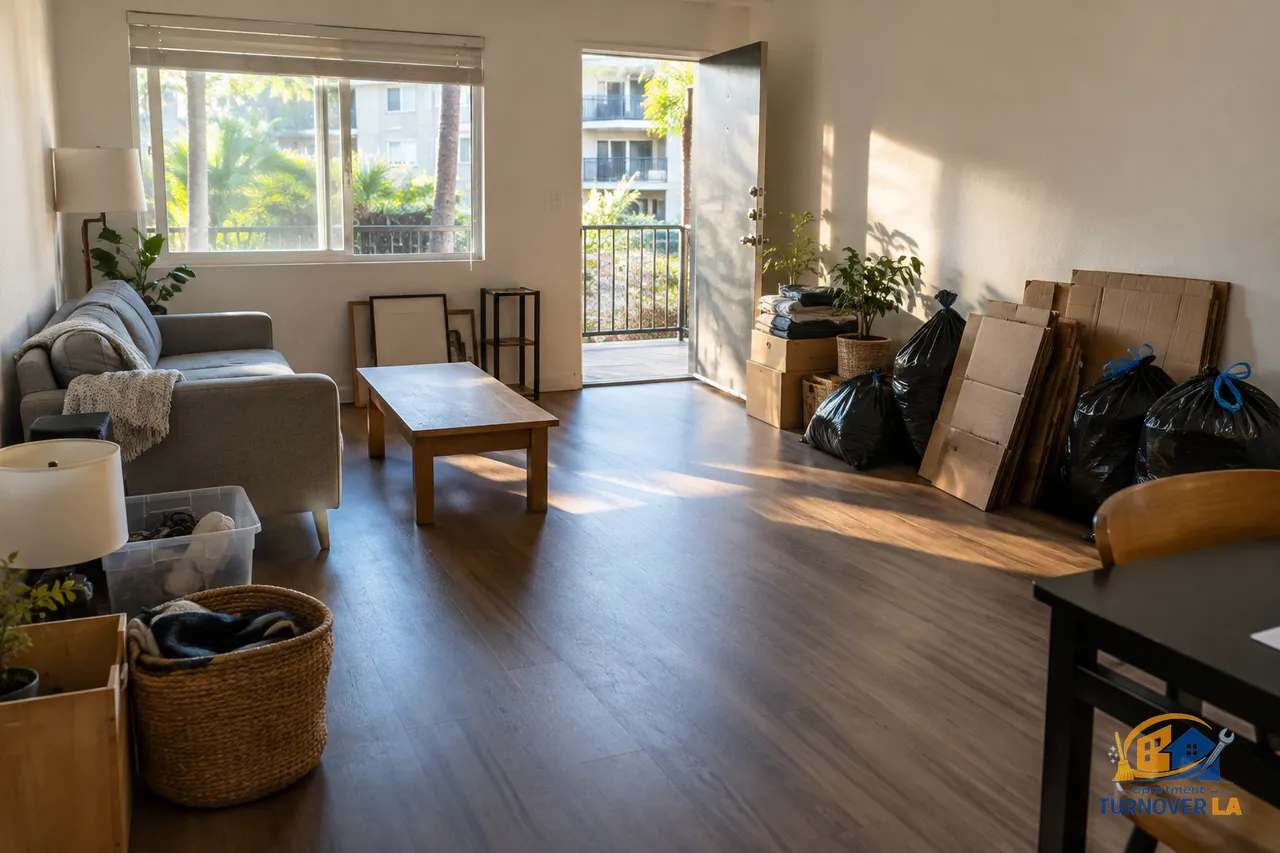
Quick answer: In California, take reusable junk to a donation organization, household hazardous waste to an approved local facility, and ordinary bulky debris to a municipal pickup, transfer station, or licensed hauler. For a vacant LA apartment with a full load, TurnOver LA lists unit cleanout and junk haul at $500, with additional junk loads at $500 per load.
For most apartment turnovers, the right destination depends on what the item is, how quickly the unit must be cleared, and whether someone can safely load and transport it. Do not put a mixed pile at the curb and assume the city will take it. Get instant quote in 30 seconds
Where should you take different types of junk in California?
Start by separating items into reusable goods, recyclable material, ordinary bulky junk, and hazardous waste. Usable furniture, clean clothing, working appliances, and household goods may be accepted by local donation organizations, but call first because acceptance rules change with condition, season, and storage capacity. Cardboard, metal, and some electronics may have separate recycling options. Mattresses, damaged furniture, broken shelving, and bagged nonhazardous debris usually belong in a bulky-item collection, at a transfer station, or with a hauling crew.
Paint, solvents, batteries, fluorescent bulbs, chemicals, and e-waste are different. They should not go into apartment dumpsters or curb piles. Use your city or county's approved household hazardous waste and e-waste program. Keep these materials separate from a unit cleanout so the hauler can identify what requires a specialized disposal route. This simple sorting step prevents rejected pickup piles, contamination fees, and a delay in getting the apartment ready.
When does Los Angeles bulky-item pickup make sense?
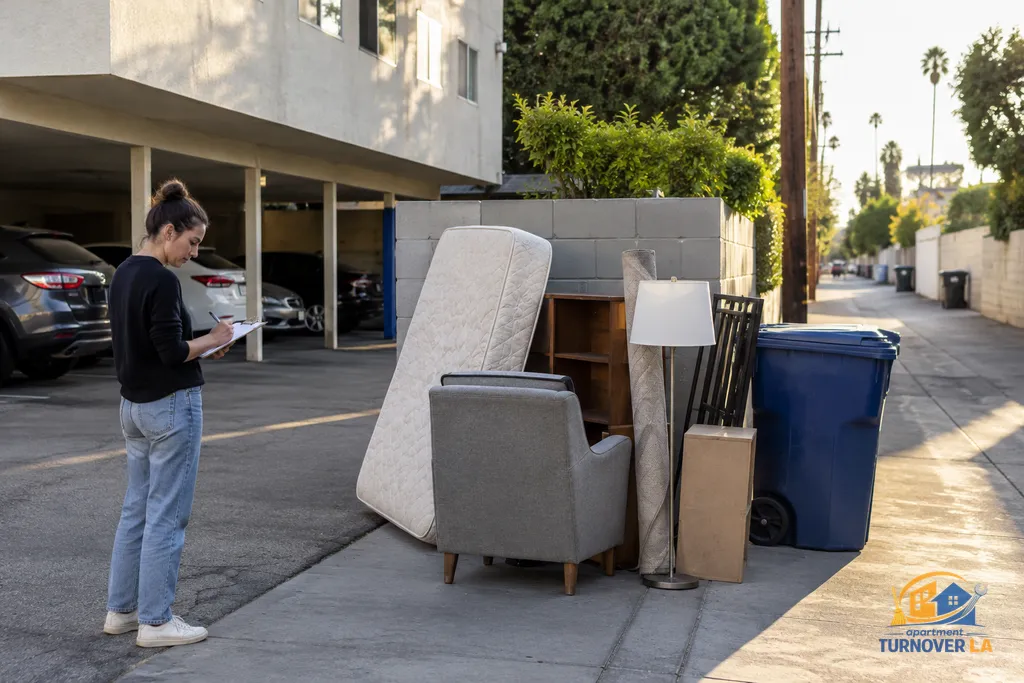
Los Angeles bulky-item pickup works best when you have a few eligible items, enough lead time, and a clear place to stage them according to the sanitation department's instructions. It can be a sensible route for one sofa, a mattress, or a small number of large items after a resident moves out. It is less reliable for a full turnover cleanout with mixed debris, loose trash, damaged fixtures, and a deadline to show the unit.
The operational issue is not just collection day. In dense areas such as Koreatown, alley access, street parking, and shared dumpster capacity can make a curbside plan difficult. If the pile blocks access, includes prohibited materials, or gets added to by neighbors, the property owner may be left with a larger problem. For a vacancy that needs to move quickly, schedule the removal around cleaning, repair access, and listing photos rather than making the entire turnover wait for a municipal collection window.
What can you donate, recycle, or dispose of as trash?
Donate only items another household can reasonably use without repair. A clean, working table may be a donation candidate. A water-damaged particleboard dresser, stained mattress, or broken office chair is generally junk. This distinction matters because donation centers can decline items at the door, leaving you with a loaded vehicle and no disposal plan. Take clear photos and check the receiving organization's current rules before transport.
Recycle material only when it is clean enough for the program that accepts it. Flatten cardboard, separate metal, and keep e-waste apart from ordinary household trash. Appliances may require special handling, particularly if they contain refrigerants. For tenant move-outs, make an inventory and photograph the unit before anything leaves. That record supports the condition file and helps distinguish abandoned property from items you have authority to discard. For the cleaning work that follows removal, see our guide to move-out cleaning in Los Angeles.
Need the unit turned before the next tenant?
We do the move-out clean and send you a photo report you can attach to the deposit itemization.
From $225 · 48-hour turnaround
Get an instant quoteWhat does apartment junk removal cost in Los Angeles?
The broader LA market does not have one dependable published cleanout price. Most haulers quote after seeing load volume, stairs, elevator access, parking distance, heavy items, and disposal categories, so the market price can change from one building to the next. Ask whether the quote includes labor, hauling, disposal, and a second load if the first truck fills before you compare providers.
TurnOver LA lists a unit cleanout and junk haul at $500. If the job requires more capacity, an additional junk load is $500 per load. That is useful for planning a turnover because the base cleanout and each added load are stated separately rather than hidden inside a vague volume estimate. Materials such as paint, parts, or fixtures are not part of a cleanout price. When those are needed for follow-up work, they are priced at inspection and added only with your approval.
| Cleanout question | What to confirm before booking |
|---|---|
| Is it one load or more? | Photos, approximate pile size, and heavy items |
| Can a truck park nearby? | Alley, driveway, loading zone, or street access |
| Are there prohibited items? | Paint, chemicals, batteries, e-waste, refrigerants |
| Does the unit need other work? | Cleaning, patches, lock changes, or repairs |
Get instant quote in 30 seconds
What is the cheapest legal way to get rid of junk?
The cheapest legal option is usually the one that matches the load. For a few approved bulky items, a municipal program can cost less than hiring labor. For reusable items, donation can reduce what needs hauling, assuming the organization accepts them. If you already have a suitable vehicle, know the transfer-station rules, and can safely do the lifting, self-hauling may be economical for a small load.
The apparent bargain disappears when the load needs multiple trips, the building has stairs, or the disposal site rejects part of the material. A vacant-unit cleanout also has a time cost. LA vacancy commonly costs owners about $80 to $200 per day depending on submarket, so delaying cleaning or showings to save a small hauling charge can cost more than the disposal itself. Never use a vacant lot, alley, another building's dumpster, or an unapproved curb pile. Illegal dumping can create cleanup costs and enforcement exposure for the owner.
How should a landlord prepare a unit for a junk haul?
Prepare the unit before the crew arrives so removal does not turn into a slow sorting exercise. The answer is to create a documented, safe path from each room to the truck, then reserve any items that cannot be removed yet. This protects the turnover schedule and makes the post-cleanout inspection more useful.
- Photograph every room, closet, balcony, and storage area before moving property.
- Separate hazardous materials, e-waste, sharps, paint, and chemicals from ordinary debris.
- Set aside keys, remotes, mail, financial papers, and building access devices.
- Identify any property that may require notice or retention before disposal.
- Clear parking, elevator reservations, loading access, and any building move-out rules.
- Walk the unit after removal and note wall damage, missing hardware, leaks, and cleaning needs.
California deposit and move-out rules deserve a separate review. Use the California DCA Landlord-Tenant Guide and California Civil Code §1950.5 when evaluating deductions, documentation, and deposit accounting. For the practical turnover side, our guide on what a landlord can charge for turnover work explains the difference between damage and normal use.
Why should cleanout happen before cleaning and repairs?
Cleanout comes first because debris hides the actual condition of the apartment. You cannot accurately inspect flooring, cabinets, wall damage, appliances, or pest issues while boxes and discarded furniture fill the rooms. Removing everything also keeps a cleaning crew from working around trash and prevents a painter or handyman from moving belongings that should have been documented or disposed of.
Once the unit is empty, schedule a full condition walk. A unit cleanout and junk haul service can be followed by make-ready cleaning, patching, paint touch-up, and lock work in an order that limits repeat visits. If the inspection reveals minor wall damage, review our guidance on drywall patching in LA rental apartments before authorizing repairs. A clean, empty unit is also the right time to verify smoke detectors, drains, outlets, and door hardware. Get instant quote in 30 seconds