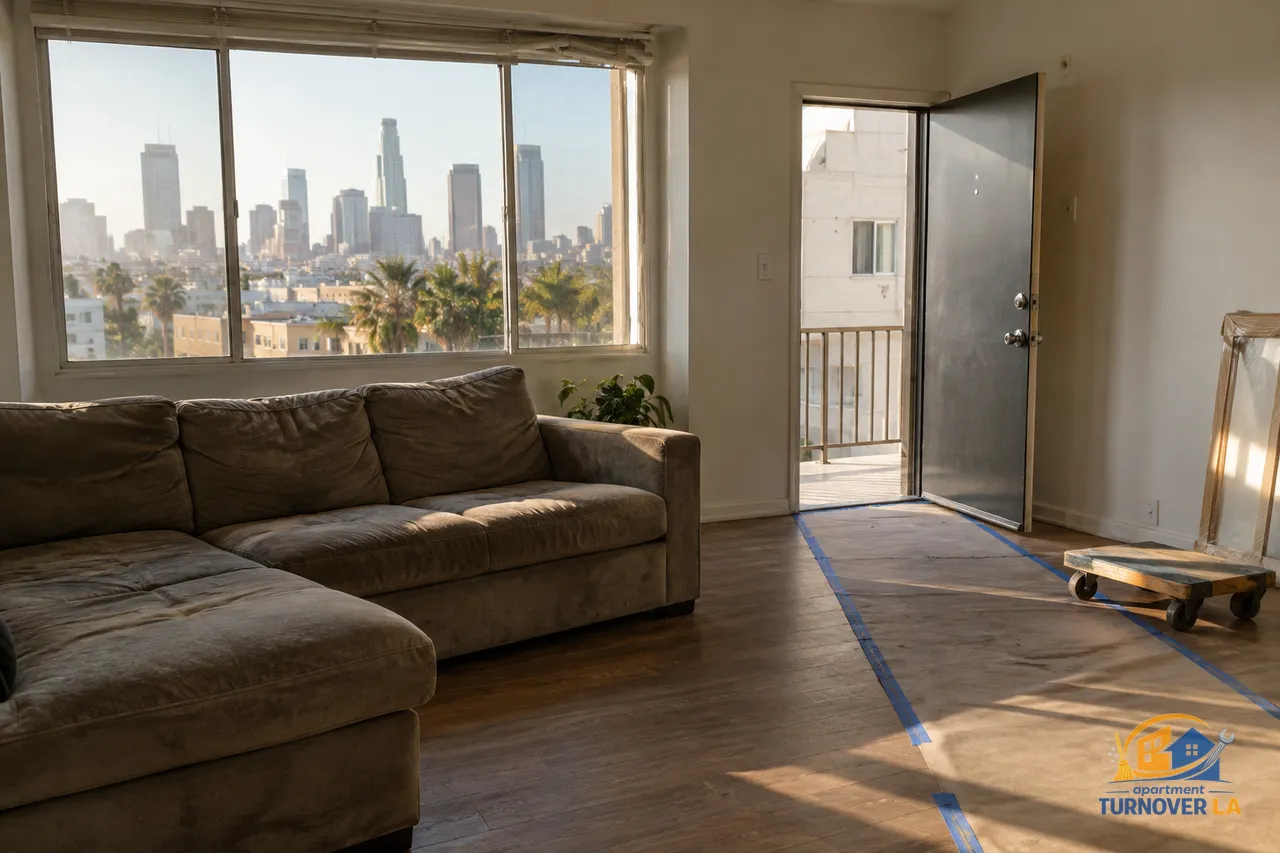
Quick answer: Standard couch removal across Los Angeles commonly costs about $100 to $200, but access, stairs, and extra items can raise the price. TurnOver LA prices a unit cleanout or junk haul at $500, with a flat 48-hour turnaround. Eligible City of LA residents may also be able to schedule no-cost bulky-item service, though apartment access and pickup rules matter.
Couch removal in Los Angeles comes down to the couch's condition, your building access, and how quickly the unit must be cleared. A free City pickup or a donation may work for a clean, usable sofa, while a vacant rental with abandoned furniture usually needs a scheduled haul-away that protects the next showing date.
Get instant quote in 30 seconds
What does couch removal cost in Los Angeles?
For a standard sofa, the general LA market commonly runs $100 to $200 for professional removal. That is a market benchmark, not a TurnOver LA rate, and it often assumes curbside access or one uncomplicated item. A sectional, sleeper sofa, walk-up building, parking restrictions, or a room full of abandoned belongings can change the scope quickly.
For a rental that needs the couch and other leftover contents cleared, TurnOver LA charges $500 for a unit cleanout or junk haul. An additional junk load is $500 / load when the volume exceeds the first load. The quote covers crew labor and their supplies. Unlike a single-item curbside quote, the crew can assess the whole vacant unit and set the removal sequence around cleaning, repairs, and photography.
For owners managing units in Downtown LA, loading access can be the real scheduling issue. Confirm elevator reservations, freight rules, alley access, and curb restrictions before setting a removal window.
Can LA residents use free bulky-item pickup?
Often, yes. The City of Los Angeles offers bulky-item service and free drop-off options for qualifying residents, including furniture such as couches. The practical limitation is that this is a resident waste-service option, not a guaranteed turnover solution for every apartment building. A renter in a multifamily property may need to go through the property owner, onsite manager, or the building's private waste provider.
Schedule the pickup before placing anything out, follow the location instructions, and do not assume an alley, lobby, or parking garage is an acceptable staging area. A couch left in a common area can become a fire, access, and neighbor complaint issue before the pickup date arrives. Donation outlets may also decline upholstered furniture with tears, odors, pet hair, stains, smoke exposure, or structural damage.
Free pickup makes sense when timing is flexible. It is less useful when an incoming tenant, painter, cleaner, or listing photographer is scheduled within the next two days.
Should you donate, sell, or haul the couch away?
Choose the disposal route based on condition and deadline, not just the lowest apparent cost. A clean couch in current, usable condition may be worth listing for free or offering to a donation organization. Take clear photos, list dimensions, disclose pet or smoke exposure, and give a short pickup deadline. Free listings regularly attract no-shows, so do not let a promised pickup block a turnover schedule indefinitely.
Donation pickup is best for furniture that is genuinely ready for resale. It is not a disposal service. If the sofa is sagging, stained, infested, damaged, or has been left behind with bags and debris, plan for haul-away instead. This distinction matters in rental units because a failed donation pickup can leave the crew waiting while the vacancy clock keeps running.
For context, LA vacancy loss commonly falls around $80 to $200 per day depending on the submarket. Saving on a couch pickup can cost more than it saves if it delays cleaning, paint touch-up, or the first showing.
Get instant quote in 30 seconds
How do you remove a couch from an apartment safely?
Start with a route plan. Most damage during couch removal happens at door frames, elevator corners, hallway turns, and freshly painted walls, not at the curb. Use this five-step sequence:
- Measure the couch, front door, elevator, stairwell turns, and hallway width.
- Reserve the elevator or loading area if the building requires it.
- Remove loose cushions, legs, and detachable sections when the manufacturer design allows it.
- Protect corners and floors, then photograph existing wall and door-frame damage before moving the couch.
- Clear the couch before cleaners and painters enter, then inspect the floor, walls, and baseboards it covered.
Do not drag a sofa across laminate, vinyl plank, or finished hardwood. It can leave scratches that were hidden until the couch moved. In a turnover, that final inspection is also the moment to identify wall scuffs, pest evidence, stains, or missing outlets that need separate attention.
Need the unit turned before the next tenant?
We do the move-out clean and send you a photo report you can attach to the deposit itemization.
From $225 · 48-hour turnaround
Get an instant quoteWhat should landlords do with a couch a tenant left behind?
First, document it. Photograph the couch in place, note its condition, and preserve the move-out inspection record. Then separate the operational question, which is how to get the unit rentable, from the legal question, which is whether and how any cost can be deducted from a security deposit. California deposit rules are specific, and an abandoned couch does not automatically make every cleanout cost deductible.
Review California Civil Code §1950.5 and the California DCA Landlord-Tenant Guide before finalizing deductions. Keep invoices, condition photos, inspection notes, and communications with the former tenant. For the deposit timeline and itemization process, see our guide to the California 21-day deposit return.
Operationally, do not wait for a deposit decision to start necessary turnover work. Remove the furniture, document the work, and get the unit back on schedule. Legal notice requirements for personal property can be separate from deposit accounting, so use counsel or a qualified manager when the facts are unclear.
Can couch removal fit inside a 48-hour apartment turnover?
Yes, when the job is scoped before the crew arrives and building access is ready. Couch removal should happen first, followed by an inspection of what was behind and beneath it. That order prevents cleaners from working around furniture, helps painters see wall damage, and gives the owner a clean record of conditions after the haul-away.
TurnOver LA uses a flat 48-hour turnaround on every job, with no rush or same-day upcharge. After the cleanout service, many vacant units move into a Make Ready service, which includes a base deep clean and 12-point photo report. The report is useful when the couch concealed floor damage or when an owner needs a clear handoff record for the next vendor.
A couch removal is not just a disposal task in a rental. It is the first gate in the work sequence. Clearing it early makes the remaining scope visible and avoids paying multiple vendors to work around the same obstruction.
When is a full cleanout the practical choice?
A full cleanout is the practical choice when the couch is only one part of the problem. Examples include a sectional plus boxes, a mattress, kitchen debris, patio items, broken shelving, or trash left in closets. In that situation, getting quotes for one couch, then arranging separate pickups for the rest, can create more delay than value.
TurnOver LA charges $500 for a unit cleanout or junk haul. If the job needs more capacity, an additional junk load is $500 / load. Those are cleanout line items, not a per-couch promise. An onsite inspection confirms access, volume, and whether paint, parts, fixtures, or other materials are needed. Materials are added only with owner approval.
If the unit needs more than removal, work from a documented scope. Our apartment turnover checklist helps owners sequence cleaning, repairs, locks, photos, and listing preparation without overlooking the work that becomes visible after the furniture is gone.
A couch should not hold up the next showing
The cheapest removal path is the one that works within the unit's condition and leasing timeline. Use City bulky-item service or donation when the sofa is acceptable and you have time. Use a scheduled cleanout when access is difficult, the couch has no donation value, or the unit has other abandoned contents that keep the turnover from moving forward.
Document the condition before removal, confirm building access, and inspect the newly exposed surfaces immediately afterward. That sequence gives you cleaner deposit records and a clearer repair scope. For a vacant LA unit, the goal is not simply to make the couch disappear. The goal is to make the apartment ready for cleaning, repairs, photos, and the next prospect.