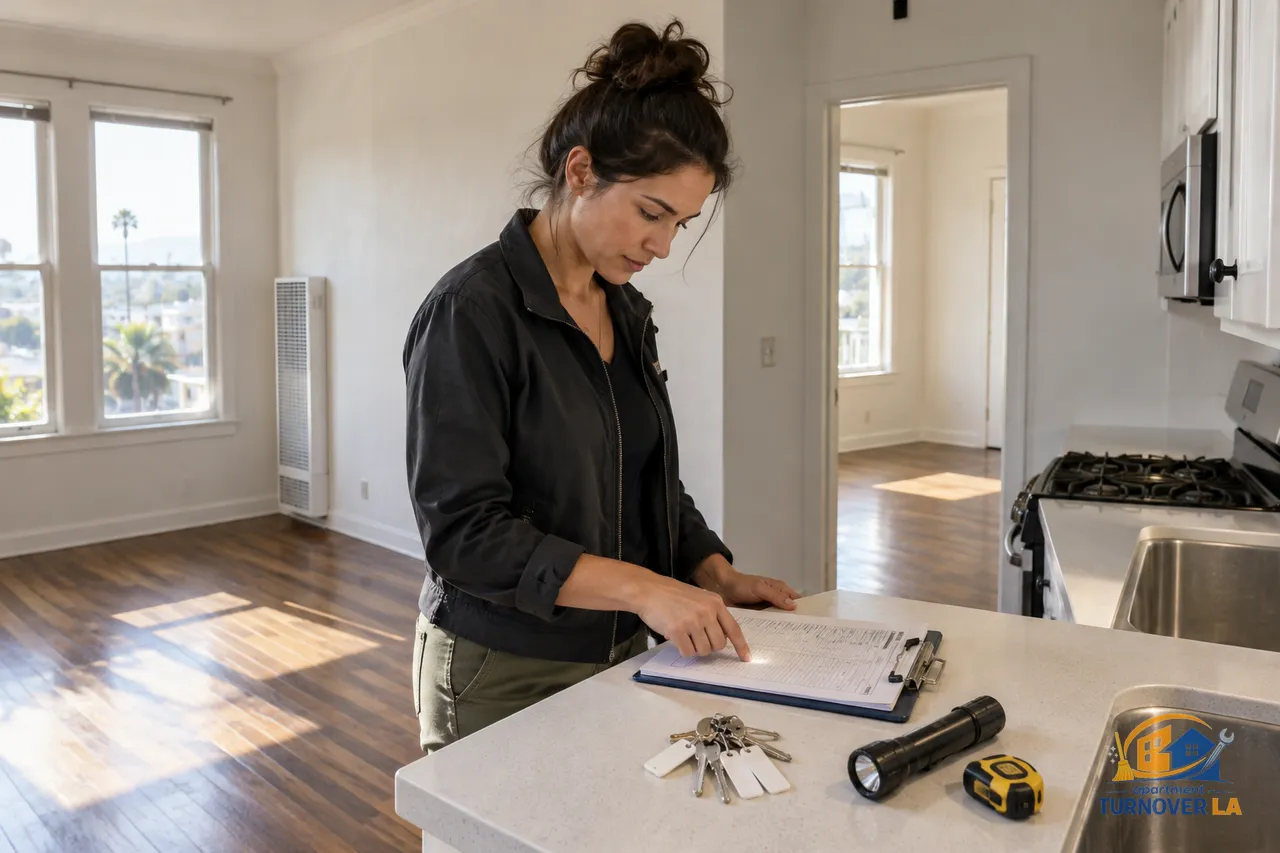
Quick answer: A free apartment make ready checklist should track 12 core areas, from keys and locks to appliances, cleaning, repairs, photos, and final release. For an LA turnover, assign each item to a person and deadline, then complete the final walk-through before marketing the unit. TurnOver LA can complete a Make Ready with a deep clean and 12-point photo report within 48 hours.
An apartment make ready checklist is not just a cleaner's punch list. It is the handoff document that tells the owner, manager, vendor, and incoming resident whether the unit is actually rent ready. Use the template below after possession is returned, then keep the completed copy with your turnover file.
Get instant quote in 30 seconds
What should an apartment make ready checklist include?
Start with the conditions that can delay a showing or create a security problem: possession, utilities, water, electrical safety, and locks. Then move room by room. A useful checklist must show who owns the work, whether it is complete, and what proof was collected. A box marked complete without a photo, invoice, or manager sign-off often creates arguments later.
Here is a copyable free template for a standard vacant unit:
- Confirm possession, collect all keys, remotes, parking tags, and mailbox keys.
- Record move-out condition with dated photos before work begins.
- Check power, water, gas, smoke alarms, carbon monoxide alarms, and GFCI outlets.
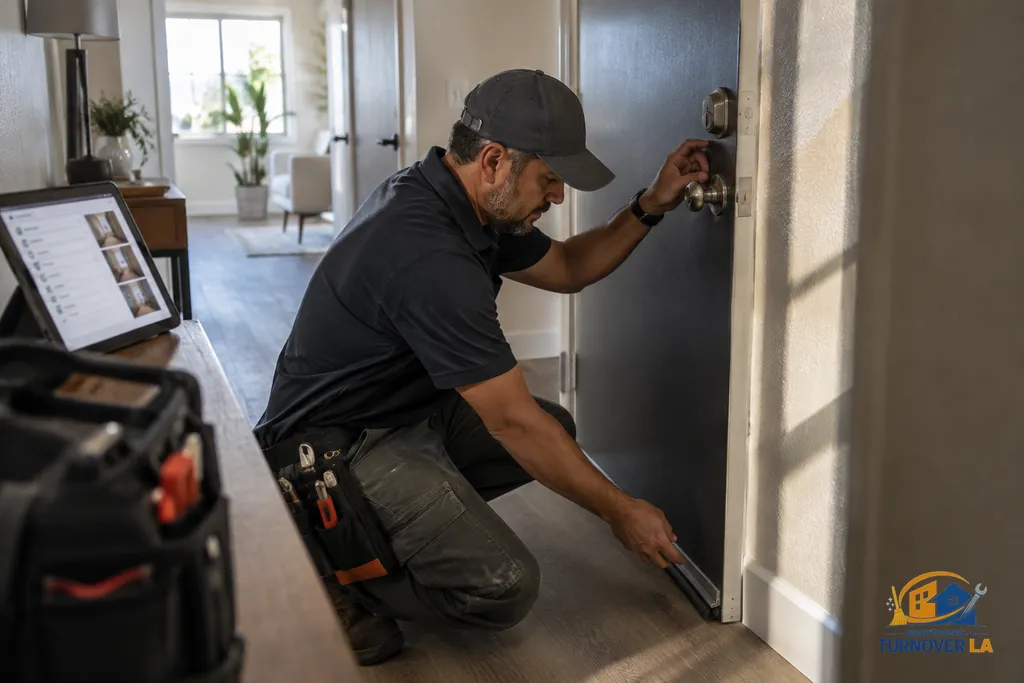
- Inspect doors, locks, windows, screens, blinds, and door sweeps.
- Test appliances, plumbing fixtures, drains, exhaust fans, and HVAC operation.
- Assign drywall, paint, hardware, and safety repairs.
- Complete cleaning from ceilings and cabinets down to floors.
- Reinspect every room, photograph final condition, and release the unit for listing.
For a fuller sequence, use TurnOver LA's apartment turnover checklist. It separates initial inspection tasks from final rent-ready verification, which prevents a crew from cleaning a room before a repair creates fresh dust.
Why should you inspect before cleaning?
Inspect first because cleaning can erase evidence of damage, conceal a leak, or make a worn item look better than it is for one day. In practice, take wide photos of each room, then close photos of stains, holes, missing fixtures, cracked tiles, and appliance serial labels before the crew starts. Note the date, unit number, and who attended the inspection.
This order also helps with security-deposit decisions. California's rules distinguish tenant-caused damage from ordinary use, and owners need a defensible record when deductions are considered. Review California Civil Code §1950.5 and compare the unit condition against this guide to normal wear and tear in California. A scuffed wall can be normal use. A fist-sized hole, unauthorized paint, or missing smoke alarm is a different conversation.
One operational detail many templates omit: photograph the water meter or confirm the water is off at fixtures before cleaning. A slow toilet leak found after a deep clean can lose a full day and damage the work already completed.
How do you assign make ready work without duplicating vendors?
Create one line per issue and use four fields: task, owner, due date, and proof of completion. “Bathroom” is not a task. “Replace cracked GFCI cover in hall bath, maintenance, Tuesday noon, photo plus test” is a task. The same standard applies to cleaning, paint, and lock work.
A practical workflow is to group items by trade after the first inspection. Repairs happen before final cleaning. Paint and drywall dust must be cleared before floors and fixtures receive their final pass. Locks should be rekeyed after the last vendor has returned keys, not early in the sequence when multiple people still need access. For units with several small failures, a handyman punch-list visit keeps one responsible party moving through the open items.
Use a separate “blocked” status for items that require owner approval or a part. It is better than marking the item incomplete with no explanation. TurnOver LA's materials policy is straightforward: labor and crew supplies are covered in the quote, while paint, parts, and fixtures are identified at inspection and added only with approval.
What do you check in every room before a new tenant moves in?
The answer is to test function, not just appearance. A white wall and clean counter do not prove that a fan, drain, outlet, window latch, or range burner works. Walk the unit in a consistent order so the final inspection is repeatable across your portfolio.
Use this room-by-room check:
| Area | Final make ready checks |
|---|---|
| Entry and living room | Keys work, door closes, locks operate, walls and floors are clean, outlets and lights function |
| Kitchen | Refrigerator cools, range and hood work, cabinets latch, sink drains, no grease remains |
| Bathroom | Toilet flushes, tub drains, fan runs, caulk is intact, mirrors and fixtures are clean |
| Bedroom | Windows lock, closet doors track, blinds work, smoke alarm is tested, flooring is clear |
| Utility areas | HVAC filter is checked, water heater area is clear, laundry connections show no leaks |
For cleaning depth, do not rely on a quick visual pass. Grease behind the range and residue inside cabinet shelves are common showing killers. The move-out cleaning guide for Los Angeles explains what should be included before calling a unit clean.
Need the unit turned before the next tenant?
We do the move-out clean and send you a photo report you can attach to the deposit itemization.
From $225 · 48-hour turnaround
Get an instant quoteWhen should locks, keys, and access codes be changed?
Change access after the final contractor exits and before the unit is shown or released to the new resident. First, reconcile every physical key, gate remote, mailbox key, fob, and garage clicker collected at move-out. Then verify that old access no longer works. A checklist line that says “rekeyed” is incomplete unless someone actually tests the new key at each lock.
This matters in buildings where a former tenant may have copied a key, or where vendors have borrowed keys during a busy turn. Include a space on the checklist for key count issued, who received them, and the date. For a straightforward unit, TurnOver LA's lock rekey service can be scheduled as part of the turnover workflow.
If a smart lock is installed, document the account owner, master code custody, auto-lock setting, and removal of prior resident access. Do not put the new resident's code in a shared vendor text thread or a generic work-order note. That small handoff control is often absent from free templates, but it closes a real security gap.
Get instant quote in 30 seconds
What are you supposed to do when maintenance is in an apartment?
For an occupied apartment, residents should receive appropriate notice, secure pets, clear access to the work area, and report any existing damage before work starts. Managers should identify the technician, define the repair scope, document entry and exit, and make sure the resident knows whether a return visit is needed. Emergency conditions can require faster action, but routine work should not be handled like an emergency.
For a vacant make ready, use the same discipline with fewer occupant concerns. Log who entered, when they entered, what key or code they used, and what work they performed. This protects the unit and makes it easier to find out why a lock was left unlocked or why an appliance was moved. The California DCA Landlord-Tenant Guide is a useful state reference for landlord and tenant responsibilities, but local lease terms and city rules can add requirements.
In Los Angeles RSO properties, keep the turnover file separate from rent and tenancy records. The LAHD Rent Stabilization Ordinance governs more than the condition of a vacant unit, so do not treat a make ready checklist as a substitute for compliance review.
How do you make the final walk-through useful?
The final walk-through should answer one question: could a prospect tour this unit today without the manager apologizing for something? Do not conduct it from a work-order dashboard alone. Enter the unit, operate the important items, look from the doorway and from inside closets, and compare the final condition with the initial photos.
Use a two-person release when possible. One person walks the unit and calls out items. The other marks the checklist, takes final photos, and confirms that no vendor materials, keys, or trash remain. This catches small but costly misses, such as a painted wall plate not reinstalled, an unlocked window, a missing drain stopper, or an uncleaned oven drawer.
Then save the completed checklist, pre-work photos, final photos, invoices, and key log under the same unit and turnover date. TurnOver LA's Make Ready service combines the deep clean with a 12-point photo report, which gives managers a documented condition record instead of a verbal “all set.”
How can this checklist reduce vacancy time?
A checklist reduces vacancy time by stopping work from bouncing between cleaners, painters, maintenance, and the manager. In LA, each vacant day can cost roughly $80 to $200 depending on the submarket and unit rent. The bigger loss is often not the repair itself, but the day lost because a task was discovered after the showing was scheduled.
Set target dates at the first inspection: repair approval, repair completion, cleaning completion, rekey, final release, and listing launch. If an item cannot be completed, decide early whether to replace it, repair it, disclose it, or delay the listing. Silence is not a plan. A vacant unit with a known issue should have an owner, deadline, and next action recorded by the end of the inspection day.
Use this template as the control sheet, not as paperwork completed after the fact. A clean, secure, photographed unit is easier to market and easier to defend when questions arise after move-in.