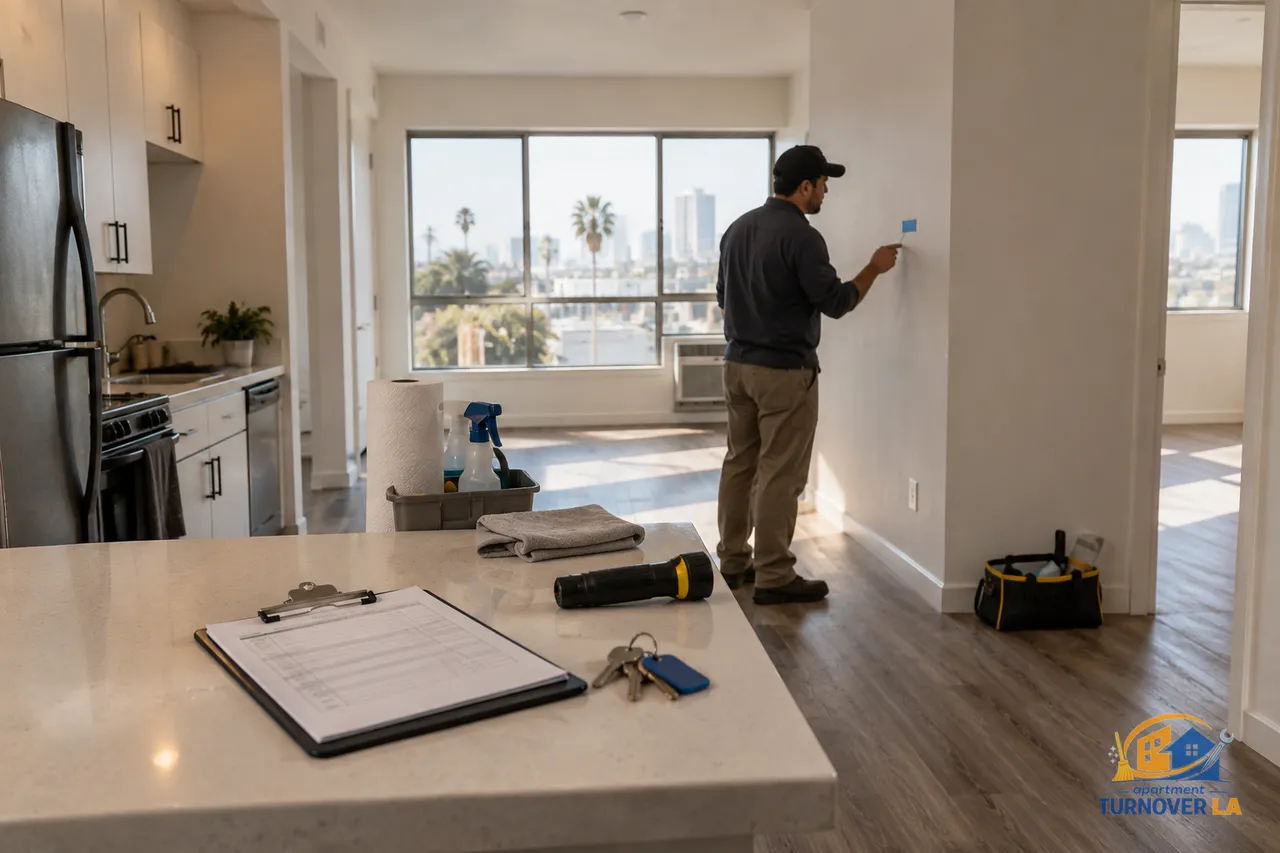
Quick answer: An apartment make ready maintenance checklist should move in order from condition inspection and repair triage to cleaning, security reset, final function testing and documentation. For a vacant studio through a 3BR or larger unit, TurnOver LA's Make Ready package is $225 to $425 and includes a deep clean plus a 12-point photo report, with a 48-hour turnaround.
A make ready is the work that returns a vacant apartment to a safe, clean, functional and showable condition for the next resident. The checklist matters because a missed leak, weak lock or unfinished repair can delay leasing after the cleaners have already left. Get instant quote in 30 seconds
What does make ready mean in apartments?
Make ready means preparing an apartment between residents, not simply sending in a cleaner. The work starts with the actual move-out condition and ends when a manager can confidently show, lease and hand over the unit. In practice, that includes documenting damage, completing approved repairs, removing tenant belongings, cleaning every room, checking basic safety items and resetting access.
Keep the scope separate from the security-deposit accounting process. A wall scuff may be normal wear, while a large unauthorized hole may require a repair review. California rules distinguish ordinary wear from damage, and California Civil Code §1950.5 governs many deposit deductions and the itemized statement timeline. Our guide to normal wear and tear in California helps with that decision. A make ready checklist records the unit's current condition, regardless of whether a cost is eventually charged back.
What should the first walk-through cover?
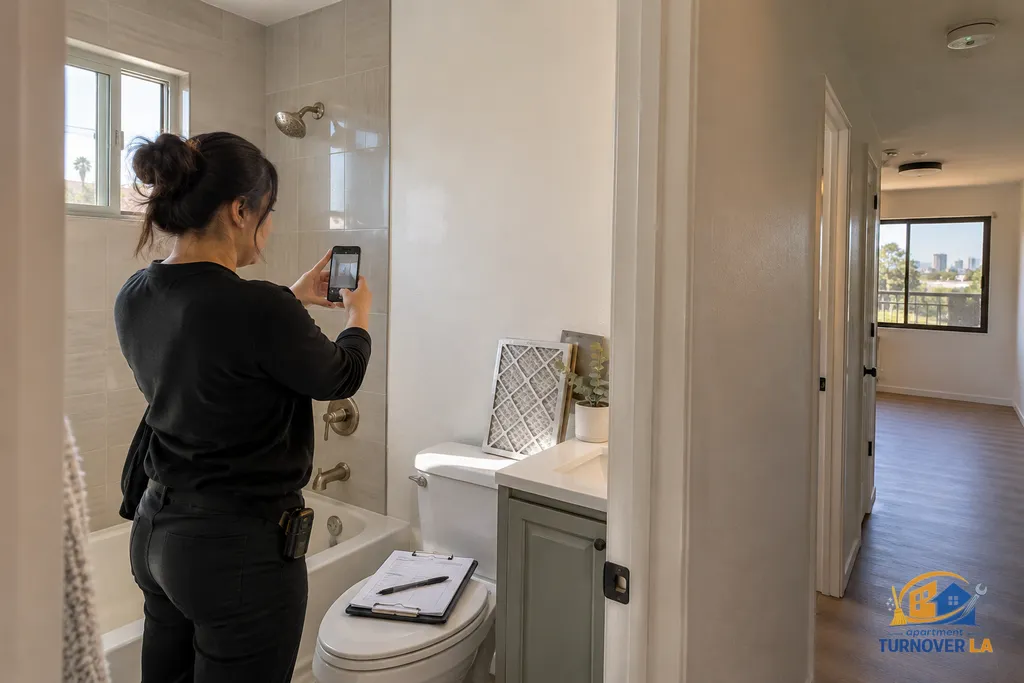
The first walk-through should identify work in the order that controls every later trade. Start at the entry, photograph each room before touching it, then list items as safety, water, access, repair, cleaning or disposal. Test lights, switches, outlets that are visibly accessible, faucets, toilets, appliances provided with the unit, windows, doors, smoke alarms and carbon monoxide alarms where installed. Note active leaks and electrical concerns for immediate attention.
Do this inspection before approving paint or a deep clean. A dishwasher leak discovered after floor cleaning creates duplicate work. A drywall patch completed after cleaning leaves dust on finished surfaces. Photograph meter or utility concerns if relevant, and record serial numbers on appliances that need service. For buildings subject to local rules, the unit work plan does not change the rent rules. LA owners can review the LAHD Rent Stabilization Ordinance separately from their turnover scope.
Which maintenance items belong on the punch list?
Put every repair on a punch list with a room location, a clear condition note and a completion check. High-priority items include leaking supply lines, running toilets, non-latching doors, damaged locks, failed lights, loose cabinet hardware, damaged blinds, trip hazards and appliance problems. Then handle cosmetic items such as wall holes, scuffs, loose caulk and chipped shelving. The goal is not to replace everything that shows age. It is to correct defects that affect safety, function or reasonable presentation.
Use the repair sequence to prevent rework: plumbing and electrical first, drywall next, paint after patches cure, then cleaning. A handyman punch list is useful when a unit has several small, unrelated fixes. For wall damage that needs a more defined scope, review drywall patching in rental apartments. The operational detail many checklists miss is cabinet and shelf interiors: repair dust collects there, so they need a second wipe after patching and painting are complete.
What should the apartment cleaning checklist include?
Cleaning should be the finishing stage, not the opening move. In the kitchen, clean the refrigerator, oven, range hood, cabinet interiors, drawers, sink, faucet, counters, backsplash and floors. In bathrooms, clean and disinfect the toilet, tub or shower, vanity, mirror, exhaust cover, fixtures, grout lines and floor edges. In living areas and bedrooms, remove cobwebs, wipe baseboards and ledges, clean closets, spot walls after repairs, clean floors and remove remaining debris.
The 20/10 rule and 80/20 cleaning ideas can help a resident maintain a home, but they are not a turnover standard. A vacant apartment needs a room-by-room completion check because future residents notice overlooked cabinet crumbs, hair behind a toilet, grease on a hood filter and paint dust on a sill. TurnOver LA's Make Ready service combines the base deep clean with final documentation. For more detail on the cleaning scope, see our Los Angeles move-out cleaning guide.
Need the unit turned before the next tenant?
We do the move-out clean and send you a photo report you can attach to the deposit itemization.
From $225 · 48-hour turnaround
Get an instant quoteHow do you reset access and safety before showing?
Reset access after vendors have completed work, not at the beginning of the turnover. Confirm that the front door closes and latches, the deadbolt operates smoothly, window locks work and any keys, fobs, garage remotes or mailbox keys are accounted for. Rekeying too early can create access problems for painters, cleaners and maintenance staff. Keep a simple key log that shows who held access and when keys were returned.
Then do a safety pass. Test smoke and carbon monoxide alarms as applicable, confirm required covers are in place, check that egress paths are unobstructed, look for tripping hazards and verify bathroom and kitchen fixtures operate without active leaks. A full apartment rekey for up to 2 locks is $150 through TurnOver LA. If a property needs only the first lock rekeyed, the catalog rate is $100. Both are separate, defined scopes, not assumptions inside a cleaning job. Use the lock and rekey service when access control is part of the turnover.
How much should an apartment make ready cost in LA?
Across LA, basic vacant-unit make ready work commonly runs about $225 to $500 before repair materials, junk removal or larger corrective work, depending on unit size and condition. With TurnOver LA, Make Ready is a flat $225 for a studio, $255 for a 1 Bedroom, $335 for a 2 Bedroom and $425 for a 3BR or larger. Each base package includes a deep clean and 12-point photo report with a 48-hour turnaround.
Labor and the crew's own supplies are covered in the quote. Materials the job needs, including paint, parts or fixtures, are priced at the on-site inspection and added to the final invoice only with owner approval. Keep those material decisions visible instead of burying them in a general turnover allowance.
| Scope decision | General LA market context | TurnOver LA catalog rate |
|---|---|---|
| Base Make Ready, studio to 3BR or larger | About $225 to $500 before repairs or materials | $225, $255, $335 or $425 by unit size |
| Paint touch-up | Varies by wall condition and matching needs | $200 |
| Small drywall patch and texture | Varies by patch size and texture match | $150 per patch |
Get instant quote in 30 seconds
What should the final photo report prove?
A final report should prove completion, not merely show attractive angles. Photograph the entry and lock condition, kitchen, refrigerator and range, each bathroom, major living spaces, bedroom closets, flooring condition and any completed repair that a manager needs to verify. Take wide shots for overall readiness and close shots for repaired damage, clean appliances, new hardware or conditions that may matter during a later dispute.
TurnOver LA includes a 12-point photo report with its Make Ready package. That report is most useful when the original inspection notes use the same room names as the final photos. For example, label a repair as “hall bath, right wall by vanity,” then photograph that exact location after completion. This creates a clean handoff between the person approving work, the leasing team and the next resident. It also reduces the common problem of asking whether a visible issue was pre-existing, repaired or simply missed.
How do you schedule a make ready without losing days?
Schedule the turnover backward from the target showing date. First, set the move-out inspection and access plan. Second, approve repairs and materials quickly. Third, place trades in sequence: repair, patch, paint, cleaning, rekey and final verification. Fourth, reserve a short final walk-through before leasing photographs or showings. This order avoids the two most common delays, cleaning a unit before dusty work is finished and discovering access problems after a new resident is ready to move in.
TurnOver LA uses a flat 48-hour turnaround on every job, with no rush or same-day upcharge. That window works best when the manager provides unit access, parking instructions, known deficiencies and approval authority at booking. For a broader operating sequence, use our apartment turnover checklist. Vacancy can cost roughly $80 to $200 per day depending on the LA submarket, so a clear approval path is often more valuable than trying to compress the actual work.
What is the practical final sign-off sequence?
The practical final sign-off is a five-step check: 1. Compare completed work against the original room list. 2. Test doors, locks, lights, water and included appliances. 3. Walk the unit at normal eye level and then inspect corners, cabinets and floors closely. 4. Confirm all vendor debris, old parts and keys are removed or logged. 5. Review final photos before releasing the unit to leasing.
Do not treat a clean smell as proof of completion. Open drawers, look under sinks, run the disposal if present, flush toilets and check that fresh paint did not cover a hardware problem. Once the unit passes, save the inspection notes and photos with the turnover file. That record makes the next move-out comparison simpler and gives the leasing team a clear representation of what was delivered. Get instant quote in 30 seconds