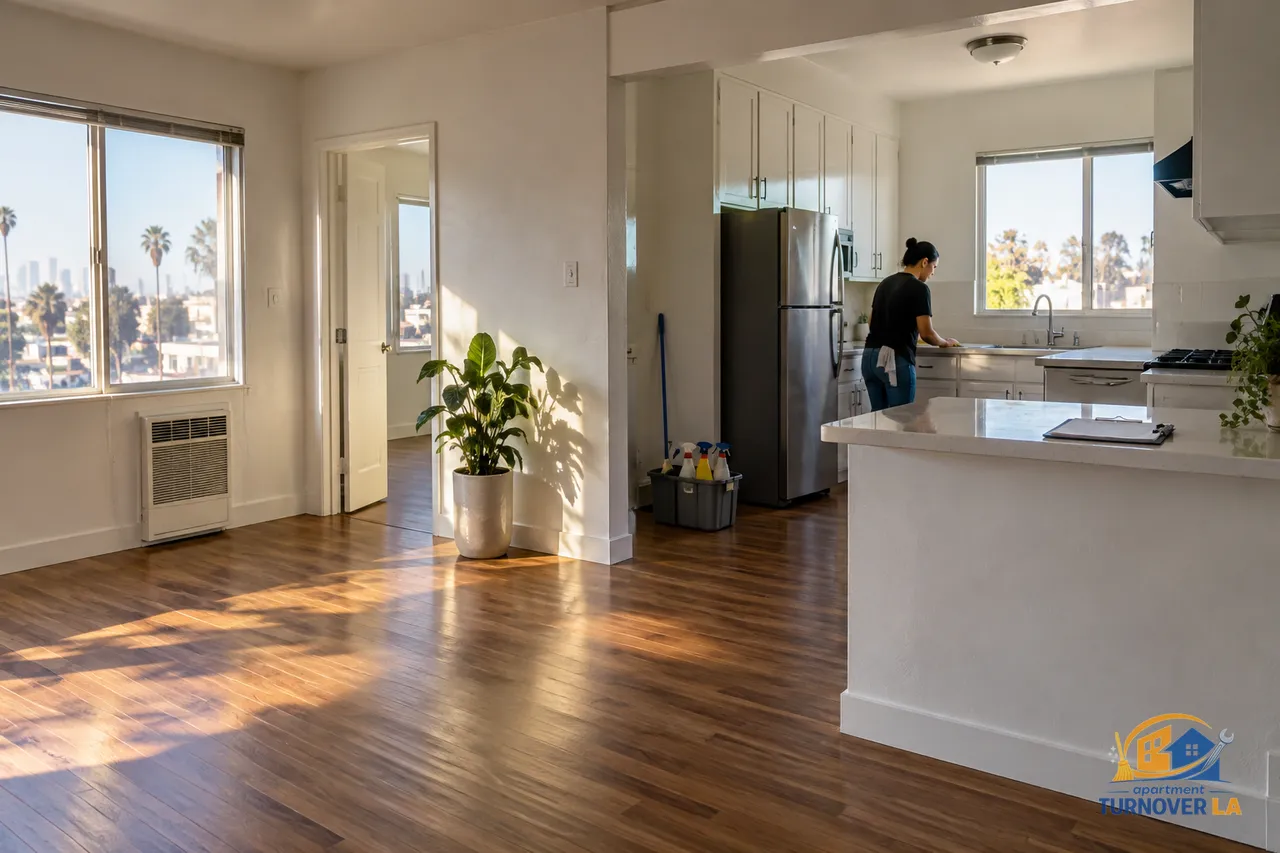
Quick answer: Apartment turnover in Los Angeles usually takes 3 to 10 days from possession to rent-ready status. A clean unit with light touch-ups can be prepared in 48 hours, while junk removal, drywall repairs, paint drying, material lead times, or delayed approvals can push the schedule past a week. The fastest turns are scoped immediately and sequenced before crews arrive.
For most rentals, the realistic answer is not one fixed number. A studio with no damage may turn in two days, while a two-bedroom with a full cleanout and repair list needs more calendar room. Start the turnover clock when the prior resident has surrendered possession and keys, not when they first say they are moving.
Get instant quote in 30 seconds
How long does an apartment turnover actually take?
Plan on 3 to 10 days for a normal apartment turnover, then shorten or extend that window based on the condition found at inspection. The three-day end is possible when the unit is vacant, access is clear, the scope is limited to cleaning, touch-up work, and locks, and no parts need to be ordered. The longer end is common when a manager discovers hidden damage after furniture is removed or when several trades must work in sequence.
The online operational ranges are broad for good reason. Some managers report a three-day minimum and roughly seven days on average, while other sources describe 7 to 10 days for a standard turn. Those figures often blur the actual work period with scheduling and leasing delays. Keep those separate. A unit can be physically rent-ready in 48 hours and still sit vacant because photos, pricing, approvals, or applicant processing are not complete.
At TurnOver LA, every job is scheduled with a 48-hour turnaround, with no rush or same-day upcharge. That is a service turnaround, not a promise that an apartment needing unapproved materials or extensive repairs will be fully leased in two days.
What does turnover mean in renting?
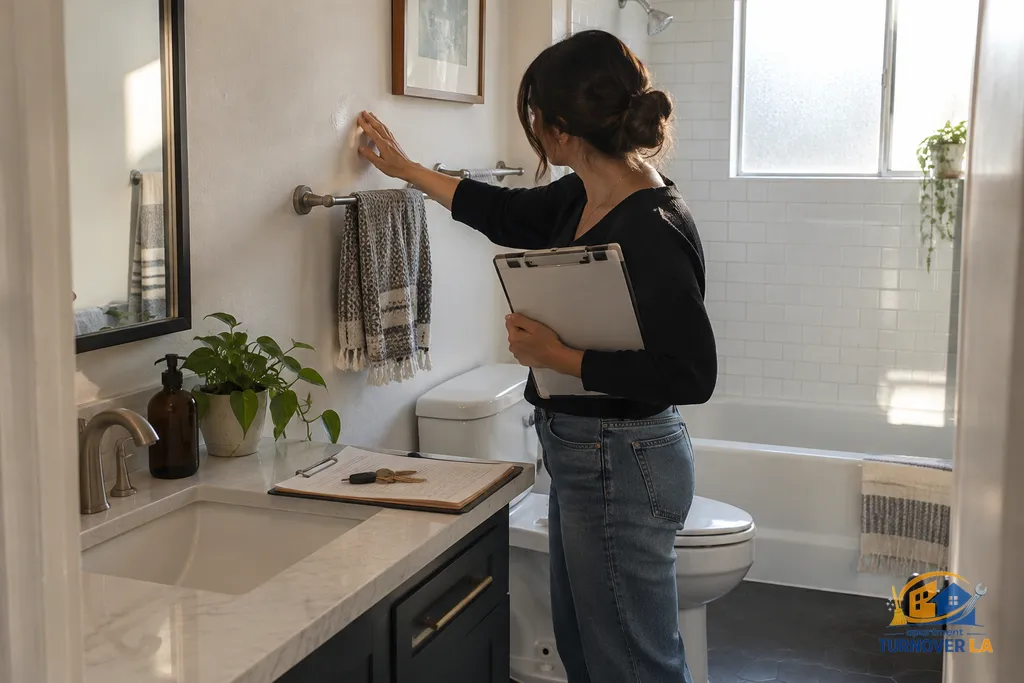
Turnover is the period between one resident leaving and the next resident taking possession. In operations, it includes the handoff, condition documentation, cleaning, repairs, security work, final quality control, and listing readiness. It is more than a move-out clean, and it should not be treated as one.
A workable turnover begins with possession confirmation, keys, parking or gate access, and a condition walk. The unit is then photographed before work, not after. That simple sequencing matters because it separates pre-existing condition evidence from completed work and lets the manager decide what is chargeable, what is normal wear, and what needs owner approval. California deposit accounting has separate legal requirements under California Civil Code §1950.5. For the operational side, use a repeatable scope and save the records in the unit file.
A base Make Ready package combines deep cleaning with a 12-point photo report. That gives the next decision maker a documented starting point instead of a verbal update that the apartment "looks good."
What usually slows an LA apartment turnover down?
The most common delays are not the cleaning itself. They are late access, undisclosed furniture, moisture damage found behind belongings, paint color decisions, missing parts, and waiting for an owner to approve materials. In Los Angeles, older buildings can add surprises: worn shutoff valves, layered paint, aging cabinet hardware, and patches that need texture work before paint can go on.
Cleanout is a major calendar divider. A vacant unit can move directly into cleaning and repairs. A unit with mattresses, sofas, bags of debris, or abandoned furniture needs clearance before anyone can see the true condition of the flooring, walls, appliances, and closets. This is why a pre-move-out walkthrough is useful even when the resident has given notice. It lets you reserve the right crew and identify whether a unit cleanout may be needed.
Do not schedule cleaners, painters, and photographers for the same morning simply to compress the calendar. Cleaning before dusty drywall work creates rework. Photography before the final wipe-down creates a listing problem. The efficient sequence is access, inspection, removal, repairs, paint, clean, locks, final photos, then listing handoff.
Can a 48-hour turnover work for a normal apartment?
Yes, a 48-hour turnover can work when the scope is known early and the unit has no material dependency. It is most realistic for a vacant studio or one-bedroom needing a deep clean, small touch-ups, safety checks, and rekeying. It is less realistic for a unit with extensive wall damage, cabinet refinishing, appliance replacement, or a cleanout that reveals additional work.
Use this calendar as a practical planning model:
| Turnover condition | Likely work sequence | Practical timeline |
|---|---|---|
| Clean unit, light wear | Inspect, clean, rekey, final check | 48 hours |
| Scuffs and minor patches | Inspect, patch, touch up paint, clean, rekey | 2 to 4 days |
| Multiple repairs or repainting | Repair, dry, paint, clean, quality control | 4 to 7 days |
| Furniture and junk left behind | Cleanout, inspect, repair, paint, clean | 5 to 10 days |
| Parts or owner-selected fixtures needed | Scope, approve, source, install, final clean | Depends on material availability |
The key distinction is between crew time and elapsed time. A punch list may take only a few labor hours, but drying, access coordination, material pickup, and approval gaps can consume several days. TurnOver LA's quote covers labor and crew supplies. Paint, parts, and fixtures are identified at the on-site inspection and added only with your approval.
Get instant quote in 30 seconds
Need the unit turned before the next tenant?
We do the move-out clean and send you a photo report you can attach to the deposit itemization.
Get an instant quoteHow do you calculate your apartment turnover time?
Calculate turnover time from the date possession is returned to the date the apartment is genuinely ready for a new resident to receive keys. Track the result in days, then track the reason for every day beyond your target. Do not use the date a listing goes live as the finish line, because a listed unit may still need repairs or may not yet be safe for occupancy.
A simple calculation is: possession date to rent-ready date, divided by the number of completed turns in the period. Add a second measure for vacancy days, from possession to new lease start. The first exposes maintenance bottlenecks. The second exposes the combined effect of operations, pricing, marketing, and leasing.
For each turn, log at least these five items:
- Date and time keys and possession were received.
- Inspection date and the approved work scope.
- Date cleaning, repairs, paint, and rekeying were completed.
- Date final photos and quality control were completed.
- Date the apartment was available for a signed resident to move in.
This record is more useful than a broad annual average. It shows whether a particular building is delayed by access, a recurring repair type, or approval practices. Compare it with your apartment turnover checklist so the same closeout steps are not missed each time.
What is a good apartment turnover rate, and what is the 2% rule?
There is no single good turnover rate for every Los Angeles property. A building with stable long-term residents may have low annual turnover but higher repair needs when a rare vacancy occurs. A building with frequent move-ins may turn units quickly yet spend more on leasing, cleaning, and wear. Measure both the percentage of units that turn and the average days each unit remains unavailable.
The so-called 2% rule is not a California landlord rule or a reliable apartment-turnover benchmark. In rental investing, people use the phrase in different ways, often as a rough screening shortcut tied to rent and purchase price. It does not tell a property manager how many days a vacant apartment should take to prepare. For turnover operations, a more useful target is a documented rent-ready standard and a variance report when a unit misses it.
Vacancy days are expensive in LA. At a baseline of $80 to $200 per day depending on submarket, a three-day approval delay can matter more than a modest labor difference. That is why a clear scope, immediate approval path, and final photo confirmation are operational controls, not paperwork.
Which turnover tasks should happen before the next resident moves in?
Complete every health, safety, security, and condition item before the next resident receives keys. At minimum, verify locks, smoke and carbon monoxide devices where required, plumbing leaks, visible electrical issues, appliance function, sanitation, and any repair that could worsen after occupancy. A final walkthrough should happen after crews leave, not while work is still underway.
For regulated units, operational speed does not replace compliance. Review the LAHD Rent Stabilization Ordinance when it applies to the property, and keep security-deposit documentation aligned with the California DCA Landlord-Tenant Guide. If you are deciding what may be deducted versus what is normal aging, this guide to normal wear and tear in California is a useful companion.
Do not leave the rekey until after cleaning or photography just because it is a small task. Security work is a handoff item. Completing it before final quality control confirms that the apartment is not only clean enough to show but also controlled enough to deliver. A lock rekey service can be scheduled as part of that final sequence.
How can you shorten turnover time without cutting corners?
Shorten turnover time by making decisions before vacancy, not by asking crews to work out of sequence after the fact. Send a pre-move-out notice with access expectations, schedule the inspection for the first available possession window, and use the same scope template on every unit. Reserve judgment for actual condition, not for basic process steps that should already be settled.
The strongest operational improvement is a single documented handoff from inspection to work completion. It should show what was found, what was approved, what materials are pending, and what remains before rent-ready status. That prevents a cleaner from discovering a repair late, a painter from arriving before a patch is dry, or a manager from requesting listing photos before the final check.
When the work is complete, use the photo record to confirm the scope and release the listing. For a broader look at avoiding vendor handoff gaps, see why one vendor for cleaning, painting, and repairs can reduce vacancy. A fast turn is not the crew moving faster. It is fewer idle handoffs, fewer surprises, and a clear final standard.