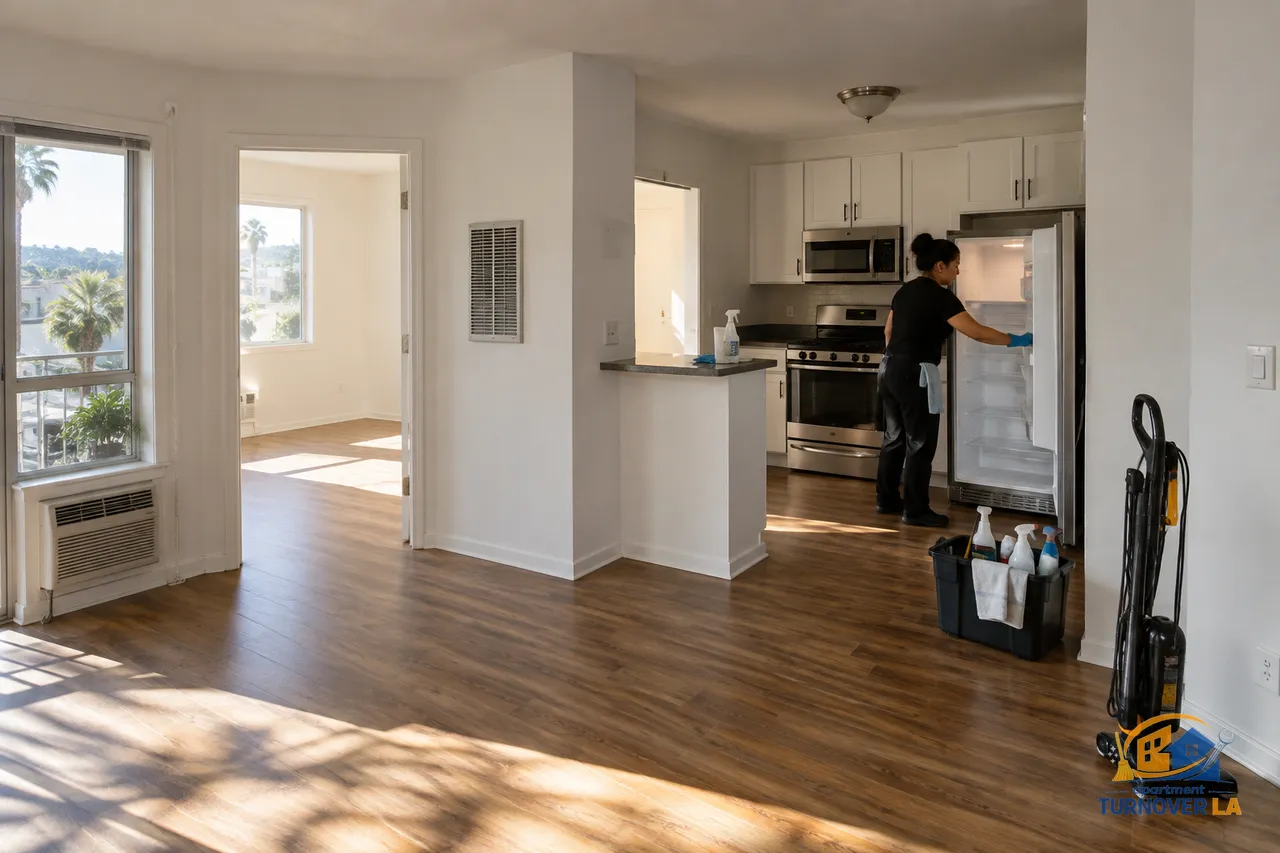
Quick answer: Most LA apartment move out cleans take 4 to 8 labor hours, with a two-person crew often finishing a typical one-bedroom in 2 to 4 hours of elapsed time. Heavy kitchen grease, soap scale, pet odor, trash, and wall repairs can extend the job. The important number is not just hours on site, but whether the unit passes a rent-ready inspection when the crew leaves.
For a standard vacant apartment, expect the lower end when it was regularly maintained and completely emptied. Expect the upper end when the kitchen, bath, floors, or appliances need restorative work rather than a routine reset. Get instant quote in 30 seconds
How many hours does a move out clean actually take?
A move out clean usually takes 4 to 8 total labor hours. That can mean one cleaner working most of a day, or a two-person crew completing the same scope in roughly half the calendar time. A maintained studio may need 2 to 4 labor hours. A typical one-bedroom commonly lands around 4 to 7, and a two-bedroom often needs 6 to 10 before repairs or hauling are added.
Those are planning ranges, not a promise that every unit of the same size takes the same time. A vacant apartment with clean appliances can move quickly. A one-bedroom with baked-on oven grease, mineral buildup around the tub, and cabinets left full of debris cannot. The practical turnover question is, "How many cleaner-hours are needed to return this particular unit to its documented move-in condition?" That is more useful than comparing the job to a weekly housekeeping visit.
What makes a move out clean take longer?
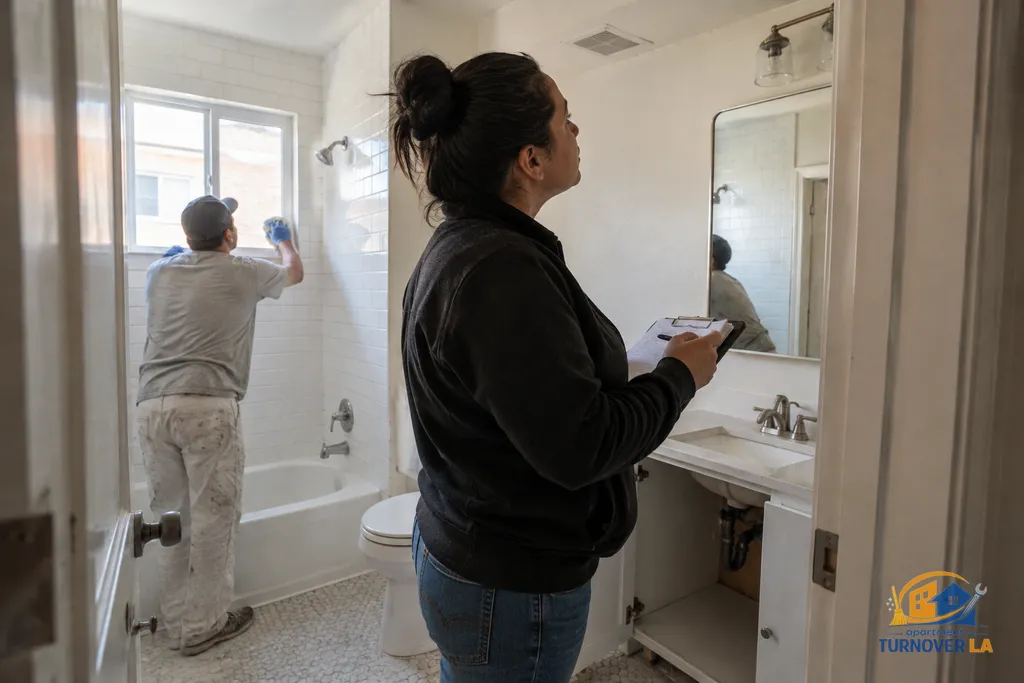
The kitchen and bathroom usually determine whether a job stays routine or becomes a restoration clean. Oven interiors, range hoods, cabinet shelves, refrigerator gaskets, shower glass, grout lines, toilet bases, and exhaust fan covers all take detail time. Empty rooms can still add work when baseboards, blinds, closet tracks, window sills, and floor edges have not been touched for a year.
Access and unit condition matter too. In Koreatown, for example, older walk-up buildings can add trips through narrow halls and parking constraints for crews carrying equipment. A tenant leaving furniture or bagged trash changes the work from cleaning to removal. Wall scuffs and nail holes are not cleaning tasks, so schedule painting and drywall work separately when they are visible at the inspection.
A useful field rule is that dirt spread across an empty apartment is faster to clean than buildup concentrated in a kitchen or bath. Concentrated buildup requires dwell time, scraping, repeat passes, and a final check under bright light.
How long should each apartment size take?
Use this table as an initial staffing estimate for a vacant, fully emptied unit. It assumes ordinary move-out soil, working appliances, and no significant trash, odor treatment, or repair work. It describes labor hours, so divide roughly by crew size to estimate elapsed time.
| Unit type | Typical cleaning labor hours | Common elapsed time with two cleaners | What pushes it longer |
|---|---|---|---|
| Studio | 2 to 4 | 1 to 2.5 hours | Greasy kitchenette, blinds, pet hair |
| One-bedroom | 4 to 7 | 2 to 4 hours | Oven, tub scale, cabinets, balcony debris |
| Two-bedroom | 6 to 10 | 3 to 5.5 hours | Second bath, more closet tracks, larger floors |
| Three-bedroom or larger | 9 to 14 | 4.5 to 7.5 hours | Multiple baths, large kitchens, heavier traffic areas |
These ranges separate cleaning from other turnover work on purpose. If a crew has to wait for a junk hauler, patch drywall, touch up paint, or resolve a water issue, the apartment may take longer to release even if the cleaning itself is complete. For a task-level scope, see this apartment turnover checklist.
Is calendar time different from cleaning hours?
Yes. This distinction prevents many scheduling mistakes. Six labor hours can be one person cleaning for six hours, two people cleaning for three hours, or three people working for two hours. The apartment is unavailable for the elapsed time, while your cleaning cost and crew capacity are driven by labor hours and scope.
For a tight turnover, assign two people to a one-bedroom when possible. One person can handle kitchen degreasing and appliance interiors while the other completes bathrooms, floors, dusting, and detail work. The final walk-through should happen only after both routes are complete. Sending one person home early to make the job look shorter often leaves missed cabinet corners, shower edges, and closet debris.
TurnOver LA plans every job around a 48-hour turnaround, with no rush or same-day upcharge. That timeline is useful for sequencing cleaning with repairs, but it does not turn a heavily neglected unit into a two-hour job. Get instant quote in 30 seconds
Need the walls done before you re-list?
Turnover painting, scuff removal and patching, with a photo record of the condition we left behind.
$395 per room · 48-hour turnaround
Get an instant quoteHow much should you budget for a professional move out clean?
Across the general professional cleaning market, published rates commonly run $40 to $75 per cleaner-hour, and many move-out jobs require 4 to 8 hours of work. That is a context range, not a TurnOver LA rate, and it can rise when cleaners bill separately for appliances, heavy buildup, or add-on tasks.
TurnOver LA instead lists a flat Make Ready package that combines a deep clean and 12-point photo report: Studio $225, 1 Bedroom $255, 2 Bedroom $335, and 3BR or larger $425. Those packages are distinct from a simple hourly estimate and give owners a defined turnover deliverable. If your unit needs cleaning only, compare the actual scope before assuming a standard package is interchangeable with a general deep cleaning service.
The quote covers labor and the crew's own supplies. Paint, replacement parts, and fixtures are identified at the on-site inspection, then added only with your approval. Do not build a budget from square footage alone. A small unit with a neglected oven can consume more cleaning time than a larger unit that was maintained and left empty.
Can a landlord charge a tenant for move out cleaning?
A landlord can generally deduct cleaning costs only when cleaning is necessary to return the unit to the level of cleanliness it had at move-in, subject to the security-deposit rules and the facts documented in the file. Normal wear is not a cleaning invoice. California's governing statute is California Civil Code §1950.5, and the state also explains the process in the California DCA Landlord-Tenant Guide.
Operationally, save the move-in condition photos, the move-out photos, an itemized scope, and invoices. This matters most when the dispute is about borderline items, such as light scuffs, ordinary dust, or minor floor wear. Our guide to normal wear and tear in California helps separate those issues from tenant-caused cleaning. For the deposit timeline and itemization requirements, review California's 21-day deposit return rules.
A practical inspection habit is to photograph the oven, refrigerator, tub, toilet, cabinets, and flooring before anyone starts. That creates a condition record rather than relying on a cleaner's recollection after the unit is reset.
What should be completed before the cleaners arrive?
Have the unit vacant, access confirmed, utilities on, and all owner decisions made before the crew begins. Cleaning around abandoned property wastes time and leaves uncertainty about what can be discarded. If possessions remain, arrange a unit cleanout before the deep clean rather than asking cleaners to guess what is trash.
Use this pre-clean sequence:
- Complete the move-out inspection and condition photos.
- Remove tenant property and obvious trash.
- Confirm water, power, and appliance access.
- Identify leaks, broken fixtures, pest issues, and HVAC concerns.
- Approve repair and paint priorities before final cleaning.
- Schedule locks, cleaning, repairs, and listing photos in that order.
This order avoids the common rework problem: cleaning a bathroom, then sending a repair person in to open a wall or replace hardware. It also gives the final cleaner a fair chance to deliver a presentation-ready unit instead of working around unresolved maintenance.
How do you keep cleaning from delaying the next showing?
Treat cleaning as one handoff in a short turnover chain, not the entire project. First, document condition and remove contents. Next, complete messy repairs and paint. Then deep clean, inspect, rekey, and photograph the finished apartment. The most expensive delay is often not a slow cleaner. It is discovering after cleaning that a cabinet repair, lock change, or junk load still needs to happen.
Vacancy in Los Angeles can cost roughly $80 to $200 per day depending on submarket, so the goal is a dependable release date, not simply the fewest billed cleaning hours. A Make Ready scope is useful when you need the deep clean and a 12-point photo report to confirm the result before listing. Keep the cleaning scope honest, staff the unit for its condition, and reserve a final inspection window before a prospect arrives.