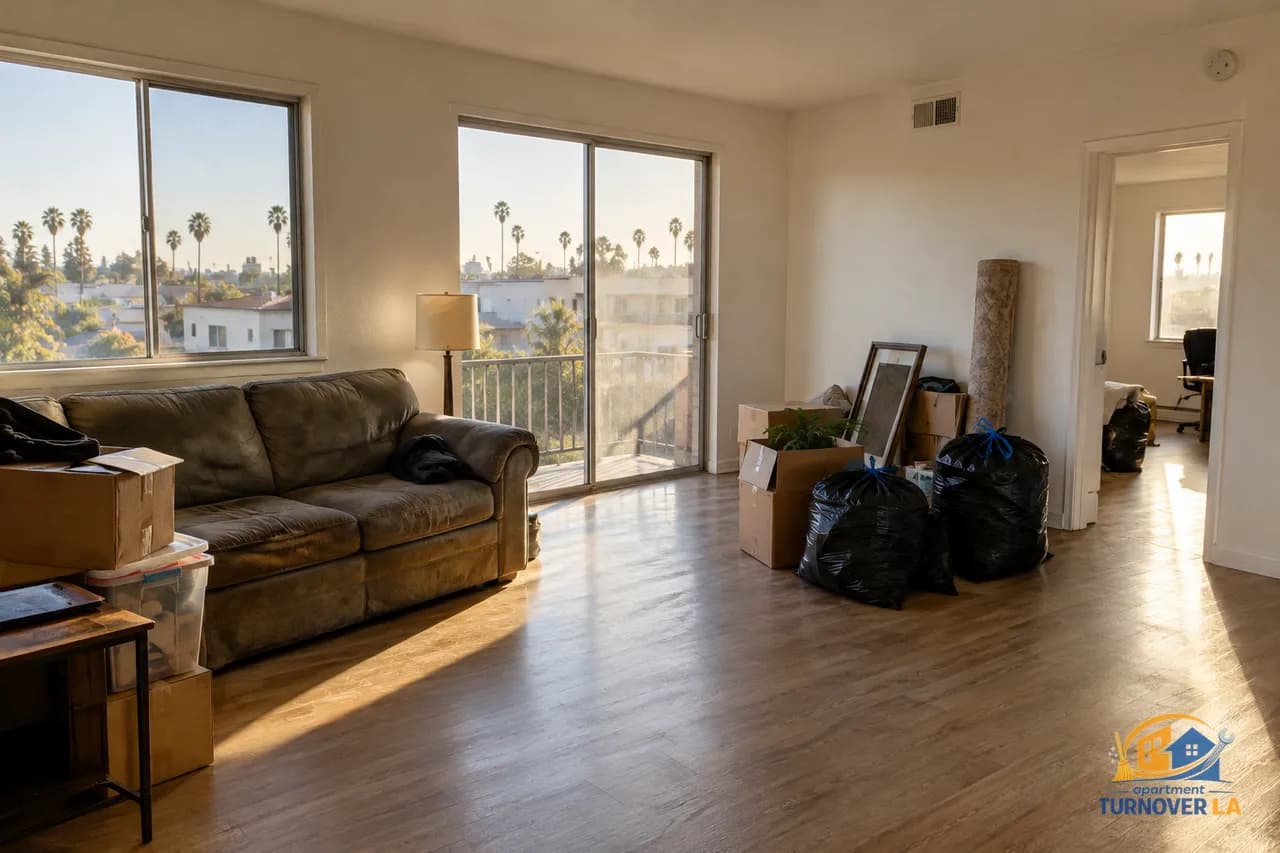
Quick answer: General LA junk hauling commonly runs about $75 to $375 for smaller pickups, while TurnOver LA charges a flat $500 for a unit cleanout and junk haul. That price is for a turnover-focused clear-out, not a curbside single-item pickup, and every job has a 48-hour turnaround with no rush or same-day upcharge.
For a vacant apartment, junk removal is usually a sequencing problem before it is a hauling problem. Clear the unit before cleaners, painters, and repair crews arrive so they can inspect every surface and finish the turnover without working around abandoned items. Get instant quote in 30 seconds
How much does junk removal cost in Los Angeles?
Across the general LA market, a smaller junk-hauling pickup often runs $75 to $375, with volume, stairs, parking, labor, and disposal determining where the job lands. That market range is useful for a chair, a few bags, or a garage corner, but it does not describe every apartment vacancy. A full unit can include furniture, loose household goods, damaged items, and material that must be sorted before it can leave the property.
With TurnOver LA, a unit cleanout / junk haul is $500. If the crew finds more volume than the booked load can cover, the catalog rate is $500 / load for an additional junk load. The practical advantage for a landlord is not trying to compare a curbside pickup to a turnover cleanout. The crew clears the work area so the next trade can move in on schedule. In dense buildings around Koreatown or Downtown LA, elevator reservations, alley access, and parking restrictions should be identified before the crew arrives because they can determine whether the whole unit is cleared in one visit.
What does a turnover cleanout solve that curb pickup does not?
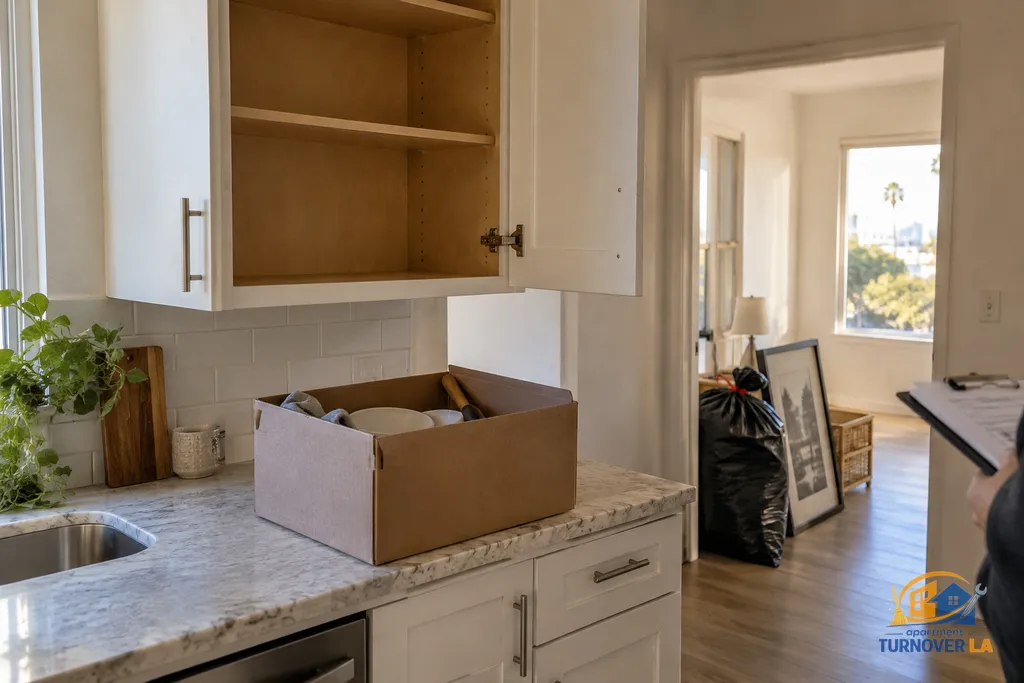
Curb pickup is useful when a resident has one eligible bulky item and the building can place it correctly for collection. A turnover cleanout is different. It is an inside-the-unit operation: identify what stays, remove what is approved for haul-away, clear closets and cabinets, and leave the unit open for cleaning and inspection. That distinction matters when a former resident leaves a mattress, pantry contents, broken furniture, boxes, and miscellaneous debris in several rooms.
Before authorizing disposal, document the condition and confirm ownership. California deposit rules allow deductions only in defined circumstances, so photos, invoices, and an itemized workflow matter if the cleanout relates to a security-deposit accounting. Review California Civil Code §1950.5 and the California DCA Landlord-Tenant Guide before treating resident property as trash. A useful operational rule is simple: do not let an urgent rent-ready date replace documentation or the required handling of personal property.
What is the cheapest way to remove junk from an apartment?
The cheapest legitimate option is usually to reduce the haul before booking one. Separate building-approved donation items, recyclables, e-waste, hazardous material, and items the owner wants to retain. If an eligible municipal or franchise-hauler bulky-item appointment is available and the item can wait at the approved collection location, it may cost less than a private haul. That route is often a poor fit for a vacancy because it does not clear interior debris on your cleaning timeline.
Avoid the false economy of assigning cleanout work to the cleaning crew without a clear scope. A cleaner who must move sofas, bags, and broken shelving cannot deep-clean under, behind, or inside those areas. The better sequence is haul, inspect, repair, then clean. TurnOver LA's unit cleanout / junk haul is $500, which is designed for that turnover sequence. It can prevent a paid cleaning appointment from becoming a partial job that needs to be repeated. For the cleaning stage after the unit is cleared, see the move-out cleaning guide.
When should a landlord schedule junk removal during a turnover?
Schedule the cleanout as soon as you have possession, access, and a clear decision about what can be removed. Do it before paint touch-up, drywall work, deep cleaning, photography, or showings. In a typical vacancy, the cleanout crew should be the first vendor through the door after the initial condition photos. That order exposes wall damage behind furniture, stains under rugs, and missing hardware inside packed closets while there is still time to approve the next scope.
TurnOver LA provides a 48-hour turnaround on every job, without a rush or same-day upcharge. That matters because vacancy loss in Los Angeles commonly runs about $80 to $200 per day depending on submarket. A cleanout delayed by three days can turn into a larger loss when cleaning, repairs, and listing photos all slide with it. Once the unit is empty, a Make Ready service can handle the deep clean and provide a 12-point photo report for the next decision point. Get instant quote in 30 seconds
Need the unit turned before the next tenant?
We do the move-out clean and send you a photo report you can attach to the deposit itemization.
From $225 · 48-hour turnaround
Get an instant quoteDoes Los Angeles charge for bulky-item pickup?
For eligible residential customers, LA-area bulky-item programs may offer scheduled collection without a separate pickup charge, but availability, item limits, placement rules, and service boundaries depend on the collection provider and address. It is not a substitute for a professional unit cleanout when items are inside the apartment, scattered across multiple rooms, or tied to a tight vacancy schedule. Building staff may also prohibit placing furniture in hallways, alleys, parking areas, or trash enclosures before the confirmed collection window.
The operational question is not only whether collection is free. It is whether it will clear the unit in time and without creating a common-area violation. A mattress left in a corridor can block access. Loose bags at a rear gate can trigger a complaint. Appliances, e-waste, paint, batteries, chemicals, and other restricted materials can require separate handling. Confirm the building's rules and the local hauler's accepted materials before moving anything outside. For an apartment unit that needs to be fully cleared, use the dedicated cleanout and junk haul service rather than treating common areas as temporary storage.
What should be documented before a cleanout begins?
Start with date-stamped wide photos of every room, then take closer photos of cabinets, closets, appliances, patios, storage areas, and any item with apparent value. Make a simple keep, dispose, and owner-review list. The owner-review category is important for documents, medication, electronics, jewelry, mail, and personal records. It creates a pause point before an item is removed and gives the property manager a usable record when preparing the final account statement.
Next, photograph damage that may affect a deposit deduction before it is covered by cleaning or paint. A cleanout often reveals nail holes, unauthorized fixtures, wall damage, or heavy grease that was hidden by furniture. Compare the post-cleanout condition to your move-in documentation and use the standards discussed in the normal wear and tear in California guide. This is also the right time to decide whether a small repair needs a handyman punch list or whether cleaning alone will resolve the issue. Clear documentation keeps the cleanout separate from unsupported charges.
Why should junk removal happen before cleaning and listing media?
Junk removal changes the scope of every job that follows. Cleaners need access to floors, baseboards, cabinet interiors, and bathroom corners. Painters need clear wall lines and room access. A listing photographer needs an empty, orderly space or a properly prepared unit, not moving boxes and discarded furniture. Removing junk first gives the turnover team a true view of the apartment's condition and reduces duplicate labor.
The order also protects the listing schedule. If a hidden patch or stained wall appears after a clean, the unit may need a second visit before photos can happen. That is avoidable when the unit is cleared, inspected, repaired, and then cleaned in sequence. Use the apartment turnover checklist to assign each stage and prevent handoffs from being missed. The goal is not to remove every item as fast as possible. It is to create a documented, empty unit where the next vendor can complete a defined scope without interruption.
A practical cleanout plan for a Los Angeles vacancy
Use this order when an apartment has abandoned or owner-approved haul-away items:
- Secure possession and take condition photos before anything moves.
- Separate owner-retained items, personal property requiring review, and approved disposal.
- Confirm access details, including gate codes, stairs, elevator rules, parking, and loading location.
- Complete the cleanout before repair and cleaning crews are scheduled on site.
- Inspect newly exposed floors, walls, closets, cabinets, and appliances for repair needs.
- Complete repairs, deep cleaning, and final photo documentation before marketing the unit.
This sequence is particularly useful in older LA multifamily buildings, where narrow stairs, no elevator, and restricted alley access can turn a simple haul into a scheduling issue. TurnOver LA charges $500 for a unit cleanout / junk haul, with $500 / load for an additional junk load when needed. The quote covers labor and the crew's own supplies. If a follow-on repair needs paint, parts, or fixtures, those materials are priced at the on-site inspection and added only with your approval. Get instant quote in 30 seconds