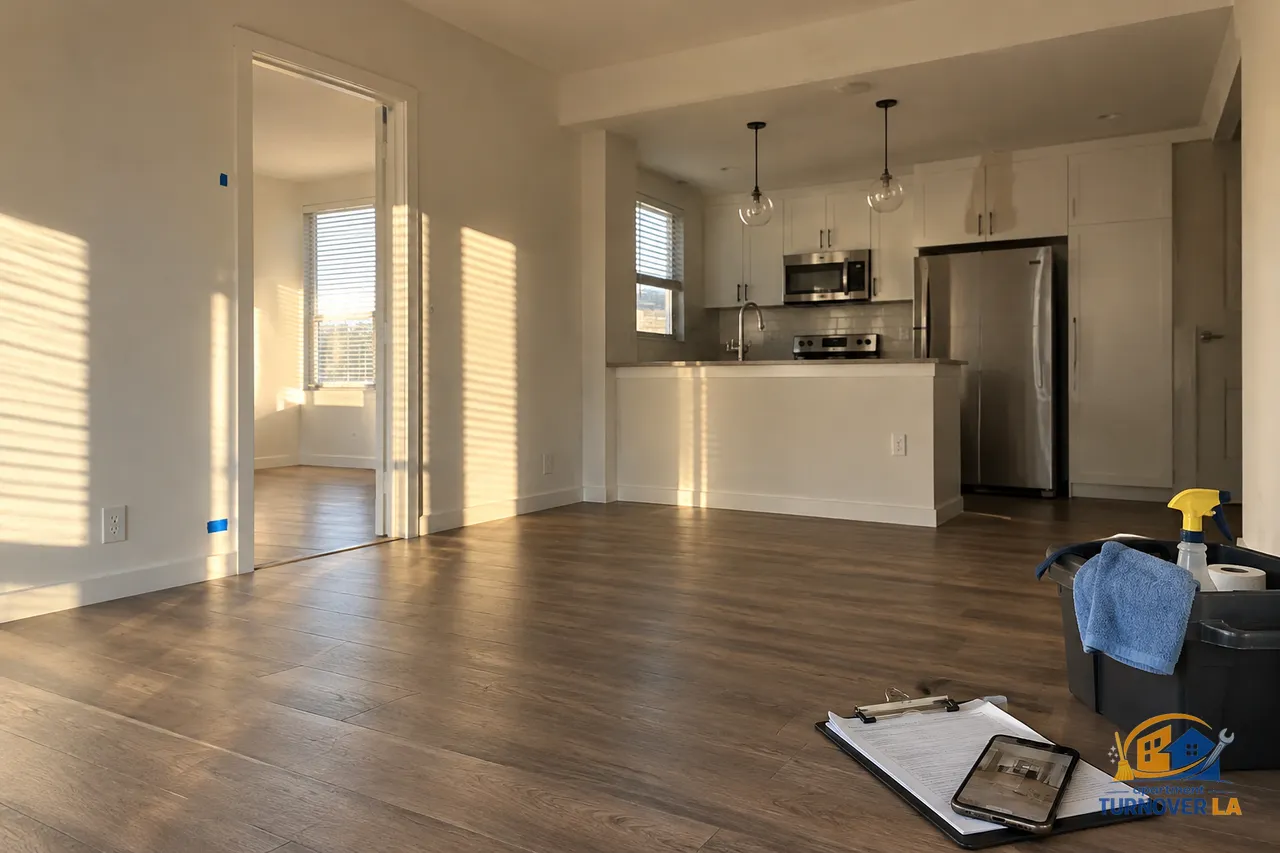
Quick answer: Across Los Angeles, a basic studio through two bedroom turnover clean commonly lands in the broad $200 to $500 market range before painting, repairs, locks, or hauling. TurnOver LA's Make Ready is a flat $225 for a Studio, $255 for a 1 Bedroom, and $335 for a 2 Bedroom, with a deep clean, 12-point photo report, and 48-hour turnaround. A lease turnover also needs a documented inspection and a work sequence that protects your deposit accounting and listing date.
A lease turnover is the work between a resident's possession ending and the next resident receiving keys. In an LA rental, it should begin with condition documentation, separate tenant-caused damage from ordinary wear, then move through cleaning, repairs, access control, and listing preparation. Get instant quote in 30 seconds
What does a lease turnover actually include?
A complete lease turnover is a controlled reset of the unit, not just a move-out cleaning. The landlord or manager first records the condition left by the outgoing resident, then defines what must be restored before marketing or move-in. That scope commonly includes cleaning, wall touch-up, drywall repair, maintenance items, discarded-property removal, and lock work.
The key operational point is to keep two records. One is the deposit file, with move-in evidence, move-out photos, invoices, and damage notes. The other is the rent-ready scope, which may include owner-paid work that cannot fairly be charged to the former resident. A worn finish, faded paint from normal use, or an aging fixture can belong in the second file even when it needs attention before the next lease.
For the base reset, TurnOver LA's Make Ready service pairs a deep clean with a 12-point photo report. The report is useful because it gives the manager a post-work record before showings begin.
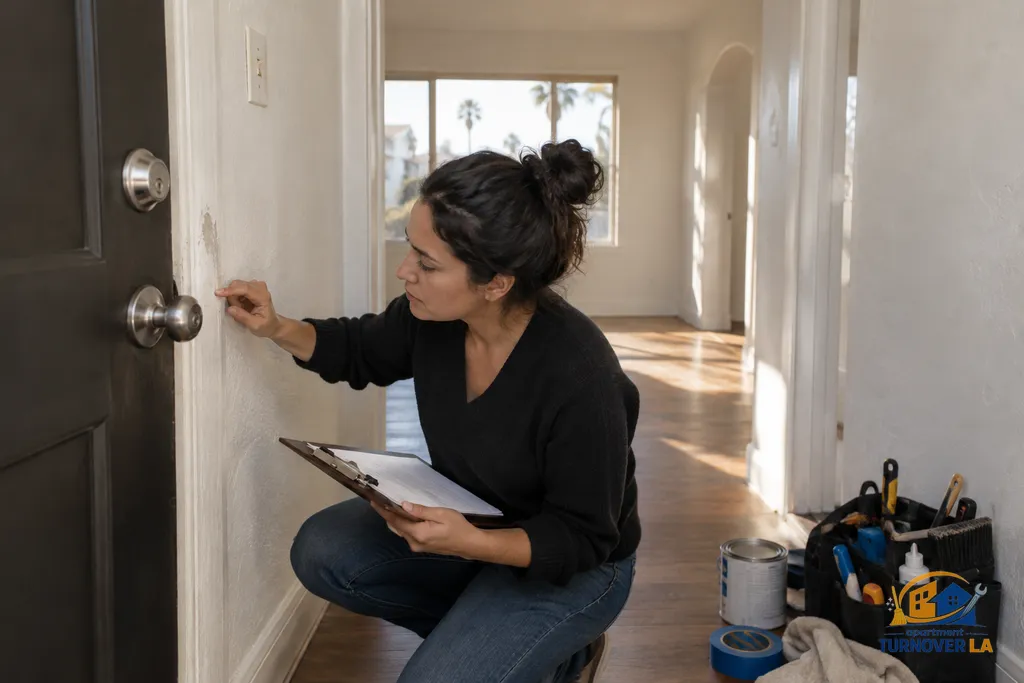
What should you inspect before scheduling turnover work?
Inspect before crews begin, because cleaning or hauling can erase evidence needed for the deposit decision. Walk the unit after possession is returned, ideally with the move-in condition record open on your phone or clipboard. Photograph each room wide, then photograph specific damage close up with enough context to identify its location.
Use this order:
- Confirm keys, remotes, parking devices, mailbox keys, and any building fobs.
- Photograph floors, walls, ceilings, appliances, cabinets, plumbing fixtures, and windows.
- Test smoke and carbon monoxide alarms, lights, outlets, locks, toilet flushes, and leaks.
- Separate ordinary wear from cleaning, damage, and deferred maintenance.
- Identify abandoned belongings before authorizing a cleanout.
- Create one written scope in the order crews should complete it.
California deposit rules matter at this stage. Review California Civil Code §1950.5 and the California DCA Landlord-Tenant Guide before making deductions. Our guide to normal wear and tear in California helps with common wall, carpet, and cleaning distinctions.
How much does a lease turnover cost in LA?
Across LA, basic turnover cleaning bids commonly range from about $200 to $500 for a studio through two bedroom unit, depending on condition, access, kitchen grease, bathroom buildup, and whether the vendor includes documentation. That is a general market range, not a TurnOver LA price. TurnOver LA charges a flat $225 for a Studio Make Ready, $255 for a 1 Bedroom, $335 for a 2 Bedroom, and $425 for a 3BR or larger, each with a deep clean and 12-point photo report.
| Unit size | General LA market context | TurnOver LA Make Ready |
|---|---|---|
| Studio through 2 Bedroom | About $200 to $500 for basic turnover cleaning | Studio $225, 1 Bedroom $255, 2 Bedroom $335 |
| 3BR or larger | Varies by condition and scope | $425 |
Do not treat a cleaning quote as the whole turnover budget. Paint, drywall, broken hardware, and abandoned furniture are separate conditions that require their own authorization. TurnOver LA quotes labor and crew supplies upfront. Paint, parts, and fixtures are identified at the on-site inspection and added to the final invoice only with your approval. See the detailed apartment turnover cost in Los Angeles guide for planning categories beyond cleaning.
Which turnover work should happen first?
The correct sequence prevents rework. Repairs and dusty wall work should happen before the final clean, while lock changes should generally happen after vendors no longer need unrestricted access. A rushed sequence can leave drywall dust on cleaned floors or require a second visit when a painter finds damage behind furniture that should have been removed first.
Start by documenting the unit and approving the scope. Next, remove approved abandoned items, address maintenance and drywall issues, complete paint touch-up or repainting, then perform the final deep clean. After the cleaning report is complete, rekey the unit and verify that all access devices work. If the apartment will be marketed vacant, schedule listing media only after the finish condition is confirmed.
A small wall issue is often quick to resolve, but it should not be hidden inside the cleaning scope. TurnOver LA lists a small drywall patch + texture at $150 / patch and paint touch-up only at $200. For broader punch items, use repairs and maintenance support as a distinct scope. Get instant quote in 30 seconds
Need the unit turned before the next tenant?
We do the move-out clean and send you a photo report you can attach to the deposit itemization.
From $225 · 48-hour turnaround
Get an instant quoteWho pays for turnover work after a tenant moves out?
The owner pays for ordinary wear, routine aging, and improvements that make the unit more competitive. A former tenant may be responsible for cleaning or repair that is beyond ordinary use, but the charge needs support: a lawful basis, reasonable amount, itemization, and documentation. A turnover vendor's invoice is useful evidence, but it does not itself establish that every item is deductible.
For example, a scuffed wall from ordinary use may need paint for the next tenancy without being a fair charge to the prior resident. A fresh hole, unauthorized alteration, or unusual residue may be different if documented against the move-in condition. Keep repair authorization separate from the deposit ledger so the crew can restore the unit without prejudging the accounting.
Los Angeles landlords also need to consider local rules. Review the LAHD Rent Stabilization Ordinance when the property is covered, and use our guide on the California 21-day deposit return timeline when preparing the statement. The current statewide deposit cap is addressed in AB 12 (2023) security deposit cap.
How should landlords handle furniture and junk left behind?
Do not treat furniture left at the curb or in the unit as a simple trash problem. First determine whether it is clearly discarded, whether the tenancy has legally ended, and whether California's abandoned-property process applies. Document every item before it is moved, particularly appliances, electronics, furniture, or boxes that could contain personal property.
Free or low-cost bulky-item programs can help a resident with disposal, but they are not a reliable turnover schedule for a vacant unit. Pickup dates, item limits, building access, and curb placement rules can conflict with a showing date or create a complaint from neighbors. A hallway, alley, or curb is also not a secure place to stage belongings while you decide what to do.
When the property is clear for removal, TurnOver LA's unit cleanout and junk haul is $500. That is a defined vendor option, while general LA hauling bids vary with volume, stairs, parking, and disposal requirements. The practical advantage is that removal can be placed into the same turnover sequence as repairs and cleaning instead of waiting on a separate pickup window.
How can a manager shorten vacancy without skipping steps?
The fastest lease turnover is usually the one with a clear scope on day one, not the one that sends the first available cleaner into an undocumented unit. In LA, every extra vacant day can cost roughly $80 to $200 depending on the submarket and rent level. The goal is to make decisions early enough that cleaning, repair, and listing work flow in sequence.
Set the move-out inspection before or immediately after possession return. Approve only the work that is needed to make the unit safe, clean, functional, and accurately marketable. Give each vendor the same written scope, and require a final photo record before the listing goes live. This avoids the common delay of discovering a lock issue, missed cabinet damage, or dirty oven after prospective residents have already toured.
TurnOver LA provides a flat 48-hour turnaround on every job, with no rush or same-day upcharge. That timeline works best when access, parking instructions, unit status, and decision authority are ready before booking. Get instant quote in 30 seconds
What is the practical lease turnover standard for an LA landlord?
A practical standard is simple: the unit should be documented, safe, clean, functional, secured, and ready to show without creating unsupported deposit charges. That standard works for a single duplex owner and for a manager coordinating multiple turns at once. It also creates a cleaner audit trail if a former resident asks for receipts or challenges deductions.
Do not wait for the final cleaning to discover the full scope. Use the first inspection to separate evidence, owner maintenance, and resident-caused issues. Then schedule work in the order that protects the finish condition: removal and repairs first, cleaning next, access control last, and listing preparation after the unit is actually ready.
A consistent process makes turnover cost easier to forecast and vacancy easier to control. Start the scope while the move-out condition is still visible, then book the work with one accountable schedule. Get instant quote in 30 seconds