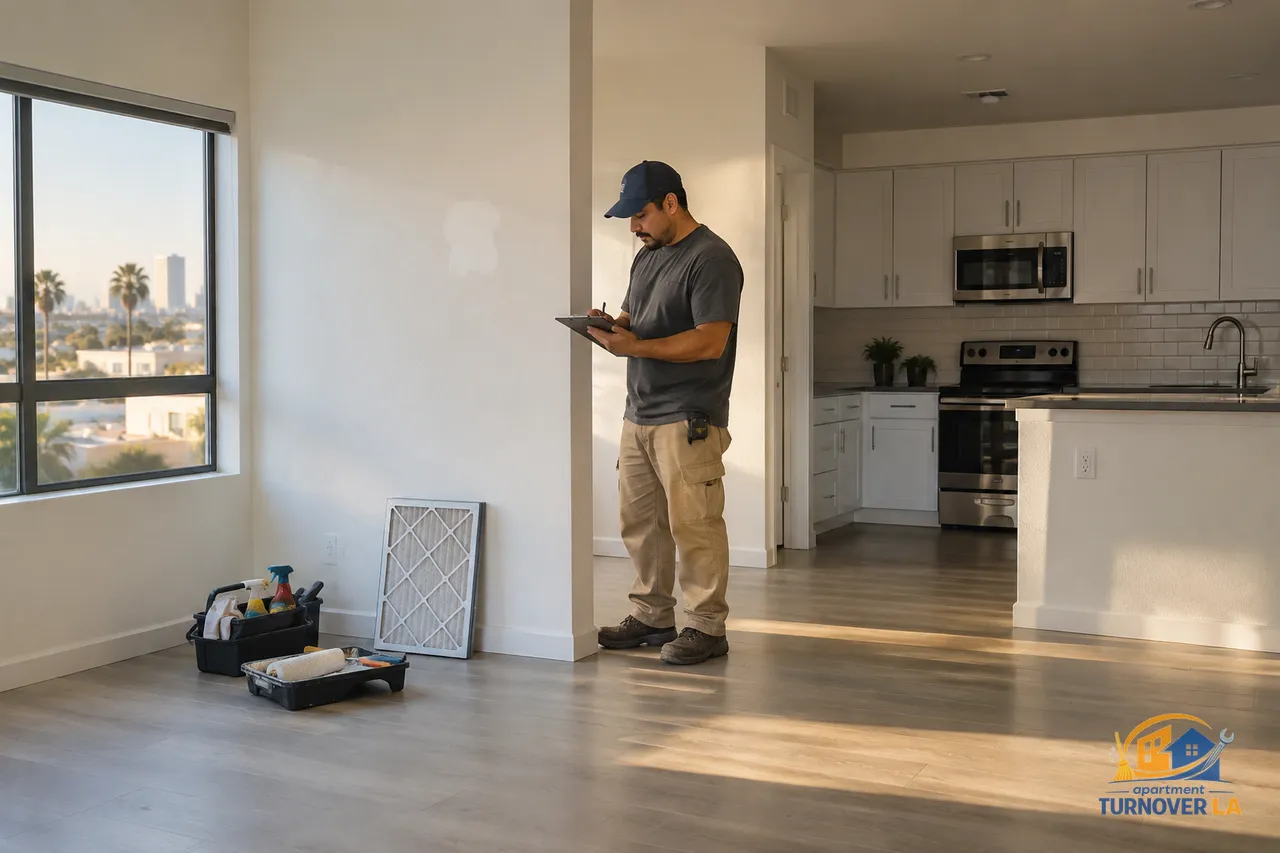
Quick answer: Make ready maintenance jobs prepare a vacant apartment for the next resident by coordinating cleaning, paint, minor repairs, safety checks, locks, and documented final condition. In Los Angeles, job listings commonly show roughly $18 to $32 per hour, but the work is measured by a unit being rent ready, not by one trade finishing one task. TurnOver LA completes its Make Ready package within 48 hours.
A make ready maintenance job is the turnover work performed after one resident leaves and before another takes possession. It is a sequence of condition checks and corrections, not simply a cleaning assignment or a maintenance ticket. Get instant quote in 30 seconds
What does make ready mean in an apartment?
In apartment operations, make ready means returning a vacant unit to a safe, clean, functional, showable condition for the next tenancy. The job begins with the move out condition, then resolves the items that would delay leasing, create a safety concern, or generate a day one resident complaint. A proper scope can include a deep clean, wall scuff review, drywall patching, paint touch ups, fixture tests, lock work, debris removal, and final photos.
The practical distinction is that make ready has a finish line. A cleaner can complete cleaning while a broken blind, a dripping stop valve, or an unrekeyed deadbolt still keeps the apartment from being ready. A maintenance technician can finish a repair while grease remains in the kitchen. The make ready lead closes those gaps against one unit standard. TurnOver LA's Make Ready service combines a deep clean with a 12 point photo report, which gives the owner or manager a documented closeout rather than a verbal update.
For a fuller definition of the unit standard, see what make ready means for a rental.
What work does a make ready maintenance technician actually do?
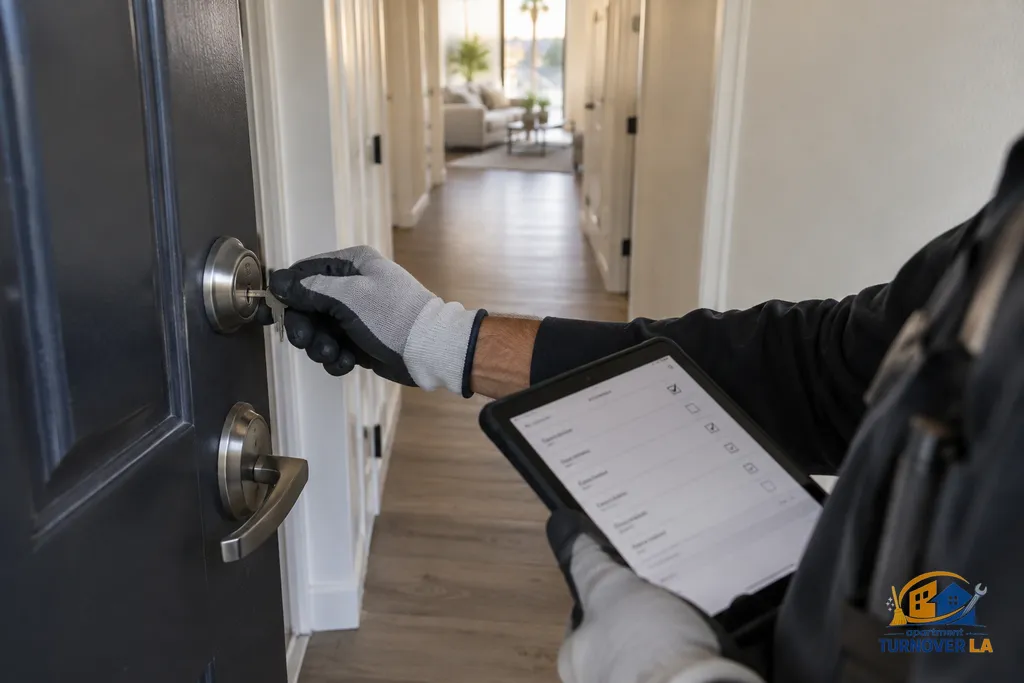
The work changes with the unit, but the technician's role is to identify, complete, or coordinate the tasks that stand between vacancy and move in. In a typical LA turnover, that means walking every room, noting damage against normal wear, testing basic functions, and putting work in the correct order. The technician may handle a simple punch list directly, then bring in paint or cleaning support where that produces a better result.
A solid turnover scope usually includes these steps:
- Photograph and inspect the vacant unit before work begins.
- Remove tenant left belongings and obvious debris.
- Check doors, locks, windows, smoke and carbon monoxide alarms, outlets, faucets, toilets, lights, and appliances.
- Repair small damage, including holes, loose hardware, caulk failures, and basic fixture issues.
- Coordinate patching and paint after repair dust is controlled.
- Deep clean kitchens, baths, floors, and touch surfaces after dusty work is finished.
- Rekey and complete a final condition and functionality review.
The order matters. Cleaning before drywall sanding creates rework. Rekeying before every vendor has finished can create key control problems. Taking final photos before the last paint touch up leaves a misleading record. These are routine operational details, but they are where a turnover gains or loses a day.
How is make ready different from cleaning, painting, or repairs?
Make ready is the management layer over several trades. Cleaning, painting, and repairs each have their own finish standard. The make ready process decides what is needed, sequences it, checks it, and confirms that the unit can be shown or handed over. That is why a manager should not assume that booking one service produces a rent ready apartment.
For example, a tenant may leave a clean studio with three nail holes, a loose bedroom knob, and an old key still in circulation. Cleaning alone will not solve the closeout. Conversely, a painter can cover scuffs but should not be expected to degrease the range hood or test the bathroom GFCI. A single accountable scope helps avoid those handoffs.
TurnOver LA uses its Make Ready package for the base deep clean and 12 point photo report. When the inspection finds work outside that base scope, the appropriate crew can complete painting and drywall repairs or a maintenance punch list. Labor and crew supplies are covered in the quote. Paint, parts, or fixtures needed for the job are priced at the on site inspection and added only with owner approval.
What should the make ready timeline look like in Los Angeles?
A disciplined timeline starts as soon as the keys are returned. On day one, the manager or turnover lead documents move out condition, identifies any immediate safety issue, and approves the work scope. Cleaning, repair, paint, lock, and cleanout tasks then proceed in an order that prevents one crew from undoing another crew's work. The final walkthrough should happen after all trades have exited, not when the largest task appears complete.
For TurnOver LA, the standard turnaround is 48 hours on every job, with no rush or same day upcharge. That timing is especially relevant in dense leasing areas such as Koreatown, where a vacant unit can lose leasing momentum quickly. A vacancy day in Los Angeles commonly costs an owner about $80 to $200 depending on the submarket, before considering utilities, leasing labor, and concessions.
The useful question is not whether every unit can receive every repair within two days. It is whether a manager knows by the first inspection what is blocking readiness, who owns each task, and when a final condition record will be delivered. Get instant quote in 30 seconds
Need the walls done before you re-list?
Turnover painting, scuff removal and patching, with a photo record of the condition we left behind.
$395 per room · 48-hour turnaround
Get an instant quoteWhat are red flags when renting an apartment after make ready?
A newly cleaned apartment can still reveal poor turnover control. Renters should inspect items that are difficult to notice during a fast showing: water pressure and drainage, every lock and latch, working smoke and carbon monoxide alarms, signs of fresh patching around prior leaks, window operation, appliance function, and odor in closets or cabinets. Fresh paint can be normal, but paint over hinges, outlets, or cracked trim can signal rushed work.
A red flag is not one ordinary scuff or an older finish in an older building. It is a pattern of unresolved function and unclear accountability. Examples include a front door that does not latch, an electrical outlet that does not work, a toilet that moves at the base, an unvented bathroom with mildew odor, or no clear answer about who has access to the unit's keys.
Owners should document move in condition because it protects both sides later. California's California Civil Code §1950.5 sets rules around security deposits and deductions. A dated turnover photo report can distinguish a preexisting condition from damage alleged at move out. Renters and managers can also use this guide to normal wear and tear in California.
Which maintenance items cannot wait for the next resident?
Some items can be scheduled as an aesthetic upgrade. Others should be resolved before keys are issued because they affect habitability, security, or the resident's ability to use the unit. A make ready inspection should elevate safety and basic function before cosmetic preferences. This is particularly important in older LA buildings, where a small visible issue can point to a larger maintenance condition.
Before move in, confirm that exterior entry locks work and prior access has been addressed, required alarms are present and responsive, plumbing does not leak under ordinary use, toilets flush and refill correctly, electrical switches and outlets function, windows and doors secure, and appliances supplied with the tenancy operate as represented. The California DCA Landlord-Tenant Guide is a useful reference for the broader landlord and tenant framework.
Security work should also be tracked as its own closeout item, not buried in a general note. TurnOver LA lists a full apartment rekey for up to two locks at $150, and a general maintenance or safety visit at $125. Those catalog items are separate from the base Make Ready package, so the manager can approve the needed work without pretending that a clean unit is automatically secure.
How should a property manager document a completed make ready?
The closeout record should answer a simple question: can a leasing agent or incoming resident rely on the stated condition? Start with pre work photos and a room by room scope. Keep notes on what was repaired, what was cleaned, which parts or materials were approved, and any condition intentionally left for a later capital project. Finish with final photos that show the same areas after work is complete.
The highest value photos are not always the widest ones. Capture the oven interior, under sink area, bath fan or vent condition, repaired wall location, lock hardware, appliance model area when relevant, and any preexisting condition that is not being replaced. A 12 point report also gives an absent owner a faster approval trail than scattered texts from multiple vendors.
For deposit timing and notice requirements, review the California 21 day deposit return guide. In LA rent stabilized properties, managers should also understand the LAHD Rent Stabilization Ordinance before treating turnover work or charges as routine. Documentation does not replace legal advice, but it makes the operational record much easier to defend.
What does a good make ready handoff look like?
A good handoff gives the manager three things: confirmation that the agreed work is complete, photos that match the actual unit, and a clear list of any remaining exception. It does not mean every older surface has been made new. It means the unit has been assessed consistently, safety and function have been addressed, the cleaning standard is complete, and the next action is clear.
For owners, the point is fewer surprises between turnover completion and the showing. For incoming residents, it is a home that operates on day one. For make ready technicians, it is a defined scope with a final inspection instead of an open ended request to fix whatever someone notices next.
When cleaning, basic repairs, paint coordination, and final reporting are managed as one turnover process, the unit spends less time waiting on handoffs. TurnOver LA can quote the base Make Ready scope by unit size, with Studio at $225, 1 Bedroom at $255, 2 Bedroom at $335, and 3BR or larger at $425. Any needed materials are reviewed on site and approved before they are added to the final invoice. Get instant quote in 30 seconds