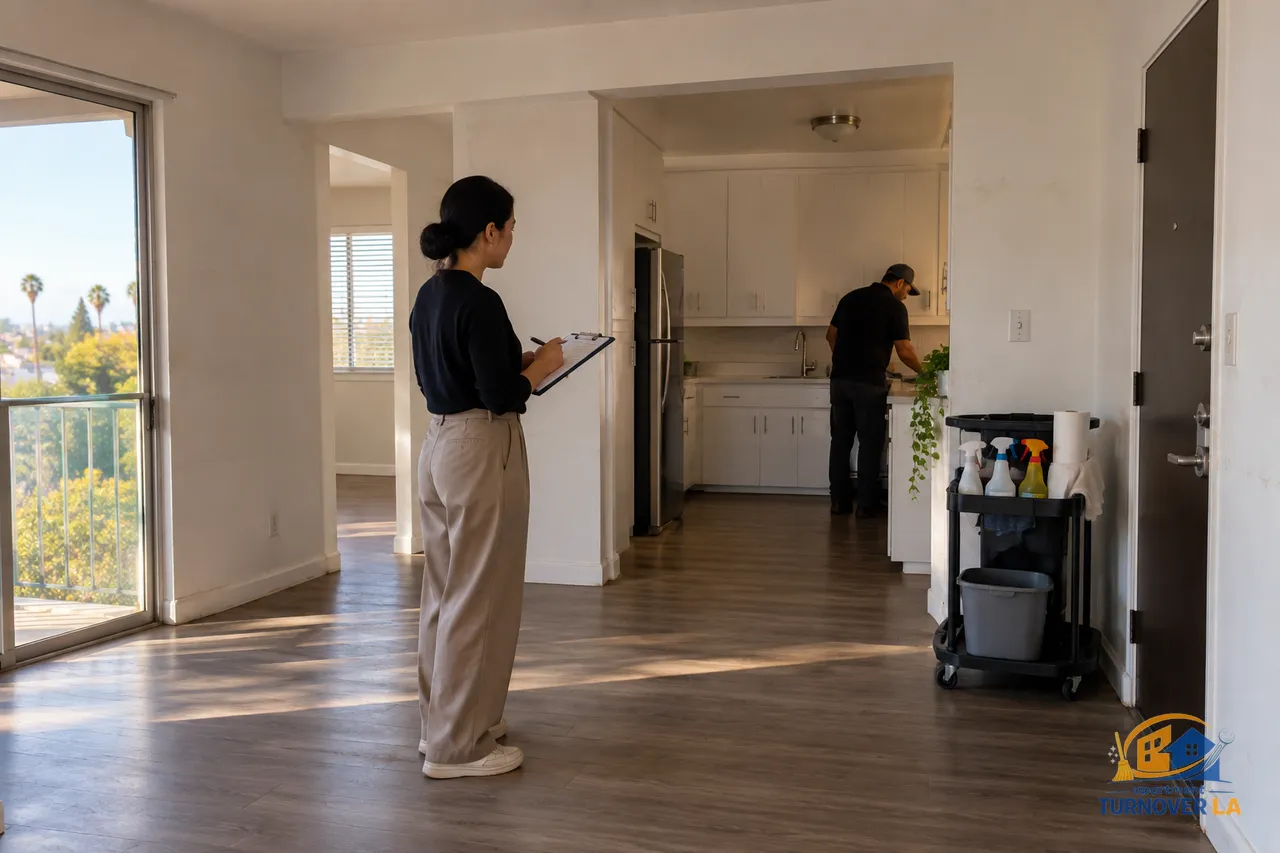
Quick answer: Calculate rental turnover in two parts: the cost to return one vacant unit to rentable condition, and the annual rate of move outs across your portfolio. Add the approved cleaning, repair, security, cleanout, and vacancy-loss costs for each unit, then track move outs divided by average occupied units. In Los Angeles, one vacant day commonly costs $80 to $200 in lost rent.
To calculate your turnover accurately, do not use one percentage for everything. Build a per-unit scope after move out, record the actual vacancy days, and separately calculate the rate at which residents leave. Get instant quote in 30 seconds
What does turnover mean in a rental property?
In renting, turnover is the work and lost time between one resident leaving and the next resident taking possession. It begins when the unit is returned, not when the notice is given, and it ends when the next lease starts or keys are delivered. The work can include cleaning, wall repair, painting, maintenance, rekeying, debris removal, inspection photos, and listing preparation.
That definition matters because a move out is not automatically a costly turnover. A resident may leave a clean unit with no repairs beyond ordinary wear. Another unit may need a cleanout, drywall repair, lock work, and delayed leasing because a hidden plumbing issue surfaces during inspection. Treat each unit as a separate job record rather than assigning the same fixed allowance to every departure.
For the cleaning and condition-documentation portion, TurnOver LA's Make Ready service combines a deep clean with a 12-point photo report. The report helps the owner, manager, and leasing team work from the same observed condition instead of separate verbal descriptions.
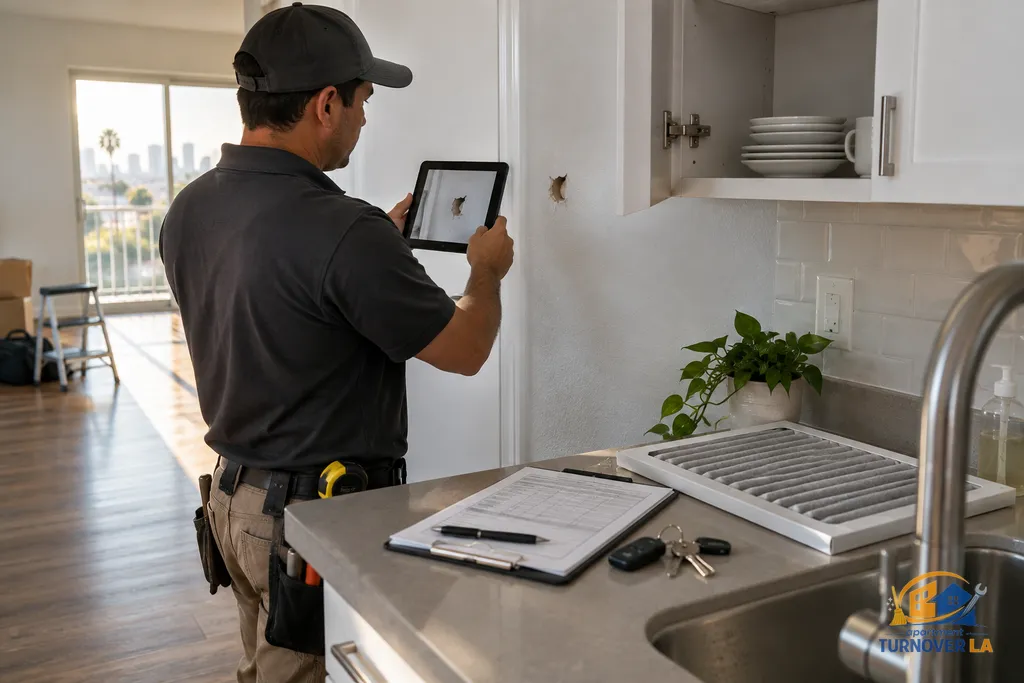
How do I calculate turnover cost for one apartment?
Start with a scoped job cost, then add the cost of vacancy. The basic calculation is:
Turnover cost = approved unit work + materials + vacancy loss + leasing and administrative costs
Approved unit work includes labor for cleaning, paint, repairs, locks, and cleanout. TurnOver LA quotes labor and crew supplies, while needed paint, parts, and fixtures are identified during the on-site inspection and added to the final invoice only with your approval. Keep those materials as their own line, because a replacement fixture is not the same type of expense as crew labor.
For vacancy loss, multiply vacant days by your daily rent. A practical LA planning baseline is $80 to $200 per day, depending on submarket and unit rent. A five-day delay can therefore cost $400 to $1,000 before any repair invoice is considered. This is why a short, defined scope often matters more than shaving a small amount from one trade's labor line.
Do not count a security-deposit withholding as a reduction in the turnover cost. It may offset an owner expense later, but it is a separate accounting and compliance decision.
How do I calculate my annual apartment turnover rate?
Calculate the annual turnover rate by dividing the number of move outs during the period by the average number of occupied units, then multiplying by 100. Use occupied units rather than total units if you want to measure resident movement, not long-term vacancy.
Annual turnover rate = move outs during the year / average occupied units x 100
For example, a 24-unit building starts the year with 23 occupied units and ends with 21. Its average occupied count is 22. If six residents moved out during the year, the annual turnover rate is 6 divided by 22, or 27.3 percent. That rate does not tell you the cost by itself. You still need the per-unit job records to learn whether those six turns were mostly clean-and-release units or repair-heavy vacancies.
Track both figures in the same monthly report: turnover rate and average cost per completed turn. Add median vacant days as a third figure. That combination shows whether your expense problem is resident churn, slow scope approval, repair complexity, or leasing lag.
Get instant quote in 30 seconds
What should be included in a turnover worksheet?
A useful turnover worksheet answers what happened, what was approved, and what delayed the next lease. Complete it at move out and update it as work progresses. Your worksheet should include at least these seven items:
- Unit number, resident move-out date, and key-return date.
- Pre-move-out inspection notes and dated condition photos.
- Cleaning scope, including kitchen grease, bath grout, appliances, floors, and odor concerns.
- Repair scope, such as wall damage, fixtures, smoke detectors, cabinet hardware, and HVAC filter condition.
- Security work, including rekey status and number of access points.
- Approved labor, materials, and cleanout charges, listed separately.
- Ready date, listing date, lease-start date, and the reason for any delay.
Use the apartment turnover checklist as the field sequence, then retain the completed document with your unit file. If the work includes wall damage, distinguish scuffs from holes and failed patches. This drywall patching guide explains the inspection details that can change the repair scope.
Need the walls done before you re-list?
Turnover painting, scuff removal and patching, with a photo record of the condition we left behind.
$395 per room · 48-hour turnaround
Get an instant quoteHow long should an apartment turnover take?
A straightforward turnover should be planned as a short sequence of inspection, approval, work, final photos, and lease-ready handoff. TurnOver LA has a 48-hour turnaround on every job, without a rush or same-day upcharge. That timeline works best when access is confirmed, the prior resident's property is removed, and the decision maker can approve materials promptly when the inspection identifies a need.
The calendar can extend when there is a full cleanout, water damage, specialty odor work, vendor access restrictions, or a material that must be ordered. The key is to identify those exceptions on day one. Do not let a cleaner discover paint needs after leaving, or let a painter discover repair work after paint has been selected.
Coordinate the base scope with painting and drywall work and handyman repair support when the inspection calls for it. One coordinated scope reduces duplicate site visits and makes the final ready date easier for leasing staff to trust.
Can I use the 7% rule to estimate rental turnover?
The 7% rule is not a California legal standard or a universal apartment turnover formula. In investor conversations, it can refer to several unrelated shortcuts, including a percentage reserve for operating costs or an expected return target. It should not replace your building's actual move-out history, rent level, vacancy days, or repair records.
If you need a planning reserve, use your own trailing 12 months. Add completed turnover labor, approved materials, vacancy loss, and leasing costs, then divide by the number of completed turns. Apply that average only as a preliminary budget, not as a substitute for inspecting the next unit. A 1920s Hollywood unit with original plaster may have different repair exposure than a newer unit with smooth drywall and standardized fixtures.
Keep legal deductions out of a casual percentage calculation. California's California Civil Code §1950.5 sets rules for security deposits and itemized accounting. Review the California DCA Landlord-Tenant Guide before charging a resident for condition issues.
How should deposits affect the turnover calculation?
Record the full turnover expense first, then separately evaluate whether any portion may be lawfully deducted from the deposit. This order prevents a common bookkeeping mistake: treating a possible resident charge as though it eliminates the owner's repair bill. The property still needs to be made ready, and the deposit accounting must stand on its own documentation.
Use move-in records, move-out photos, invoices, and an itemized scope to distinguish resident-caused damage from ordinary wear. California deposit rules impose specific timing and documentation requirements, and the state's current deposit cap was changed through AB 12 (2023) security deposit cap. For the practical deadline and documentation sequence, see the California 21-day deposit return guide.
This separation also gives you better operating data. You can see the true average cost to turn a unit, the amount recovered from deposits, and the portion that is normal ownership expense. Those are three different numbers, and they should not be blended into one turnover percentage.
What is the simplest way to manage the next turnover?
Use one file per vacancy, one inspection date, and one approved scope before crews begin. First, document condition and access. Next, identify whether the unit needs only Make Ready or additional paint, repair, security, or cleanout work. Then set a ready date and calculate vacancy loss against that date each morning until leasing confirms the next possession date.
After the job closes, enter actual labor, materials, vacant days, and any deposit recovery into your turnover log. Within a few turns, you will know the average cost and average downtime for each building, rather than relying on a generic rule. That is the number that helps with reserves, owner reporting, and decisions about whether a recurring issue needs a capital fix.