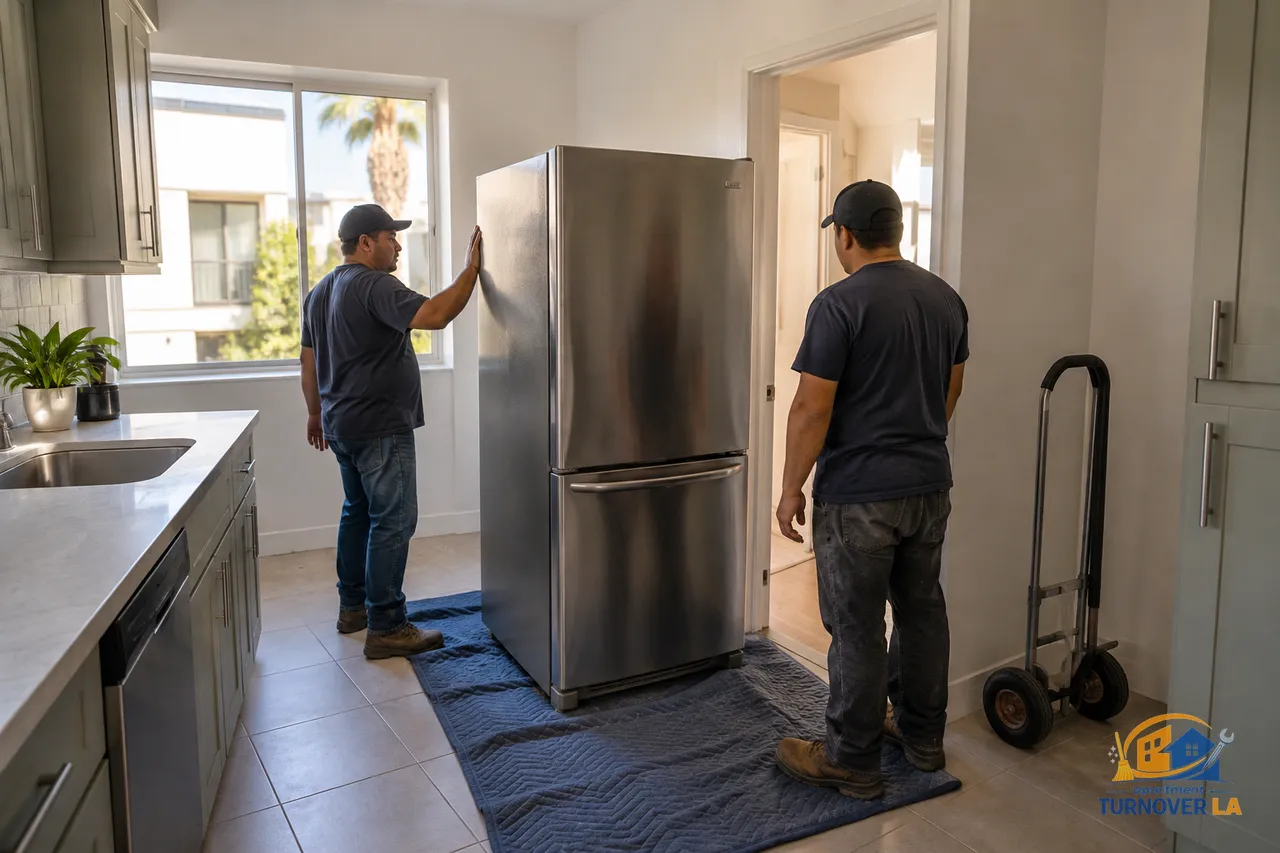
Quick answer: In Los Angeles, a straightforward refrigerator removal commonly runs $75 to $250 in the general junk-haul market. TurnOver LA lists a unit cleanout or junk haul at $500, which is the right scope when the refrigerator is part of a vacant unit's remaining furniture, trash, or turnover debris. Stairs, tight access, and refrigerant status should be confirmed before scheduling.
A refrigerator is rarely just a refrigerator during an apartment turnover. The practical question is whether you need one appliance collected, or whether you need a crew to clear the unit, document what remains, and leave access open for cleaning and repairs. Get instant quote in 30 seconds
What does refrigerator removal cost in Los Angeles?
Across LA, a basic, accessible refrigerator pickup generally costs $75 to $250 in the general market. That range fits a disconnected unit at ground level or near an easy curbside route, with no other junk included. It is not a TurnOver LA refrigerator-only rate.
With TurnOver LA, unit cleanout / junk haul is $500. That catalog line is designed for turnover work, where the refrigerator often comes with abandoned furniture, bagged trash, shelf contents, or a landlord's need to clear the space on one coordinated visit. If a second haul is needed after the first load, the catalog rate is $500 / load.
The difference matters when comparing quotes. A low single-item pickup price can be sensible for one unplugged appliance. It can stop being economical when a crew arrives and finds a sofa, mattress, broken shelving, or multiple bags that were not included in the original scope. For a complete vacant-unit sequence, review this Los Angeles apartment turnover cost guide alongside the cleanout decision.
Why can the same refrigerator cost more to remove?
Access and appliance condition drive the removal plan more than the refrigerator's purchase price. A freestanding refrigerator on a ground-floor patio is a simple move. A unit wedged into a second-floor apartment with a narrow stair landing, a full freezer compartment, or a blocked hallway requires more labor, protection, and route planning.
| Removal condition | Typical LA market context | What to confirm before booking |
|---|---|---|
| Empty, disconnected refrigerator with easy access | $75 to $250 | Ground floor, curb route, no other junk |
| Refrigerator plus scattered unit debris | Often above a single-item pickup | Volume, elevator use, parking, and load size |
| Built-in or commercial-style appliance | Can require a specialized quote | Disconnect method, dimensions, and cabinetry |
| Refrigerator with food or leaking contents | May require added handling | Whether it is emptied, defrosted, and safe to move |
Do not ask a crew to disconnect a live water line or electrical connection at the door. Photograph the appliance, measure tight turns, and state whether it is in a garage, courtyard, walk-up, or elevator building. That lets the cleanout crew set the correct scope instead of discovering a problem after arrival.
Should a landlord use a single-item pickup or a unit cleanout?
Use a single-item option when the unit is otherwise empty, the refrigerator is already safely disconnected, and your only goal is to get one appliance out. A utility or municipal program may also be worth checking before you pay for hauling, especially for an older working unit. Availability, eligibility, and pickup rules change, so verify the program directly rather than relying on a neighbor's experience.
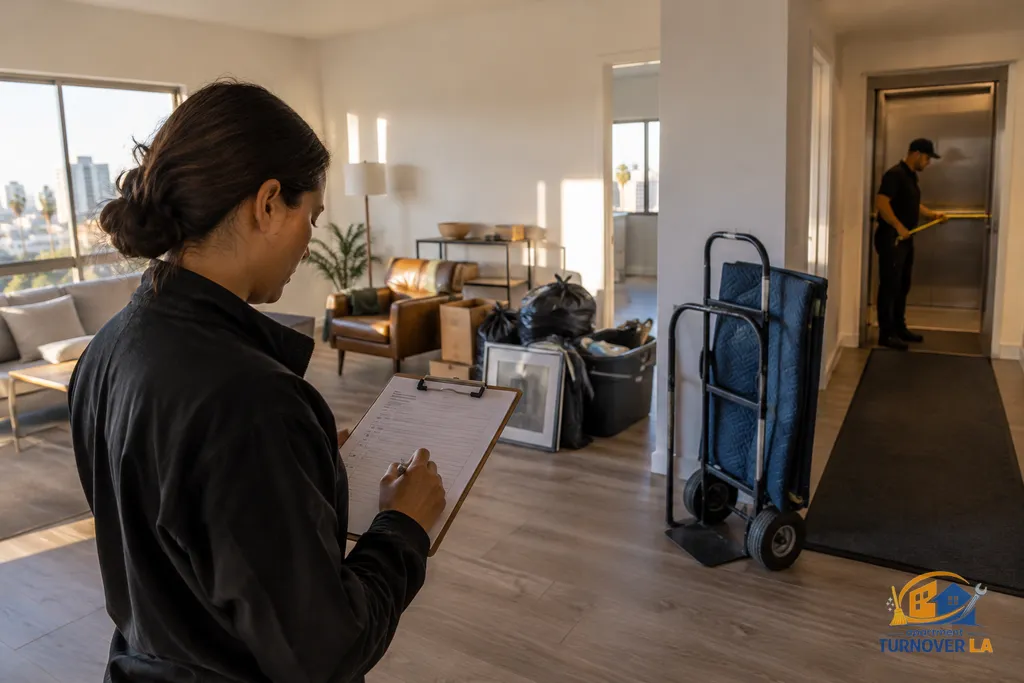
Choose a unit cleanout when the refrigerator is one part of a larger vacancy problem. This is common after a skip-out or an uncoordinated move-out: food remains in the refrigerator, furniture blocks the exit, closets contain loose property, and the cleaner cannot begin until the unit is cleared. TurnOver LA's $500 unit cleanout / junk haul rate gives managers a defined starting line for that job type, rather than trying to stack several small pickups.
In Koreatown and other dense LA neighborhoods, elevator reservations, alley access, and loading windows can make a supposedly small appliance run consume most of a crew visit. A cleanout scope should account for the building rules before the vendor is dispatched. Get instant quote in 30 seconds
What should happen before the refrigerator leaves the apartment?
First, confirm ownership. In a turnover, a refrigerator may belong to the owner, the tenant, or a prior tenant who left it behind. Do not dispose of an item simply because it looks old. California deposit disputes often turn on documentation, notice, and whether a claimed cost was actually necessary. Start with dated photos, the move-out inspection record, and your lease file.
Second, empty and defrost it. Remove food, loose shelves that can fall out, magnets, and cleaning chemicals stored on top. Keep the doors secured for transport. Third, confirm that any electrical, water, or ice-maker connection is safely disconnected. A cleanout crew can remove the appliance, but an active connection is a maintenance issue that should be resolved first.
For a broader sequence, use an apartment turnover checklist. If you may charge a departing tenant, compare the facts to California Civil Code §1950.5 and keep copies of invoices, photos, and communications. The question is not whether removal was annoying. It is whether the cost was properly documented and legally chargeable.
Need the walls done before you re-list?
Turnover painting, scuff removal and patching, with a photo record of the condition we left behind.
$395 per room · 48-hour turnaround
Get an instant quoteCan refrigerator removal be charged to a former tenant?
Sometimes, but not automatically. If a tenant leaves an owner-owned refrigerator dirty or damaged beyond ordinary use, cleaning or repair may be a legitimate deposit issue with proper records. If the tenant leaves their own refrigerator or abandoned property, removal may be necessary, but managers should follow the appropriate notice and disposition process before treating it as simple junk.
The distinction is important in LA's regulated housing environment. A turnover invoice does not itself establish what can be deducted from a security deposit. The California DCA Landlord-Tenant Guide is a useful starting point for deposit procedures, and the separate rules and deadlines still apply. Take before-and-after photos that show the appliance, its location, contents, and the cleared result.
Also separate removal from make-ready work. A vacant unit may need a cleanout first, then cleaning, paint, and repairs. For example, TurnOver LA's Make Ready (deep clean + 12-pt photo report) is $225 for a studio and $255 for a 1 Bedroom. That is not included in the $500 unit cleanout / junk haul rate unless your approved scope says otherwise. Keeping those line items separate makes the file easier to review later.
What is the fastest way to clear a refrigerator during a turnover?
The fastest method is to decide the disposition before keys are returned or immediately after the move-out inspection. Confirm ownership, take photos, empty and disconnect the refrigerator, identify the exit route, and book the haul with a complete description of everything that must leave. Do not schedule cleaning first if an appliance or furniture blocks access to the kitchen and hall.
A practical five-step turnover sequence is:
- Photograph the refrigerator and all remaining property before moving anything.
- Check the lease, inventory, and utility status to identify ownership and safe disconnection needs.
- Empty, defrost, and secure the appliance for removal.
- Combine the refrigerator with remaining junk if a full cleanout is more efficient.
- Schedule the next trade after the space is clear, such as professional deep cleaning or painting and drywall work.
TurnOver LA uses a flat 48-hour turnaround on every job, with no rush or same-day upcharge. That helps when an appliance is holding up the rest of the turnover, but it does not replace advance notice of access restrictions or an approved materials decision. Crew labor and supplies are covered by the quote. Paint, parts, and fixtures needed for other turnover work are identified at the on-site inspection and added only with your approval.
How do you avoid paying twice for a refrigerator haul?
Scope the whole unit before booking. The most common avoidable expense is booking a refrigerator pickup, then discovering after the crew arrives that the old couch, mattress, boxed dishes, and balcony debris also need to go. The appliance may leave, but the unit is still not ready for a cleaner, painter, or showing.
Walk each room, patio, storage area, and parking spot. Make one list of what stays, what is owner property, what requires a tenant-property decision, and what can be hauled. Include photos from multiple angles and call out stairs, gate codes, elevator rules, and parking constraints. In a full cleanout scenario, TurnOver LA's catalog rate is $500 for unit cleanout / junk haul, with $500 / load for additional junk load. Do not represent that as a flat rate for unlimited volume.
Once the unit is clear, move directly into the rent-ready scope. Managers who coordinate cleaning, punch-list work, and listing preparation through one schedule reduce idle days between vendors. Get instant quote in 30 seconds
The practical decision for LA landlords
For one accessible, empty, disconnected refrigerator, use the general LA market expectation of $75 to $250 as your comparison point and check local pickup programs first. For a turnover with appliance removal plus the accumulated contents of a vacant apartment, TurnOver LA's $500 unit cleanout / junk haul is the relevant listed service, not a refrigerator-only pickup price.
The operational win is not simply getting the appliance out. It is avoiding a second dispatch, protecting the deposit file with clear documentation, and handing the next crew an empty unit. If the refrigerator is part of a broader move-out problem, arrange the cleanout before the make-ready sequence so the 48-hour job timeline can work as intended.