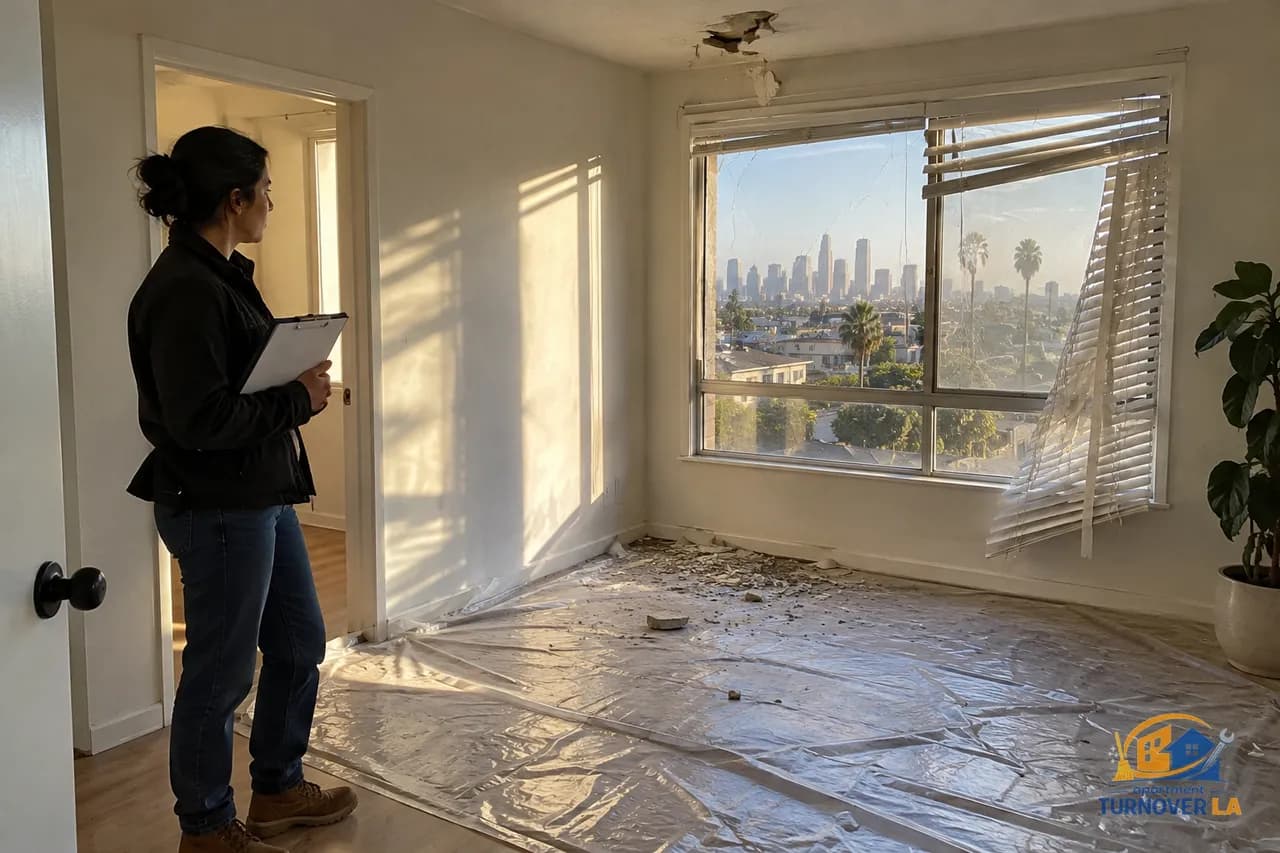
Quick answer: After a tornado warning or confirmed tornado in Los Angeles, keep tenants and crews out until officials and the building owner clear access. In the first 24 hours, photograph every affected room, stop active water entry if it is safe, and secure doors and windows. Then separate emergency safety work from ordinary turnover work so the unit can be repaired and documented properly.
For Los Angeles landlords, the first job after tornado damage is not cleaning up fast. It is establishing whether the building is safe, what changed, and what has to be secured before anyone enters for a turnover. Wind damage can be limited to a broken window and wet carpet, or it can expose roof, electrical, or structural problems that need a qualified professional before a make ready crew starts. Get instant quote in 30 seconds
Is the apartment safe to enter after a tornado?
Do not treat an apparently minor tornado or severe wind event as a routine maintenance call. Enter only after local officials, the owner, and any required building professional have cleared the property for access. Keep people out if there are downed lines, a leaning exterior wall, standing water near electrical equipment, a damaged gas meter, a compromised stairway, or broken glass in common paths.
For a small multifamily property, start at the street and work inward. Photograph the roofline, gutters, exterior windows, gates, and shared walkways before moving through the unit. In dense areas such as Downtown LA, check balconies, rooftop equipment, exterior corridors, and neighboring construction debris as well as the unit itself. A unit can look orderly while a displaced vent cap or roof penetration is allowing water into the ceiling cavity.
Do not send a cleaner, painter, or tenant in to investigate a possible structural or electrical hazard. Their work begins after the site is safe and the scope is defined.
What should a landlord do in the first 24 hours?
The first 24 hours should produce a clear record, prevent additional damage where it is safe to do so, and give tenants a usable update. Do not begin with cosmetic cleanup. Use this sequence:
- Confirm whether the property is safe to access and whether any emergency services direction applies.
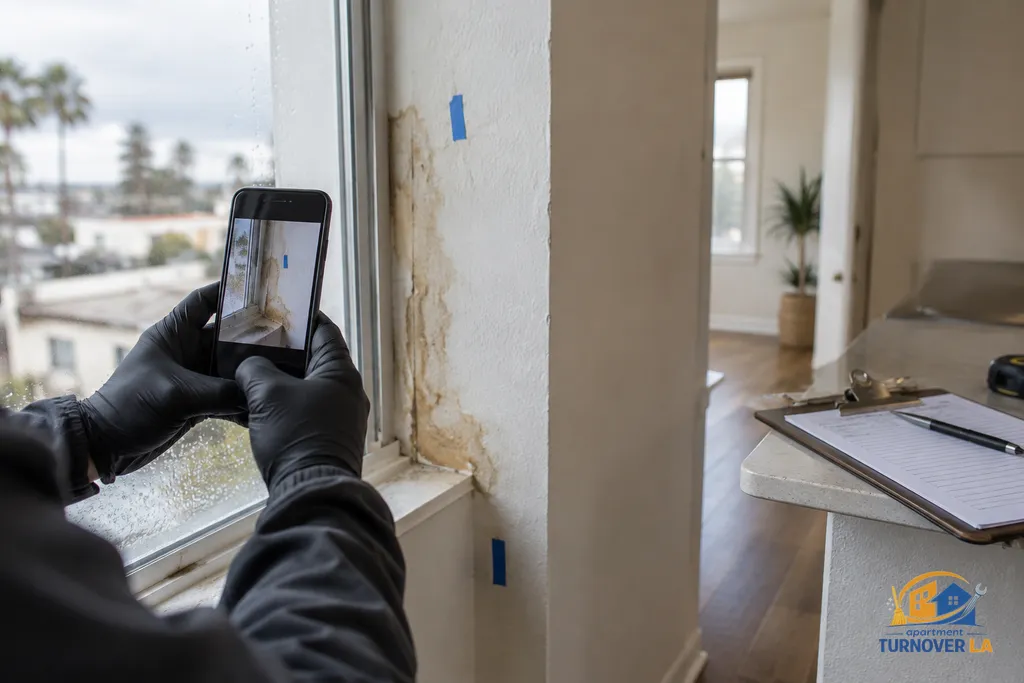
- Take wide photos and video of the exterior, common areas, and every room before moving items or wiping surfaces.
- Note active leaks, broken glazing, roof debris, odor, wet materials, and visible electrical concerns.
- Protect openings with appropriate temporary measures, but do not perform work beyond the crew's training or authority.
- Send affected tenants a factual written status update, including access limits and the next inspection time.
- Open separate work items for life safety, weather intrusion, unit damage, and ordinary turnover items.
This separation matters. A scuffed wall from a normal move out is a turnover issue. Wet drywall under a wind-damaged roof is a property damage issue. Combining them in one vague invoice makes later decisions harder. Keep the move out condition report, storm photos, and repair notes together, then compare them against your normal apartment turnover checklist.
How should you document tornado damage before cleanup?
Document first, clean second. Start with wide shots that establish the room, then take medium shots of the affected wall, window, ceiling, floor, or fixture. Finish with close shots of the actual damage. Repeat the same order for each room and avoid relying on one dramatic detail photo that cannot show location or scale.
Include date, time, unit number, and a short description in your file names or inspection log. Photograph personal property separately from building components. If a tenant reports damage, acknowledge the report without deciding fault on the spot. Your record should show what you observed, when you observed it, and what was done to prevent further loss.
This is also the time to preserve pre-loss evidence. Pull the most recent move in photos, turnover report, and maintenance records. For a vacant unit, the 12-point report included with a Make Ready service can provide a useful baseline when it was completed before the event. A listing photo is not a substitute for a condition report, but it can help establish what a room looked like before a storm.
Need the unit turned before the next tenant?
We do the move-out clean and send you a photo report you can attach to the deposit itemization.
From $225 · 48-hour turnaround
Get an instant quoteCan tornado damage be deducted from a tenant's deposit?
Usually, storm damage is not something to automatically charge to a departing tenant. California security deposit rules focus on unpaid rent, cleaning needed to restore the premises to the initial level of cleanliness, and repair of tenant-caused damage beyond ordinary wear. A tornado, roof failure, or wind-driven water intrusion calls for fact finding, not a deposit assumption.
Read the statutory categories in California Civil Code §1950.5, and keep storm-related invoices distinct from documented tenant-caused damage. California's DCA Landlord-Tenant Guide is also a practical starting point for understanding the deposit process. If a tenant moved out shortly before the event, preserve the original move-out condition documentation and the timeline of when the storm damage occurred.
Los Angeles rental rules can add operational constraints, particularly for rent-stabilized units. Review the LAHD Rent Stabilization Ordinance before making a decision that affects occupancy, access, or a tenancy. For the turnover portion, use a detailed itemized record and follow the normal deadline process described in our guide to California's 21-day deposit return rule.
Which turnover work should wait until the repair scope is clear?
Wait on finish work until the source of the damage is controlled. It makes no sense to repaint a ceiling before the roof or window issue is fixed, or to deep clean a unit while wet drywall is still being evaluated. The most common scheduling mistake after a storm is putting cosmetic work ahead of drying, safety checks, and building-envelope repairs.
Once the unit is cleared, divide the scope into four buckets: safety, weather intrusion, repair, and rent-ready finish. Safety can include damaged door hardware, loose fixtures, and access control. Weather intrusion covers the source and any wet materials. Repair includes drywall patching, texture matching, and paint preparation after the affected area is dry. Finish work includes cleaning, floor detailing, and final photos.
TurnOver LA can handle the post-clearance punch list through apartment repair services, cleanout work when damaged items need removal, and lock rekey service if exterior doors or keys are compromised. Jobs are scheduled on a flat 48-hour turnaround, with no rush or same-day upcharge. Materials such as paint, replacement parts, and fixtures are identified at the on-site inspection and added only with owner approval. Get instant quote in 30 seconds
When is the unit ready to show again?
A unit is ready to show when it is safe, dry, secure, clean, and honestly represented. That standard is different from simply looking presentable in a doorway. Before listing, confirm that windows and doors close and lock, ceilings and walls show no active moisture issue, power and required fixtures are functioning, debris is removed, and common access routes are safe.
Run the final inspection in the order a prospect will experience the home. Start outside the building, walk the path to the door, test entry hardware, then move room by room. Check natural light and window operation because storm damage often shows up at the glass, screens, trim, or blinds. Photograph the final condition after repairs, not during the middle of cleanup.
If the unit is being remarketed, use current media rather than old photos that may no longer match the space. The TLA Launch Pad listing media package is designed for a finished, rent-ready unit. It should come after repairs and cleaning, not before. For a storm-affected vacancy, current photos also reduce disputes about whether a listing accurately represented the unit.
How do you prevent a tornado response from becoming a long vacancy?
The practical way to limit vacancy is to make decisions in order: clear access, document, stop ongoing damage, approve the scope, complete repairs, then finish the turnover. Skipping ahead often creates rework. A fast paint job that has to be redone after a moisture issue is resolved costs more time than an extra inspection at the beginning.
Assign one person to own the timeline, even if several vendors are involved. That person should know which units are unsafe, which have active leaks, which are waiting for owner approval, and which are ready for final turnover. Keep storm restoration tasks apart from standard cleaning and make-ready tasks, but schedule the handoff between them before the repair crew leaves.
For an occupied unit, document access notices and tenant communication. For a vacant unit, secure it at the end of every workday and keep an updated photo record. Once repairs are complete, close out the unit with a final condition check, cleaning, and new listing media if needed. Get instant quote in 30 seconds