
Quick answer: A turnover lease is usually a commercial lease where part of the tenant's rent rises with their sales, often after sales pass an agreed breakpoint. It is not the same thing as an apartment turnover. For a residential vacancy, TurnOver LA's Make Ready starts at $225 for a studio and includes a deep clean plus a 12-point photo report within 48 hours.
A retail tenant may pay base rent plus a percentage of gross sales, while an apartment owner uses the word turnover to describe the work between residents. Keeping those two meanings separate prevents lease-language mistakes and helps owners schedule the right work before a new resident moves in. Get instant quote in 30 seconds
What is a turnover lease?
A turnover lease, also called a turnover-rent lease, is a commercial lease that links some or all rent to a business tenant's revenue. The tenant commonly pays a fixed base rent, then pays additional rent when reported sales exceed a stated threshold, called a breakpoint or overage point. A boutique, restaurant, salon, or retailer in Los Angeles may use this structure when the landlord and tenant want rent to reflect the location's trading performance.
For example, a lease could require base rent plus 5% of gross sales above a $500,000 annual breakpoint. The percentage, reporting period, definition of sales, and exclusions all belong in the signed lease. This is a commercial deal point, not a default rule under California residential tenancy law. Owners should have commercial lease counsel review the actual language, especially sales definitions and audit rights.
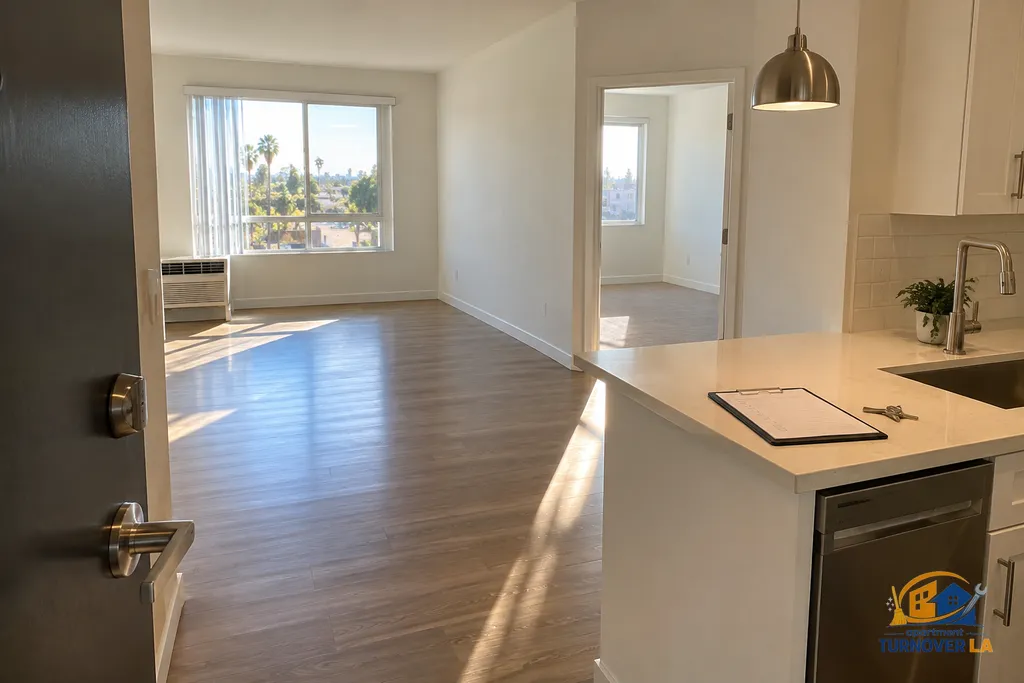
How does turnover rent work in a commercial lease?
Turnover rent works only when the lease defines the numbers well enough to calculate and verify them. The landlord receives a predictable minimum through base rent, while the turnover component lets rent rise if the business performs beyond the negotiated breakpoint. In a pure turnover arrangement, rent may be based almost entirely on sales, but that is less common than base rent plus an overage provision.
The basic calculation is: qualifying sales above the breakpoint multiplied by the turnover percentage. If annual qualifying sales are $650,000, the breakpoint is $500,000, and the rate is 5%, the overage rent is $7,500. Whether online orders, delivery-platform sales, refunds, sales tax, gift cards, and affiliate revenue count can materially change that result. The lease needs to say so, rather than relying on a casual understanding between the parties.
Is a turnover lease the same as an apartment turnover?
No. In residential rental operations, an apartment turnover is the interval and scope of work required after one resident leaves and before the next resident takes possession. It can include cleaning, patching, paint touch-up, lock work, safety checks, junk removal, photographs, and a condition record. The tenant's income or sales have nothing to do with the incoming resident's rent.
This distinction matters in Los Angeles because deposit accounting and rent rules have separate requirements. California's California Civil Code §1950.5 addresses security deposits and the timing of an itemized statement, while commercial turnover-rent clauses are negotiated contract terms. For the residential workflow, start with a documented apartment turnover checklist and distinguish actual tenant-caused damage from normal wear and tear in California. A clean unit is not, by itself, proof that every turnover cost can be charged back.
What terms should a turnover-rent clause include?
A usable turnover-rent clause should answer who reports sales, what revenue counts, when the landlord gets paid, and how disputes are handled. Leaving any of those points vague can turn an apparently simple percentage into a bookkeeping fight. Before signing, confirm these items in writing:
- The base rent, turnover percentage, and exact breakpoint.
- A precise definition of gross sales and every permitted exclusion.
- Whether online, delivery, catering, wholesale, and gift-card revenue are included.
- The reporting frequency, records required, and payment due date.
- The landlord's audit rights, notice procedure, and who pays an audit shortfall.
- The treatment of late reports, refunds, store closures, and lease assignment.
For a small retail owner, monthly sales reports may be more useful than waiting for an annual true-up. For the tenant, a clear audit window and confidentiality obligation protect sensitive business data. These are business terms that should be tailored to the property and tenant type.
Need the walls done before you re-list?
Turnover painting, scuff removal and patching, with a photo record of the condition we left behind.
$395 per room · 48-hour turnaround
Get an instant quoteWhy does the distinction matter for LA landlords?
Los Angeles owners often manage both commercial storefronts and residential units, sometimes in the same building. The lease structures cannot be swapped casually. A storefront's rent can be negotiated around sales performance, but a residential tenancy is governed by applicable state and local rules, including the LAHD Rent Stabilization Ordinance for covered units.
The practical risk is operational confusion at vacancy. A commercial tenant leaving a shop may trigger a lease reconciliation for percentage rent, fixture obligations, and a surrender condition. A residential move-out requires condition documentation, deposit timing, and a rent-ready scope. These are different files, different timelines, and often different vendors. On the residential side, a written condition record before work begins is valuable because it separates ordinary reset work from repairs that may require deposit documentation.
How much does a residential turnover reset cost in LA?
Across LA, basic move-out or turnover cleaning for a smaller apartment is commonly quoted in the general market at about $150 to $400, with condition, parking, access, and add-on work moving the number. That is market context, not TurnOver LA pricing. With TurnOver LA, Make Ready is a flat $225 for a studio, $255 for a 1 Bedroom, $335 for a 2 Bedroom, or $425 for a 3BR or larger. It includes a deep clean and a 12-point photo report, with a 48-hour turnaround.
If a unit needs more than the reset scope, quote each trade separately. For example, paint touch-up only is $200, a small drywall patch plus texture is $150 per patch, and a full apartment rekey for up to 2 locks is $150. See the full Make Ready service, or schedule specific wall and hardware work through painting and drywall and lock rekey service. The quote covers labor and crew supplies. Paint, parts, and fixtures are inspected on site, then added only with owner approval. Get instant quote in 30 seconds
Does the 2% rule apply to turnover leases?
No. The 2% rule is an informal real estate investing screen, not a turnover-rent rule and not a California legal standard. Investors use it to ask whether a property's monthly rent might equal roughly 2% of its purchase price. In high-cost Los Angeles markets, it often does not fit current acquisition prices, financing, operating costs, or regulated-rent constraints.
A turnover lease instead asks a different question: how much of a commercial tenant's sales should become rent after a threshold is crossed? The two concepts can appear in the same owner's financial model, but they do different jobs. One is a rough acquisition heuristic. The other is an enforceable lease calculation. Do not use a 2% investing target to set a retail percentage-rent clause, and do not describe an apartment make-ready scope as a turnover lease.
What should an owner do when a tenant leaves?
First, identify the tenancy type. For a commercial tenant, review the surrender clause, final sales-report obligations, overage-rent reconciliation, and fixture or restoration duties. For a residential resident, document condition, preserve the move-out timeline, and build a focused scope for cleaning and repairs. The California DCA Landlord-Tenant Guide is a useful state-level reference, but local rules and the signed agreement still matter.
Second, move quickly on the physical vacancy. Every idle day can mean roughly $80 to $200 in lost rent opportunity depending on the LA submarket. A tight scope avoids waiting for one issue to reveal the next: clean first, photograph condition, approve repairs, secure the unit, then market it. For an apartment, that is a turnover workflow, not a turnover lease. Get instant quote in 30 seconds