Quick answer: A condo turnover checklist should cover possession and HOA access, room-by-room condition, safety systems, repairs, cleaning, security, final photos, and records for the security-deposit file. Use seven working sections so nothing gets lost between move-out and showing. For a basic reset, TurnOver LA Make Ready starts at $225 for a studio and includes a deep clean plus a 12-point photo report.
A useful condo turnover checklist is a handoff system, not just a cleaning list. It should tell your crew what to inspect, what needs approval, what the HOA needs before entry, and what evidence belongs in the tenant file. Get instant quote in 30 seconds
What should happen before anyone starts cleaning?
Start by confirming legal possession, access, and the unit's baseline condition. Collect every key, fob, garage remote, mailbox key, parking tag, and amenity credential. In a condo, also confirm the HOA's loading rules, elevator reservation, contractor insurance requirements, work hours, and disposal rules before scheduling a cleanout or repair. A crew that cannot use the service elevator can lose a morning waiting in the lobby.
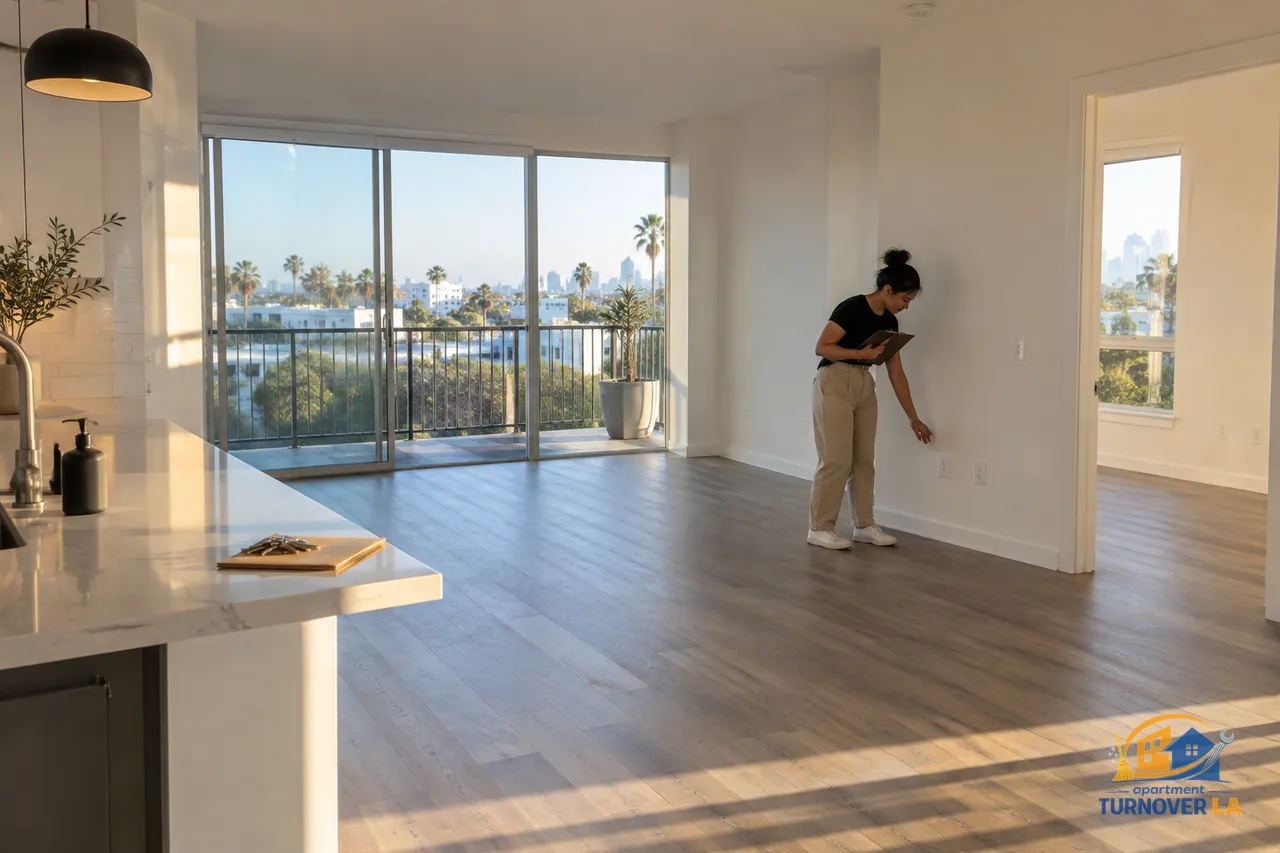
Walk the unit before moving or cleaning anything. Photograph each room wide, then capture damage close up with a date-stamped file name. Note abandoned property separately from trash, since disposal decisions can affect the deposit accounting. California's deposit rules and notice requirements are summarized in California Civil Code §1950.5. Keep the signed move-in condition report, move-out photos, invoices, and tenant communications together. For the wider deadline sequence, use this guide to California's 21-day deposit return rule.
Which rooms and surfaces belong on the inspection list?
Inspect every room in the same order every time so a small item does not disappear in the rush. Begin at the entry and move clockwise through the unit. This creates a repeatable record for one owner, an onsite manager, or a remote property manager reviewing photos later.
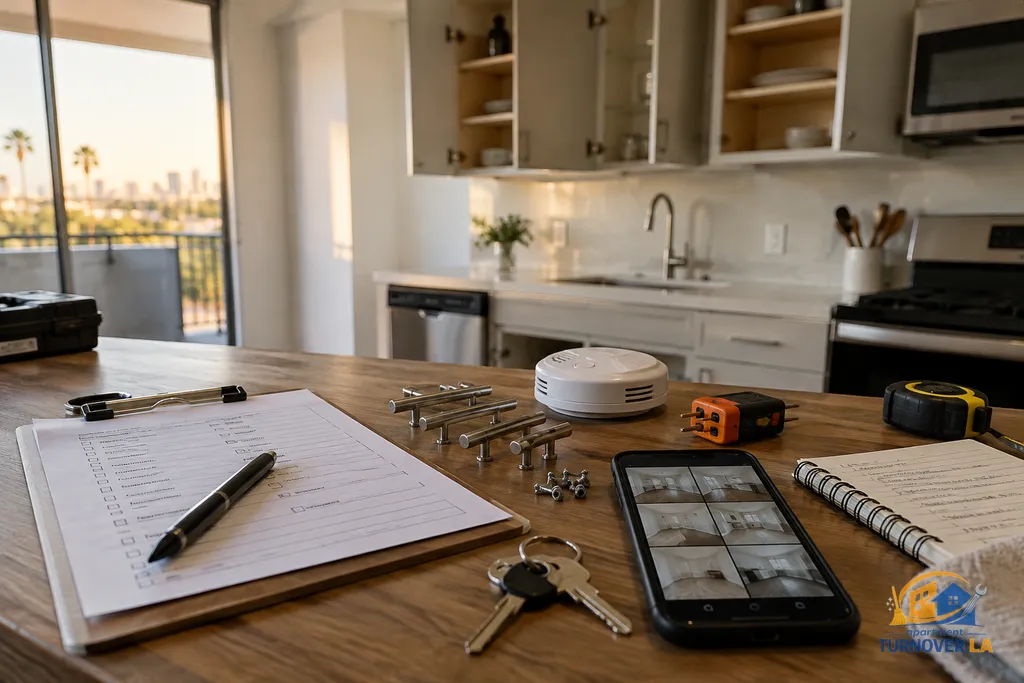
- Entry and living areas: Test locks, door closer, blinds, windows, outlets, switches, smoke alarms, walls, ceilings, flooring, and HVAC registers.
- Kitchen: Check appliance operation, cabinet hinges, drawers, sink drainage, garbage disposal, backsplash grease, counters, and refrigerator shelves.
- Bathrooms: Test toilet flush, exhaust fan, hot water, drains, grout, caulk, vanity hardware, mirrors, and signs of leaks below the sink.
- Bedrooms: Check closet doors and tracks, window latches, outlets, lighting, flooring, and wall scuffs.
- Laundry and utility areas: Inspect washer connections, dryer venting where applicable, drain pans, filters, and shutoff valves.
- Balcony or patio: Check drains, railings, screens, storage left behind, and HOA restrictions on visible items.
- Parking and storage: Match assigned spaces and storage lockers to the lease, then document any remaining property.
How do you separate normal wear from chargeable damage?
Do not let the turnover checklist become an automatic charge list. Ordinary aging, light wall scuffs, and reasonable wear from normal use are different from tenant-caused damage. California guidance focuses on the actual condition, the useful life of an item, and the reasonable cost to restore it, not a full replacement charge whenever something looks used. Review normal wear and tear in California rentals before assigning deductions.
Write observations in factual terms. “Two nail holes near bedroom window” is useful. “Walls are bad” is not. Record the location, approximate size, likely remedy, and photo number. For example, a small hole may call for a drywall and paint repair, while broad fading or accumulated scuffs may be routine turnover work depending on the unit's history.
Do not bury disputed items in the cleaning notes. Give them their own line, attach photos taken before work begins, and retain the invoice after the repair is complete. That separation makes the final accounting easier to explain and review.
What maintenance and safety checks cannot wait?
Run safety and function checks before cosmetic work. Confirm that smoke alarms and carbon monoxide alarms are present and functioning, GFCI outlets reset properly, bathroom fans run, toilets do not leak, and windows open and latch as intended. Test every appliance that conveys with the tenancy. A refrigerator that appears clean but is not cooling is a showing-day problem, not a cleaning problem.
Also check visible water risks: under-sink supply lines, disposal connections, dishwasher hoses, toilet bases, water heater closets, and HVAC condensate areas. In condos, a small leak can affect a neighboring unit and trigger immediate HOA involvement. Photograph moisture staining before a patch or repaint covers it.
Group the remaining punch items by trade and urgency. A loose cabinet pull, sticking closet door, damaged outlet cover, and missing doorstop may fit in a handyman punch list. Escalate exposed wiring, active leaks, gas concerns, or compromised entry hardware instead of leaving them for a routine visit. The California DCA's California DCA Landlord-Tenant Guide is a useful reference for landlord responsibilities and habitability basics.
Need the walls done before you re-list?
Turnover painting, scuff removal and patching, with a photo record of the condition we left behind.
$395 per room · 48-hour turnaround
Get an instant quoteIn what order should a condo turnover be scheduled?
The order matters because cleaning before repairs often means paying to clean the same surface twice. A practical sequence keeps the unit protected and limits trade overlap:
- Secure possession, collect access devices, and complete the initial photo walk.
- Confirm HOA access, elevator, parking, work-hour, and trash requirements.
- Remove approved abandoned items and identify repairs requiring owner approval.
- Complete repairs, drywall patches, paint touch-up, and maintenance work.
- Deep clean the unit after dusty work is finished.
- Rekey locks or install approved access hardware after vendors are done entering.
- Perform a final walk, capture closeout photos, and release the unit for marketing or showing.
This sequence is especially useful in buildings where only one vendor can be booked into the freight elevator at a time. TurnOver LA completes jobs with a flat 48-hour turnaround, with no rush or same-day upcharge. Get instant quote in 30 seconds
How much should you budget for cleaning and the basic reset?
Across LA, independent turnover-clean quotes for a one-bedroom commonly fall around $200 to $400 before repairs, rekeying, or junk removal, depending on condition, access, and whether the quote includes a documented inspection. With TurnOver LA, a 1 Bedroom Make Ready is a flat $255 and includes a deep clean plus a 12-point photo report. A Studio Make Ready is $225, a 2 Bedroom Make Ready is $335, and a 3BR or larger Make Ready is $425.
Keep cleaning, repairs, materials, and security work as separate checklist lines. That prevents a low cleaning quote from masking needed maintenance. TurnOver LA's quote covers labor and the crew's own supplies. Paint, parts, and fixtures are priced at the on-site inspection and added to the final invoice only with your approval first.
If your unit needs an access reset, the listed price for a full apartment rekey, up to 2 locks, is $150. For a limited cosmetic scope, paint touch-up only is $200. Compare those discrete tasks against the vacancy cost of waiting. In many LA submarkets, an empty unit can cost roughly $80 to $200 per day in lost rent.
What records should close the turnover file?
Close the file only after the final condition is documented. Save before and after photos, vendor invoices, materials approvals, inspection notes, access-device inventory, HOA correspondence, and the final readiness date. If you charged the former tenant for eligible work, the documentation should clearly connect the original condition, remedy, and cost.
A final photo set does more than support deposit accounting. It gives leasing a truthful snapshot of the unit just before marketing, and it gives maintenance a baseline if an issue appears during the next tenancy. TurnOver LA's Make Ready service includes a 12-point photo report, which can serve as the closeout layer after cleaning and repairs.
For deposit limits, remember that AB 12 (2023) security deposit cap changed the general California cap, with limited exceptions. The rule does not replace the need for an itemized, well-supported accounting. Keep your checklist tied to evidence, not assumptions.
What is the simplest condo turnover checklist to use every time?
Use the same seven headings on every vacancy: possession and HOA access, initial photos, room inspection, safety and maintenance, repair approvals, cleaning and security, then final records. The checklist should identify who owns each task and whether it is complete, pending approval, or blocked by building access. That is more useful than a long generic list with no handoff point.
For a fresh unit condition baseline, schedule Make Ready service after repairs are scoped. If the unit has an odor, heavy grease, or a long vacancy, compare the scope with this move-out cleaning guide for Los Angeles. Finish with a final walk and photos before the next resident sees the unit. Get instant quote in 30 seconds