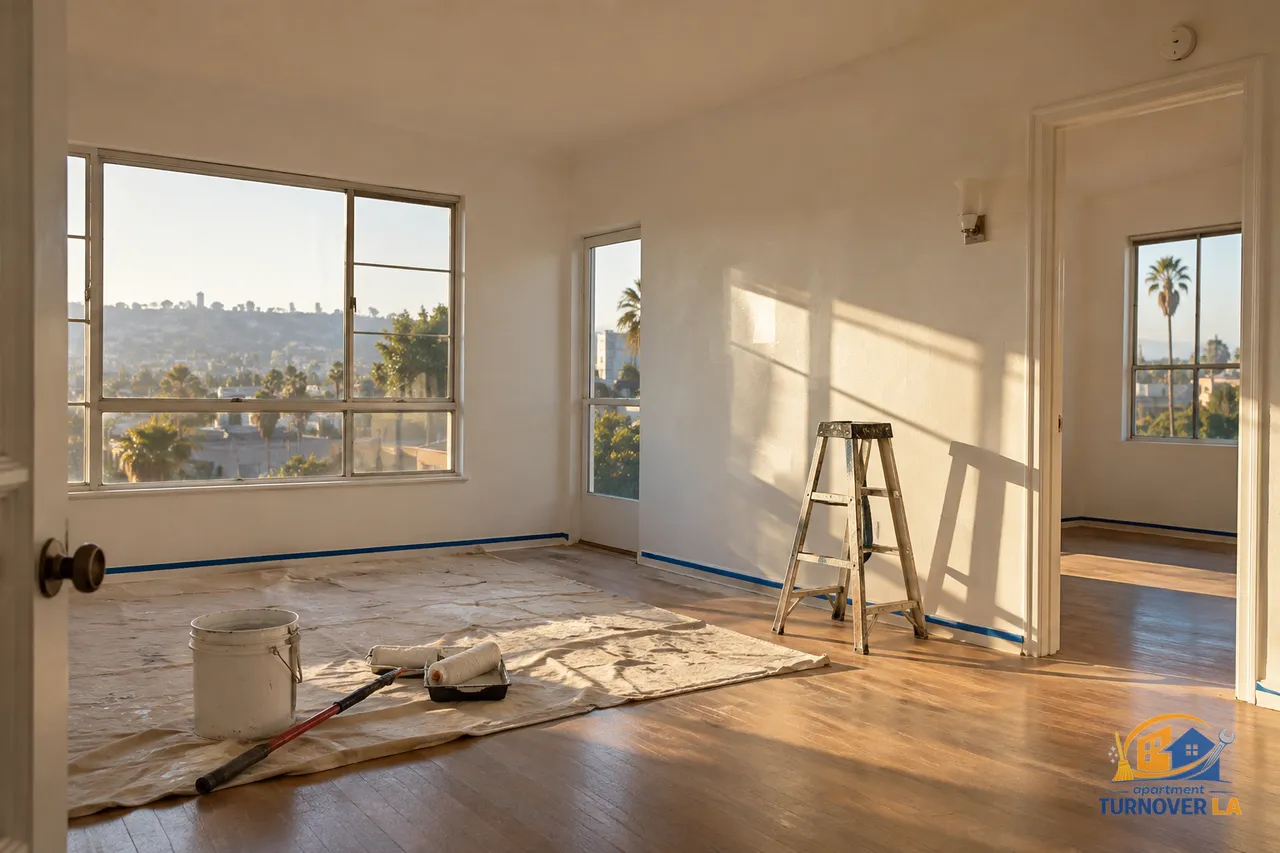
Quick answer: Published general market estimates for painting an apartment run from $700 to $3,100 for a typical apartment-wide job, while walls, ceilings, and trim can push a full scope higher. TurnOver LA prices repainting at $395 / room or paint touch-up only at $200, with a 48-hour turnaround; paint, parts, and other job materials are approved after the on-site inspection.
There is no useful single average for every LA apartment because room count, wall condition, ceiling work, and color changes drive the labor scope. For a vacant rental, the practical question is whether a targeted touch-up will lease cleanly or whether full room repainting will prevent a second visit after showings.
Get instant quote in 30 seconds
What determines the cost to paint an apartment?
The biggest cost driver is scope, not just square footage. A studio with a few handprint areas may only need blended touch-up work. A one bedroom with nicotine staining, mismatched patches, dark accent walls, or repeated roller marks usually needs repainting room by room to look consistent under leasing photos and daylight. Ceilings, trim, cabinets, and drywall repairs are separate decisions because they require different prep and dry times.
Access also changes the plan. A third-floor walk-up in Koreatown, a building with restricted loading hours, or an occupied unit requires more coordination than an empty unit with clear access. TurnOver LA's apartment painting service is structured for turnover scopes, with labor and the crew's own supplies included. Paint, replacement parts, and fixtures are identified at the inspection, then added only with owner approval. That separation keeps a low labor rate from becoming a surprise invoice when the unit needs more than a standard wall refresh.
What does apartment painting pricing actually look like in LA?
For context, published general market estimates place a typical apartment-wide painting job at $700 to $3,100. That broad range is not a TurnOver LA price, and it can rise when a quote includes ceilings, trim, extensive preparation, or premium finishes. TurnOver LA lists repainting at $395 / room and paint touch-up only at $200, then completes jobs on a flat 48-hour turnaround.
| Scope | General market context | TurnOver LA listed labor rate |
|---|---|---|
| Apartment-wide wall painting | Published estimates: $700 to $3,100 | Repainting per room: $395 / room |
| Small cosmetic wall marks | Often quoted as part of a painter's minimum visit | Paint touch-up only: $200 |
| Ceiling or baseboard and trim work | Usually expands prep and masking time | Ceilings and baseboard/trim: $125 |
| Small hole repair before paint | Condition dependent | Small drywall patch + texture: $150 / patch |
| Larger damaged wall area | Condition dependent | Medium drywall repair: $240 / patch |
The room rate is useful because it lets a manager separate lease-ready rooms from rooms that only need cleaning and spot correction. It also avoids treating an apartment-wide online estimate as if it were a reliable quote for a specific vacant unit.
Get instant quote in 30 seconds
When is a touch-up enough instead of repainting a room?
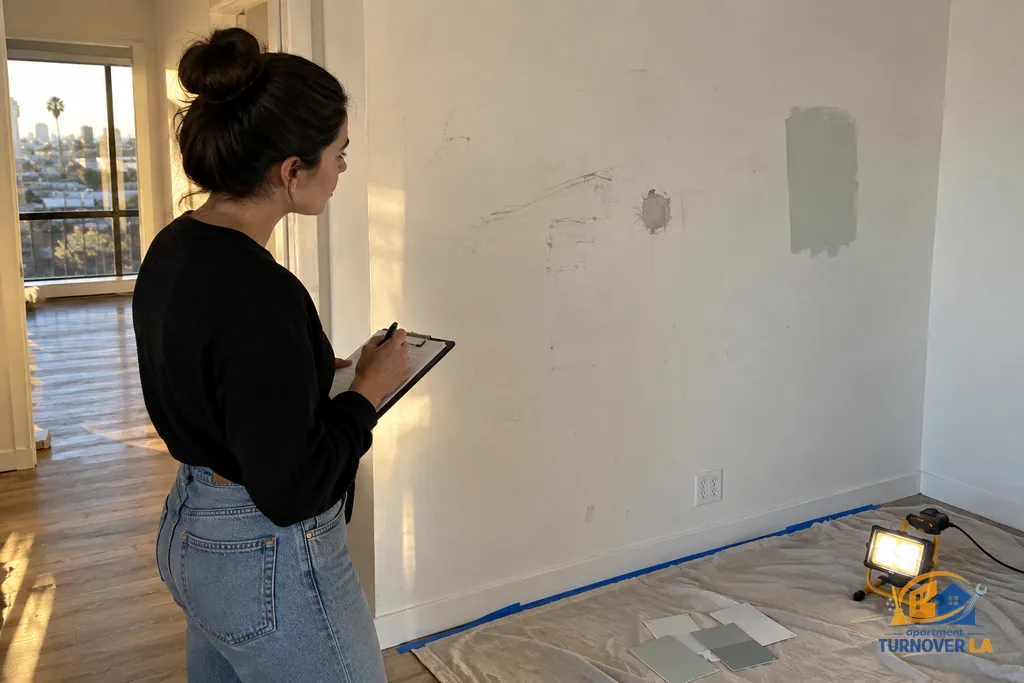
Touch-up is enough when the existing paint is cleanable, the original color can be matched, and marks are limited to isolated scuffs or small prior repairs. It works best when the same sheen and product are known. A wall can look close under a work light and still flash differently in sunlight if new paint has a different sheen, if the old coating has faded, or if the repair has not been feathered properly.
Use a full room repaint when the unit has broad wear patterns, an unknown paint history, color changes from prior tenants, or a repair that will remain visible after spot work. TurnOver LA charges $200 for paint touch-up only, compared with $395 / room for repainting. The decision is operational: spending less on a touch-up is sensible only if it prevents a callback and does not make listing photos look uneven. For a detailed walk-through before choosing, pair the scope with drywall and repair work where needed.
Need the walls done before you re-list?
Turnover painting, scuff removal and patching, with a photo record of the condition we left behind.
$395 per room · 48-hour turnaround
Get an instant quoteWhat should a landlord inspect before painters arrive?
Inspect the vacant unit in a fixed order before paint is authorized. Start with entry walls, living room corners, bedroom headboard areas, kitchen splash zones, bathroom ceilings, baseboards, closet interiors, doors, and every prior patch. Photograph any damage before crews begin, especially holes, gouges, smoke residue, crayon, grease, and water staining. This documentation helps distinguish a normal turnover refresh from tenant-caused damage.
A practical pre-paint sequence is:
- Confirm the former tenant has surrendered possession and remove remaining belongings.
- Photograph wall conditions and identify damage separately from ordinary wear.
- Test for active leaks or moisture before approving patching and paint.
- Choose touch-up or full repaint by room, based on color match and visible wear.
- Approve paint material and any repair material after the on-site inspection.
- Schedule cleaning after sanding, patching, and painting are complete.
That last step matters. Cleaning before wall prep often creates duplicate work because sanding dust settles on floors, ledges, and appliances. A Make Ready service combines deep cleaning with a 12-pt photo report after the work is complete. For a fuller sequencing plan, use this apartment turnover checklist.
Can a landlord charge for repainting in California?
A landlord can charge a departing tenant for paint-related damage beyond ordinary wear, but not simply because a unit needs its routine turnover refresh. California Civil Code §1950.5 permits security deposit deductions for repair of tenant-caused damage and specifically excludes ordinary wear and tear. The amount should be necessary and reasonable, supported by records, and handled within the deposit accounting rules.
Scuffs from normal living, minor fading, and the expected aging of paint are usually operating costs, not a repainting bill to pass through. Large unauthorized paint changes, holes beyond minor picture hangers, intentional marks, or substantial wall damage are different facts. Keep move-in photos, move-out photos, inspection notes, invoices, and a clear explanation of the repair. Review California Civil Code §1950.5 and the California DCA Landlord-Tenant Guide before making a deduction. For practical examples, see normal wear and tear in California and the guide to landlord turnover charges.
How often does a landlord need to repaint an apartment?
California does not impose a universal calendar that requires every landlord to repaint every apartment after a set number of years. The duty is to maintain habitable premises, address conditions such as peeling paint or moisture-related deterioration when they affect the unit, and avoid confusing cosmetic refresh timing with a statutory repaint cycle. Local rules can add important operating constraints, especially for regulated buildings.
In LA RSO properties, a turnover is a good point to document conditions and confirm that work will not interfere with other obligations. The LAHD Rent Stabilization Ordinance is the right starting point for local program requirements, while the paint decision itself should be based on condition. In practice, repaint when the walls cannot be cleaned to a lease-ready standard, when touch-up will visibly flash, after a repair affects the finish, or when the unit's color no longer supports marketing. This condition-based approach avoids both premature repainting and repeated failed touch-ups.
How can painting reduce vacancy time instead of extending it?
Painting saves time when it is scoped once, approved promptly, and sequenced with repairs and cleaning. In Los Angeles, vacancy loss can run $80 to $200 per day depending on the submarket. That means a delayed decision over one visibly worn room can cost more than resolving the room correctly before photography and showings begin.
The useful turnover sequence is inspect, approve materials, repair drywall, paint, deep clean, then take final condition photos and listing media. Avoid sending cleaners before sanding or asking painters to work around a junk-filled unit. If the apartment needs a cleanout first, complete that before wall assessment so hidden damage is visible. TurnOver LA's 48-hour turnaround applies to every job with no rush or same-day upcharge, which lets managers plan the next task rather than wait for an open-ended painter schedule. The goal is not to repaint every surface. It is to deliver a consistent, documented unit that can be photographed and shown without another preparation cycle.