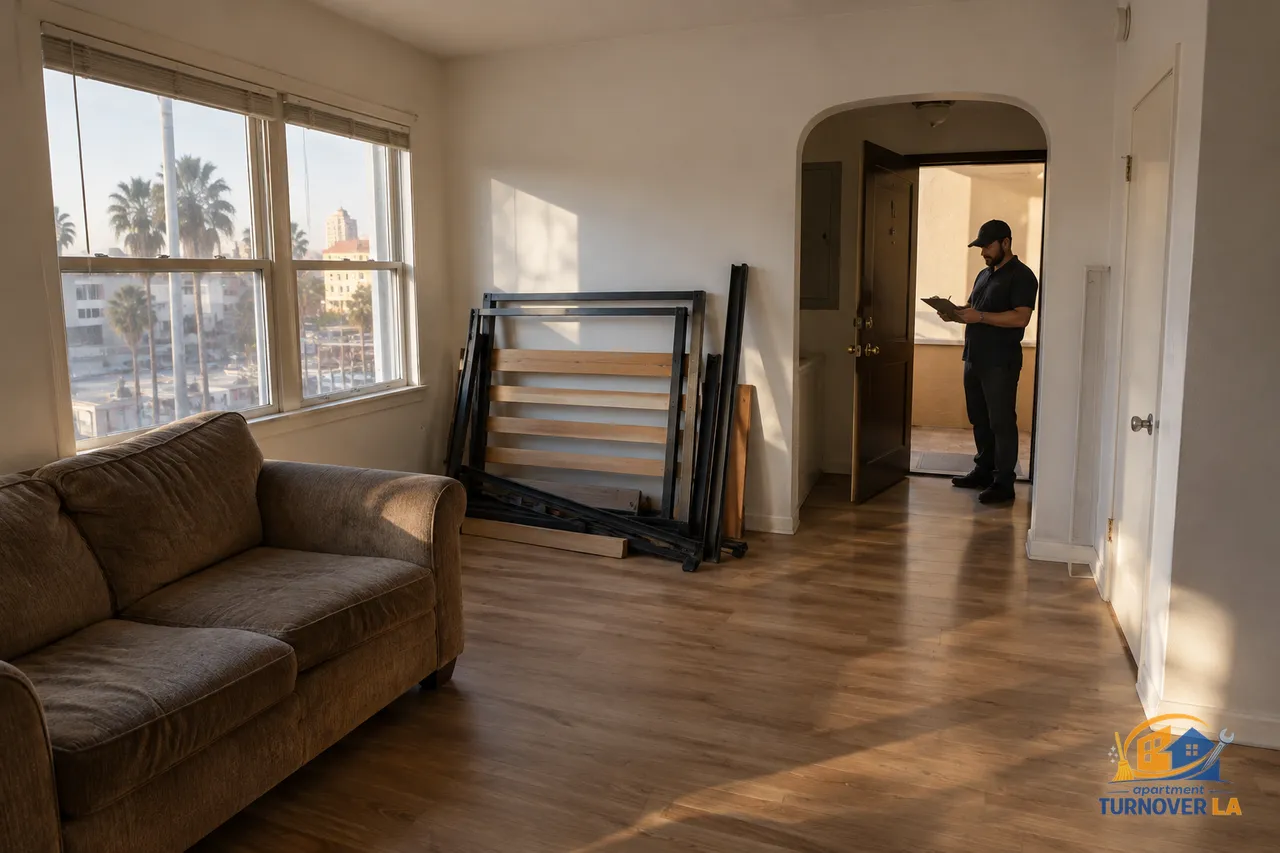
Quick answer: 311 Los Angeles bulky item pickup is a free City service for eligible residential customers, but it works best when you can wait for the assigned collection and place accepted items where the crew can access them. For a vacant apartment with a lease deadline, a private cleanout is often more predictable: across LA, private furniture removal commonly runs $150 to $600, while TurnOver LA charges $500 for a unit cleanout / junk haul with a 48-hour turnaround.
311 is a useful disposal route for a couch, mattress, or other large item from an occupied unit. It is less useful when abandoned furniture is holding up keys, cleaning, repairs, and listing photos in a vacant apartment. Landlords should first confirm possession, document what was left behind, and match the removal method to the unit's actual deadline. Get instant quote in 30 seconds
How does 311 bulky item pickup work in Los Angeles?
311 bulky item pickup lets eligible LA residential customers request collection of large household items that do not fit in normal trash service. The practical process is simple: submit a request through the City system, follow the placement instructions in the confirmation, and put only the approved items at the designated location by the stated collection window. Keep the request confirmation and take a quick photo after the items are set out.
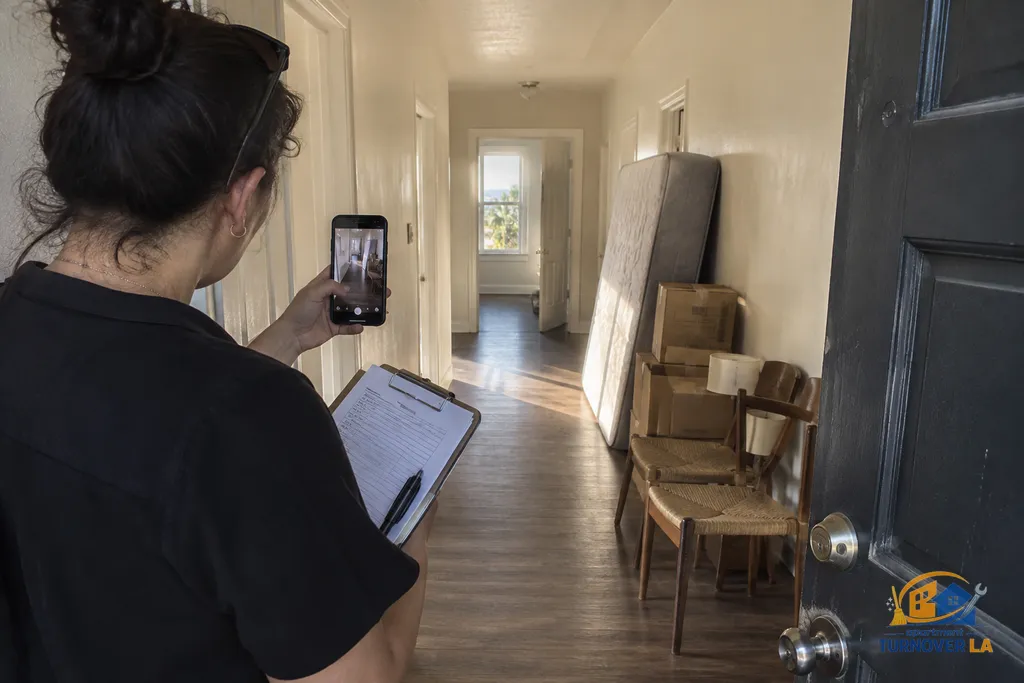
For an apartment building, access is the operational issue. A crew may not be able to enter a locked courtyard, navigate a long interior hallway, or collect items stored in a garage without clear access. Do not assume that leaving a sofa beside a dumpster solves the problem. It can create a common-area obstruction, invite more dumping, and delay the next contractor. In Hollywood, where older buildings often have tight side passages and alley bins, confirm the pickup location before moving heavy furniture.
What furniture can you put out for a 311 pickup?
Large, ordinary household items such as couches, chairs, mattresses, tables, and some appliances are the typical fit for a bulky-item request. The key is to use the City's current accepted-items guidance rather than treating 311 as a catch-all disposal service. Construction debris, hazardous materials, paint, electronics, and unusually large or commercial-volume loads can require a different disposal path.
For turnover work, separate the pile before anybody moves it. Put reusable furniture, regular bulky items, e-waste, chemicals, and renovation debris into distinct categories. That prevents a cleanout crew from arriving to find mixed materials that cannot be handled as one load. It also gives an owner a cleaner record of what was removed. If the departing resident left wall damage, loose fixtures, or debris from an unauthorized alteration, schedule the removal separately from the corrective work. Our painting and drywall service can address patches after the room is cleared and visible.
When is free pickup the right choice for a vacant unit?
Free pickup is the right choice when the items are eligible, the building can provide access, and the vacancy schedule has enough slack for the City's collection timing. It is especially sensible for one or two bulky pieces after an otherwise clean move-out. It can also work well when a resident is still in possession and can place their own items according to the request instructions.
It becomes a poor fit when the unit has a full furniture load, a pile of bagged trash, unknown materials in a storage area, or a new resident scheduled shortly. A delayed collection can cost more than it saves. LA vacancy loss commonly runs about $80 to $200 per day depending on submarket, and one missed showing window can matter more than the disposal fee. Before treating abandoned property as trash, review the notice and handling requirements that apply to the situation. The California DCA Landlord-Tenant Guide is a useful starting point for the landlord side of the decision.
How much should furniture removal cost in Los Angeles?
Across LA, private furniture removal commonly costs $150 to $600 for a small pickup or partial load, with stairs, volume, parking, labor time, and disposal type affecting the quote. A full unit can cost more when it includes multiple loads, heavy furniture, or prohibited materials that need a separate vendor. With TurnOver LA, a unit cleanout / junk haul is $500, with a flat 48-hour turnaround. An additional junk load is $500 / load when the volume exceeds the first load.
That comparison matters because 311 is free but may not align with a rent-ready deadline. A private cleanout price buys a defined turnover step, not merely a curbside collection attempt. TurnOver LA's quote covers labor and the crew's own supplies. If a job needs materials such as paint, parts, or fixtures after the contents are removed, those are priced during the on-site inspection and added only with owner approval. Get instant quote in 30 seconds
Need the walls done before you re-list?
Turnover painting, scuff removal and patching, with a photo record of the condition we left behind.
Get an instant quoteWhat should a landlord do before hauling away tenant furniture?
Document first, then remove only after you have confirmed the unit is legally ready for turnover. California deposit rules and abandoned-property issues do not disappear because a couch is blocking the living room. California Civil Code §1950.5 governs much of the security-deposit accounting process, while property left behind can involve separate notice obligations.
Use this five-step field process:
- Photograph every room, closet, balcony, and storage area before moving anything.
- Create a simple item list, including brand, condition, and any obviously valuable property.
- Save the move-out inspection, possession date, keys returned, and communications with the former resident.
- Separate apparent personal property from clear trash, hazardous materials, and building-owned fixtures.
- Confirm the required notice process with qualified local legal advice before disposal, then retain the cleanout invoice and after photos.
This record also supports a clearer accounting conversation. For a deeper walkthrough of deposit timing, see California's 21-day deposit return rules and the guide to normal wear and tear in California.
Can you get free furniture picked up through donation?
Donation can be a good option for furniture that is clean, complete, safe, and still useful. Some nonprofit and reuse organizations offer pickup in parts of Los Angeles, but acceptance depends on condition, location, crew capacity, and the organization's current schedule. A stained mattress, broken particleboard dresser, smoke-affected sofa, or unit full of mixed items is unlikely to qualify.
Do not build a turnover calendar around a donation pickup until the organization has confirmed the item list and appointment. Take wide and close photos first, and be honest about defects. If a donation partner declines the load, you need a backup removal plan that does not push cleaning and repairs into the next week. For usable items, donation can reduce landfill waste. For everything else, an orderly cleanout keeps the work moving and avoids leaving rejected items in a hallway or alley.
Why should cleanout happen before cleaning and repairs?
Cleanout should be the first physical turnover task because furniture hides damage, odors, pest evidence, wall marks, and flooring conditions. A cleaner cannot properly reach baseboards behind a sectional. A painter cannot assess a wall until shelving and abandoned nails are removed. And listing photos should never be scheduled while a unit still contains former residents' belongings.
The efficient sequence is removal, condition photos, repair scope, cleaning, lock work, then listing preparation. Once the space is empty, pair the haul with a Make Ready turnover service for deep cleaning and a 12-point photo report. That report creates a useful handoff record for an owner or property manager, especially when several vendors would otherwise visit at different times. If the unit needs more than a few pieces removed, the $500 unit cleanout / junk haul is easier to schedule as a defined first step than trying to coordinate multiple individual pickups.
How do LA rent rules affect a furniture turnover decision?
A bulky-item problem does not change the rules around a tenancy, deposits, or habitability. In rent-stabilized buildings, managers should be particularly careful not to let a rushed turnover process blur the line between a completed move-out and a disputed possession issue. The LAHD Rent Stabilization Ordinance provides the City's baseline information for covered units, while local counsel can advise on a specific fact pattern.
Operationally, the best practice is to avoid making disposal decisions from a single verbal report or an unverified vacancy. Confirm possession, preserve evidence, and then move quickly once removal is appropriate. This protects the owner's file and keeps the unit from sitting half-finished. A clean, empty apartment also makes later decisions about charges, repairs, and advertising easier to explain with photos rather than memory.
Choose the removal path that protects the turnover schedule
Use 311 when the items are accepted, access is straightforward, and the collection window does not jeopardize the next leasing step. Use donation when the furniture is genuinely reusable and the pickup is confirmed. Use a private cleanout when the apartment needs to be cleared on a defined timetable, the load is mixed, or the building layout makes curbside collection uncertain.
The important detail is sequencing. Get the contents out, document the empty condition, then move directly into cleaning, repairs, and rekeying as needed. That reduces idle days and stops a single abandoned sofa from becoming a week-long turnover problem. Get instant quote in 30 seconds