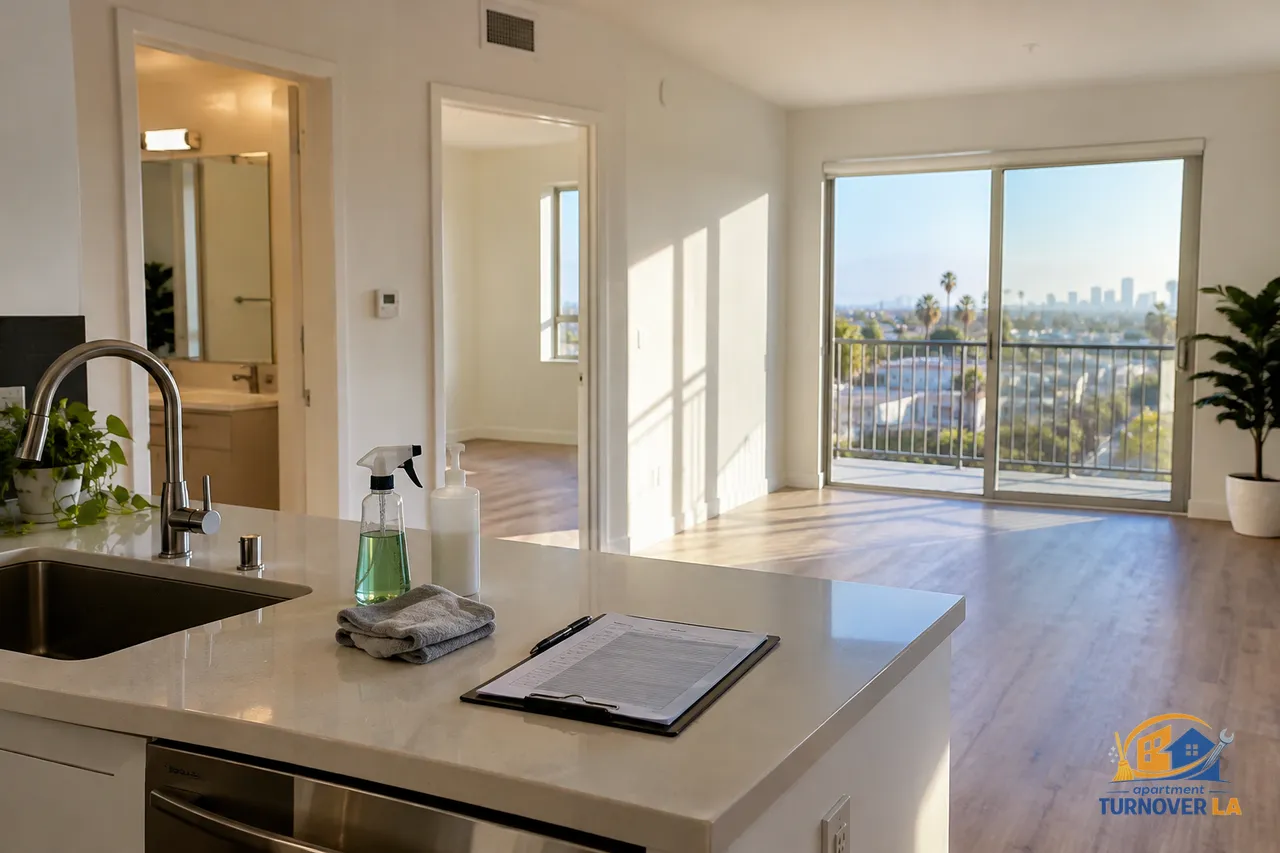
Quick answer: A useful apartment cleaning checklist template divides the unit into five inspection zones: entry and living areas, kitchen, bathroom, bedrooms, and utility or exterior spaces. For a turnover, add condition notes, before-and-after photos, and repair handoffs so cleaning is completed in the right order and the unit can be checked before keys change hands.
A recurring cleaning schedule keeps an occupied apartment presentable. A turnover checklist is different: it records what was left behind, what needs labor, and what must be verified before marketing or move-in. Use it at the walk-through, during service, and again at final inspection. Get instant quote in 30 seconds
How is a turnover cleaning checklist different from a normal cleaning schedule?
A turnover checklist is a condition-control document, not just a list of chores. Daily and weekly schedules tell a resident to wipe counters, vacuum, and take out trash. A vacancy checklist tells the owner or manager whether the counter has grease buildup, whether the carpet has a stain, whether a smoke odor remains, and whether a repair must happen before cleaning can be signed off.
That distinction matters when a deposit decision is involved. Under California Civil Code §1950.5, deductions must be tied to lawful, reasonable items rather than a routine reset of the unit. Put the move-out date, inspector name, room, issue, photo filename, and next action on the form. A line that says "clean bathroom" is too vague. "Remove hard-water film from shower glass, photo B-04 after completion" can be inspected and closed.
What are the five zones in an apartment cleaning checklist template?
Start with the same five zones on every unit. Consistency lets a manager compare the move-out condition to the final condition without hunting through notes. Work from dry, high areas down to floors, then save final floor work until the end.
- Entry and living areas: doors, locks, switches, walls, baseboards, windows, closets, vents, and floors.
- Kitchen: refrigerator, range, hood filter, cabinets, drawers, sink, disposal, counters, backsplash, and floors.
- Bathroom: toilet, tub or shower, grout, glass, exhaust fan, vanity, mirror, fixtures, and flooring.
- Bedrooms: closet interiors, wall scuffs, window tracks, blinds, ceiling fixtures, and floor edges.
- Utility and exterior spaces: laundry hookups, water heater closet where accessible, patio or balcony, storage, and assigned parking area.
For each zone, leave columns for condition, photo number, cleaner initials, repair owner, and final inspector initials. That is what turns a printable template into a usable turnover record.
What kitchen items need a deep-cleaning check?
The kitchen should be checked for residue that is easy to miss during a fast wipe-down. Open every cabinet and drawer, including the one under the sink. Pull refrigerator drawers, inspect the range drip area, remove and wash the hood filter when applicable, and check the backsplash behind small appliances. A clean-looking cooktop can still have burned residue around the burners or control knobs.
Record whether appliances were cleaned, damaged, or left nonfunctional. Cleaning and maintenance are separate handoffs. A broken disposal, loose cabinet hinge, or failed outlet should not be buried in the cleaner's notes. For a fuller task sequence, use this apartment kitchen degreasing checklist. When grease, appliance interiors, and cabinet buildup need more than a standard reset, schedule a deep-cleaning crew after repairs that create dust are complete.
How should the bathroom section handle grout, fixtures, and mildew?
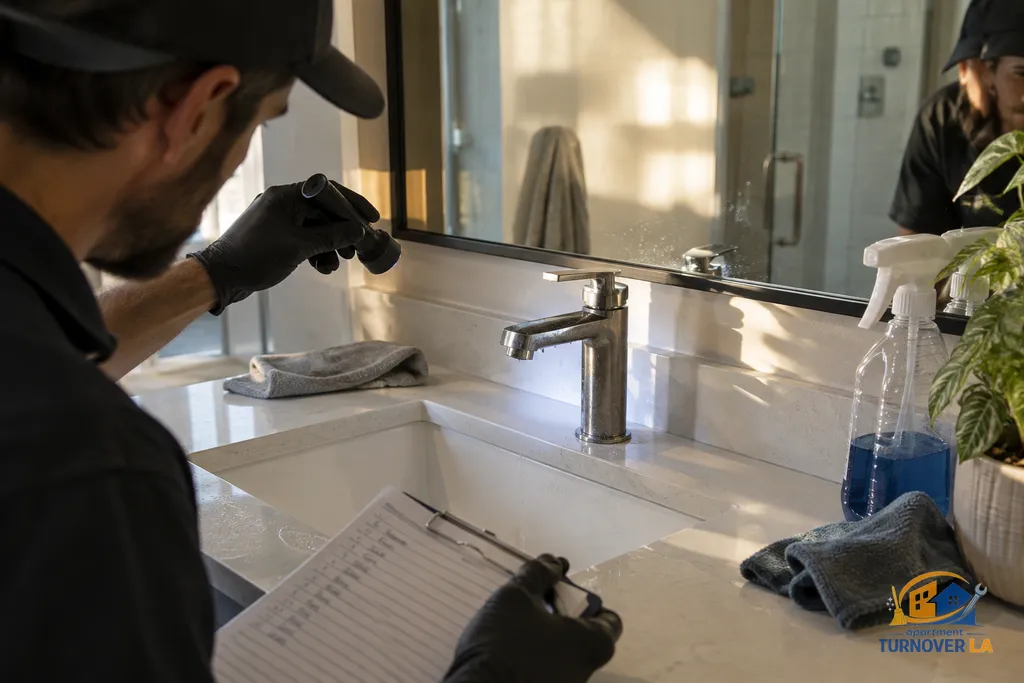
The bathroom section should separate cosmetic buildup from an active maintenance issue. List the tub, shower walls, grout, drain, toilet base, vanity, mirror, exhaust fan cover, and floor as individual checks. This prevents a completed "bathroom clean" from masking a slow drain, deteriorated caulk, loose toilet seat, or exhaust fan that does not run.
For each item, use a simple status: cleaned, needs repair, damaged, or requires owner review. Photograph stains, chips, and persistent discoloration before work begins. Grout haze and soap film are cleaning tasks, while failed caulk or moisture damage may require repair before final cleaning. The bathroom grout cleaning guide helps distinguish the labor needed for each surface. In an LA turnover, a bathroom left half-finished can delay the whole unit because final floor cleaning and inspection cannot be closed until the repair work is done.
Get instant quote in 30 seconds
Need the unit turned before the next tenant?
We do the move-out clean and send you a photo report you can attach to the deposit itemization.
From $225 · 48-hour turnaround
Get an instant quoteWhen do walls, floors, and odors belong on the cleaning template?
Walls, floors, and odors belong on the template whenever they affect rent-ready condition, but they need separate categories. Put surface soil under cleaning, wall scuffs under paint assessment, holes and texture damage under repairs, and pet or smoke odor under odor remediation. Combining all four as "clean walls and floors" causes missed scope and makes the final bill harder to review.
For example, a light scuff may be ordinary wear, while a large unauthorized patch or deep gouge needs documentation. Review normal wear and tear in California before treating cleaning notes as a tenant charge decision. Carpet should be checked at edges, closets, and under furniture marks, not only in the center of the room. If odor remains after source removal and cleaning, note where it is strongest and when it was observed. That gives the next vendor a real starting point rather than a vague complaint.
How do photos make the checklist more useful for deposit records?
Photos make a checklist useful because they connect a written observation to a specific surface and date. Take wide room photos first, then close photos of material conditions such as heavy grease, holes, stains, missing fixtures, or excessive debris. Name files by room and sequence, such as "Kitchen-03-oven-interior" or "Bedroom-02-wall-patch." Add the file name directly to the checklist.
This is especially important in LA RSO properties. The LAHD Rent Stabilization Ordinance has its own local rules, while state deposit handling remains governed by California law. The California DCA Landlord-Tenant Guide is a useful reference for deposit process questions. A cleaning checklist does not decide what can be withheld, but it provides a cleaner record for the owner to review. Keep invoices, photo sets, and the final checklist together rather than relying on a vendor text thread after the fact.
What is the right order for cleaning, repairs, and final inspection?
The right order is inspection, removal, repair, cleaning, lock work, then final verification. Start by photographing the vacant unit and tagging each issue. Remove trash and abandoned property first, because cleaners and repair crews cannot work efficiently around it. Complete drywall patches, paint touch-ups, and other dust-producing work before the detailed clean. Then clean from top to bottom and finish floors last.
After cleaning, complete lock and access work, test lights and basic fixtures, and do a final walk-through using the same checklist. If several trades are involved, a Make Ready service keeps the deep clean and 12-point photo report tied to one closeout process. Do not release the unit based only on a vendor's completion message. The manager or owner should check the actual room condition, confirm keys, and sign the final line on the template.
When should a landlord use a professional turnover cleaner?
Use a professional turnover cleaner when the scope goes beyond a resident-level reset, when the unit must be ready on a fixed timeline, or when multiple rooms need documented completion. Heavy kitchen grease, bathroom buildup, pet hair, smoke residue, move-out debris, and an inspection-sensitive unit all benefit from a defined scope and final photos. A professional crew also avoids the common mistake of cleaning before repair dust and paint debris are finished.
For smaller units, the same template still helps you decide whether to handle an item internally or send it out. Mark the task, assign an owner, and set a final inspection time rather than leaving open-ended notes. The goal is not to make the form elaborate. It is to prevent a missed closet, an untested fan, or an undocumented stain from extending vacancy after everyone believes the work is done.