
Quick answer: Deep cleaning refreshes a home that is still occupied, so cleaners work around furniture and belongings. Move-out cleaning is an empty-unit turnover scope that reaches inside cabinets, behind appliances, and along every exposed edge before the next resident arrives. At TurnOver LA, completed turnover work is scheduled on a flat 48-hour turnaround.
Deep and move-out cleaning overlap on bathrooms, kitchens, floors, and dust removal, but they serve different handoff points. The practical difference is access: an empty apartment exposes the surfaces that a deep clean cannot always reach while someone is living there.
Get instant quote in 30 seconds
What is the main difference between deep and move-out cleaning?
The main difference is whether the apartment is occupied and what happens after the cleaning. A deep clean restores a lived-in space where furniture, closets, and daily use remain in place. The crew concentrates on buildup, neglected details, and the accessible areas around the resident's things. A move-out clean is designed for a vacant unit, often after keys are returned and before maintenance, listing photos, or a new move-in.
That changes the order of work. In an empty unit, the crew can start high, clean the empty cabinets and drawers, pull attention to appliance gaps, then finish with the floor after all other work is done. This is why a strong turnover scope is more than a standard cleaning visit. It creates a clean baseline for the next inspection and makes remaining damage easier to identify.
For a resident who is staying put, deep cleaning for an occupied apartment is usually the relevant request. For a landlord preparing a vacancy, the cleaning should be planned as one part of the turnover sequence.
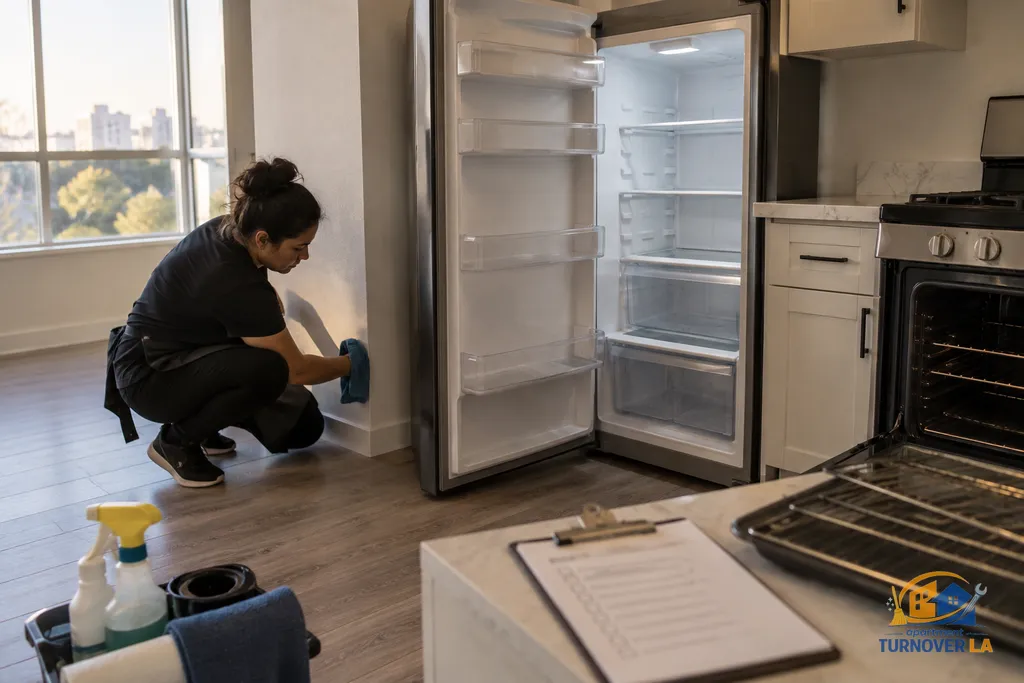
What should be included in a move-out cleaning?
A move-out clean should cover the areas a new resident, inspector, or leasing agent will see once the unit is empty. The exact scope depends on the condition at surrender, but the following checklist is a practical baseline:
- Remove loose debris and wipe empty cabinets, drawers, shelves, and closet interiors.
- Degrease the cooktop, oven exterior, hood area, backsplash, and accessible appliance surfaces.
- Clean and sanitize sinks, toilets, tubs, showers, mirrors, and vanity storage.
- Dust vents, window sills, baseboards, doors, switch plates, and light fixtures that can be safely accessed.
- Vacuum and mop all floor areas after the upper surfaces are complete.
- Inspect refrigerator seals, tracks, corners, and the floor space around appliances.
A move-out scope does not automatically solve a wall hole, failed outlet, broken blind, or abandoned furniture. Those are separate turnover items. TurnOver LA's Make Ready service combines a deep clean with a 12-point photo report, which is useful when the owner needs a documented condition handoff rather than a verbal confirmation that the unit was cleaned.
For more room-by-room detail, see the apartment turnover checklist and the guide to move-out cleaning in Los Angeles.
Why does move-out cleaning often cost more than deep cleaning?
Move-out cleaning often takes more labor because the expectation is broader and the unit is being reset for someone else. A deep cleaner can work around a couch, stocked pantry, and occupied closets. In a vacant unit, every one of those areas is visible, and the cleaner is expected to address the newly exposed surfaces, edges, drawers, and appliance gaps.
The condition at move-out also matters. Grease baked onto an oven, mineral scale in a shower, pet hair in tracks, and dust behind a refrigerator are slow tasks. Cleaning crews also lose the ability to skip or simply work around an area, because an empty room makes missed details obvious. That is why comparing a three-hour maintenance clean to a turnover clean is not useful. They are different scopes and different inspection standards.
Before approving work, separate cleaning from repairs and cleanout. That prevents a quote from becoming unclear when the crew finds a drywall patch, a damaged cabinet, or left-behind junk after arrival.
Do the 80/20 and 20/10 cleaning rules apply to a rental turnover?
They can help residents maintain an occupied home, but they are not enough for a turnover. The 80/20 rule generally means concentrating effort on the few areas that create most of the visible impact, such as bathrooms, kitchen surfaces, floors, and entry points. A 20/10 routine usually means cleaning for 20 minutes, then taking a 10-minute break. Both methods are useful for ongoing housekeeping.
A vacant-unit handoff needs a different standard. The crew should still prioritize high-impact rooms first, but it cannot ignore low-visibility areas just because they are not part of the 80 percent. An empty cabinet interior, toilet base, door top, or refrigerator edge may take only a few extra minutes, yet it can drive a failed final walk-through or a poor first impression for an incoming resident.
Use household rules to prevent buildup during a tenancy. Use a documented turnover checklist when possession changes. The two systems solve different problems.
Need the unit turned before the next tenant?
We do the move-out clean and send you a photo report you can attach to the deposit itemization.
From $225 · 48-hour turnaround
Get an instant quoteHow should a landlord sequence cleaning with repairs and photos?
The cleanest turnover sequence is to inspect first, remove junk, complete dusty repairs, clean the unit, then photograph and secure it. Cleaning before a drywall patch or paint touch-up often means paying to clean the same floor and baseboards twice. Photographing before the cleaning is complete can also make a rentable unit look neglected online.
A practical sequence is:
- Complete the move-out inspection and document condition.
- Remove abandoned property or approved junk.
- Finish drywall, painting, hardware, and maintenance items that create dust or debris.
- Deep clean the vacant unit from upper surfaces to floors.
- Review the completed condition photos and address any misses.
- Schedule listing media after the apartment presents consistently.
- Rekey or secure the unit before showing access expands.
This sequence matters in Los Angeles because a vacant day can cost roughly $80 to $200 in lost rent, depending on the submarket. It also avoids having vendors undo each other's finished work. Get instant quote in 30 seconds
Can a landlord charge a tenant for move-out cleaning in California?
A landlord can seek cleaning costs only when they are reasonably necessary to return the premises to the level of cleanliness it had at the beginning of the tenancy, subject to normal wear and tear. The governing rule is California Civil Code §1950.5. A tenant is not automatically responsible for professional cleaning just because the unit changed hands.
Operationally, the best practice is to document the move-in condition, take clear move-out photos, and keep invoices that match the actual work performed. Do not treat routine aging, faded paint, or ordinary floor wear as cleaning damage. When an item is chargeable, separate the cleaning line from repairs, replacement, and labor needed to correct damage.
For the state timeline and paperwork, review the California 21-day deposit return guide. The California DCA Landlord-Tenant Guide is also a useful reference for owners handling deposits without a large management office.
How do LA rent rules affect a cleaning turnover?
Cleaning itself is not a shortcut around rent rules or deposit rules. In Los Angeles, many owners also need to check whether the unit is subject to the LAHD Rent Stabilization Ordinance, while statewide rules may apply differently to other properties. The cleaning scope remains an operational task, but the related charges and tenancy decisions need to follow the rules that apply to that unit.
Keep the turnover file simple: pre-move-out condition records, the tenant's move-out information, dated photos, vendor invoices, and the final deposit accounting. A 12-point photo report is particularly useful because it records the completed state of the apartment after work is done, not just the problems found at surrender. That distinction helps separate a tenant charge decision from the work needed to make a unit marketable.
For a plain-language breakdown of what is ordinary aging versus chargeable condition, see normal wear and tear in California.
When should you choose deep cleaning versus move-out cleaning?
Choose deep cleaning when the resident remains in the apartment and wants a more thorough reset than recurring housekeeping. Choose move-out cleaning when the unit is empty, the lease has ended, or the owner needs a clean, inspectable baseline before repairs, photography, and showings. If there is uncertainty, start with the end use: a lived-in home needs refresh work, while a vacancy needs turnover work.
For landlords, it is usually more efficient to book the cleaning alongside the other known turnover tasks rather than wait until the last repair is finished and then begin calling vendors. TurnOver LA can coordinate the cleaning scope with painting, repairs, cleanout, lock work, and listing preparation on the same 48-hour turnover timeline. The goal is not simply a cleaner apartment. It is a unit that can be inspected, photographed, and released for leasing without avoidable rework.