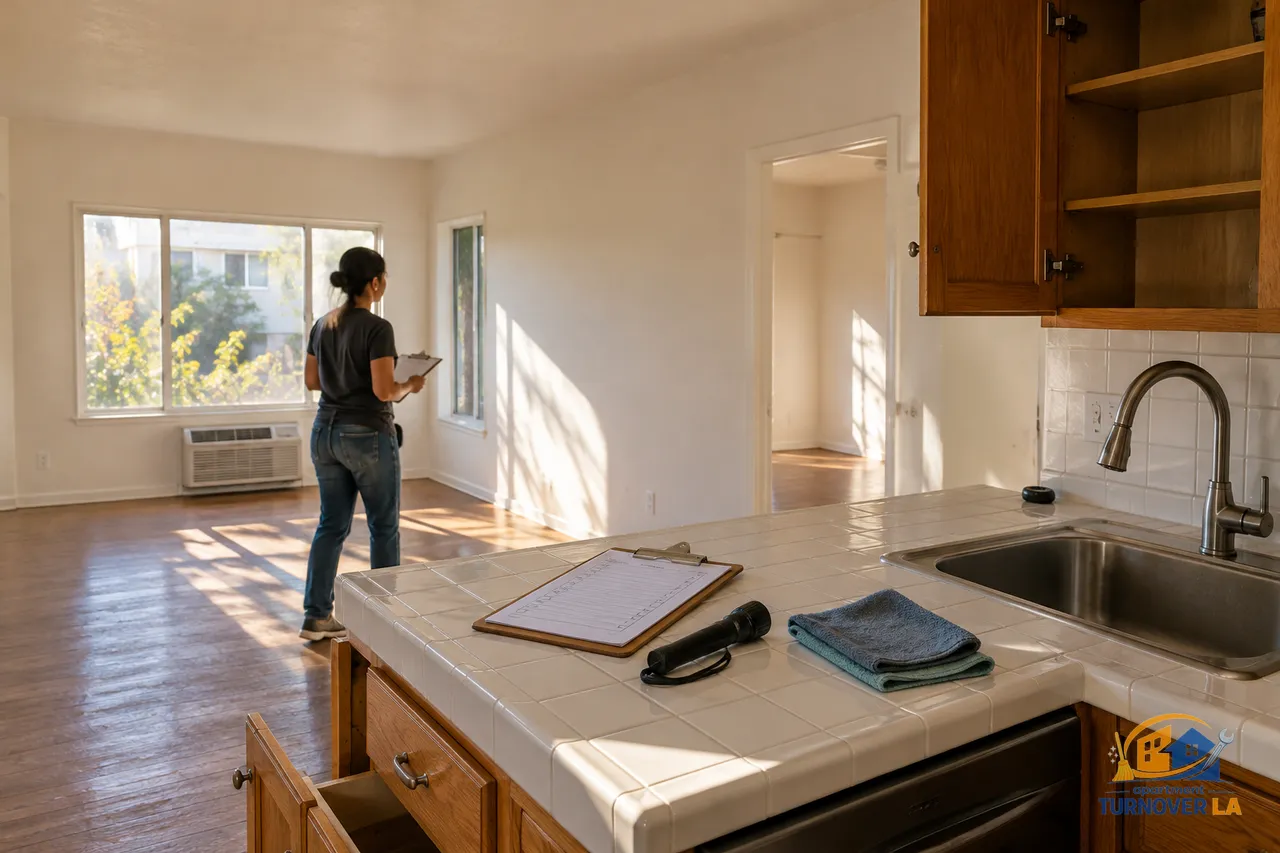
Quick answer: Include every surface a new resident will touch or inspect: kitchen appliances and cabinets, bathroom fixtures and grout, floors, walls, windows, odors, trash, safety items, locks, and final photos. For an LA turnover, use separate cleaning and repair passes so a clean unit is not mistaken for a rent ready unit. A room by room checklist prevents missed cabinet interiors, drain tests, and condition documentation.
An apartment cleaning checklist should be specific enough that two different people can inspect the same vacant unit and reach the same conclusion. In Los Angeles, it also needs a condition-record step, because cleaning, damage, and ordinary wear can affect the security deposit discussion.
Get instant quote in 30 seconds
What belongs on an apartment cleaning checklist?
Start with four categories: remove, clean, inspect, and document. “Clean the kitchen” is not an inspection standard. “Empty all cabinets, degrease the hood filter, clean inside the refrigerator, test the disposal, and photograph the finished room” is a usable standard. The checklist should name both the task and the result that counts as complete.
For a vacant rental, include every resident-facing room plus utility spaces, closets, patios, entry doors, and shared appliances assigned to the unit. Record items that cannot be cleaned to a rent ready condition, such as burned countertops, cracked tile, pet odor, damaged blinds, or loose hardware. Put those items on a separate repair list rather than asking the cleaner to make a judgment call in the field. That separation is one of the simplest ways to keep a turnover moving. It also gives the owner a clean record of what was dirt, what was damage, and what needs approval before work begins.
How should I clean and inspect the kitchen?
The kitchen should be cleaned from high surfaces down, then tested as a working space. Begin with the range hood, upper cabinet tops, cabinet interiors, shelves, refrigerator seals, and microwave. Move to counters, backsplash, sink, faucet, disposal switch, stove, oven, and finally the floor. Opening every cabinet and drawer matters because crumbs, liners, grease film, and pest evidence often sit out of sight.
Use this kitchen pass for each turnover:
- Remove all food, trash, shelf liner, magnets, and personal property.
- Degrease the hood, backsplash, range, oven racks, and cabinet faces.
- Clean inside and outside of the refrigerator, freezer, dishwasher, microwave, cabinets, and drawers.
- Run hot and cold water, check drain speed, and note leaks under the sink.
- Test the disposal and dishwasher if provided with the unit.
- Check counters, cabinet doors, pulls, and flooring for chips, swelling, or damage that cleaning cannot correct.
- Photograph the finished appliances, sink, and open cabinet interiors.
For a deeper task-by-task kitchen standard, use this apartment kitchen degreasing guide. If grease, food residue, or appliance interiors need a crew rather than a basic reset, schedule vacant-unit deep cleaning as a separate, defined scope.
What should the bathroom section cover?
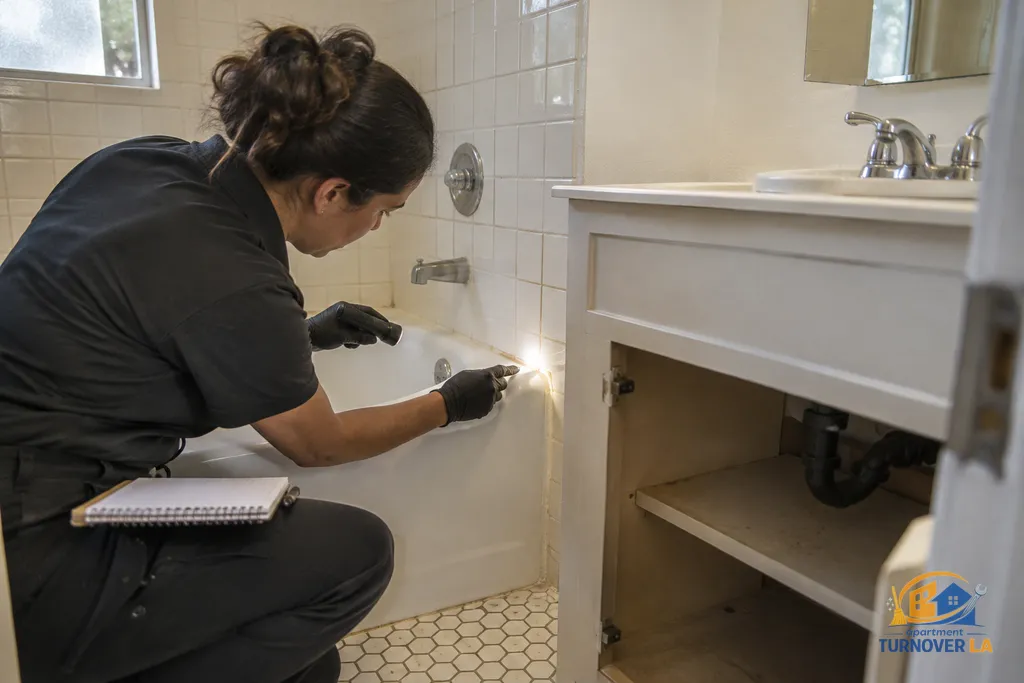
A bathroom checklist should focus on sanitation, water, and finish condition. Clean and disinfect the toilet inside and out, the sink, faucet, vanity, mirror, tub or shower, shower door or curtain rod, exhaust grille, and floor. Then inspect the caulk line, grout, drains, toilet base, and vanity interior. A bathroom can look clean while a slow drain, failed caulk joint, or active leak is still waiting behind the presentation.
Treat mineral buildup and mold-like staining as different problems. Hard-water scale may come off with cleaning. Failed grout, loose tile, persistent staining, or moisture damage needs a repair decision. Note the exact location and photograph it before any patching or repainting changes the condition. This is especially useful in older LA buildings where a tub surround may have cosmetic discoloration alongside a real maintenance issue.
Do not skip the fan. Run it, listen for unusual noise, and check whether it pulls air. Also flush the toilet and run the shower long enough to observe drainage. For detailed finish work, compare the unit against this bathroom grout cleaning turnover guide. The cleaning list should identify the issue, not hide it under a fresh scent or a quick wipe.
How do I handle floors, walls, windows, and odors?
Finish the room surfaces only after the high and horizontal surfaces are complete. Vacuum edges, closets, and under removable appliances where accessible, then mop or otherwise clean the floor for its material. Check baseboards, door frames, light-switch plates, blinds, windowsills, and tracks before calling the room done. These are the details a prospect sees during a fast showing, particularly in compact studios and one bedrooms where there is nowhere for neglect to hide.
Walls need an inspection before aggressive cleaning. Light scuffs can sometimes be cleaned, but a shiny rubbed spot, torn paper, nail holes, or stained paint may require touch-up instead. Mark those items for the painting and drywall crew rather than creating a larger patchy area with repeated scrubbing. Keep smoke and pet odor separate from normal cleaning as well. Odor work should include the source, not just air freshener. Review the practical steps in this smoke smell removal guide when the unit has a lingering tobacco issue.
For carpeted units, inspect seams, traffic lanes, pet staining, and edges before cleaning. A clean carpet with a visible burn or permanent stain is still a condition issue that belongs in the turnover report.
Need the walls done before you re-list?
Turnover painting, scuff removal and patching, with a photo record of the condition we left behind.
$395 per room · 48-hour turnaround
Get an instant quoteWhat is the 6/10 rule for cleaning?
The “6/10 rule” is not a California legal standard or a universal property-management rule. Some operators use it informally to mean a unit is moderately clean but still needs a professional turnover pass. That label is too subjective to use as the actual instruction to a cleaner, vendor, owner, or former resident.
Replace a score with observable checks. Instead of writing “bathroom is 6/10,” write “toilet bowl scaled, shower grout stained, vanity cabinet contains hair and residue, drain runs slowly.” Instead of “kitchen is 6/10,” write “oven has grease, refrigerator has crumbs in drawers, and two cabinet shelves need wiping.” This keeps the scope measurable and makes it easier to compare move-in documentation with move-out condition.
That distinction matters when deciding whether a charge is appropriate. Under California Civil Code §1950.5, cleaning deductions are tied to restoring the premises to the level of cleanliness it had at the start of the tenancy, subject to the statute's rules. Review normal wear and tear in California before treating every mark as billable cleaning.
Which items are cleaning tasks and which need a turnover handoff?
Cleaning and maintenance should be scheduled as connected passes, not treated as the same task. Cleaning covers soil, residue, dust, trash, and routine sanitizing. A turnover handoff covers function, safety, and physical defects. That means a cleaner can flag a loose toilet seat, but the checklist should send it to maintenance instead of expecting a cleaning crew to repair it without authorization.
Typical handoff items include failed smoke or carbon monoxide alarms, loose outlet covers, broken blinds, damaged screens, leaking traps, missing doorstops, sticking windows, nonworking lights, loose cabinet pulls, and inoperative appliances. Add access control to the same handoff: confirm all keys, remotes, mailbox keys, and fobs are accounted for, then rekey as the property policy requires. A maintenance and safety visit is useful when the clean inspection exposes several small issues that need one coordinated punch list.
For LA rent-stabilized properties, keep this operating record separate from any rent or tenancy compliance file. The LAHD Rent Stabilization Ordinance is the right starting point for local program information, while the cleaning checklist remains the field document that shows the unit's physical condition on a given date.
Get instant quote in 30 seconds
How should I document the completed clean?
Document the unit after cleaning and before the next resident receives possession. Take wide photos of each room, then detail photos of appliances, fixtures, flooring, walls, and any unresolved condition item. Open at least one cabinet in the kitchen and bathroom in the photo set. Closed doors make it hard to show that interiors were checked. Date the report, identify the unit, and keep repair notes with the same file.
A useful final walk uses the prospect's path: unlock the entry, step inside, turn on lights, look up, look down, open the refrigerator, open a cabinet, run the sink, flush the toilet, check the bedroom closet, and inspect the patio or exterior access. This catches presentation failures that a room-by-room task list can miss. It also prevents a common turnover problem: photos are taken immediately after cleaning, then another vendor enters to paint or repair and leaves dust or debris behind.
If you use a deposit deduction, retain records that support the work and timing. The California DCA Landlord-Tenant Guide provides statewide landlord-tenant reference material, and this California 21-day deposit return guide explains the turnover timing issue in plainer operational terms.
When is an apartment ready to list or show?
An apartment is ready to list when it is clean, functional, secure, photographed, and free of unresolved presentation defects. It is not ready just because a cleaner finished. The final decision should follow the inspection report, maintenance handoff, and access check. If paint, repair, or lock work is still pending, describe the unit as in turnover rather than rent ready.
Build your schedule backward from the showing date. First remove abandoned property and identify repairs. Next complete cleaning and maintenance. Then perform the final walk, secure the unit, and take listing photos only after the last trade has left. This order reduces duplicate trips and avoids photographing a unit that will be changed again the next day. TurnOver LA completes jobs within 48 hours, and the base Make Ready service pairs a deep clean with a 12-pt photo report for a clearer closeout.
A checklist does not need to be complicated. It needs to tell the field team what clean means, identify what is not cleanable, and create a record before the next resident walks in. That is the difference between a quick reset and a controlled apartment turnover.