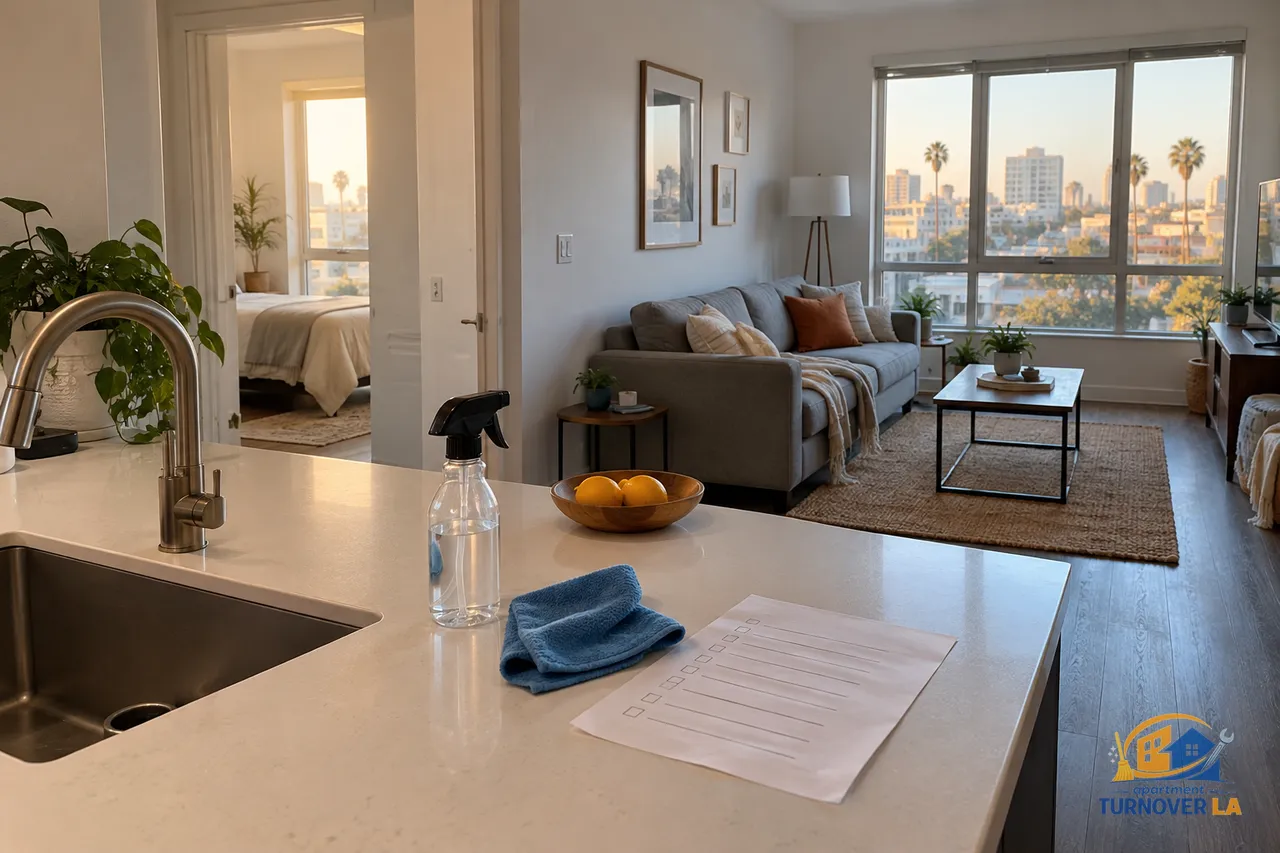
Quick answer: An apartment cleaning schedule works best as a 15-minute daily reset, a 60 to 90-minute weekly clean, and one focused monthly detail task. For rentals, add a documented move-out clean after possession changes hands, because routine housekeeping and turnover cleaning have different scopes, evidence needs, and deadlines.
A schedule only works when the jobs are small enough to finish on a normal workday and specific enough that they do not get skipped. Use the routine below for an occupied apartment, then switch to a vacancy checklist when keys are returned. Get instant quote in 30 seconds
How should you divide apartment cleaning by frequency?
Start with a simple rule: daily tasks remove food, moisture, and clutter; weekly tasks sanitize and reset the rooms you use; monthly tasks reach surfaces that slowly collect grease, dust, and mineral buildup. This division keeps a one-bedroom from turning into a three-hour weekend project. It also stops a common rental problem: treating the visible floor as clean while ignoring the bathroom exhaust cover, refrigerator seals, cabinet pulls, and other contact points.
Assign each job to the frequency that prevents buildup, not the frequency that feels satisfying. A spill on a cooktop needs same-day attention. A shower needs a weekly scrub if it is used daily. Window tracks can wait for a monthly pass unless the unit faces a high-dust street. In Los Angeles, open windows and dry outdoor air can bring fine dust into units faster than tenants expect, particularly near busy corridors in Hollywood, Koreatown, and Downtown LA.
For shared apartments, put the schedule on the refrigerator or in a shared note and assign ownership by room. “Clean the bathroom” is vague. “Wipe mirror, scrub bowl, rinse shower walls, empty bin” is workable.
What belongs on a daily apartment cleaning list?
The daily list should take about 15 minutes and focus on anything that can attract pests, set into a surface, or make the next weekly clean harder. It is not a deep clean. A tenant who completes the basics daily will spend less time dealing with stuck-on grease, soap scum, and odors later.
- Wash dishes or load and run the dishwasher.
- Wipe the kitchen counter, cooktop, and dining surface after meals.
- Sweep obvious crumbs around the kitchen and eating area.
- Wipe bathroom sink splashes and leave the shower door or curtain open to dry.
- Empty food waste and tie off trash when it smells or is full.
- Put clothing, mail, and packages away so floors and counters stay accessible.
- Do a one-minute check for leaks under the sink, around the toilet, and below the refrigerator.
That last item is more than housekeeping. A slow leak can turn a simple supply-line issue into cabinet damage before the weekly routine arrives. For a rental, take a date-stamped photo and report active leaks promptly rather than trying to clean around them.
What should you clean every week in an apartment?
Weekly cleaning is the sanitation and floor-care session. Plan 60 to 90 minutes for a studio or one-bedroom, longer for a multi-bedroom unit or a home with pets. Begin in the kitchen and bathroom, where moisture and food residue create the most work, then finish with dust and floors so debris is not spread back onto cleaned surfaces.
Clean and disinfect the toilet, sink, tub or shower, and bathroom floor edges. Wipe appliance fronts, microwave interior, cabinet pulls, light switches, and door handles. Dust reachable horizontal surfaces, vacuum rugs and upholstery, then vacuum or mop hard floors according to the flooring manufacturer’s guidance. Change bed linens and wash towels. Before grocery shopping, discard expired food and wipe any refrigerator spills.
Weekly is also the right time to check the range hood filter and the area around the stove. Grease buildup is one of the details that makes a move-out kitchen look neglected even when the counters are clean. For a deeper kitchen process, see this guide to apartment kitchen degreasing.
Which monthly cleaning tasks prevent expensive buildup?
A monthly task should target one or two neglected systems or edges, not turn into an all-day cleaning marathon. Rotate the work: do the refrigerator and cabinet interiors one month, then baseboards and doors the next. This approach is more likely to be followed than a long monthly checklist that gets postponed indefinitely.
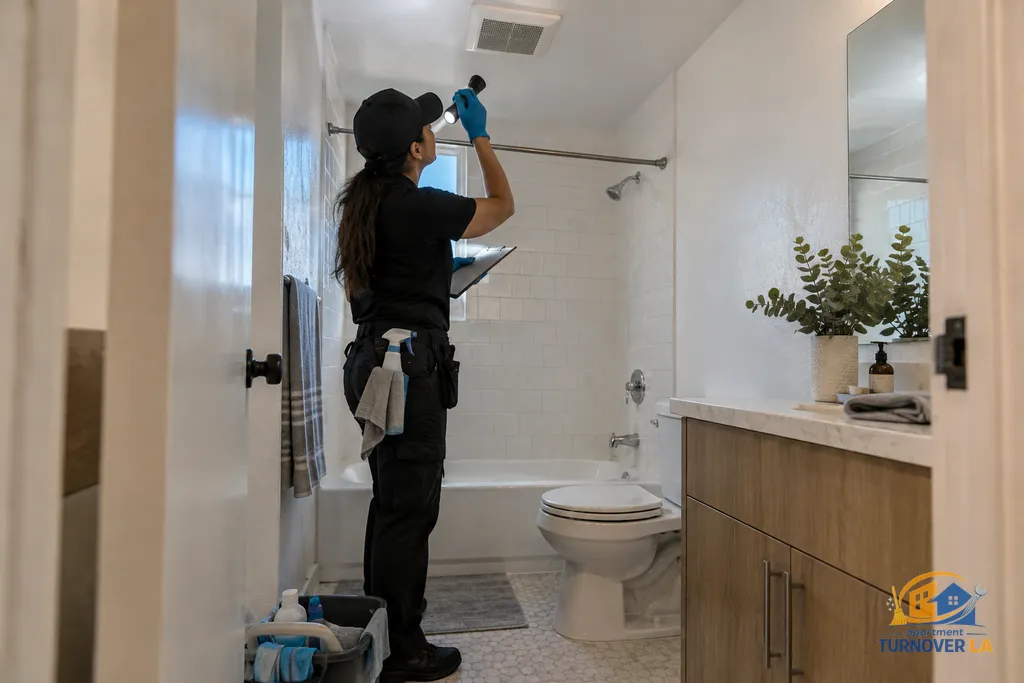
Monthly jobs include wiping baseboards, spot-cleaning walls, dusting vents and ceiling fan blades, vacuuming behind movable furniture, cleaning the dishwasher filter if the manufacturer permits it, and wiping refrigerator gaskets. In the bathroom, clean grout lines, remove hair from the drain cover, wipe the exhaust grille, and inspect caulk for gaps or mildew that returns after cleaning. A recurring stain or soft wall is a maintenance item, not a cleaning failure.
Document damage when you find it. Photos taken while the apartment is occupied can help separate a fresh problem from ordinary use at move-out. That distinction matters when a landlord is evaluating deductions under California Civil Code §1950.5.
Need the unit turned before the next tenant?
We do the move-out clean and send you a photo report you can attach to the deposit itemization.
From $225 · 48-hour turnaround
Get an instant quoteWhat should be done quarterly or seasonally?
Quarterly work protects the parts of an apartment that are easy to overlook until there is an odor, a pest issue, or a maintenance complaint. Set a repeating calendar reminder for the first weekend of January, April, July, and October. That gives you a predictable interval without pretending every task needs monthly attention.
Wash washable blinds and curtains, clean window tracks, pull out accessible appliances, vacuum couch cushions, and check smoke and carbon monoxide detector status. Replace an HVAC filter when the lease, building policy, or equipment condition calls for it. A dirty filter can reduce airflow and spread dust, but residents should not force a filter that does not fit or open sealed equipment panels. Here is a practical HVAC filter replacement turnover guide for the turnover side of that task.
Also review closets, under-bed storage, and balconies. Removing unused items gradually is easier than facing a full cleanout on key-return day. If furniture or large junk needs removal, it should be scheduled separately from cleaning so the crew can reach floors, walls, and closets.
How does a move-out clean differ from routine apartment cleaning?
A move-out clean is a condition reset, not a slightly longer weekly clean. It covers empty cabinets and drawers, appliance interiors, wall marks that can be cleaned without repainting, floor edges, bathroom mineral buildup, and debris left behind after the resident has removed belongings. It should happen after the unit is empty, otherwise furniture hides the areas a new resident, inspector, or photographer will notice.
The operational sequence matters. First remove belongings and trash. Next inspect for repairs, then clean, then photograph the finished condition. Cleaning before a cleanout often means paying to clean areas that will be dirtied again by hauling. Repairing drywall after cleaning creates dust that lands on finished floors and counters. Those small sequencing errors commonly add a day to an otherwise straightforward vacancy.
TurnOver LA can handle the cleaning scope through professional deep cleaning, or coordinate a broader Make Ready service when the unit also needs a photo report and turnover coordination. Get instant quote in 30 seconds
Can a landlord charge for cleaning after a tenant moves out?
A landlord can generally charge for cleaning needed to return a unit to the same level of cleanliness it had at move-in, subject to California’s security-deposit rules and proper documentation. The key distinction is between actual tenant-caused cleaning beyond ordinary use and routine turnover work a landlord would perform regardless. A dated move-in condition report, move-out photos, invoices, and a clear itemization are more useful than a generic “cleaning fee.”
California rules also set timelines for accounting and returning deposits. Review the California DCA Landlord-Tenant Guide and this explanation of the 21-day security deposit return rule before making a deduction decision. Local rules can add considerations for rent-stabilized units, including properties covered by the LAHD Rent Stabilization Ordinance.
For tenants, the practical takeaway is to clean against the move-in condition, photograph the empty unit, and attend any legally required pre-move-out inspection if offered. For managers, use the same inspection form every time. Consistency is better evidence than a rushed walkthrough after a new tenant is already scheduled.
When should you bring in a professional cleaner?
Bring in a professional when time, condition, or access makes the routine unrealistic. Common triggers include a vacant unit needing to be listed, heavy kitchen grease, persistent bathroom scale, pet odor, smoke residue, or a unit that has been occupied for several years without a detailed clean. A cleaner can also be useful when a resident has done regular upkeep but needs an objective final pass before returning keys.
Do not wait until the showing calendar is full. In LA, each unplanned vacancy day can cost an owner roughly $80 to $200 depending on the submarket and unit rent. That makes sequencing more important than squeezing every task into one visit. Confirm when the unit will be empty, identify repairs before the cleaning appointment, and make sure water and power remain active.
A clear schedule keeps occupied units manageable. A clear turnover sequence keeps vacant units marketable. Get instant quote in 30 seconds