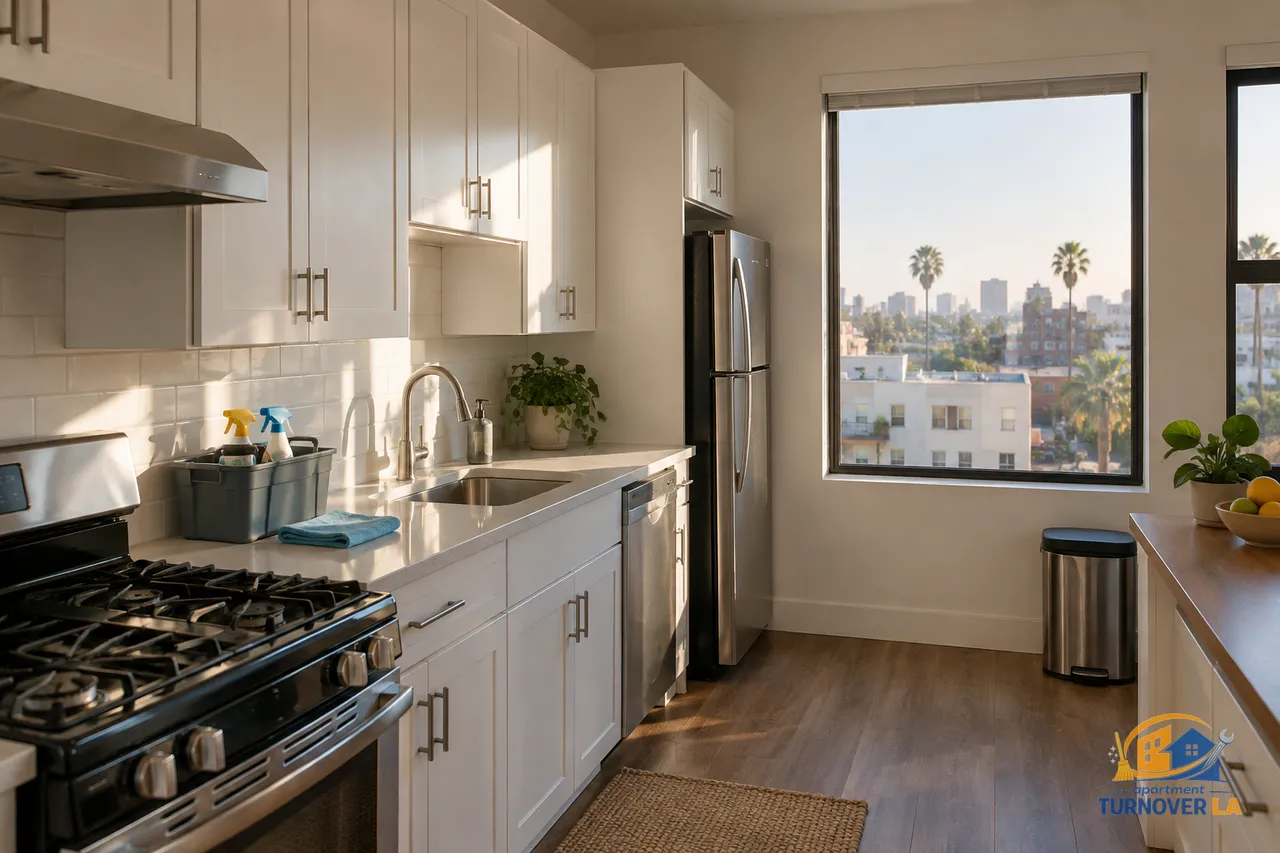
Quick answer: Across Los Angeles, a vacant-apartment deep clean commonly runs about $150 to $350, depending on size, condition, and whether the crew is handling move-out buildup. TurnOver LA's Make Ready package, which includes a deep clean and 12-point photo report, is $225 for a studio, $255 for a 1 bedroom, $335 for a 2 bedroom, and $425 for a 3BR or larger, with a 48-hour turnaround.
Deep cleaning services in Los Angeles are most useful when the unit is vacant and the goal is to document condition, correct the obvious issues, and get listing-ready without coordinating separate crews. For a rental turnover, the cleaning quote should make the scope and handoff clear, not just promise that the unit will look clean. Get instant quote in 30 seconds
How should landlords use Reddit recommendations for deep cleaning services in Los Angeles?
Reddit is useful for spotting patterns in customer experience, but it is not a substitute for a written scope, an insured vendor check, or a turnover timeline. Threads often compare hourly cleaners, independent housekeepers, and cleaning companies as if they are interchangeable. They are not. A recurring housekeeper may be the right fit for occupied-home upkeep. A vacant rental needs a crew that can work through kitchen grease, bathroom scale, cabinet interiors, appliance edges, and move-out residue on a defined deadline.
When you see a local recommendation, ask what job the commenter actually hired the cleaner for. “Deep clean” can mean a two-person reset of an occupied condo, or a move-out clean after years of tenancy. Ask whether the service included the oven, refrigerator interior, blinds, walls, closets, and a final inspection record. For a landlord, the useful question is not whether a commenter liked the crew. It is whether the scope matches the condition of your vacant unit.
What do deep cleaning services cost in Los Angeles?
For general market context, a vacant apartment deep clean across LA often falls between $150 and $350 for smaller units. Heavy buildup, interior appliances, pet hair, smoke residue, and access constraints can push general market pricing higher. This is a market range, not a TurnOver LA rate.
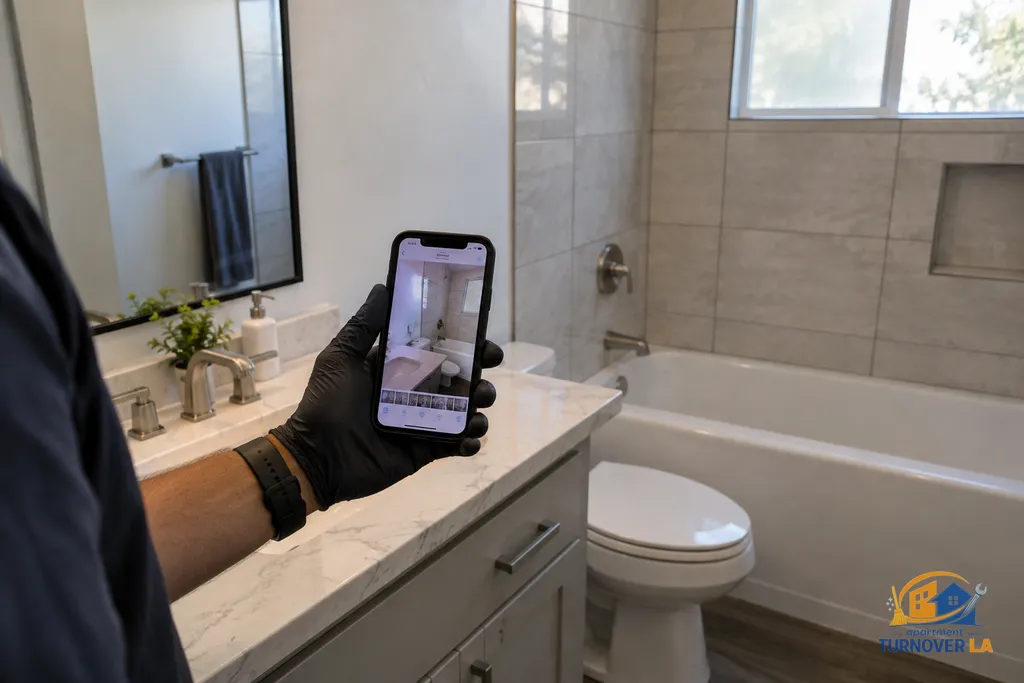
TurnOver LA lists its turnover-oriented Make Ready package at fixed size-based rates below. It includes the deep clean and a 12-point photo report, which gives an owner or manager a recorded handoff rather than relying on a verbal “all done.”
| Unit size | Typical LA deep-cleaning market context | TurnOver LA Make Ready |
|---|---|---|
| Studio | Often within the lower end of $150 to $350 | $225 |
| 1 bedroom | Often within the $150 to $350 range | $255 |
| 2 bedroom | Often near the upper end of $150 to $350 | $335 |
| 3BR or larger | May exceed $350 when condition is heavy | $425 |
The quoted rate covers labor and the crew's own supplies. If a job needs paint, replacement parts, or fixtures, those materials are priced at the on-site inspection and added to the final invoice only with your approval. For a broader budget framework, see apartment turnover costs in Los Angeles.
What should a vacant-unit deep clean actually include?
A rental deep clean should start with the surfaces that affect the next showing and the areas that create disputes after move-out. In practice, that means kitchens, bathrooms, floors, interior cabinets, closets, baseboards, window tracks where reachable, appliances, and touch points such as switches and handles. It also means checking work instead of treating a cleaning checklist as proof the work happened.
A useful sequence is to clean high to low and dry to wet. Remove dust from vents and upper surfaces before mopping. Degrease the range and hood before wiping cabinet faces. Address bathroom mineral buildup before final polish. This keeps crews from redoing floors after debris falls from a higher surface.
Cleaning alone is not a repair promise. A cleaner can remove wall marks, but not necessarily a deep gouge or failed drywall texture. TurnOver LA can route those items through painting and drywall work or apartment repair services after inspection. That separation matters because a clean unit can still fail a showing if damage is left unaddressed.
What does “make ready” mean in property management?
Make ready means preparing a vacant unit for the next tenant or for rental marketing. Deep cleaning is one component, but a true make-ready workflow also identifies repairs, confirms access and security, and records the unit's condition at handoff. It is a turnover process, not merely a cleaning appointment.
TurnOver LA's Make Ready service combines the base deep clean with a 12-point photo report. The operational advantage is that a remote owner can see whether the kitchen, bathroom, floors, walls, and key unit areas are ready for the next step. The photo report can also surface work that cleaning cannot solve, such as damaged paint, missing hardware, or a maintenance issue.
That matters in Los Angeles because an empty day costs money. A typical vacancy-loss baseline is $80 to $200 per day depending on submarket, rent level, and demand. Sending one crew to clean without confirming the rest of the punch list may save a little on the first invoice while adding days before the unit can be shown. Get instant quote in 30 seconds
Need the walls done before you re-list?
Turnover painting, scuff removal and patching, with a photo record of the condition we left behind.
$395 per room · 48-hour turnaround
Get an instant quoteIs $50 an hour good for house cleaning in LA?
For a recurring housekeeper, $50 an hour can be a reasonable Los Angeles market reference, especially if the worker is experienced, insured, and bringing supplies. It does not, by itself, tell you the final cost or whether the job fits a vacant rental. A two-hour maintenance visit and a move-out reset are different scopes, even at the same hourly number.
For turnover work, flat unit-based pricing is easier to compare because it puts the responsibility on the vendor to define what is included. A landlord should still ask about condition triggers: excessive grease, food left in the refrigerator, smoke odor, adhesive on floors, or construction dust may require more than a standard cleaning scope.
Avoid using an hourly rate as a reason to skip a walkthrough. A cheap crew that misses cabinet interiors or leaves bathroom scale can delay photography, showings, or a new resident's move-in. If the departing tenant may be charged, documentation and a proper itemization process matter as much as the cleaning invoice. Review California Civil Code §1950.5 before applying any security-deposit deduction.
How can the 5-5-5 cleaning rule help with a turnover?
The 5-5-5 rule is best used as a daily maintenance habit, not as a substitute for a move-out clean. The phrase generally means spending five minutes each on three quick tasks, such as clearing clutter, wiping kitchen surfaces, and resetting the bathroom. It can help an occupied tenant prevent buildup, but it will not address a unit that has been vacated after a long tenancy.
For a turnover, use the same idea as a final quality-control pass. Spend five minutes in the kitchen, five minutes in the bathroom, and five minutes at the entry and living area after the crew says the work is complete. Check for odors, debris in drawers, fingerprints, hair, appliance residue, and visible wall scuffs in daylight.
This small post-clean check is one of the practical differences between a cleaning appointment and a rental handoff. It catches issues while access is still available. For room-by-room standards, use this move-out cleaning guide for Los Angeles alongside your own unit inspection form.
Which cleaning agents are appropriate for rental turnover work?
The seven common cleaning-agent categories are water, detergents, degreasers, acids, abrasives, solvents, and disinfectants or sanitizers. Each has a place, but none should be used blindly. Degreaser may be appropriate for kitchen residue. An acid cleaner may help with mineral scale on a bathroom fixture. Abrasives can damage finishes if used on the wrong surface.
The important operating rule is never to mix products unless the manufacturer explicitly says it is safe. In particular, bleach and ammonia-based products should never be combined. A cleaner should also test a small inconspicuous area before using a stronger product on painted walls, natural stone, laminate, or older finishes.
For landlords, the result matters more than the product name. The unit should be free of visible soil and ready for inspection without creating damage that becomes another repair item. Where odors are the issue rather than surface soil, see our guide to removing smoke smell from an apartment.
What should you book before the next tenant sees the unit?
Book the deep clean first when the unit is empty, then use the post-clean condition to authorize repairs, paint, rekeying, or cleanout work. This sequence prevents crews from working around abandoned belongings or repairing a wall before the full extent of scuffs and stains is visible. It also helps separate cleaning work from chargeable damage in your records.
For an LA rent-stabilized unit, keep your turnover work and deposit paperwork organized separately. Cleaning may be deductible when it is needed to return the unit to the same level of cleanliness documented at move-in, subject to the facts and applicable law. The LAHD Rent Stabilization Ordinance and the California DCA Landlord-Tenant Guide are useful starting points for compliance questions.
A clean unit that is still waiting on a loose handle, wall patch, or key change is not truly ready. Build the scope around the actual handoff, document the condition, and keep the work inside a 48-hour plan. Get instant quote in 30 seconds