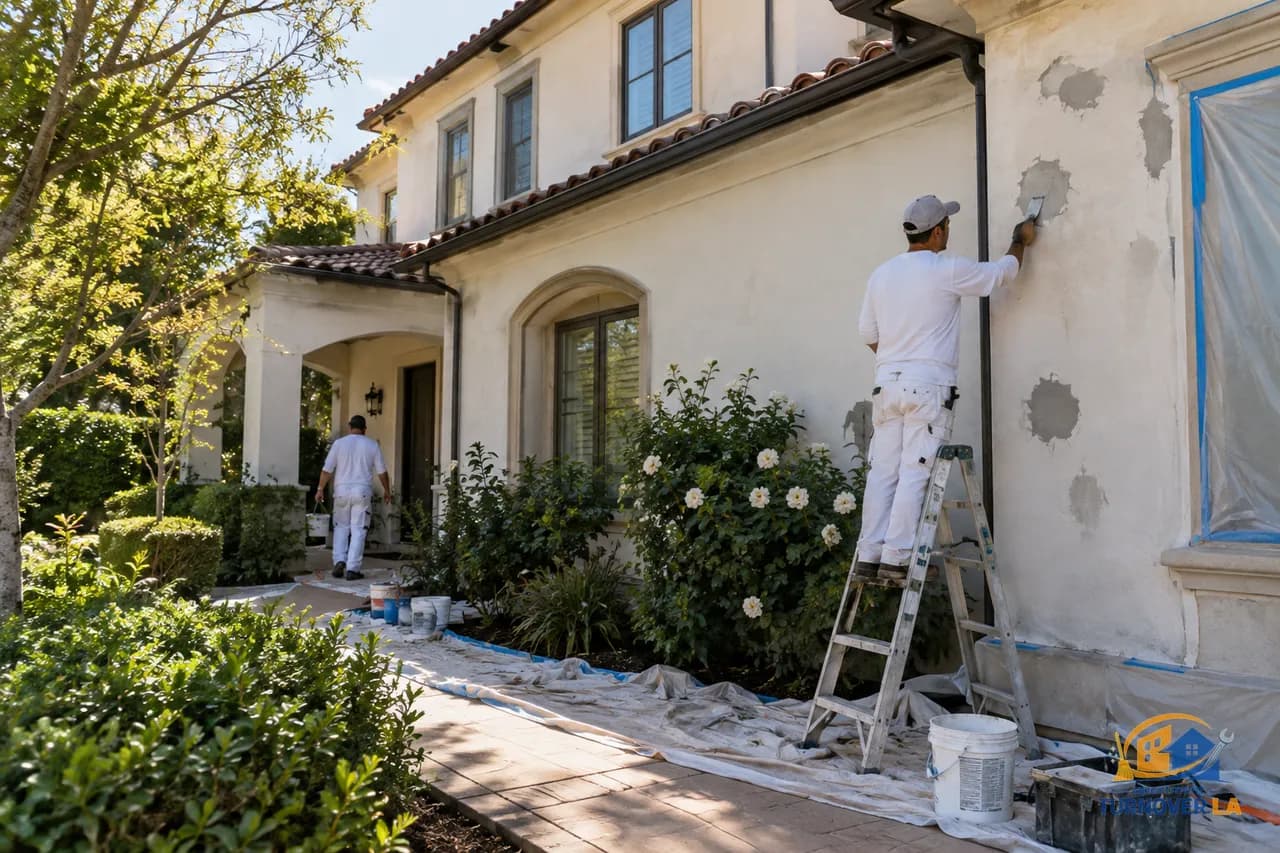
Quick answer: Painting the exterior of a 3,000 square foot house in California typically costs $6,000 to $15,000 in the general contractor market. The wide range reflects actual paintable wall area, number of stories, surface preparation, repairs, access, and paint selection. A floor-plan size of 3,000 square feet is a starting point, not a complete paint estimate.
For a typical two-story California home, the lower end generally assumes sound surfaces, straightforward access, and limited repair work. The higher end is more common where stucco needs crack repair, wood trim has failed, landscaping restricts ladder placement, or the home needs extensive scraping and priming. Get instant quote in 30 seconds
What does exterior painting cost for a 3,000 square foot California house?
Across California, a 3,000 square foot house usually falls in the $6,000 to $15,000 exterior-painting market range. That is a general market benchmark, not a TurnOver LA price. A one-story ranch with clean stucco and open side yards can price below a taller home with balconies, high gables, detailed trim, and a steep lot. In Los Angeles, access can be the difference between a routine job and a labor-heavy setup, especially on hillside homes in areas such as Hollywood Hills or narrow-lot properties with little side-yard clearance.
TurnOver LA's published painting menu is for apartment turnover work, not a flat exterior-house package. For comparison, its listed interior apartment rate is Repainting per room: $395 / room, while Paint touch-up only: $200 covers limited touch-up work. Exterior-house labor, paint quantities, lifts or scaffolding, and repair scope require an on-site inspection. Materials such as paint, parts, and fixtures are added to the final invoice only with approval.
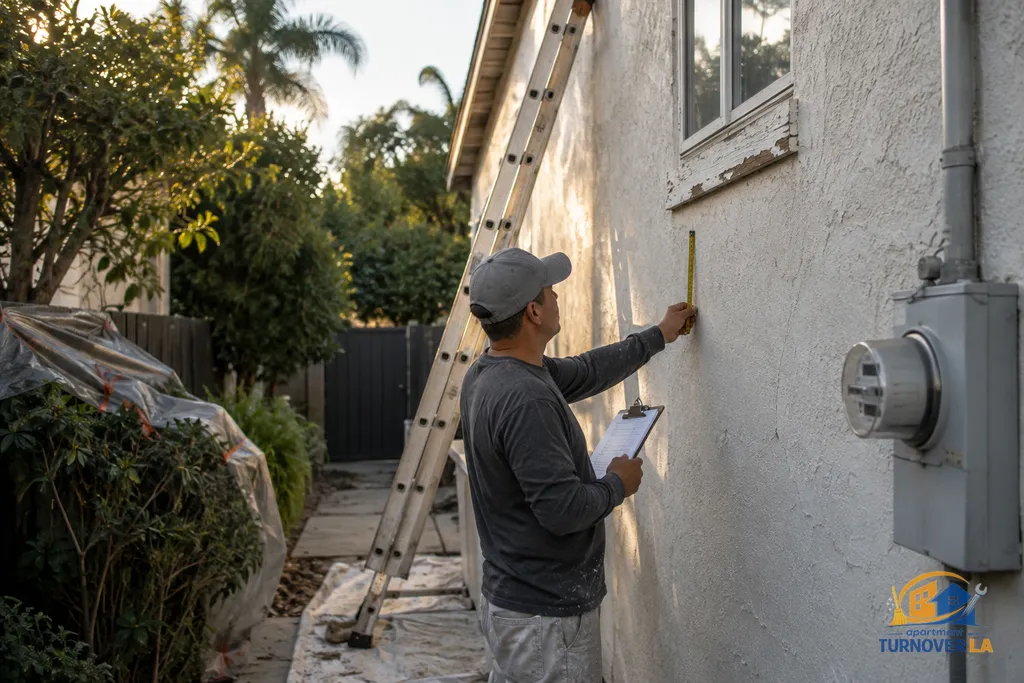
Why is 3,000 square feet not the number painters use?
A home's listed square footage measures interior living area. Painters estimate exterior wall surface, trim, soffits, fascia, doors, shutters, and any detached structures included in the scope. Two homes with the same 3,000 square foot floor plan can have very different exterior paintable areas. A compact two-story home has less roofline and wall spread than a single-story home with the same interior size. A home with a three-car garage, deep eaves, and extensive wood trim adds detail work that does not appear in the listing square footage.
A reliable estimate also separates surfaces. Stucco, fiber cement, wood siding, metal railings, and masonry each need their own preparation and coating method. Asking a contractor to price only by house square footage can produce a low initial number that grows when the actual surfaces are inspected. The useful measurement is exterior scope, not just interior living area.
What work pushes an exterior quote toward the high end?
Preparation is usually where the budget moves. Peeling coatings must be scraped, glossy surfaces may need sanding, cracks need the right filler, and bare areas need primer before finish coats go on. On stucco homes, small hairline cracks are common, but wider cracks or moisture-related damage need evaluation before paint is used to hide them. Painting over an unresolved leak or failed sealant simply delays the repair.
The main cost drivers are usually:
- Two or more stories, difficult rooflines, or work above a garage roof.
- Extensive scraping, sanding, pressure washing, and spot priming.
- Failed fascia, dry rot, loose trim, or damaged stucco.
- Landscaping, fences, utility equipment, and narrow side yards that limit access.
- Color changes that require full coverage, especially dark-to-light changes.
- Detailed trim, shutters, railings, gates, and detached accessory structures.
The biggest estimating mistake is treating prep as an optional extra. It is the part that determines whether the new coating adheres through California sun and seasonal rain.
What should a usable exterior painting estimate include?
A usable proposal identifies surfaces and preparation, not just a lump sum labeled “paint house.” It should state whether the contractor will wash surfaces, scrape failed paint, prime bare material, caulk joints, protect plants and hardscape, and apply one or two finish coats. It should also name what is excluded, such as structural repairs, dry rot replacement, permit work, or lead-safe procedures where older coatings require them.
Ask how access is priced. A bid that assumes ordinary ladder access is not comparable to one that includes scaffolding, a lift, or work over a sloped grade. Also confirm whether paint is included, which product line is proposed, and how many colors are covered. TurnOver LA handles painting and drywall work for apartment turnovers, where the scope is documented before work starts and materials require approval. That same discipline matters on a house exterior: define the existing-condition repairs before crews start applying finish paint.
Need the walls done before you re-list?
Turnover painting, scuff removal and patching, with a photo record of the condition we left behind.
$395 per room · 48-hour turnaround
Get an instant quoteDoes repainting a California house add value?
Repainting can improve marketability and protect exterior surfaces, but it does not create a fixed dollar-for-dollar increase in appraised value. Its practical value is strongest when the current exterior shows peeling paint, visible patching, faded color, exposed wood, or a neglected appearance that makes buyers or renters assume larger maintenance issues. Clean paint, sound trim, and consistent caulking help a property show as maintained.
For a rental, exterior painting can also reduce objections during a showing, particularly when the property is competing with recently refreshed homes. It is better viewed as condition preservation and leasing presentation than a guaranteed return calculation. Prioritize repairs first. A fresh coat over rotted fascia, active water intrusion, or failed stucco sealant can make the problem harder to spot without solving it.
Interior condition still affects leasing speed. Owners preparing a vacant unit can compare the practical scope in this apartment turnover cost guide and use a documented apartment wall scuff removal process for smaller work between full repaints.
Get instant quote in 30 seconds
How do rental rules change a repaint decision?
Rental owners should distinguish between routine aging and tenant-caused damage before assigning costs. Paint fades, scuffs, and wears through ordinary use. California's Civil Code §1950.5 governs security-deposit deductions and requires an itemized accounting when deductions are taken. The state also summarizes common landlord and tenant responsibilities in the California DCA Landlord-Tenant Guide.
That does not mean a landlord cannot repaint after move-out. It means the business decision to repaint is separate from whether all or part of the cost can fairly be charged to a departing tenant. Document move-in condition, move-out condition, prior paint dates, and localized damage. If the job involves a damaged wall rather than a full repaint, TurnOver LA lists Small drywall patch + texture: $150 / patch and Medium drywall repair: $240 / patch for apartment turnover work. Those line items are not exterior-house repair pricing, but they show why repair scope should be separated from painting scope.
How does TurnOver LA fit into a painting plan?
TurnOver LA is structured around Los Angeles apartment turnovers, not a generic flat-price exterior paint offer for a 3,000 square foot home. The published menu is useful when an owner needs a vacant apartment addressed quickly: Repainting per room: $395 / room, Ceilings and baseboard/trim: $125, and Sand + repaint cabinets/shelving: $135 are distinct turnover items. Labor and the crew's supplies are covered in the quote. Job-specific paint, parts, and fixtures are inspected on site and approved before they are added.
That separation prevents a common turnover problem: quoting cosmetic paint before identifying patches, failed fixtures, cleaning needs, or lock work. A Make Ready service combines a base deep clean with a 12-point photo report, while a turnover checklist helps owners sequence the rest. TurnOver LA provides a flat 48-hour turnaround on its jobs, with no rush or same-day upcharge.
How should you schedule exterior paint work before listing or leasing?
Start with condition assessment before choosing a listing date. Check for leaks, failed caulk, damaged trim, loose gutters, and cracked stucco first. Then schedule surface washing and adequate dry time, repairs, primer where needed, finish painting, and a final walk-through in that order. Exterior work that starts before the repair list is known often loses time to change orders and incomplete prep.
For a vacant rental, keep exterior and interior work on one written scope, but do not assume they share the same timeline. Exterior curing and weather exposure can affect scheduling even when an interior apartment turnover can be completed promptly. Vacancy has a real carrying cost in Los Angeles, often estimated at $80 to $200 per day depending on the submarket. That makes a clear scope and fast approval process more valuable than selecting the lowest incomplete bid. Confirm the finish condition before photos, showings, and tenant move-in.