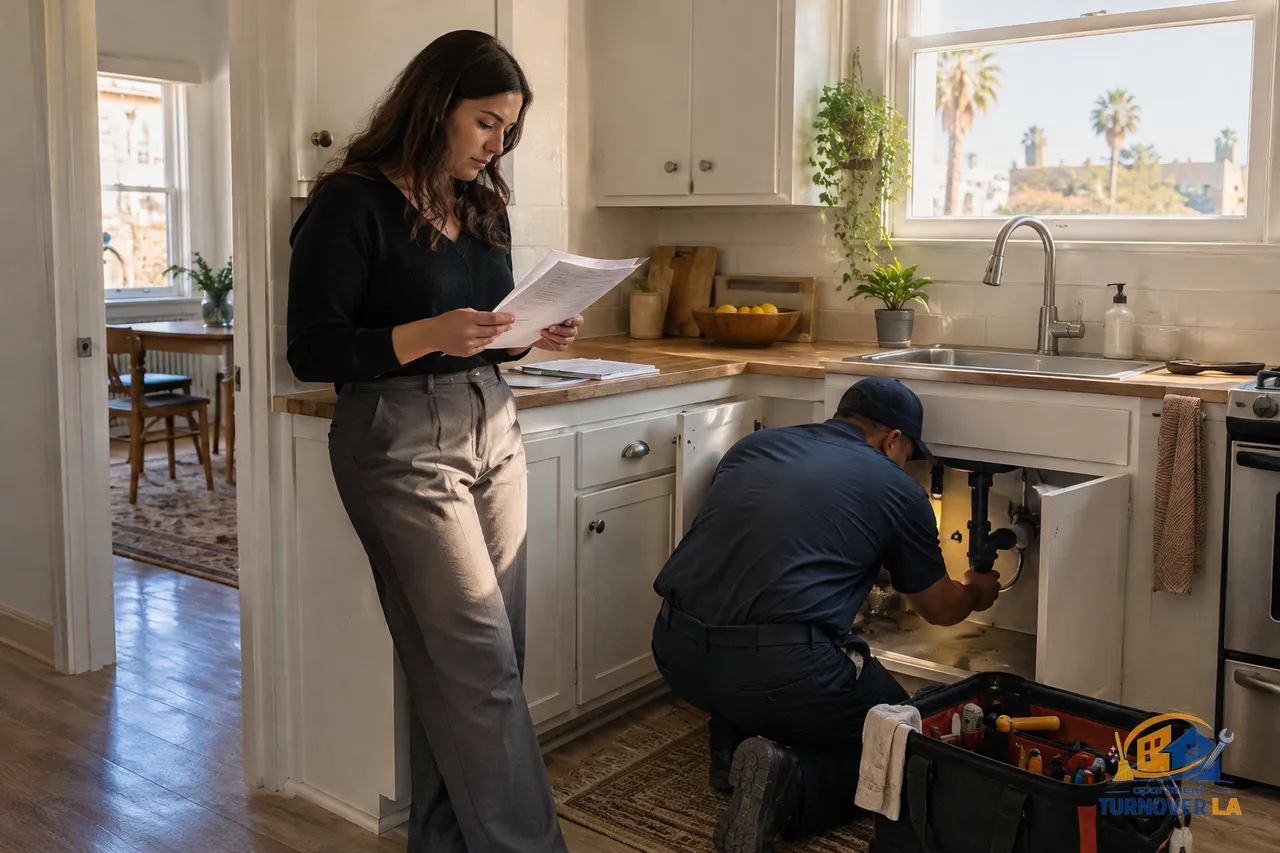
Quick answer: A landlord may need to stop by for a reported leak, electrical or appliance repair, required safety work, preventive maintenance, or a scheduled inspection. In California, entry into an occupied unit usually requires reasonable written notice, commonly at least 24 hours, unless there is an emergency or another legal exception. A maintenance reason does not give an owner unlimited access.
Landlords should treat a maintenance visit as a defined job, not a casual drop-in. The reason for entry, who is coming, the expected time window, and the work to be completed should all be clear before anyone arrives. Get instant quote in 30 seconds
What maintenance issues justify a landlord visit?
The clearest reason to visit is a tenant-reported condition that needs diagnosis or repair. Water under a sink, a ceiling stain, a tripping breaker, a failed outlet, a broken window latch, a nonworking appliance, or a toilet that will not stop running can worsen quickly if nobody looks at it. Heat, hot water, plumbing, electrical, pests, and weather intrusion should be triaged before cosmetic items because they can affect habitability, neighboring units, or the building itself.
A useful work order describes the symptom, not just the requested fix. “Water appears below the bathroom vanity after showering” gives a technician a better starting point than “check bathroom.” It also creates a record of when management learned about the issue and what was done. If a repair requires follow-up, send a new notice with the next visit window rather than assuming the first notice covers an open-ended series of entries.
Can a landlord enter for maintenance without notice?
Usually, no. For an occupied California rental, routine maintenance, repairs, agreed improvements, and inspections generally require advance written notice and entry during normal business hours. The California DCA Landlord-Tenant Guide explains the state framework tenants and landlords should review. A true emergency, such as active flooding, fire, suspected gas danger, or a condition creating immediate property damage, is different because waiting can make the loss worse.
The maintenance purpose matters, but it is not a blank check. A landlord should not label a general desire to look around as “maintenance” to bypass notice. Give a date, a reasonable time window, the reason for entry, and the names or roles of expected workers when known. Keep a copy of the notice and the completed work order. The California Tenants Guide is also a useful reference when there is a disagreement about access or repairs.
Which routine maintenance visits are worth scheduling?
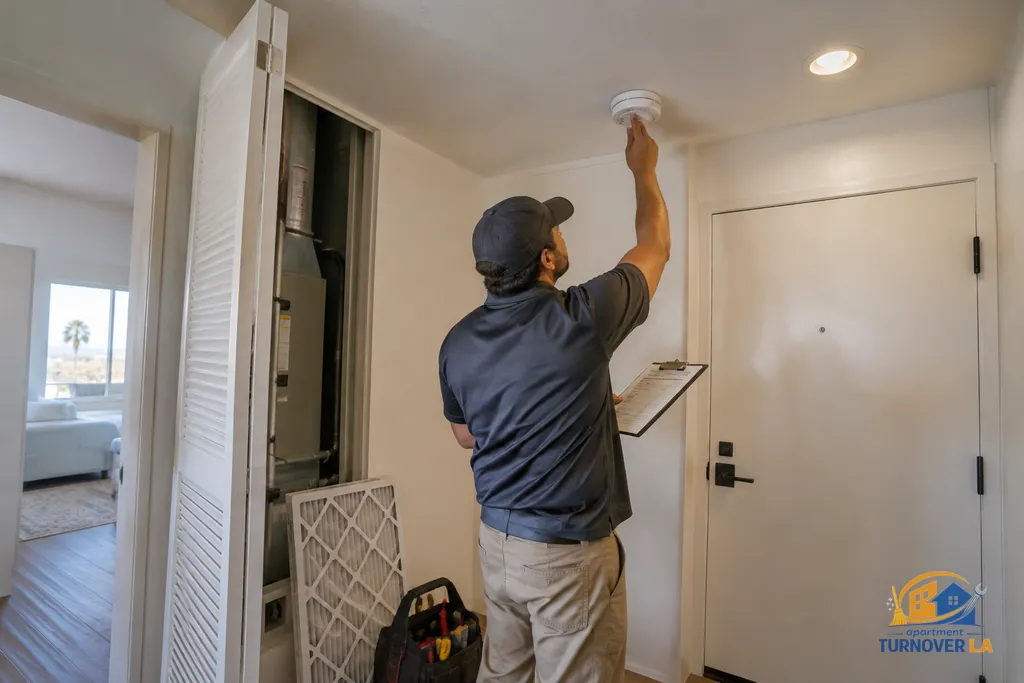
Preventive visits reduce surprise calls, but they should be tied to an actual building need and a predictable schedule. In an LA apartment building, common scheduled work includes replacing HVAC filters, testing smoke and carbon monoxide alarms where required, checking under-sink supply lines, inspecting window and door hardware, servicing shared laundry equipment, and addressing roof or exterior drainage after heavy rain.
A good schedule separates in-unit work from common-area work. Hallway lighting, stair rails, landscaping, exterior drains, gates, and shared water heaters can often be checked without entering a tenant's home. For in-unit work, group compatible tasks into one noticed visit when possible. For example, a technician can test alarms, replace an approved filter, tighten a loose cabinet hinge, and inspect a reported bathroom fan during one appointment. See our practical HVAC filter replacement turnover guide for why a neglected filter can create avoidable operating problems.
What does apartment maintenance consist of during a visit?
Apartment maintenance is more than fixing whatever is visibly broken. A productive visit starts with the reported issue, then checks connected components that could cause it to recur. A toilet leak may involve the fill valve, supply line, shutoff valve, flooring condition, and the ceiling below. A failed light may be a bulb, fixture, switch, breaker, or wiring issue. The visit should end with a clear status: fixed, temporarily stabilized, awaiting parts, or requiring a specialist.
Use this field sequence to keep the appointment focused:
- Confirm the tenant's reported symptom and location.
- Photograph the condition before work when damage or moisture is involved.
- Make the repair or isolate the hazard.
- Test the affected fixture, appliance, or safety device.
- Clean the immediate work area and remove debris.
- Record materials needed, follow-up work, and completion status.
For multiple small items, a scheduled handyman punch list is usually more efficient than several separate entries. It also gives the manager one completion record instead of scattered texts and verbal updates.
Get instant quote in 30 seconds
Need the unit turned before the next tenant?
We do the move-out clean and send you a photo report you can attach to the deposit itemization.
From $225 · 48-hour turnaround
Get an instant quoteHow should a landlord handle an urgent leak or safety issue?
Start by deciding whether the condition is an emergency, urgent, or routine. Active water flowing into a unit, smoke, a suspected gas issue, exposed energized wiring, sewage backup, or loss of an essential service may require immediate action. Document the call or report, send the appropriate vendor, and take reasonable steps to limit damage. In a multi-unit building, a small leak in an upstairs unit can become a drywall, flooring, and mold prevention problem below within hours.
For an urgent but non-emergency issue, communicate the next available visit window and any safe interim steps. Do not ask a tenant to dismantle electrical equipment, climb onto a roof, or perform a repair beyond simple shutdown or containment instructions. After access, photograph the cause and affected area, especially when water crossed unit boundaries. If the issue may relate to tenant damage, separate the repair record from any later deposit accounting. Deposit rules are addressed in California Civil Code §1950.5.
What happens when maintenance is needed between tenants?
A vacant unit is operationally different from an occupied one. Once lawful possession has returned to the owner, the team can inspect, clean, repair, repaint, rekey, and prepare the home for the next resident without coordinating an occupied-unit entry window. That is the right time to catch items that were hard to access while the unit was lived in, including cabinet interiors, appliance pullouts, wall damage behind furniture, window screens, and worn door hardware.
Do the inspection before cleaning so the crew does not lose evidence of a leak, damage, or pest activity. Then sequence the work: cleanout if needed, repairs, patching and painting, deep cleaning, lock work, final photos, and listing preparation. Our apartment turnover checklist lays out the handoff in more detail. A Make Ready service is built around the final clean and a 12-point photo report, which helps a manager verify condition before marketing or move-in.
A maintenance visit should leave a paper trail
The most useful maintenance record has three parts: the notice, the work order, and the completion evidence. That record protects the tenant's privacy and helps the owner track recurring defects. It also makes it easier to identify building-wide patterns, such as repeated drain clogs on one plumbing line or several failed exhaust fans of the same age.
For each completed visit, log the date, unit, reason for entry, worker, observed condition, work performed, materials or parts needed, and whether another visit is required. Before-and-after photos are especially useful for leaks, drywall, appliance damage, lock changes, and safety corrections. Avoid putting unrelated personal observations into the file. The record should be about the property condition and the work performed.
Los Angeles rent-stabilized properties still need disciplined repair records. The LAHD Rent Stabilization Ordinance is relevant to many local owners, but it does not turn a vague maintenance reason into permission for repeated, unannounced entry. Clear notice and narrowly defined work remain the better operating practice.
How can property managers reduce repeat maintenance visits?
Repeat visits often happen because the first appointment was dispatched with too little information. Ask for the room, fixture, timing, photos when appropriate, and whether water, odor, heat, power, or access is involved. Then send the right trade with the likely parts. A loose interior door handle is a different dispatch from a deadbolt problem, and a ceiling stain may need a plumber before a painter.
Close every work order with an owner-facing result, not just “done.” State what was found, what was repaired, what remains, and whether the tenant confirmed operation. When a resident moves out, coordinate repair and security work before the next showing. A lock rekey service can be scheduled as part of that handoff, rather than leaving keys and access control as an afterthought. For managers who need one vendor to coordinate cleaning, repairs, painting, and final condition reporting, Get instant quote in 30 seconds.