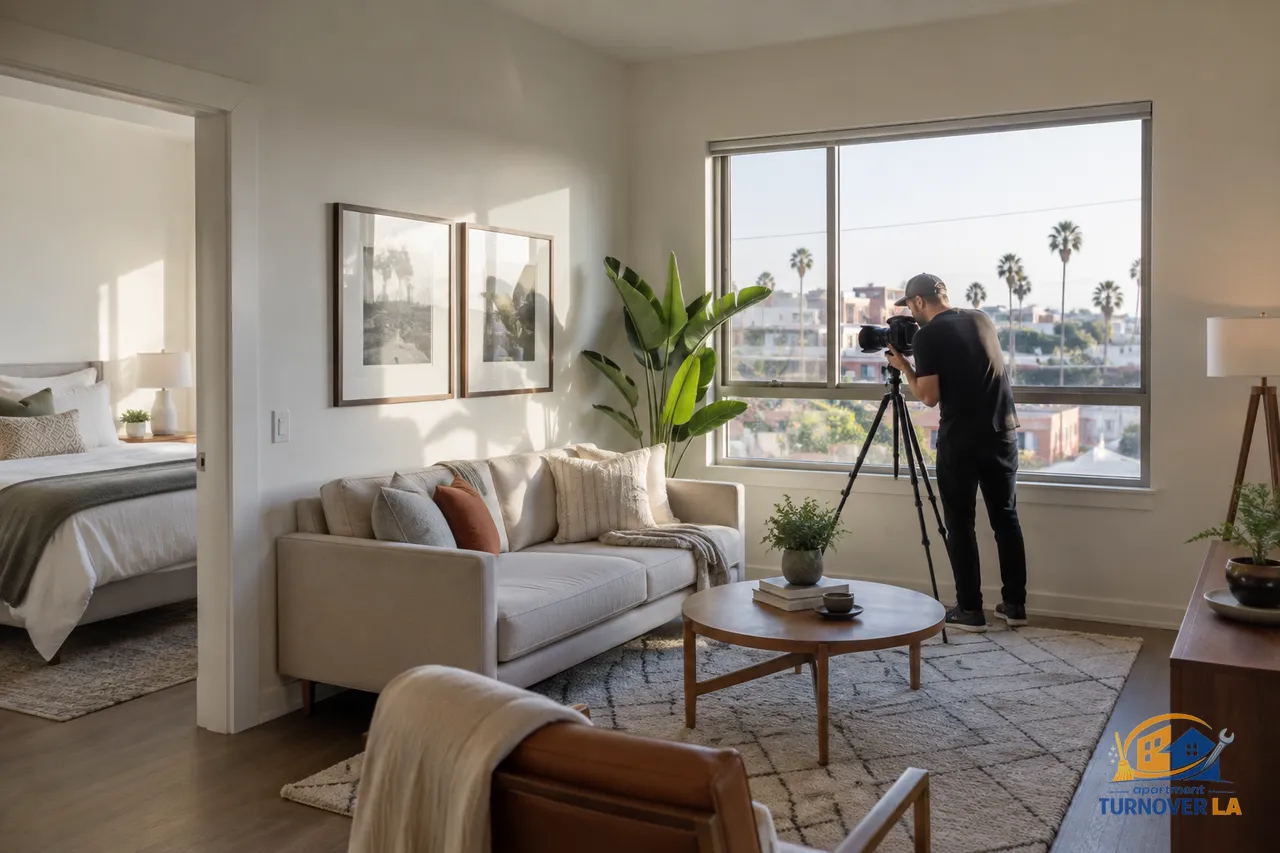
Quick answer: Real estate photographer jobs in Los Angeles usually require a reliable shooting workflow, wide-angle interior work, fast file delivery, and enough property knowledge to spot what should be fixed before the camera comes out. Current LA job listings in the supplied search results range from about $25 to $66.31 an hour, while some roles are part-time, contractor-based, or combine photography with video. The strongest applicants can document a unit, coordinate access, and produce consistent listing-ready images.
Real estate photography is not just a camera job. In LA rentals, it is the last operational step before a vacant unit goes live, which means photographers who understand cleaning, repairs, access, and delivery timelines are easier for managers to hire. For owners who need the unit and media coordinated in one workflow, Get instant quote in 30 seconds.
What do real estate photographer jobs in LA actually require?
Most entry-level and contract roles ask for interior photography competence, dependable transportation, editing skills, and the ability to work without much on-site direction. A hiring manager needs someone who can arrive, assess the light, make a room look accurate, and leave with every required angle covered. In a typical apartment, that means an exterior or building context shot when permitted, living area, kitchen, bedrooms, bathrooms, storage, and useful features such as balconies or laundry.
The operational requirement is often more important than the gear list. A photographer who notices an overflowing trash bin, burned-out vanity light, or unpatched wall hole before shooting saves a manager from publishing weak photos and then rescheduling. This is especially relevant in fast-moving submarkets such as Koreatown, Hollywood, and Downtown LA, where a missed shoot can extend vacancy. Strong candidates create a repeatable shot list, confirm unit access in advance, and send a concise issue note with the gallery.
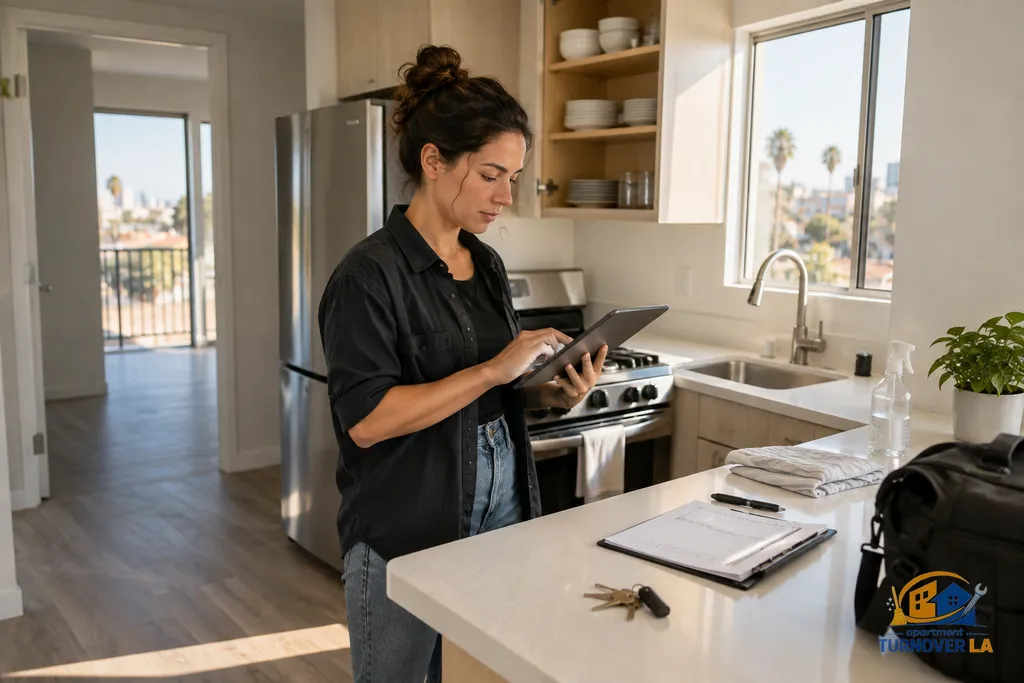
Which skills make a candidate useful on a rental listing shoot?
Start with composition, exposure control, basic flash or bracketed-lighting work, perspective correction, and disciplined editing. Wide-angle interiors should feel spacious without bending door frames, stretching kitchens, or misrepresenting room size. The job also calls for practical communication: confirm the appointment, follow building entry instructions, protect resident privacy, and state when the final files will be available.
A useful portfolio shows the work managers actually buy. Include a studio, a one-bedroom, a darker interior, a small bathroom, an occupied unit, and a unit with a difficult layout. Show natural but corrected window exposure, vertical lines, and a consistent sequence of rooms. Do not fill the portfolio with sunsets and exteriors if the role is primarily apartments.
Photographers can also stand out by understanding the distinction between a cleaned unit and a camera-ready unit. A make-ready turnover pairs a deep clean with a 12-point photo report, so it can flag conditions before listing media is scheduled. That gives the photographer a better starting point and gives the manager a record of what was found.
How should you take photos for a rental listing?
Treat the shoot as a documented sequence, not a collection of attractive individual frames. Walk the unit first. Open blinds where privacy permits, turn on working lights, remove visible cleaning supplies, straighten blinds, close toilet lids, and check mirrors for reflections. Then photograph rooms in the order a renter will understand them, usually entry, living area, kitchen, bedroom, bathroom, and amenities.
Use a consistent camera height and shoot from corners that explain the room. Photograph the feature that answers a renter's practical question: counter space in the kitchen, closet depth in the bedroom, shower condition in the bathroom, or usable outdoor space. Take an extra angle where a room is unusually narrow or has an odd connection to another space. Accuracy matters. Misleading images can generate unproductive showings and frustrate prospects.
Before shooting, address visible maintenance items rather than trying to edit around them. A rental repair punch list can cover the small operational issues that pull attention in photos, such as loose hardware, damaged switch plates, or a cabinet door that will not close. That is often faster than a reshoot after the listing is already delayed.
Get instant quote in 30 seconds
Is the 20 60 20 rule a real estate photography rule?
There is no single, universal 20 60 20 rule that employers use to judge real estate photography. You may hear it used as a general composition or workload shorthand, but it is not a substitute for a property-specific shot plan. A manager hiring for apartments will care more about whether the gallery answers renter questions without distortion or omissions.
A better working allocation is to divide time by operational need. Spend the first portion preparing the room and identifying problems, the largest portion shooting the core rooms and essential details, and the final portion checking coverage before leaving. The last check is where professionals catch a missed second bedroom, an unphotographed closet, a visible reflection, or a balcony that was left out of the gallery.
This matters because vacancy is not abstract in LA. A vacant unit can cost roughly $80 to $200 per day depending on the submarket. A photographer who leaves without confirming complete coverage can cause another scheduling cycle, another access coordination task, and days of avoidable downtime. Employers value people who reduce those handoffs.
Need the unit turned before the next tenant?
We do the move-out clean and send you a photo report you can attach to the deposit itemization.
From $225 · 48-hour turnaround
Get an instant quoteWhat does the pay versus package pricing tell you?
The supplied LA search results show real estate photography job listings around $25 to $66.31 per hour. That is a general labor-market range, not a consumer price for a listing shoot. It also reflects different arrangements, including part-time positions, training roles, contractor work, and jobs that combine photography with video or editing.
For owners comparing delivered-media options rather than applying for a job, TurnOver LA's TLA Launch Pad Media Package is $399. It is a defined listing-media package, not an hourly wage or an hourly photographer rate. Keeping those numbers separate prevents a common budgeting mistake: using an employee job ad to estimate the price of ready-to-publish listing media.
The workflow matters as much as the rate. TurnOver LA handles jobs on a 48-hour turnaround, with no rush or same-day upcharge. If a unit needs paint, parts, or fixtures before the shoot, those materials are priced at the on-site inspection and added to the final invoice only with approval. See the TLA Launch Pad listing media package for the service scope.
Why should a photographer understand turnover work?
A listing photographer is often the first person after turnover work to view the completed unit with fresh eyes. That makes the role a quality-control opportunity. The camera catches things a walkthrough misses: streaked stainless steel, uneven paint sheen, wall scuffs near a doorway, loose smoke-detector covers, an unmade bed in an occupied unit, or a dead bulb in a dim hall.
A photographer does not need to perform repairs, but should know how to report them cleanly. Use room, location, and a short description. For example: “Bedroom two, south wall, visible drywall patch at door height.” A photo manager can act on is more useful than “wall issue.” This kind of discipline makes a freelancer easier to retain across a portfolio.
It also helps to understand the difference between tenant-caused conditions and normal use when photographing move-out condition. California's rules and deposit process are summarized in California Civil Code §1950.5, while this guide on normal wear and tear in California explains common apartment examples. A photographer's role is documentation, not a legal conclusion.
How can you build a portfolio that gets property manager work?
Build for repeatability, not one impressive property. Ask to photograph a range of clean, rent-ready apartments and deliver each gallery in a predictable order. Name files clearly, keep editing consistent, and show that you can work with a modest studio as carefully as a renovated two-bedroom. A property manager needs reliable coverage more than a heavily stylized look.
Your sample set should include before-and-after operational judgment where appropriate, but never publish an occupied resident's belongings or identifying details without permission. Document your access and privacy procedures. The California Tenants Guide is useful background for anyone working in rented homes, particularly around respectful entry and resident-facing professionalism.
Finally, learn the handoff. Confirm file delivery, identify any unresolved condition that affects the listing, and state whether a return visit is needed. Managers who use one vendor for cleaning, repairs, and media reduce scheduling gaps. Our guide to one-vendor cleaning, painting, and repairs in Los Angeles explains why that coordination can matter during a vacancy.
A practical path into LA real estate photography jobs
The fastest credible path is to practice in real apartments, create a focused portfolio, and show that you understand the time pressure of turnover. Start with small units and learn to deliver an accurate gallery under ordinary conditions, not only ideal natural light. Then apply to roles that match your availability, editing capacity, and transportation range.
Use this five-step operating sequence:
- Build a portfolio with studios, one-bedrooms, kitchens, bathrooms, and difficult-light rooms.
- Create a fixed shot list and pre-departure checklist for batteries, cards, tripod, and access details.
- Practice a room-prep walk that identifies visible turnover issues before shooting.
- Deliver galleries in a predictable room order with corrected verticals and realistic color.
- Report listing blockers in plain language, with room-specific notes and supporting photos.
For property owners, the same sequence means fewer surprises between move-out and marketing. Pairing rent-ready preparation with a planned media appointment reduces the chance that a clean unit sits unlisted because nobody caught a small issue. Get instant quote in 30 seconds