
Quick answer: The 5 P's of property management are People, Property, Process, Pricing, and Paperwork. For LA owners, they provide a practical way to run a turnover without missed repairs, undocumented charges, or avoidable vacancy. A vacant apartment can cost roughly $80-$200 per day in lost rent depending on the submarket, so each P needs an owner and a deadline.
The 5 P's are not a statewide legal formula or a formal LA ordinance. They are an operating framework for getting an apartment from move-out condition to a documented, rentable unit. Used together, they help a small landlord make decisions in the right order instead of reacting to surprises after the cleaner, painter, or prospective tenant has arrived. Get instant quote in 30 seconds
What do the 5 P's mean in property management?
The five P's are People, Property, Process, Pricing, and Paperwork. People means clear responsibility among the owner, manager, vendors, and resident. Property means knowing the actual condition of the unit, not relying on a move-out conversation or old photos. Process is the repeatable sequence from notice to keys. Pricing covers both asking rent and the cost of holding a vacant unit. Paperwork is the inspection record, invoices, notices, photos, and deposit accounting that support the decision later.
The framework matters most during turnover because all five areas collide in a short window. A manager may have a good cleaner but no lock plan. The owner may know the target rent but not have a written scope for wall damage. Or the unit may look clean but still lack a working smoke detector, a filter change, or a documented key handoff. Treating those as separate tasks creates delays. Treating them as five connected controls keeps the next step moving.
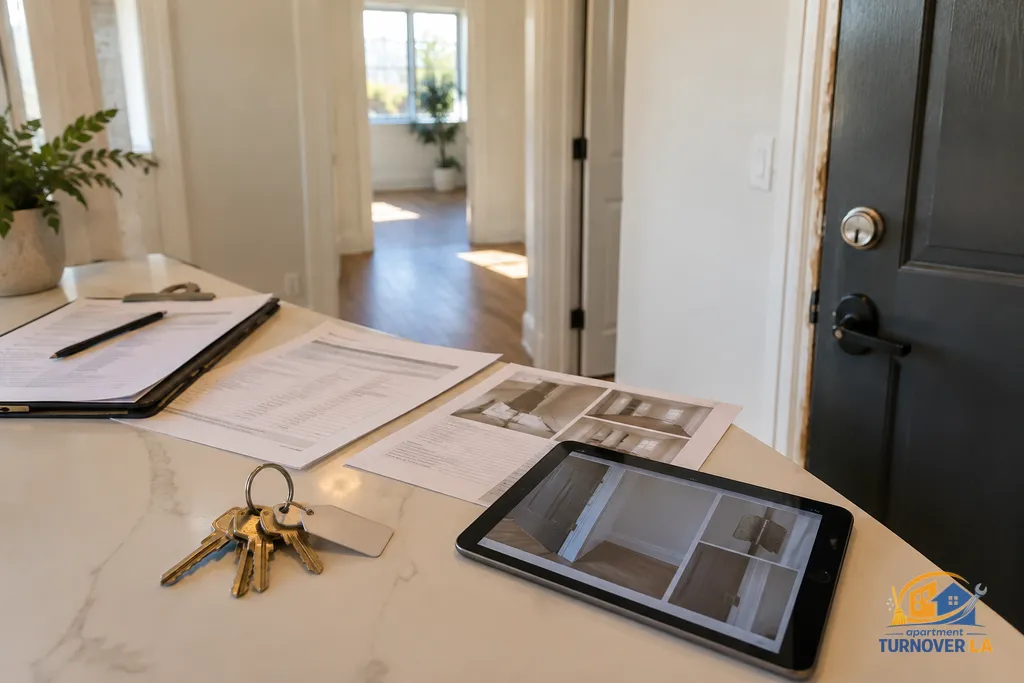
Why does People come first in an LA apartment turnover?
People comes first because a turnover stalls when no one owns the next decision. Assign one person to approve scope, one to coordinate access, and one point of contact for the incoming resident. In a small building, that may all be the owner. In a managed portfolio, it may be the property manager with a vendor lead and leasing contact. What matters is that the roles are explicit before the former resident returns keys.
A practical rule is this: the person who performs the inspection should be able to flag work, but not silently approve tenant charges or materials outside an agreed limit. That prevents the common dispute where a vendor finds damage, work proceeds, and the owner later lacks the records needed to explain the cost. For recurring vacancy work, a dedicated property manager turnover workflow also reduces the number of separate handoffs between cleaning, maintenance, and leasing.
People also includes the outgoing and incoming resident. Confirm possession, key return, forwarding address, scheduled entry, and move-in timing in writing. Those basics keep a fast turn from becoming an access or expectations problem.
How should you assess the Property before scheduling work?
Inspect the property before ordering work, then divide findings into cleaning, maintenance, damage, safety, and leasing presentation. Take wide shots of every room plus close-ups of walls, floors, appliances, fixtures, windows, smoke and carbon monoxide alarms, and every lock. The inspection should produce a scope, not just a collection of photos.
In LA, this step is where local building age and rent regulation often matter. A prewar Hollywood unit with original doors and layers of prior paint needs a different scope than a newer Downtown LA apartment with vinyl plank flooring and smart locks. For covered units, the LAHD Rent Stabilization Ordinance can affect the larger tenancy and rent context, but it does not replace a physical condition inspection.
Start with health, safety, water intrusion, and access issues. Next, address functionality, then cleaning and cosmetic work. A Make Ready service is useful when the unit needs a base deep clean and a 12-point photo report to establish its visible condition before leasing activity begins. For a room-by-room field list, use this apartment turnover checklist.
What Process keeps a turnover from losing days?
The best process is a fixed sequence with a same-day decision point after inspection. Do not schedule cleaning first and discover two days later that drywall needs repair or a bathroom leak needs attention. In most units, the order should be safety and access, repairs, patching and paint, cleanout if needed, deep cleaning, final quality control, then listing photos and showing readiness.
Use this seven-step turnover sequence:
- Confirm legal possession and collect keys.
- Inspect, photograph, and approve the written scope.
- Rekey or secure access before multiple vendors enter.
- Complete repairs, including leaks, electrical issues, and drywall patches.
- Finish painting and allow adequate dry time.
- Remove debris, deep clean, and replace consumables such as filters where required.
- Conduct final photo-based quality control before marketing or move-in.
This order makes the critical path visible. If a medium drywall repair or a replacement part is pending, leasing knows the unit is not yet ready instead of promising a date based on a cleaning appointment. A single repair contact for maintenance punch-list work can reduce coordination gaps. Get instant quote in 30 seconds
Need the unit turned before the next tenant?
We do the move-out clean and send you a photo report you can attach to the deposit itemization.
From $225 · 48-hour turnaround
Get an instant quoteHow does Pricing affect vacancy and rental decisions?
Pricing is more than setting the advertised rent. It is the daily decision about whether the unit is worth holding for a higher price, whether a repair should be done now, and how much vacancy is being created by waiting. In LA, a vacant day commonly represents about $80-$200 in lost rent depending on location and unit type. At that pace, a two-day approval delay can cost more than a modest, clearly scoped repair.
Set three numbers at the beginning of the turnover: the target rent, the earliest realistic ready date, and the daily vacancy cost. Then make approval decisions against those numbers. For example, a scuffed wall that will affect showings may be a faster decision than debating whether it is merely cosmetic. The same is true for a sticky lock or a missing cabinet pull. Small issues compound when prospects see them together.
Do not use tenant deposit funds as a casual turnover budget. California law limits what can be deducted and requires itemization and supporting documentation when applicable. Review California Civil Code §1950.5 before assigning costs. Our guide to landlord charges for tenant turnover explains the practical distinction between chargeable damage and normal preparation for the next tenancy.
What Paperwork should a property manager retain?
Keep one turnover file per vacancy, even if you own only a few apartments. The file should include the prior move-in condition record, move-out inspection notes, dated photos, resident communications, estimates, approved scope, invoices, receipts for materials, rekey confirmation, final inspection photos, and the security deposit accounting. It should also show who approved any work that was outside the original scope.
This is not paperwork for its own sake. It is how you answer later questions about a wall patch, a cleaning charge, a missing key, or the unit's condition on the day possession changed. Photo timestamps help, but captions are better. Write what the photo shows, the room, and whether the item was present at move-in, observed at move-out, or repaired for the next resident.
Deposit timing is especially important. California's rules have specific requirements around the return and accounting process. The California DCA Landlord-Tenant Guide is a useful starting point, and this guide on the California 21-day deposit return covers the operating deadline. When the record is complete, the paperwork P protects both the owner and the manager.
Where do locks, cleaning, and listing readiness fit in the 5 P's?
These tasks sit at the overlap of Property, Process, and Paperwork. Rekeying belongs early because the unit needs controlled access before vendors and prospects come through. Cleaning belongs after dusty repairs and paint work because otherwise the cleaner is asked to do the same work twice. Listing readiness belongs after final quality control, not when the unit is only mostly done.
This sequence creates a useful handoff standard: no unit is called rent-ready until access is secure, all approved work is complete, visible surfaces are clean, appliances and fixtures have been checked, and final photos confirm the condition. That is more reliable than a verbal update that the unit is "basically ready." It also gives the leasing side a defensible answer when asked when showings can start.
For a fuller explanation of the cleaning and documentation standard, see what a make-ready service includes. If the apartment is being marketed immediately after final quality control, the rental listing media package can follow the ready confirmation rather than interrupting the repair sequence.
How can owners use the 5 P's every month, not just at move-out?
Turn the five P's into a monthly operating review. Under People, check vendor performance, response times, and unresolved resident communication. Under Property, review open work orders, recurring leaks, pest conditions, and upcoming lease expirations. Under Process, ask where the last turnover paused and whether the sequence needs correction. Under Pricing, compare asking rent, concessions, and vacancy days. Under Paperwork, spot-check files for missing photos, approvals, or invoices.
The important operational insight is that turnovers do not fail only because of major repairs. They more often lose days through small unowned tasks: a missing lock rekey record, paint touch-up not approved until after cleaning, or final photos not taken before a prospective tenant arrives. A five-P review makes those weak links visible before they cost another day of rent.
Use the framework on every notice to vacate, then refine it after each completed turn. The goal is not a complicated management system. It is a repeatable handoff from possession to a clean, secure, documented apartment that leasing can confidently show. Get instant quote in 30 seconds