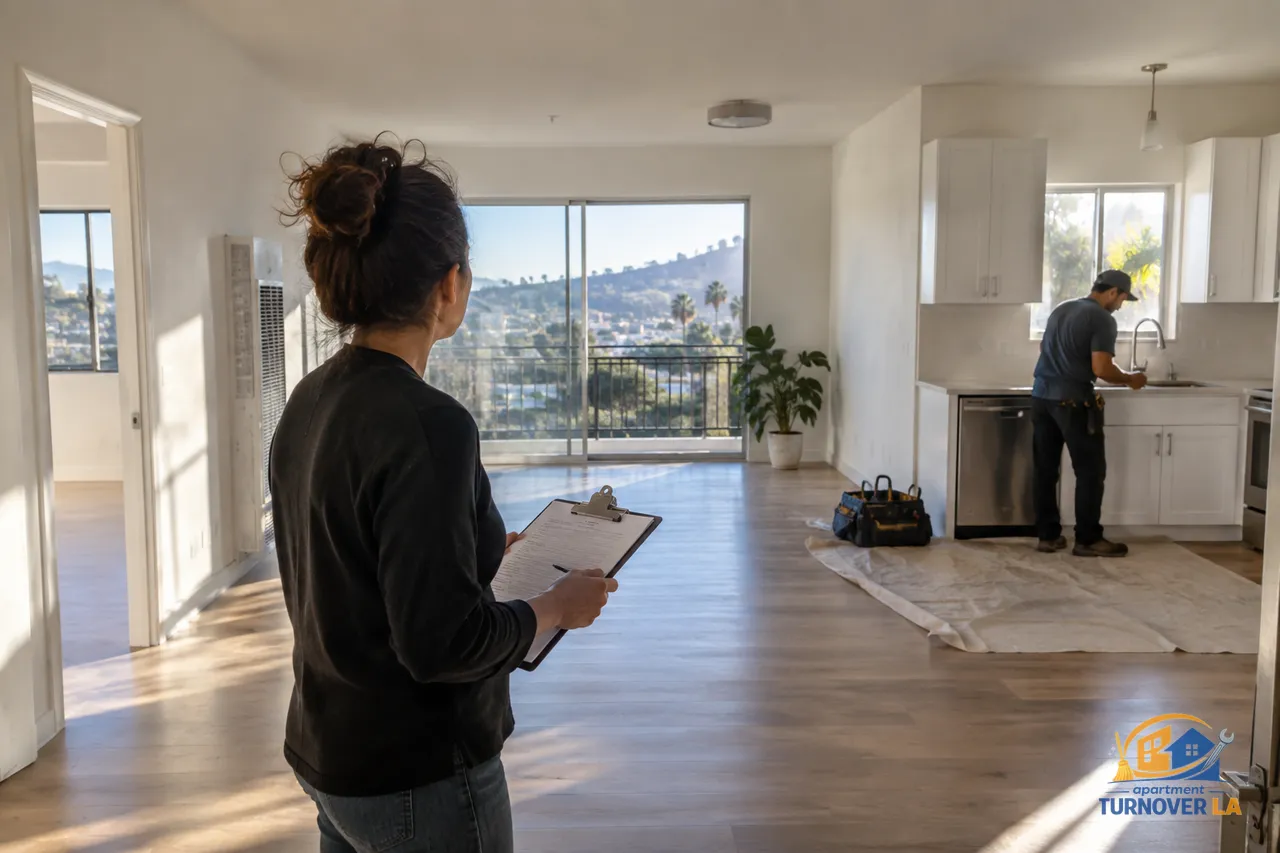
Quick answer: In apartments, “make ready” means preparing a vacant unit for the next resident after move-out. It is a coordinated scope of cleaning, repairs, paint touch-up, safety checks, and documentation, not one maintenance task. At TurnOver LA, the base Make Ready package includes a deep clean and 12-point photo report, with a 48-hour turnaround.
Make ready is the handoff between a former tenancy and a unit a leasing agent can show without apologizing for its condition. The scope should be based on an inspection, the property standard, and any work needed to make the apartment clean, functional, secure, and presentable.
Get instant quote in 30 seconds
What does make ready mean in apartments?
Make ready means bringing an empty apartment back to a rent-ready condition. It starts after possession is returned and ends when the unit can be shown, leased, and occupied without unfinished turnover work hanging over the next resident. In practice, that means more than sending in a cleaner. The person coordinating the turn needs to identify cleaning needs, visible wall damage, failed fixtures, lock status, odor issues, and items left behind.
The exact scope varies by unit. A clean studio with a few wall scuffs may need only a deep clean, touch-up paint, and lock work. A long-tenured two-bedroom may also need drywall patches, a handyman list, cabinet work, or a cleanout. The useful definition is operational: make ready is the planned set of tasks that closes the gap between move-out condition and your leasing standard.
For a fuller description of the base scope, see what is make ready. The key point is that “ready” should mean ready for the next step, not merely empty.
What work belongs in a make ready scope?
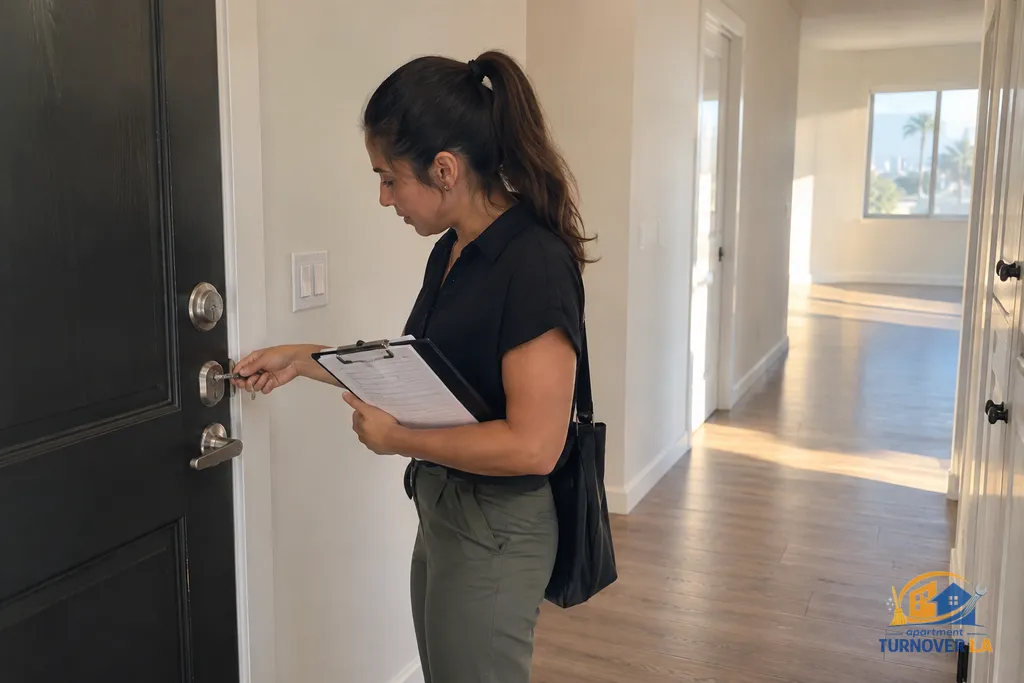
A sound make ready scope covers the conditions that affect cleanliness, function, security, and first impression. Start with an inspection before crews arrive, then assign each item to the right trade. Combining every issue under “cleaning” is how small defects get missed until a prospect or new resident finds them.
A practical sequence often includes:
- Photograph the unit condition and identify damage or deferred maintenance.
- Remove abandoned belongings and trash if needed.
- Complete drywall, paint, fixture, and safety repairs.
- Deep clean the kitchen, bath, floors, appliances, and high-touch areas.
- Rekey or replace locks after access needs are finished.
- Perform a final walk and document the completed condition.
TurnOver LA's Make Ready package combines a deep clean with a 12-point photo report. Paint, parts, and fixtures are not guessed from photos or buried in a package price. The quote covers labor and the crew's supplies, while job materials are priced at the on-site inspection and added only with owner approval.
How is make ready different from a maintenance request?
A maintenance request fixes a specific in-place problem for a current resident. Make ready is vacancy work that coordinates multiple tasks across an entire apartment. The distinction matters because a repair can be complete while the unit is still not ready to lease.
For example, a resident may submit a request for a dripping faucet. A technician repairs the faucet, closes the ticket, and leaves. During a make ready, that same faucet is one checkpoint among many: leaks, drains, GFCI outlets, lights, cabinet hardware, caulking, wall condition, appliances, smoke detectors, doors, locks, and cleaning all need a decision. Make ready has an end-state, while a maintenance request has a discrete problem statement.
This is also why it helps to keep a punch list separate from the base cleaning scope. A handyman punch list can address small functional corrections that a cleaner should not be asked to diagnose or repair. It gives the property manager a clearer record of what was found, who handled it, and what remains open before leasing starts.
What does a make ready inspection catch that cleaning alone misses?
A final cleaning can make an apartment look better, but it cannot confirm that the entry lock has been rekeyed, a closet door closes properly, or a wall patch has been textured and painted to an acceptable finish. Make ready inspections catch these crossover issues before they become a showing problem or a move-in complaint.
The most useful inspection looks at sightlines and function together. From the doorway, check walls, floors, odor, lighting, blinds, and obvious debris. Then test the ordinary resident touchpoints: locks, latches, outlets, switches, plumbing, appliances, cabinets, and safety devices. In older LA buildings, mismatched paint sheen, patched plaster, sticky windows, and loose cabinet pulls are common examples of items that look minor individually but make a vacant unit feel unfinished as a group.
The 12-point photo report is operationally useful because it documents the completed baseline after the crew leaves. It is not a substitute for an owner or manager's legal move-out inspection process. For deposit rules and documentation standards, review California Civil Code §1950.5 and your records separately.
Need the unit turned before the next tenant?
We do the move-out clean and send you a photo report you can attach to the deposit itemization.
From $225 · 48-hour turnaround
Get an instant quoteWhen should paint, drywall, or cleanout be added?
Add trade work when the condition cannot be corrected through normal deep cleaning and ordinary reset work. Paint touch-up is appropriate for isolated scuffs where the existing finish can be matched. Repainting a room makes more sense when marks are widespread, the sheen is inconsistent, or patches would remain visible. Small holes, anchor damage, and torn paper face are drywall decisions, not cleaning decisions.
The same logic applies to belongings left behind. A few forgotten items may be simple removal, but a unit filled with furniture, bagged trash, or damaged items needs a cleanout plan before cleaners can work efficiently. Avoid asking a cleaning crew to work around junk, wet paint, or active drywall sanding. That order creates rework and muddies the final condition report.
For context, TurnOver LA lists paint touch-up only at $200, small drywall patch + texture at $150 / patch, and unit cleanout / junk haul at $500. Those are separate catalog line items, not amounts included in the base package. Review drywall patching in LA rental apartments when deciding whether visible wall damage needs a patch or a broader paint scope.
Get instant quote in 30 seconds
What does make ready cost for an LA apartment?
There is no defensible single LA market price for a make ready because the unit size, move-out condition, access, paint coverage, repairs, junk, and materials can change the scope quickly. The cleaner comparison is to separate the base reset from added trade work, rather than treating a turnover as one vague all-in number.
TurnOver LA's base Make Ready price is $225 for a Studio, $255 for a 1 Bedroom, $335 for a 2 Bedroom, and $425 for a 3BR or larger. Each includes a deep clean and 12-point photo report, with a 48-hour turnaround. If the inspection identifies additional work, catalog examples include $395 / room for repainting, $240 / patch for medium drywall repair, $125 for a general maintenance / safety visit, and $150 for a full apartment rekey (up to 2 locks).
Materials are handled separately. Labor and crew supplies are covered in the quote, but paint, replacement parts, and fixtures are priced at the on-site inspection and added to the final invoice only with approval. That keeps a $255 1 Bedroom Make Ready from being presented as if it includes unknown repair materials.
Why does the order of make ready work matter?
The order matters because the wrong sequence creates duplicate labor, delays the final walk, and leaves an apartment unavailable longer than necessary. In LA, vacancy loss can run roughly $80 to $200 per day depending on the submarket, so a preventable extra day is not a small administrative detail.
Start with inspection and access. Next, remove junk and complete dusty or disruptive work such as drywall repair, sanding, and paint. Then handle repairs that need open access to cabinets, walls, or appliances. Deep cleaning belongs after those trades are done, followed by lock work and the final documented walk. Rekeying too early can create access problems for other approved crews, while cleaning too early means cleaners may need to return after repairs.
This sequence also helps with security and accountability. When keys change at the end, the manager can connect the final condition report to the actual unit handoff. If a departing resident's deposit is involved, do not let speed replace documentation. The California DCA Landlord-Tenant Guide is a useful starting point, and California's 21-day deposit return guide covers the turnover timeline in more detail.
How do you know a unit is actually rent ready?
A unit is rent ready when the manager can open the door, show every room, and schedule move-in without a remaining work order, access issue, cleanliness concern, or unresolved approval. “Looks okay” is not the standard. The standard is whether the unit meets your documented property condition and can withstand a prospect's close look.
Use a final walk that checks the same conditions every time. Confirm the apartment is empty, odors are addressed, floors and appliances are clean, walls are acceptable, fixtures operate, safety items are in place, locks are handled, and all approved work is complete. Compare the completed unit against a consistent apartment turnover checklist, not against memory from the previous visit.
Make ready is most effective when it is treated as one coordinated vacancy process, with a clear scope and a documented finish. TurnOver LA can turn the base reset around in 48 hours, then flag approved add-on work rather than concealing it inside an undefined package.