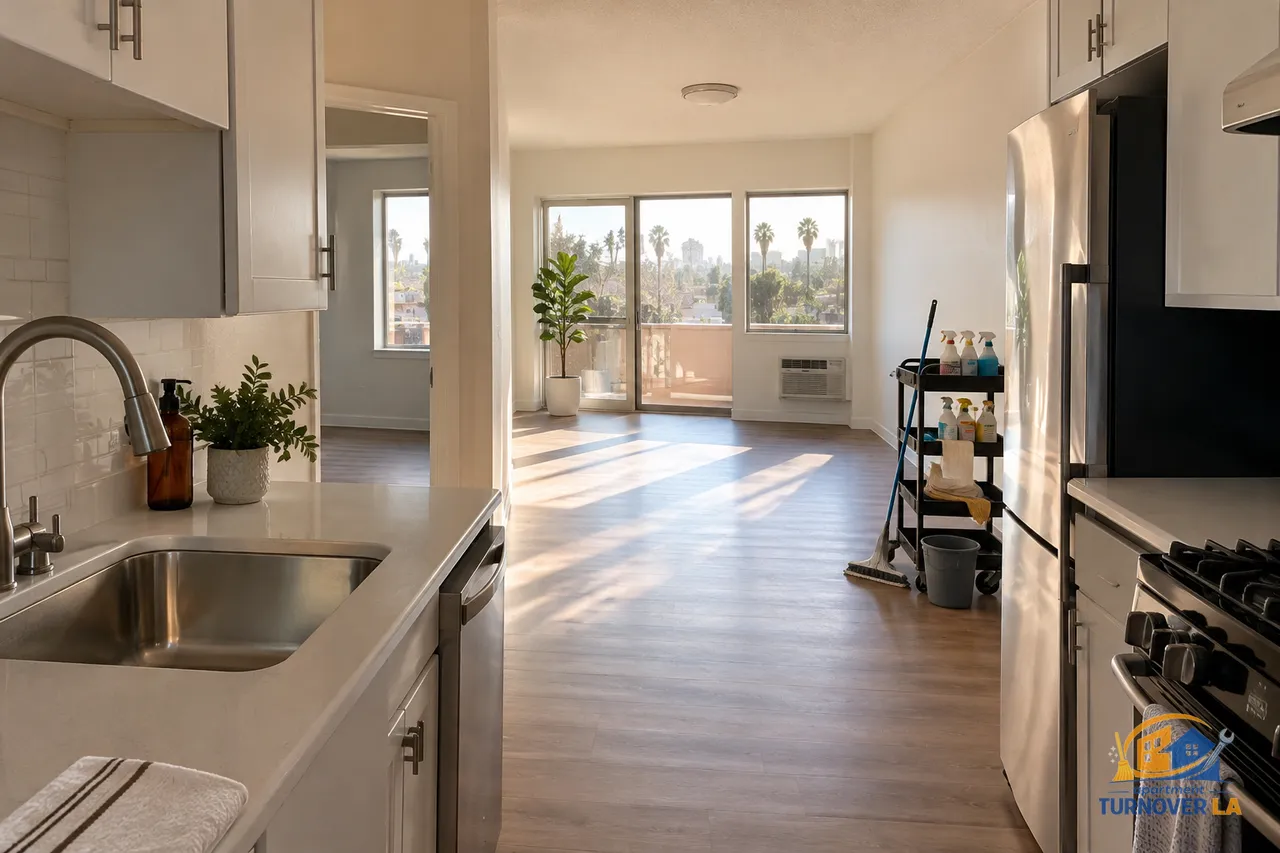
Quick answer: A deep cleaning usually includes detailed kitchen and bathroom scrubbing, cabinet fronts and interiors when specified, floors, baseboards, fixtures, high-touch surfaces, and dusting beyond routine reach. For an LA rental, confirm appliance interiors, shower tracks, odor treatment, and post-repair dust in writing, because those items are often assumed but not automatically included.
A proper deep clean resets a unit to a showable condition, not merely a tidy one. The scope should identify each room, the condition issues found at move-out, and the tasks that need separate approval. Get instant quote in 30 seconds
What separates a deep cleaning from a regular cleaning?
A deep cleaning reaches accumulated soil and the surfaces a routine visit may skip. That means buildup around faucets, grease near a range, residue in shower tracks, dust on baseboards, and debris along floor edges. It also means cleaners work methodically through a vacant unit, rather than simply straightening rooms and wiping what is visible at eye level.
For a rental, the distinction matters because the move-out condition is rarely uniform. A clean bedroom can sit beside a kitchen with sticky cabinet pulls and an oven with baked-on grease. Ask for a room-by-room scope rather than accepting the label "deep clean" by itself. The scope should state whether cleaners will clean inside empty cabinets, inside appliances, and behind movable items. For the broader turnover sequence, compare this work with a Make Ready service, which combines a deep clean with a 12-point photo report.
Which kitchen tasks are usually part of a deep cleaning?
A deep-cleaned kitchen normally includes counters, backsplash, sink, faucet, cabinet exteriors, pulls, wall splatter, floors, and the edges where grease collects. The cleaner should remove loose debris from drawers and cabinets, wipe shelving when empty, and clean around the range rather than just its visible front. Refrigerator shelves, the oven interior, and range-hood filters should be listed separately if they are expected.
The operational issue is grease, not just crumbs. In older units in Koreatown and Hollywood, painted cabinet faces and narrow gaps beside the range can hold a film that becomes obvious during a showing. Cleaning it early also tells you whether a cabinet needs paint touch-up instead of more scrubbing. See our detailed checklist for apartment kitchen degreasing after move-out before deciding whether cleaning alone will solve the condition.
What should a deep-cleaned bathroom include?
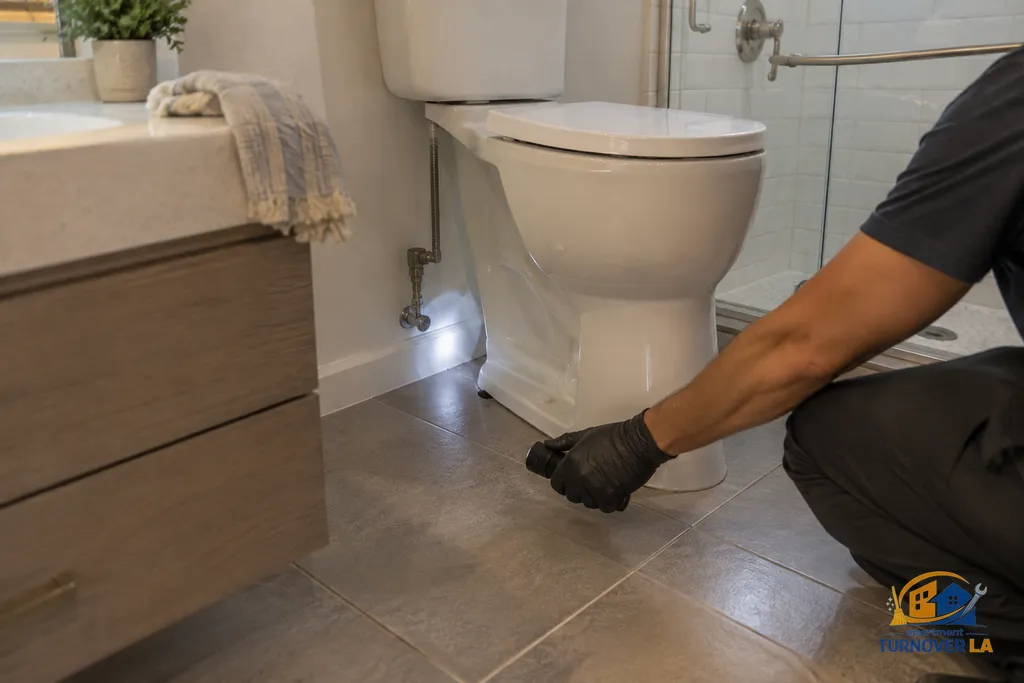
Bathrooms need an answer-first inspection: if the fixtures, grout lines, shower track, toilet base, vanity, mirror, and floor edges are not addressed, the room is not fully deep cleaned. A normal scope includes soap scum removal, sink and faucet polishing, toilet cleaning inside and out, dust removal from vents, wiping light fixtures, and mopping the floor after the dry work is complete.
Grout and caulk need careful expectations. Surface residue may come off with cleaning, but cracked grout, failed caulk, mineral etching, and permanent discoloration are repair or replacement issues. Do not tell a cleaner to make damaged materials look new. Document the condition, then separate cleaning from repair authorization. Our guide to bathroom grout cleaning during an apartment turnover helps distinguish removable residue from a maintenance problem.
Are bedrooms, living rooms, and floors included too?
Yes. Deep cleaning in bedrooms and living spaces usually covers dusting ledges, blinds or blind surfaces, ceiling-fan blades, vents, light fixtures, baseboards, doors, switch plates, closet shelves, and window tracks where accessible. Floors are vacuumed and mopped or otherwise cleaned for their material, with attention to corners and perimeter edges. Empty closets should be cleaned before new tenant access.
What cleaners can move is a practical limit. In a vacant apartment, they can usually access more floor area than in an occupied home. Heavy appliances, built-in furniture, and items that require disconnection need a separate plan. Carpet staining also is not solved by standard vacuuming. If the unit has carpet, assess odor, visible spots, and traffic lanes before choosing a cleaning method. That prevents a late discovery after the listing photos are scheduled.
Need the unit turned before the next tenant?
We do the move-out clean and send you a photo report you can attach to the deposit itemization.
From $225 · 48-hour turnaround
Get an instant quoteWhat is commonly excluded unless it is written into the scope?
The safest assumption is that a deep clean does not include labor that changes, repairs, removes, or restores a damaged item. Put the following tasks in the work order only when they are needed:
- Inside-oven, refrigerator, or range-hood filter cleaning.
- Interior window washing or exterior glass access.
- Carpet extraction, stain treatment, or pet-odor remediation.
- Mold remediation, biohazard cleanup, or pest treatment.
- Hauling furniture, trash, construction debris, or abandoned belongings.
- Drywall patching, repainting, fixture replacement, or caulk repair.
This separation protects the schedule. Cleaning should reveal damage, not hide it under a vague scope. If an inspection finds holes, loose hardware, or nonworking fixtures, route those items to a rental repair crew before the final clean. TurnOver LA quotes cover labor and the crew's own supplies. Paint, parts, and fixtures are inspected on site and added only with your approval.
How should an LA landlord sequence deep cleaning after move-out?
Start with possession, photographs, and a condition walk. Next, remove abandoned property, identify repairs, complete dust-producing work such as drywall patching, then deep clean. Rekeying, final quality control, and listing preparation come after that. Cleaning before a repair crew sands a patch creates duplicate work and can delay a showing.
A practical five-step turnover order is inspection, cleanout, repairs, cleaning, then final photos and access control. TurnOver LA uses a flat 48-hour turnaround on every job, so a clear scope at the start helps keep the handoff moving. In Los Angeles, where vacancy loss commonly runs $80 to $200 per day depending on submarket, avoiding one unnecessary return visit can matter more than negotiating a small line item. Get instant quote in 30 seconds
Can a landlord charge for deep cleaning in California?
A landlord can deduct cleaning costs from a security deposit only to the extent needed to return the unit to the level of cleanliness it had at move-in, less ordinary wear and tear. That standard comes from California Civil Code §1950.5. It is not a blank check for a standard cleaning charge every time a tenant leaves.
Document the move-in condition, the move-out condition, invoices, and photos. Then separate tenant-caused cleaning from ordinary aging, such as minor dust after a long tenancy. California deposit timing and documentation rules are also covered in this guide to the California 21-day deposit return. LA rent-stabilized units can involve additional local compliance considerations, so review the LAHD Rent Stabilization Ordinance when it applies to your property.
Do the 20/10, 5-5-5, and 80/20 cleaning rules define the scope?
No. Those rules are personal cleaning routines, not turnover specifications. The 20/10 approach generally means 20 minutes of work followed by a 10-minute break. A 5-5-5 routine is usually a short daily reset across several task groups. The 80/20 rule suggests prioritizing the small number of tasks that make the largest visual difference.
They can help an owner or resident stay organized, but they do not replace a work order. A rental deep clean needs measurable tasks, especially around appliances, bathroom buildup, odor, floors, and closets. Use time-based rules for personal upkeep. Use room-by-room standards and photos for a vacancy handoff.
What should you confirm before booking a deep clean?
Confirm whether the unit is vacant, the number of bedrooms and bathrooms, flooring types, appliance interiors, cabinet interiors, visible odor, pet history, access instructions, and whether repairs will finish first. Ask for an inspection record of anything that could not be cleaned to a rent-ready standard. That record is useful for maintenance authorization and deposit accounting.
For a simple turnover, the goal is not an abstract idea of clean. It is a unit where the next resident, leasing agent, and inspector can see that surfaces, edges, fixtures, and storage areas were addressed. A defined scope keeps the clean from turning into a second visit after the listing is live. Get instant quote in 30 seconds