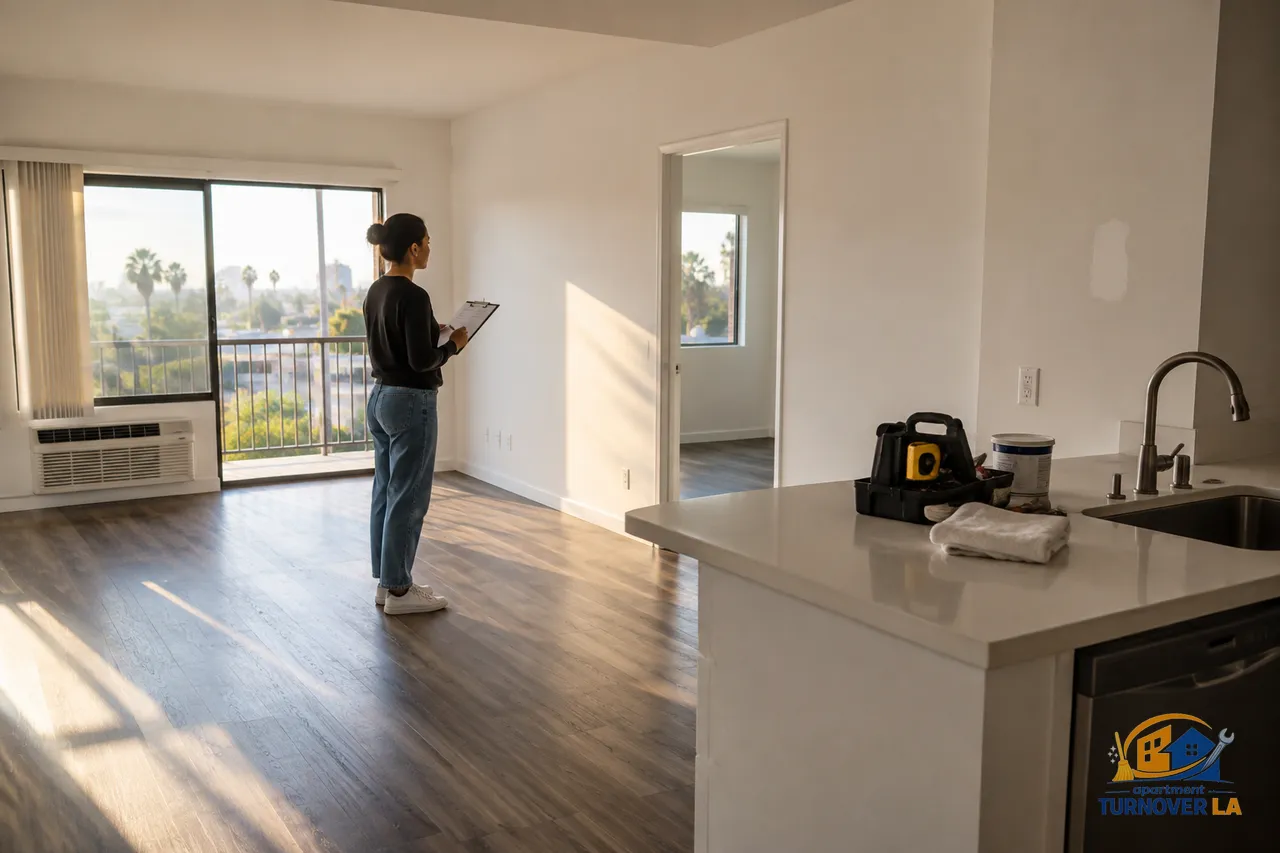
Quick answer: Tenant turnover is the full period between one renter moving out and the next renter taking possession, including inspection, deposit accounting, cleaning, repairs, marketing, and lease-up. In Los Angeles, every vacant day commonly costs $80 to $200 in lost rent, depending on the submarket. Track turnover as both a unit workflow and a percentage of occupied units that leave over a set period.
Tenant turnover means more than receiving keys from a departing renter. It is the operational handoff from an occupied unit to a documented, safe, rent-ready home for the next renter, and missed handoffs are where vacancy days accumulate. Get instant quote in 30 seconds
What is turnover in renting?
In renting, turnover starts when a tenant gives notice or a manager learns that the unit will be vacant. It ends when the next resident has possession, not when the cleaners leave. Between those points, the owner or manager needs a move-out inspection, condition documentation, deposit accounting, cleaning, repair decisions, access control, listing preparation, applicant screening, lease execution, and a move-in condition record.
For an LA apartment, the sequence matters because trades can block one another. A cleaner should not be sent before drywall dust is controlled, and listing photos should not be taken before the final punch work is complete. The working definition should also separate resident-caused damage from ordinary aging. California deposit rules set boundaries on what may be deducted, so use the move-in record and current inspection rather than memory. Review California Civil Code §1950.5 alongside your lease before finalizing charges.
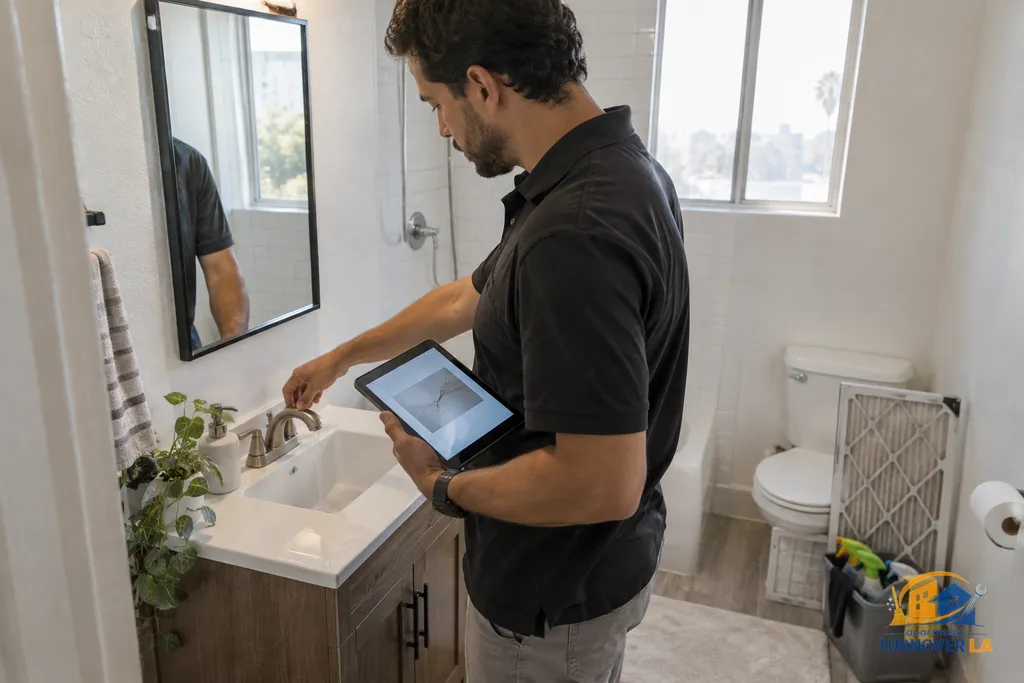
How do you calculate tenant turnover rate?
Calculate tenant turnover rate by dividing the number of move-outs during a chosen period by the average number of occupied units during that same period, then multiply by 100. A 20-unit building with four move-outs in a year and an average of 20 occupied units has a 20 percent annual turnover rate. Use average occupied units if occupancy changed during the year, rather than simply using the number of units at year end.
Keep the rate separate from vacancy rate. Turnover measures how often residents leave. Vacancy measures how much inventory sits unrented. A building can have modest turnover but high vacancy if lease-up is slow. It can also have high turnover but limited vacancy if the manager preleases efficiently. Track four dates for each unit: notice received, possession returned, work completed, and new lease start. The gap between each date identifies whether the bottleneck is resident notice, vendor coordination, marketing, or applicant processing.
What is a good tenant turnover rate for an apartment building?
There is no single good turnover rate for every LA building. A rate that looks high in a building with student renters or short job assignments may be normal, while the same rate in a family-oriented building with stable rents may point to a retention problem. The useful benchmark is your own building's trailing 12-month rate, broken out by unit type, lease length, and stated move-out reason.
Start asking operational questions instead of chasing a generic percentage. Are most departures tied to rent increases, job relocation, roommate changes, maintenance history, or building conditions? Did turnover rise after a policy change? Are one-bedroom units cycling faster than two-bedroom units? Also separate voluntary move-outs from lawful evictions, transfers, and owner move-ins. LA rent-regulated properties require extra care around tenancy changes. The LAHD Rent Stabilization Ordinance is the starting point for understanding whether a unit is covered and what local rules may affect the tenancy.
What does a tenant turnover actually include?
A complete turnover has a field sequence, not a vague instruction to “get it ready.” The following order keeps condition decisions, vendor work, and leasing records aligned:
- Receive notice and schedule the pre-move-out walkthrough when appropriate.
- Photograph and note the unit condition immediately after possession returns.
- Compare findings with the move-in file, then identify ordinary wear versus billable damage.
- Approve repairs, cleaning, cleanout, and access work in the order each trade needs.
- Verify the completed unit against a written punch list before photography or showings.
- Prepare the deposit itemization and supporting records within the applicable deadline.
- Create a move-in condition record before handing over keys.
This is why a photo report is more than a marketing convenience. It creates a timestamped work-completion record that can be matched to the final inspection and deposit file. For a closer breakdown of tasks, use the apartment turnover checklist. For the chargeability question, see normal wear and tear in California.
Need the unit turned before the next tenant?
We do the move-out clean and send you a photo report you can attach to the deposit itemization.
Get an instant quoteHow much does vacancy change the turnover decision?
Vacancy is the fastest way to evaluate a turnover decision. Across LA, a vacant apartment commonly loses $80 to $200 per day in rent, depending on the submarket. That is a general market vacancy baseline, not a TurnOver LA service price. At that pace, a three-day approval delay can cost $240 to $600 before additional utility, advertising, or staff time is counted.
For the unit-ready work itself, TurnOver LA's Make Ready service is a flat $225 for a studio, $255 for a one-bedroom, $335 for a two-bedroom, and $425 for a three-bedroom or larger, with a 48-hour turnaround. It includes a deep clean and 12-point photo report. Labor and crew supplies are covered. Paint, parts, and fixtures needed for the job are identified at the on-site inspection and added only with your approval.
The practical point is not that every repair should be rushed. It is that decisions should be made with the cost of an idle unit visible. Get instant quote in 30 seconds
Which turnover work should be bundled, and which should be inspected first?
Bundle work that can be scoped from the same vacant-unit inspection, but do not bury uncertain damage inside a generic clean. Cleaning, touch-up paint, minor drywall repair, rekeying, and a punch list are commonly linked. First inspect for water damage, active leaks, electrical issues, pest evidence, missing safety devices, and damage that may require owner approval or a specialist. Those conditions can change the sequence and prevent duplicate visits.
A Make Ready is often the base scope after ordinary move-out conditions are documented. If the unit needs a repair pass, use the repairs service before final cleaning where dust or access will affect the finish. For units that simply need the unit-ready baseline, review the Make Ready service. A small drywall patch and texture is $150 per patch, and paint touch-up only is $200. Those are separate catalog items, not assumptions folded into the base package.
The operational gain comes from a single inspection record that tells each crew what is approved, what is pending, and what must be rechecked at final walk.
What is the 2% rule for rentals, and does it apply to turnover?
The 2% rule is an informal investing screen, not a California landlord rule and not a turnover metric. Investors generally use it to compare monthly rent with a property's purchase price. For example, a property priced at $500,000 would need roughly $10,000 in monthly rent to meet that screen. In Los Angeles, where prices, financing, and rent regulation vary widely, it is rarely enough to guide a unit-level operating decision.
For turnover, a better measure is the recoverable vacancy clock. Count days from possession to rent-ready, then rent-ready to lease start. Next, record what caused each delay. An unapproved cabinet replacement, a missed lock change, and a slow applicant decision are different problems with different owners. This lets a manager see whether spending on preventive maintenance, cleaner documentation, or faster coordination will reduce lost days. It also avoids treating turnover as one unavoidable expense line when parts of it can be controlled.
Build a repeatable turnover file, not just a vendor invoice
A reliable turnover file has the move-in condition report, move-out photos, inspection notes, approval messages, vendor invoices, final completion photos, deposit accounting, and the new resident's move-in record. That file supports better charge decisions and makes the next turnover easier to scope. California's landlord guidance is a useful reference point, including the California DCA Landlord-Tenant Guide, but managers should also confirm local rules and obtain legal advice for disputed or unusual facts.
The best time to protect the file is before work begins. Photograph damage, record fixture model numbers when replacement is likely, and distinguish preexisting wear from fresh loss. Then use the final report to confirm that approved work was done and that the home is ready for the next showing. A documented sequence reduces avoidable callbacks and gives leasing a clear answer about when the unit can be marketed.
Tenant turnover is manageable when it is measured as dates, conditions, approvals, and completed work, not simply as a vacancy on a report. Get instant quote in 30 seconds