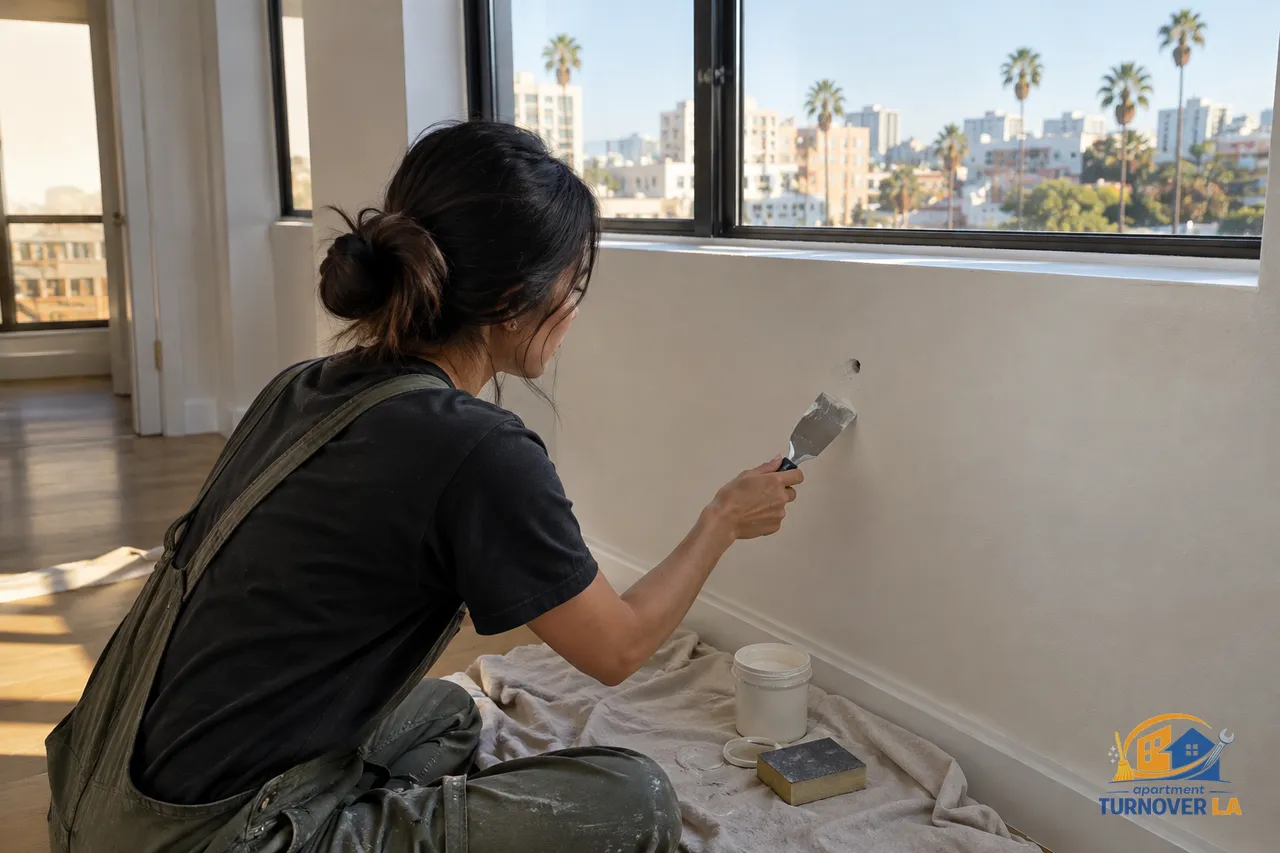
Quick answer: You can fix a nail hole, screw hole, or shallow dent in drywall without a separate patch by cleaning the opening, pressing in lightweight spackle, sanding it flat, and touching up the paint. This works best for holes under about 1 inch that have solid drywall around them. A soft, wet, cracked, or larger hole needs backing and a proper repair, not extra filler.
To fix a hole in drywall without a patch, use filler only when the surrounding gypsum board is firm and the opening is small enough for the compound to bridge without sinking. For a rental, the repair is only complete when the wall is flat under side light and the paint sheen matches the rest of the wall. Get instant quote in 30 seconds
When can you repair drywall without a patch?
You can skip a patch for pinholes, picture-hanger holes, small anchor holes after the anchor is removed, and shallow dents. As a practical field rule, a hole no wider than your fingertip can usually be filled if its edges are firm. Push gently around the opening first. If the paper face crumbles, the wall flexes, or the hole has a brown water stain, filler alone will not hold up.
The key issue is depth. Spackle can fill a shallow void, but it shrinks as it dries and has little structure across an open gap. A hole made by a door knob, an impact, or a pulled-out toggle bolt often has broken paper and fractured gypsum beyond the visible edge. It may look small after paint, then telegraph through a week later.
In older apartments in Koreatown, texture and multiple paint layers can make a small repair more visible than the hole itself. Test the wall condition before choosing the quick method. If there is any question about hidden moisture or loose board, use a backed repair.
How do you fill a small drywall hole without a patch?
For a sound hole under about 1 inch, the no-patch method is simple: use thin layers, not one oversized blob. Lightweight spackle is easiest for tiny holes because it sands quickly, while setting compound is more durable for a slightly deeper screw or anchor hole. Keep the repair area wider than the hole so the edge disappears into the wall plane.
- Remove loose paper, old anchor pieces, and dust with a utility knife or the tip of a putty knife.
- Press any raised paper edge flat. Cut away only paper that is already loose.
- Push a small amount of filler into the hole, then scrape across it with a flexible 2 to 4 inch knife.
- Let the first coat dry fully. Deep holes usually need a second thin coat because the first one shrinks.
- Sand lightly with fine grit paper until the repair feels level when you run a hand across it.
- Prime bare compound if needed, then apply matching paint with the same roller nap and sheen.
Do not wet-sand fresh compound or rush paint onto a damp repair. In a turnover, that shortcut can leave a dull spot that shows immediately in listing photos.
What is the best no-patch fix for a screw or anchor hole?
A screw hole is usually the easiest repair, but a wall anchor needs a little more care. Remove the screw first. If a plastic anchor comes out cleanly, pull it with pliers and fill the opening in two coats. If the anchor spins, sits flush, or tears the drywall paper when pulled, do not keep digging at it. That can turn a small repair into a larger broken area.
For a stubborn hollow-wall anchor, tap it slightly below the surface with a screwdriver handle, then fill over it only if it is stable and the depression is shallow. This is a finish repair, not a structural repair. Do not cover an anchor that is loose, protruding, or attached to a fixture.
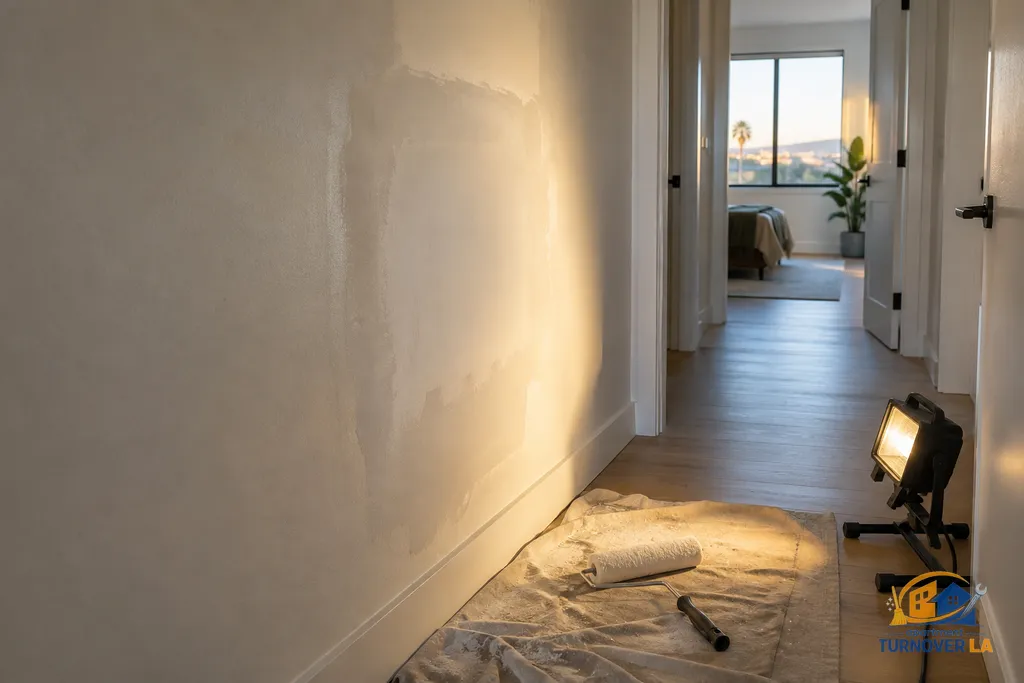
A useful turnover check is to shine a flashlight or work light sideways across the wall after sanding. Overhead room light hides ridges, while side light reveals a raised filler edge before paint makes it harder to correct. That inspection step saves a return visit, especially on low-sheen landlord white paint.
For multiple wall marks, compare a focused repair against a full painting and drywall service. A repaint can be the cleaner choice when touch-ups will create visible flashing across one wall.
Why does a filled drywall hole show through after painting?
Most visible repairs fail because the surface, paint, or texture does not match, not because the filler fell out. A repair can feel smooth but still show as a shiny or dull circle. That is called flashing, and it is common when flat touch-up paint is applied over a wall that has aged, been cleaned, or has a different sheen than the can on hand.
Feather the filler at least a few inches beyond the hole. Sanding only the center leaves a hard ridge. Then remove every trace of sanding dust with a dry microfiber cloth before painting. Dust mixed into touch-up paint produces a rough edge that catches light.
Match the application method too. If the original wall was rolled, use a small roller rather than a brush. Brushes leave a smoother, denser surface that can reflect differently. In rentals, keep a labeled paint record with color, sheen, manufacturer, and room. That simple record is more useful than trying to color-match a dried chip at the end of a tenancy.
Get instant quote in 30 seconds
Need the walls done before you re-list?
Turnover painting, scuff removal and patching, with a photo record of the condition we left behind.
$395 per room · 48-hour turnaround
Get an instant quoteCan water-damaged drywall be saved without cutting it out?
Sometimes, but only after the water source is stopped and the board has dried completely. A faint stain on firm, dry drywall may be sealed and repainted after checking for softness, bubbling paper, mold-like spotting, and recurring moisture. A soft panel, swollen seam, sagging ceiling area, or wall that still reads damp should be opened and repaired properly.
Do not use spackle to hide a leak stain before identifying the cause. Water from a plumbing line, roof intrusion, window failure, or upstairs unit can continue behind the surface even when the stain looks dry. In an apartment, document the condition with photos before work begins and notify the responsible party promptly.
For California landlords, deposit deductions and repair documentation should follow the process in California Civil Code §1950.5. A move-out wall charge should reflect actual repair work, not an assumption that every mark is tenant damage. Review the difference in this guide to normal wear and tear in California.
When is a drywall patch necessary instead of filler?
Use a patch or backing when the hole is wider than about 1 inch, has missing gypsum, or flexes when pressed. Larger openings need something behind the joint compound. Without backing, a thick mass of filler can crack, shrink deeply, or break free when the wall is bumped. A proper repair may use a drywall butterfly piece, wood backing, or a cut-out replacement section depending on the opening and location.
Door knob holes, damaged corners, holes near electrical boxes, and holes in textured walls are common examples where a no-patch shortcut performs poorly. Never push filler into an opening if you cannot tell whether wiring, plumbing, or a low-voltage cable is behind it. Turn off power and call a qualified professional when the location is uncertain.
Across LA, a standalone small drywall repair commonly carries a general labor minimum of about $125 to $250. TurnOver LA lists a Small drywall patch + texture at $150 / patch, while a Medium drywall repair is $240 / patch. Labor and crew supplies are covered in the quote. Paint, parts, or fixtures needed for the job are reviewed on-site and added only with approval.
How should a landlord handle drywall repair during turnover?
Start with photos before cleaning, repairs, or painting. Then measure the hole, note its location, and compare it with the move-in condition report. This sequence matters because a wall mark can be normal use, prior damage, or a repairable tenant-caused issue. California landlords should also follow the deposit accounting timeline explained in our California 21-day deposit return guide.
Operationally, repair drywall before the final clean and before listing media. Sanding creates fine dust, and a touch-up done after cleaning can leave paint drips on baseboards or floors. For a broader turnover punch list, a Half-day handyman punch list is $230 and a Full-day handyman punch list is $425. Those are useful when drywall work is one item among loose hardware, blinds, caulk, and minor safety corrections.
California's DCA Landlord-Tenant Guide is a useful reference for the broader landlord-tenant process, but it does not replace unit-specific documentation. Keep the before photos, invoice, paint notes, and after photos in the unit file.
The practical call on no-patch drywall repair
Use the no-patch method for small, firm holes and take time to feather, sand, and match the finish. Stop and switch methods when the drywall is soft, wet, missing material, or larger than a small anchor opening. The fastest repair is not the one with the fewest steps. It is the one that does not require repainting the same wall twice.
If the wall damage is part of a longer move-out list, coordinate it with rental repair work and final cleaning so dust, paint, and photos happen in the right order. Get instant quote in 30 seconds