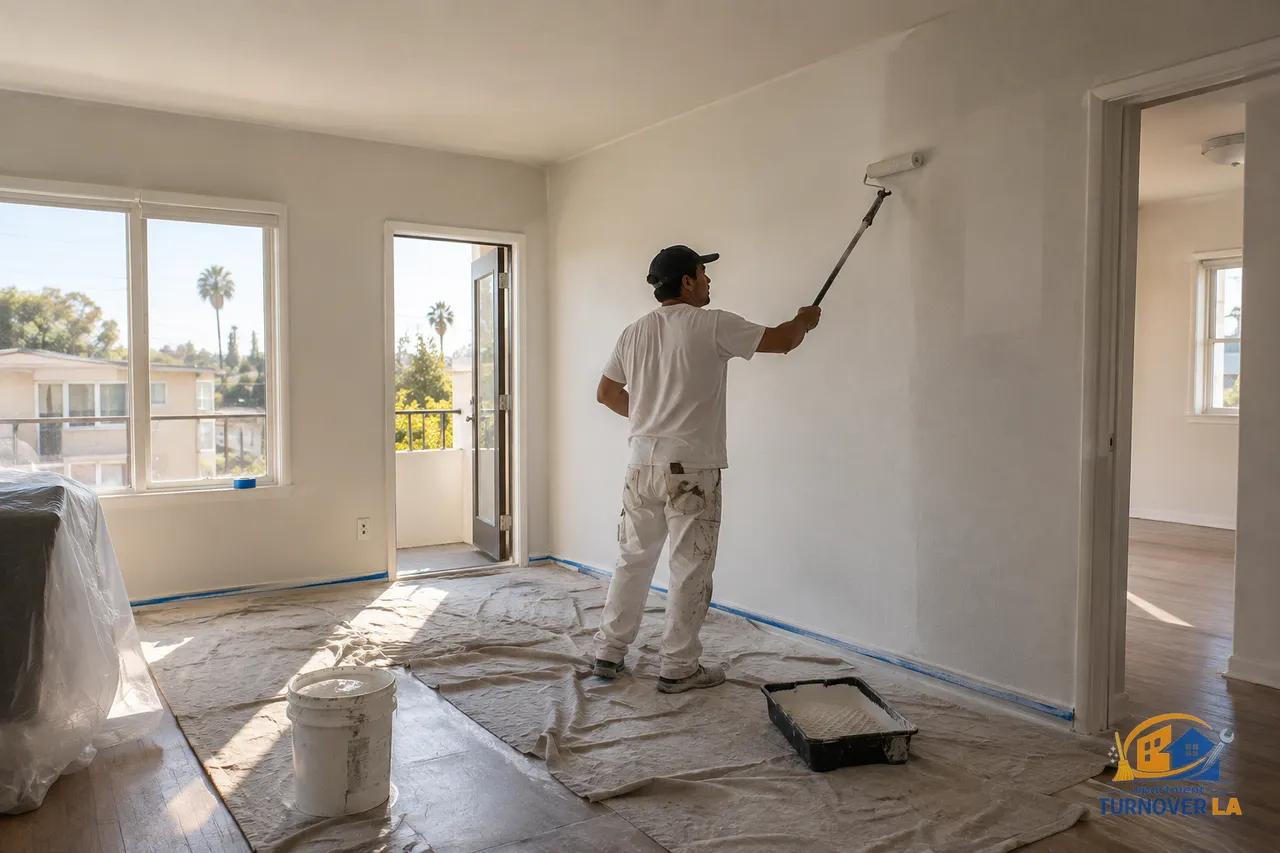
Quick answer: A vacant apartment usually takes about 6 to 16 crew-hours to paint when walls need two coats, with extra calendar time for drying, patching, trim, and final touch-ups. A clean studio or one-bedroom can move faster, while a two-bedroom with wall damage can take a full crew day or more. Plan the job from wall condition and paint system, not square footage alone.
How many hours it takes to paint an apartment depends first on whether the crew is refreshing sound walls or correcting a real move-out condition. For an LA turnover, the practical target is a finished, inspected unit, not simply the moment the last roller pass is complete. Get instant quote in 30 seconds
How long does it take to paint a vacant apartment?
For a straightforward vacant apartment, allow about 6 to 10 crew-hours for a studio or one-bedroom and about 10 to 16 crew-hours for a typical two-bedroom. Those are labor windows, not necessarily elapsed clock time. A two-person crew may finish the wall work in one visit while paint dries between coats, then return for a final pass. Occupied units usually take longer because furniture moves, tenant access, masking, and protection interrupt production.
The fastest jobs have a known existing color, clean walls, empty rooms, and minor scuffs only. The slower jobs have nicotine film, grease near the kitchen, dark color changes, poor prior patching, or extensive trim. A bedroom can receive paint quickly in isolation, but an apartment turnover includes closets, hallway corners, doors, cut lines, and the walk-through that catches misses. Build time around the whole unit, not a single-room estimate from a paint can.
What changes the painting schedule most?
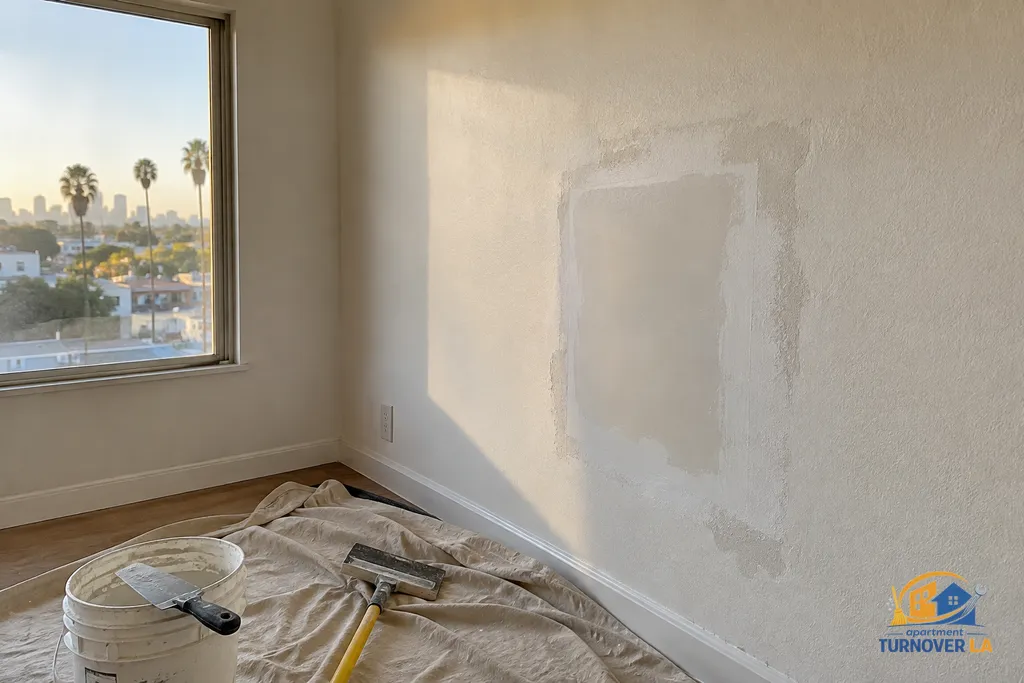
Wall preparation is the main swing factor. A small nail-hole fill is quick, but a torn anchor hole or failed previous patch needs removal of loose material, compound, drying, sanding, texture matching, primer, and then paint. That sequence cannot be compressed without risking a visible flashing spot after the unit is listed.
Color and coating condition matter too. A light neutral refresh over a similar finish is simpler than covering saturated blue, red, or charcoal walls. Kitchens and bathrooms can need cleaning before paint will bond properly. Ceiling stains may need a stain-blocking primer, which creates a separate step. If baseboards or trim are included, the crew also spends more time masking, cutting in, and protecting floors. Before assigning a move-in date, inspect every room under direct light. A five-minute inspection can identify repairs that otherwise appear only after fresh paint makes them obvious.
For related wall-condition planning, see our guide to drywall patching in rental apartments and the service details for apartment painting and drywall work.
Does paint drying time count as painting time?
Yes, it counts in the turnover schedule, even though it is not all hands-on labor. A crew may apply a coat efficiently, but the next coat, tape removal, and final touch-up must follow the product's recoat instructions and actual room conditions. Cool coastal air in Santa Monica, limited ventilation, or a bathroom with high humidity can extend the practical window compared with a dry, well-ventilated unit.
Keep three clocks separate: active crew-hours, drying and curing time, and final inspection time. This avoids a common turnover mistake, which is calling a unit complete when walls look dry but still mark easily or reveal uneven sheen. Drying also affects adjacent work. A handyman should not reinstall outlet covers, closet hardware, or a door stop against fresh paint before the finish is ready. When a unit has patching, the patch needs its own dry and prime cycle before the final wall coat can blend correctly.
Can a crew paint an apartment in one day?
Often, yes, if the unit is vacant, the scope is limited to walls, and surfaces are ready. One day is realistic for an efficient refresh with two painters, but it should not be promised from square footage alone. The job can extend when the inspection finds repairs, when paint coverage requires an additional coat, or when ceilings and trim are added after the initial wall scope.
The operational decision is whether the crew can complete prep, coating, cleanup, and a quality-control pass within the available turnover window. A rushed final hour is where missed closet edges, roller marks, and paint on hardware show up. TurnOver LA schedules a flat 48-hour turnaround on every job, without a rush or same-day upcharge. That window gives room for proper preparation and verification rather than treating paint as a single uninterrupted task. Get instant quote in 30 seconds
If the unit also needs outlet covers, blinds, door adjustments, or smoke detector checks, coordinate those tasks with turnover repair support instead of sending separate vendors into freshly painted rooms.
Need the walls done before you re-list?
Turnover painting, scuff removal and patching, with a photo record of the condition we left behind.
$395 per room · 48-hour turnaround
Get an instant quoteWhat does apartment painting cost in Los Angeles?
Across LA, painting quotes vary widely because contractors may price by room, day, wall condition, coat count, ceiling height, and whether repairs and materials are included. Compare scopes before comparing numbers. A low quote that excludes drywall work, trim, or a second coat is not the same job as a full move-out repaint.
TurnOver LA lists paint touch-up only at $200 and repainting per room at $395 / room. Ceilings and baseboard/trim are $125, sand + repaint cabinets/shelving is $135, a small drywall patch + texture is $150 / patch, and a medium drywall repair is $240 / patch. These are distinct catalog line items, not a bundled apartment total. Labor and the crew's own supplies are covered in the quote. Paint, parts, and fixtures needed for the job are identified at the on-site inspection, then added to the final invoice only with approval.
| Scope question | Why it affects time and price |
|---|---|
| Are walls getting touch-up or full repainting? | Full repainting involves broader prep and coating coverage. |
| Is the existing color staying? | A color change can require more coverage and cut-in work. |
| Are ceilings or trim included? | These are separate surfaces with separate protection and detail work. |
| Is there drywall damage? | Patches require drying, sanding, texture, primer, and paint. |
| Is the unit empty and accessible? | Vacancy reduces moving, protection, and access delays. |
Can a landlord charge a tenant for repainting in California?
A landlord cannot automatically charge a departing tenant for routine repainting caused by ordinary use. Under California Civil Code §1950.5, deductions from a security deposit can cover cleaning needed to return the premises to the same level of cleanliness as move-in and repairs for damage beyond ordinary wear. The facts, condition, useful life, and documentation matter.
A few scuffs, minor fading, or normal picture-hook use may be ordinary wear, while unauthorized dark paint, large holes, heavy smoke staining, or substantial tenant-caused damage can support a deduction if documented and reasonably allocated. Take move-out photos before work begins, retain invoices, and avoid charging the full cost of an upgrade to a tenant. California's DCA Landlord-Tenant Guide is a useful starting point for deposit procedures. For a closer discussion, review normal wear and tear in California and California's 21-day deposit return rule.
How often should a landlord repaint an apartment?
There is no universal California rule requiring repainting on a fixed calendar cycle. Repaint when the unit's condition, habitability needs, or market-ready standard calls for it, not simply because a certain number of years has passed. In practice, high-turnover units and units with heavy wall traffic need attention more often than lightly used apartments. A landlord should also respond to peeling paint, water damage after repairs, smoke residue, or surfaces that cannot be cleaned to a reasonable condition.
For LA rent-stabilized properties, keep the operational and legal questions separate. The LAHD Rent Stabilization Ordinance governs important local rental rules, while a paint decision still requires a documented condition assessment. During every turnover, photograph walls before cleaning or patching, note pre-existing defects, and decide room by room whether touch-up will blend. If it will not blend, a full-room repaint often produces a cleaner result and reduces repeat work after listing photos.
Plan painting as part of the turnover sequence
Painting goes best after cleanout and initial condition photos, but before final cleaning and listing media. Start with an empty-unit inspection. Identify wall damage, test whether touch-up paint blends, choose the finish, approve any materials, and schedule repairs before the final coat. Do not wait until cleaning is complete to discover a patch behind a door or a greasy kitchen wall.
A practical sequence is: document move-out condition, remove debris, repair drywall, clean paint surfaces where needed, paint, complete repairs that can safely follow drying, then perform final cleaning and photos. If paint is the only issue, a touch-up may be enough. If the apartment needs a full reset, Make Ready service pairs a deep clean with a 12-point photo report, which helps confirm the unit condition after work is complete. Get instant quote in 30 seconds
The useful answer is not just how many hours a painter holds a roller. It is how long it takes to deliver a vacant apartment with consistent walls, documented work, and no preventable delay before the next showing.