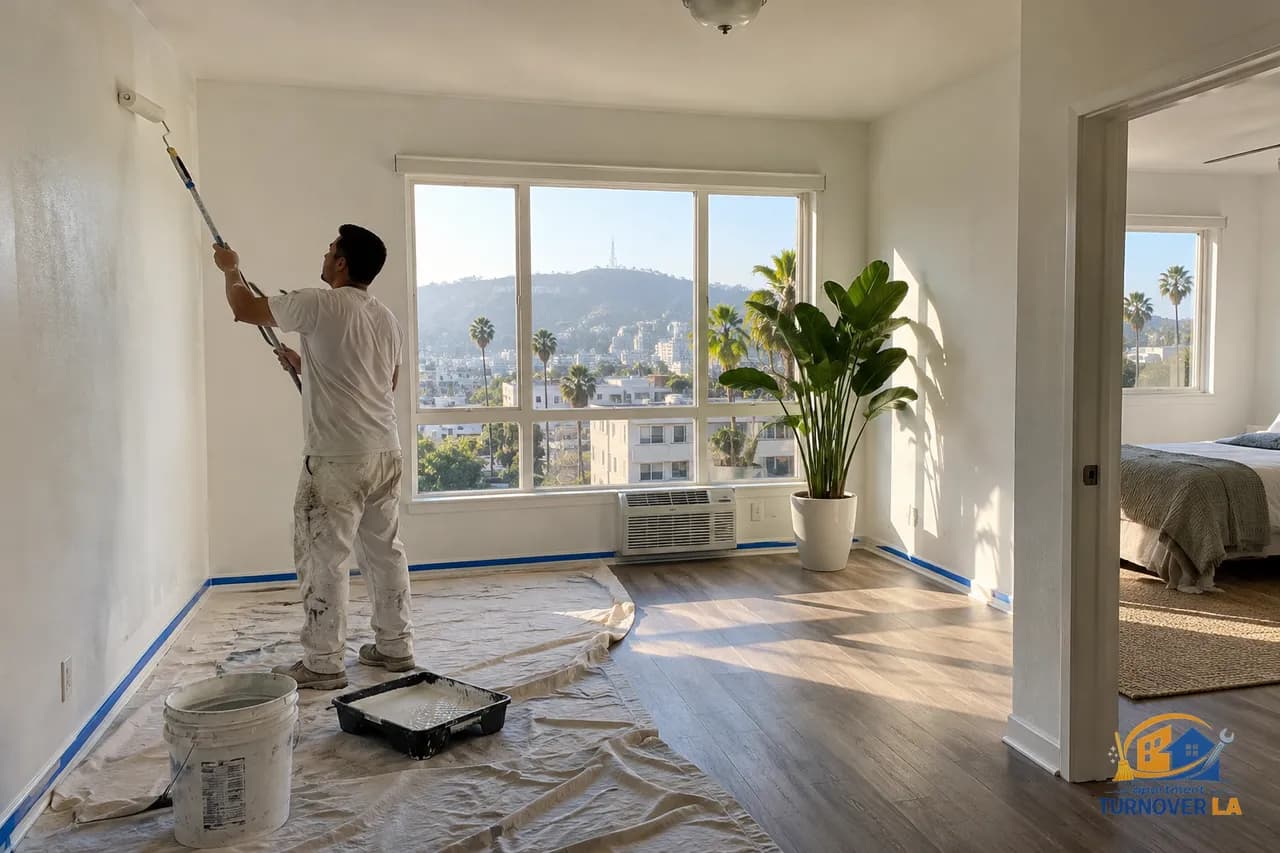
Quick answer: A vacant apartment usually takes about 6 to 20 painter-hours to repaint, assuming ordinary walls, one color, and limited repair work. A studio may take 6 to 8 painter-hours, a one-bedroom 8 to 12, and a two-bedroom 14 to 20. Drywall repair, dark colors, ceilings, occupied belongings, and cure time can extend the calendar.
For a normal turnover, the useful number is painter-hours, not just the number of hours a unit is unlocked. Two painters can complete 12 painter-hours in roughly six hours on site, while primer, patch drying, and a second coat may still control when the apartment can be shown. Get instant quote in 30 seconds
What changes how many hours it takes to paint an apartment?
Prep condition changes the estimate more than square footage alone. An empty studio with clean, light-colored walls and minor scuffs can move quickly because the crew can protect floors, cut in, roll, and clean up without working around furniture. A similarly sized apartment with nicotine staining, greasy kitchen walls, nail holes, peeling caulk, or unauthorized dark paint can take materially longer before the first finish coat goes on.
The number of rooms matters because every room has edges, doors, windows, closets, outlets, and transitions to protect. Ceiling height also matters. Many LA apartments have standard ceilings, but older buildings can have tall plaster walls, uneven surfaces, or detailed trim that slows cutting in. A walkthrough should identify each condition before setting a showing date. Surface cleaning is part of that decision, so it helps to distinguish ordinary wall prep from a separate move-out cleaning scope that addresses the whole unit.
How many painter-hours should you plan by apartment size?
For a vacant, average-condition unit with walls only, one color, and no major patching, these are practical planning ranges. They describe active crew labor, not elapsed calendar time. A two-person crew can reduce the on-site clock, but it does not eliminate drying time or inspection time between coats.
| Unit type | Typical painter-hours | Approximate on-site time with two painters |
|---|---|---|
| Studio | 6 to 8 | 3 to 4 hours |
| One-bedroom | 8 to 12 | 4 to 6 hours |
| Two-bedroom | 14 to 20 | 7 to 10 hours |
| Three-bedroom | 20 to 28 | 10 to 14 hours |
These estimates assume walls are already accessible and reasonably clean. Add labor when the scope includes closets, accent colors, doors, ceilings, baseboards, cabinets, or repairs. The common online estimate of about five hours for one average room can be reasonable for rolling and cutting in, but it often leaves out protection, spot priming, patching, cleanup, and a final turnover inspection.
Why does prep take longer than landlords expect?
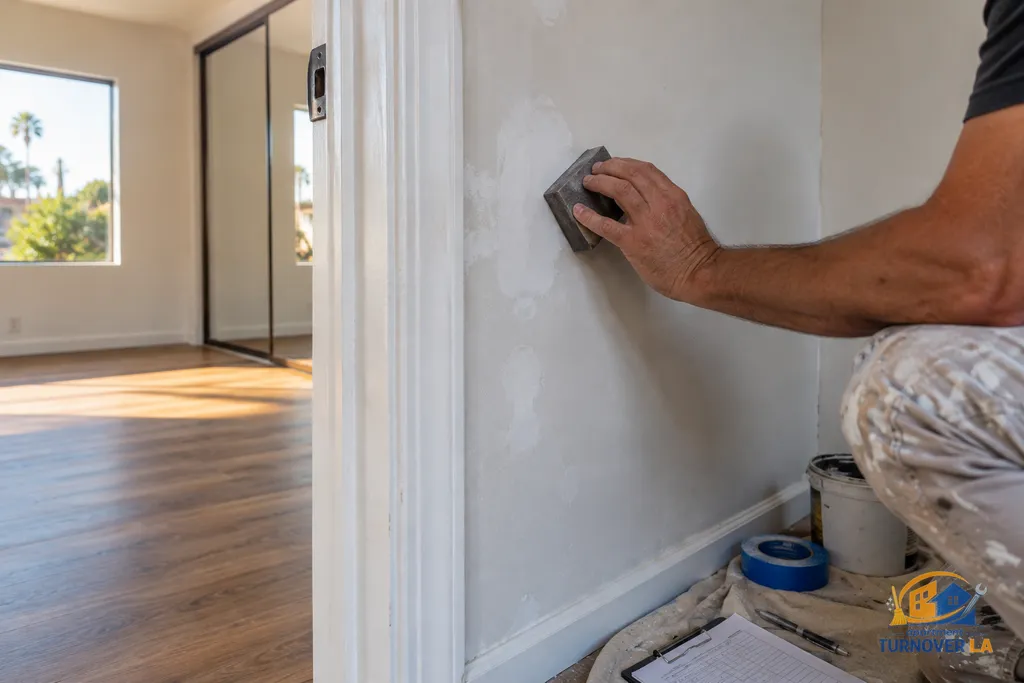
Prep is usually where a turnover paint schedule succeeds or fails. Before paint goes on, the crew needs to test whether marks are surface scuffs or damaged drywall, remove loose hardware where needed, protect floors and fixtures, fill holes, sand repairs, caulk gaps, and spot-prime stains. Skipping those steps can produce flashing, visible patch edges, and paint on hardware that a prospect notices immediately.
The most useful operational rule is to inspect in strong side light, not just overhead lighting. Side light exposes sheen changes and raised patches that disappear in a quick walk-through. For minor rub marks, cleaning may solve the issue faster than repainting. For deeper marks, use the decision process in this guide to apartment wall scuff removal. A crew can also paint faster when the unit is empty, but vacant does not mean ready. Debris, dust, and residue can still cause adhesion problems and require cleaning before painting begins.
Need the walls done before you re-list?
Turnover painting, scuff removal and patching, with a photo record of the condition we left behind.
$395 per room · 48-hour turnaround
Get an instant quoteHow do drywall repairs and dry time affect the turnover calendar?
Drywall work adds both labor and waiting time. A small hole may be patched, textured, sanded, primed, and painted in a short visit if conditions allow. Larger repairs can require multiple compound applications and drying intervals before a finish coat will blend. Trying to rush that sequence can leave a shrink line or a visible texture mismatch after the unit is relisted.
Plan the work in the right order: repair first, then sand and prime, then paint, then complete the final clean and photo check. This sequencing is one reason a 48-hour turnaround is a completion window, not a claim that every apartment has only 48 hours of brush labor. For repair scope, see drywall patching in rental apartments. If the inspection finds a patch, color mismatch, or stain, document it before authorizing the finish work. Get instant quote in 30 seconds
What does apartment painting cost in Los Angeles?
Across LA, repainting an empty room is commonly quoted in the general market at about $300 to $800 per room before significant repairs and materials, with the wide spread driven by prep, height, color changes, access, and whether trim or ceilings are included. With TurnOver LA, repainting is $395 / room, and paint touch-up only is $200. Those are different scopes, so a touch-up should not be used as a substitute for a room that needs full coverage.
If the unit needs trim or ceiling work, TurnOver LA lists ceilings and baseboard/trim at $125. A small drywall patch + texture is $150 / patch, while a medium drywall repair is $240 / patch. The quote covers labor and the crew's own supplies. Paint, parts, and fixtures are identified at the on-site inspection, added to the final invoice only with approval first. A $25 hourly rate by itself is not enough to compare bids, because it does not state crew size, prep time, materials handling, protection, or whether the completed room will receive a final condition check. Review the available apartment repainting service scope before comparing estimates.
How often does a landlord need to repaint an apartment?
There is no simple California rule requiring repainting on a fixed number of years. Repaint when condition, habitability, or a justified turnover standard calls for it, rather than treating each vacancy as an automatic full repaint. Ordinary fading, minor scuffs, and wear from normal use are not automatically tenant charges. Condition photos from move-in and move-out make the distinction easier to support.
California security-deposit rules allow deductions for cleaning and repairs beyond ordinary wear, subject to the governing standards and documentation. Review California Civil Code §1950.5 and the California DCA Landlord-Tenant Guide before allocating repaint costs. LA owners with rent-stabilized units should also keep the LAHD Rent Stabilization Ordinance in mind when managing a turnover. Operationally, spot paint is appropriate when color and sheen can blend. Full repainting is more defensible when walls are broadly damaged, stained, mismatched, or cosmetically worn throughout the room.
How should you schedule painting into a 48-hour apartment turnover?
Schedule paint from the inspection findings backward from the listing or showing date. The fastest sequence is not to send every trade at once. It is to clear the unit, complete repairs, paint, clean final dust, inspect, and then photograph the finished condition. This prevents a handyman from marking fresh walls or a cleaning crew from leaving residue before paint begins.
- Inspect walls, ceilings, trim, and drywall under good light.
- Approve the paint and repair scope after the on-site inspection.
- Complete patching, sanding, and spot priming before finish paint.
- Repaint walls and complete any approved trim or ceiling scope.
- Perform final cleaning, photo documentation, and a ready-to-show walk-through.
TurnOver LA works to a flat 48-hour turnaround on every job, with no rush or same-day upcharge. The practical handoff is a unit with paint completed, surfaces checked, and next work scheduled in sequence, not simply a room where the rollers have been put away. Get instant quote in 30 seconds