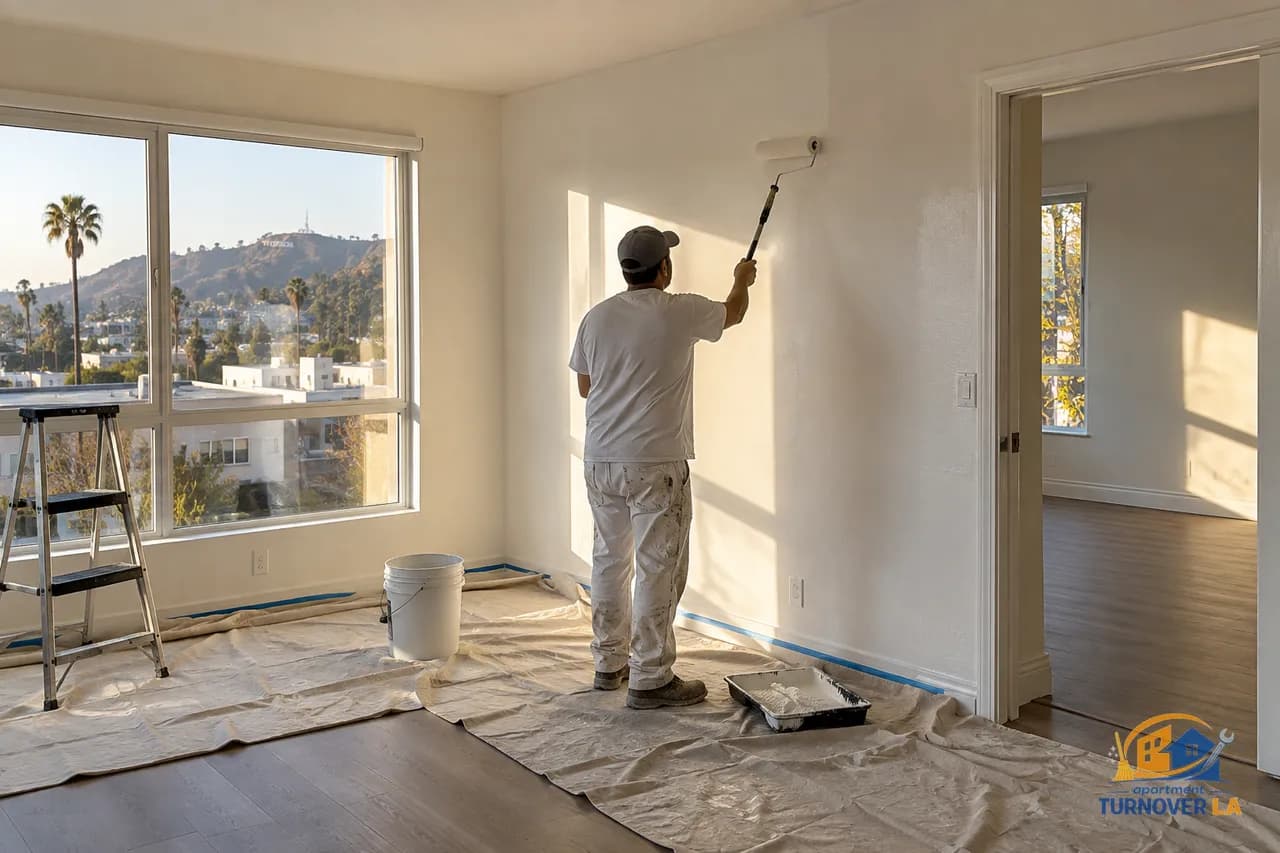
Quick answer: California does not set a fixed number of years when a landlord must repaint an apartment. In Los Angeles, many landlords budget for interior repainting every 3 to 5 years, but the real trigger is the unit's condition, including ordinary wear, documented tenant damage, and any issue affecting habitability. A turnover inspection should decide the scope room by room.
A landlord does not need to repaint simply because a tenant asks or because a lease has ended. The practical question is whether the existing paint is cleanable and presentable for the next tenancy, or whether it is worn, damaged, peeling, stained, or creating a habitability concern. Get instant quote in 30 seconds
Does California require landlords to repaint on a schedule?
No. California law does not impose a statewide three-year, five-year, or other automatic interior repainting cycle for rental apartments. That is different from some New York City rules people find in general search results. California landlords instead need to maintain a habitable premises and return deposits using the rules in California Civil Code §1950.5. A wall with faded paint alone is usually a maintenance and marketability question, not an automatic statutory violation.
For operations, a three-to-five-year planning cycle is still useful. It gives an owner a reserve target, helps prevent a patchwork appearance across long-held units, and avoids waiting until a vacant apartment needs more than a one-day scope. High-touch areas such as entry halls, kitchens, bathroom doors, and the wall behind a dining table may need attention sooner. A bright white paint job can also show hand marks much earlier than a warmer eggshell color. Inspect at every possession, then schedule only the work the unit needs.
What conditions mean an apartment should be repainted?
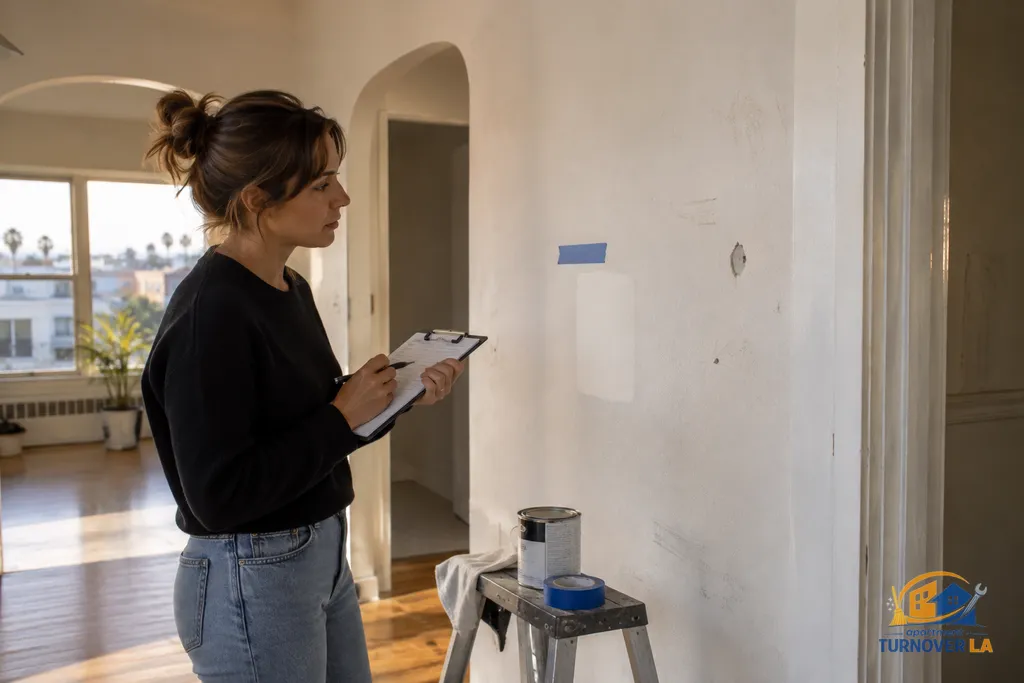
Start with condition, not the lease date. Repaint when cleaning and minor repair will not leave the room reasonably presentable for a new resident. Peeling or flaking paint, persistent smoke staining, water marks after the moisture source has been corrected, widespread grease, heavy crayon or marker, and multiple failed touch-ups are common triggers. So are broad areas of sun fade where new touch-up paint will visibly flash against the old coating.
A few scuffs, nail holes, or furniture rub marks do not always justify painting an entire apartment. Compare the move-in photos, move-out photos, and the wall surface under normal daylight. This is where the distinction in our guide to normal wear and tear in California matters. Light scuffs and age-related fading generally belong to the owner. A concentrated impact hole, unauthorized dark-color paint, or writing across several walls may support a damage discussion, subject to documentation and depreciation.
Does LA rent stabilization change the repainting decision?
For an RSO unit, repainting is still primarily a condition and maintenance decision, not a calendar obligation. The LAHD Rent Stabilization Ordinance affects many Los Angeles rentals, but it does not create a universal interior repainting interval. Owners should keep rent regulation, habitability work, and security-deposit accounting as separate files, even when the work occurs during the same vacancy.
That separation matters in older RSO buildings, where walls may have many layers of prior paint and repairs. If paint is peeling because of a building condition, such as a roof leak or plumbing intrusion, solve the source before applying a new coat. Painting over active moisture only creates a repeat visit and a weaker record. For managed portfolios, TurnOver LA can coordinate a rental painting scope with photo documentation so the property manager has a clear before-and-after record. The photo record is useful whether the work is owner maintenance or a documented repair following resident-caused damage.
How much does it cost to paint an apartment in Los Angeles?
Across the general LA market, repainting quotes commonly run about $300 to $800 per room, depending on prep, ceiling height, wall condition, occupied versus vacant access, and whether materials are included. That range is market context, not a TurnOver LA price. With TurnOver LA, repainting is $395 / room, while paint touch-up only is $200. Ceilings and baseboard/trim are $125, and a small drywall patch + texture is $150 / patch.
Those figures cover labor and the crew's own supplies. Paint, parts, and fixtures needed for the job are identified during the on-site inspection, then added to the final invoice only with owner approval. Do not compare a low room quote with a full prep quote without asking what it includes. A room with six anchor holes, greasy kitchen walls, dark prior color, or repair texture needs more preparation than a clean bedroom with light scuffing. Get instant quote in 30 seconds
Need the walls done before you re-list?
Turnover painting, scuff removal and patching, with a photo record of the condition we left behind.
$395 per room · 48-hour turnaround
Get an instant quoteCan a landlord charge a tenant for repainting in California?
Sometimes, but not for ordinary aging. Under California Civil Code §1950.5, a deposit deduction must relate to allowable cleaning, repair, or restoration work, and it cannot shift normal wear from ordinary use to the departing tenant. A landlord should not bill a tenant for a full repaint merely because the unit was occupied for several years and the walls no longer look new.
A charge is more defensible where there is actual, documented damage beyond normal use, such as unauthorized paint colors requiring coverage, extensive writing, large holes, or smoke-related staining caused during the tenancy. Use move-in and move-out photos, an itemized scope, invoices, and an age-based approach to the paint's remaining useful life. The California DCA Landlord-Tenant Guide is a practical state reference, and our guide on landlord turnover charges explains the operational distinction. Deposit timing has its own rules, so keep the work order and accounting file together.
Should a landlord touch up paint or repaint the whole room?
Use touch-up work when the existing paint can still blend and the defects are limited. The right conditions are a known paint color and sheen, a small number of isolated marks, no broad fading, and no visible texture mismatch. Test a discreet spot first. Even the same named color can look different after years of sunlight, wall cleaning, and airborne cooking residue. A mismatch often appears as a darker or shinier rectangle, called flashing, once the paint dries.
Repaint the full wall plane when touch-ups flash, when repairs cross a large area, or when a tenant can see different patches from normal standing distance. Repaint the room when multiple wall planes have failed touch-ups or the color needs to change. This room-by-room method keeps a landlord from paying for a whole-unit paint job just because one wall needs work. If holes or impact damage are the issue, schedule drywall repair and painting before the finish coat, not after the cleaner has completed the final reset.
What is the right turnover sequence for paint work?
Painting should sit in a specific place in the turnover order. First, collect possession photos and identify moisture, smoke, pest, or repair issues. Next, remove abandoned items and complete wall repairs. Then paint. Finish with the detailed clean, a functioning-items check, and final listing photos. Painting before a final clean prevents dust, sanding residue, and paint specks from turning into a second cleaning visit.
A workable sequence is:
- Photograph every room, including existing wall defects.
- Identify the source of any stain, leak, or peeling paint.
- Approve repair, patch, touch-up, or room repaint scopes.
- Complete drywall repairs and allow texture or compound to cure.
- Paint walls, trim, and ceilings as needed.
- Complete the final Make Ready service and photo report.
- Reinspect under daylight and artificial light before marketing.
This sequence is especially helpful when turnover days are expensive. LA vacancy loss often runs $80 to $200 per day depending on submarket, so a preventable return trip can cost more than a properly scoped patch on day one.
How should landlords document repainting for deposits and future turnovers?
Keep a simple paint history for each unit: color name, sheen, brand if known, date painted, rooms painted, repairs completed, and photos before and after the work. This record helps a manager decide whether a later issue is routine aging or new damage. It also avoids the common mistake of charging one tenant for restoring an old paint job that was already near the end of its serviceable life.
At move-out, photograph walls straight on and from an angle, include a room identifier, and note the size and location of each defect. Keep estimates and final invoices with the inspection record. For California deposit administration, review the statutory process and the current AB 12 (2023) security deposit cap separately from the decision to repaint. Good records do not make an improper charge proper, but they make a valid repair decision easier to explain. Get instant quote in 30 seconds