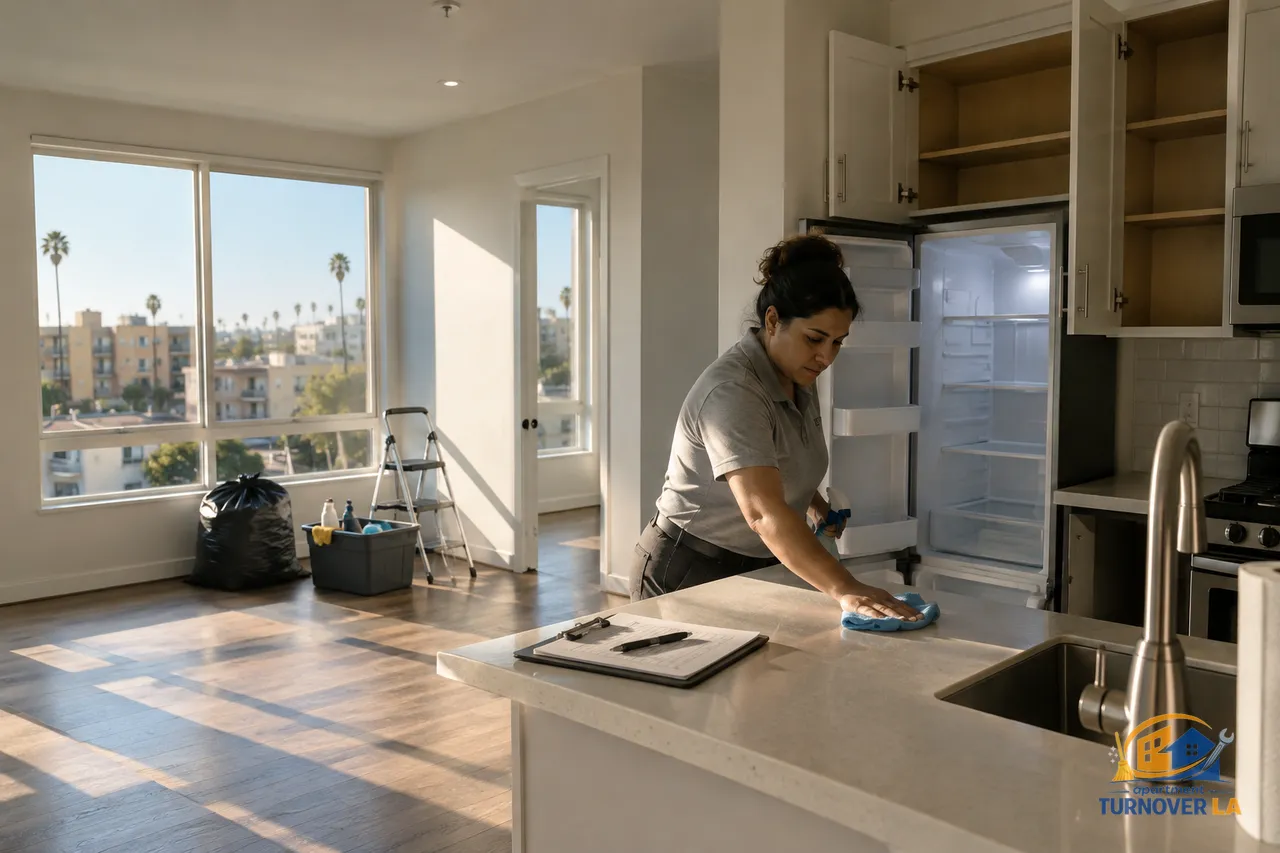
Quick answer: In Los Angeles, professional deep cleaning commonly runs $25 to $80 per cleaner hour in the general market. For a vacant apartment, TurnOver LA's Make Ready package, which includes a deep clean and 12-pt photo report, is $225 for a Studio, $255 for a 1 Bedroom, $335 for a 2 Bedroom, or $425 for a 3BR or larger, with a 48-hour turnaround.
For an occupied home, the final deep-cleaning bill usually depends on crew size and how long the grime, appliances, bathrooms, and floors take. For a vacant rental, a flat unit-based scope is easier to budget because the cleaning standard is tied to rent-ready condition, not a cleaner's open-ended clock.
Get instant quote in 30 seconds
What does a deep clean cost in Los Angeles?
Across LA, the general market rate for professional house cleaning is about $25 to $80 per cleaner hour. A large apartment with a dirty oven, soap buildup, pet hair, or neglected floor edges can require multiple cleaner-hours, which is why hourly quotes can vary sharply even for apartments with the same bedroom count.
For a vacant rental with TurnOver LA, the fixed Make Ready prices are $225 for a Studio, $255 for a 1 Bedroom, $335 for a 2 Bedroom, and $425 for a 3BR or larger. That package combines the deep clean with a 12-pt photo report and has a 48-hour turnaround. It is different from an open-ended hourly housecleaning visit because the work is organized around getting a unit ready to show, inspect, or turn over.
| Pricing context | What it covers | Cost |
|---|---|---|
| General LA market | Professional cleaning labor | $25 to $80 per cleaner hour |
| TurnOver LA vacant Studio Make Ready | Deep clean plus 12-pt photo report | $225 |
| TurnOver LA vacant 1 Bedroom Make Ready | Deep clean plus 12-pt photo report | $255 |
| TurnOver LA vacant 2 Bedroom Make Ready | Deep clean plus 12-pt photo report | $335 |
| TurnOver LA vacant 3BR or larger Make Ready | Deep clean plus 12-pt photo report | $425 |
Why can two deep-cleaning quotes for similar apartments differ?
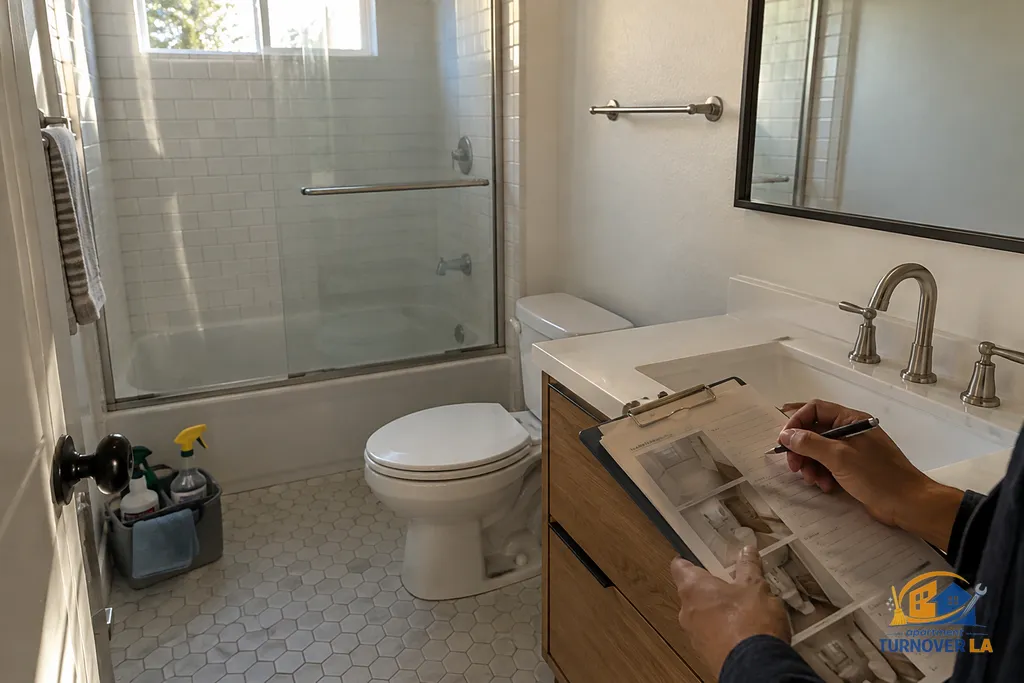
The bedroom count is only a starting point. One vacant 1 Bedroom may have been professionally maintained and need routine detailing. Another may have cooking grease above the range, hardened spills in the refrigerator, mineral buildup in the shower, hair and debris in floor edges, and residue inside cabinets. The second unit takes more labor even though the floor plan is identical.
Access and turnover coordination also affect real-world cost. A crew delayed by a tenant still moving out, an elevator reservation, parking restrictions, or a missing key loses productive time. In dense neighborhoods such as Koreatown, older buildings often add tight service access and limited loading space to an otherwise straightforward clean. A vacancy-focused scope reduces surprises by identifying the unit condition before other trades arrive.
A cleaning quote should also separate labor from things the unit needs replaced. TurnOver LA quotes include labor and the crew's own supplies. Paint, repair parts, and fixtures are priced during the on-site inspection, then added to the final invoice only with owner approval.
How many hours does a move-out clean usually take?
A move-out clean can take a few hours for a maintained studio or substantially longer for a larger, heavily used unit. The useful measure is not just elapsed time. It is total cleaner-hours. Two cleaners working three hours create six cleaner-hours, which matters when comparing an hourly bid to a flat apartment package.
For an owner or manager, the better question is whether the scope includes the neglected areas that trigger failed showings or maintenance callbacks: oven and refrigerator interiors, cabinet shelves, backsplash grease, bathroom grout, baseboards, switch plates, window tracks, and floor edges. A quick surface pass can look acceptable at first glance and still leave the unit short of rent-ready.
The move-out cleaning guide explains what a vacancy clean should cover. If the unit needs broader coordination after cleaning, the Make Ready service is built for that turnover sequence, including a photo report rather than a verbal completion update.
What should a professional apartment deep clean include?
A professional deep clean should address soil that ordinary recurring cleaning skips. In kitchens, that usually means degreasing cooktops and range hoods, cleaning appliance interiors where included in the scope, wiping cabinets and drawers, and treating residue around handles and splash zones. In bathrooms, the important details are soap film, toilet bases, shower tracks, grout condition, vanity interiors, and exhaust dust.
For the rest of the apartment, look beyond the center of the room. Baseboards, closet shelves, blinds, window tracks, doors, outlet covers, corners, and edges of flooring affect how clean a vacant unit reads during a showing. The standard should be consistent enough that a manager can compare the pre-work condition with post-work photos.
Cleaning will not correct physical damage. Scuffs that do not wash off, holes, failing caulk, loose hardware, and damaged flooring should be documented and routed to the appropriate trade. TurnOver LA can coordinate cleaning through its deep cleaning service, then address non-cleaning items through repairs and maintenance when the inspection identifies them.
Need the unit turned before the next tenant?
We do the move-out clean and send you a photo report you can attach to the deposit itemization.
From $225 · 48-hour turnaround
Get an instant quoteWhat can increase the cost after a deep-cleaning inspection?
Cleaning cost rises when the issue is not actually cleaning. A smoke odor, pet contamination, broken cabinet hardware, water-damaged drywall, or a deeply stained surface can require a separate treatment or repair. Calling all of that a deep clean creates a misleading expectation and can leave a unit not ready for the next resident.
Five common scope changes are:
- Paint touch-up needed after washing reveals scuffs or patches.
- Drywall repair needed for anchors, holes, or failed texture.
- Cleanout work for furniture, bags, or abandoned belongings.
- Lock work required before a new resident takes possession.
- Parts or fixtures needed to correct a maintenance defect.
For example, TurnOver LA lists Paint touch-up only at $200, a Small drywall patch + texture at $150 / patch, Unit cleanout / junk haul at $500, and Full apartment rekey (up to 2 locks) at $150. Those are separate catalog line items, not cleaning add-ons disguised as deep-cleaning labor. The owner approves needed paint, parts, or fixtures before they are added to the invoice.
Get instant quote in 30 seconds
Can a landlord charge a tenant for deep cleaning in California?
A landlord cannot automatically charge a departing tenant for routine cleaning that results from ordinary use. California's security-deposit rules allow deductions for cleaning needed to return the premises to the same level of cleanliness as at move-in, subject to the facts, documentation, and lawful itemization requirements. Review California Civil Code §1950.5 and the California DCA Landlord-Tenant Guide before treating turnover cleaning as a deposit deduction.
The operational point is simple: document the move-in baseline and the move-out condition. Photos, inspection notes, invoices, and a clear distinction between normal wear and tenant-caused excess cleaning make a stronger file than a generic cleaning fee. California's current deposit cap also matters when handling the larger accounting process, including AB 12 (2023) security deposit cap.
For the practical line between chargeable cleaning and normal use, see normal wear and tear in California and the guide to California cleaning fees after move-out. Local rent rules can add separate obligations. LA properties subject to local protections should also be managed with the LAHD Rent Stabilization Ordinance in mind.
Is a deep clean enough to make a vacant unit rent-ready?
Sometimes, yes. If the unit is clean, undamaged, secure, and all major systems work, deep cleaning may be the main task before photos and showings. But cleaning is often the first inspection point, not the final turnover step. Once dirt and personal belongings are gone, scuffs, damaged walls, dead hardware, leaks, missing smoke-detector batteries, and worn locks become easier to see.
That is why a 12-pt photo report matters operationally. It creates a defined handoff between the crew and the person approving the unit. A manager can decide quickly whether the unit needs paint, a handyman visit, or listing media instead of discovering unfinished items after a prospect walks through.
Vacancy has a daily cost. In LA, a commonly used working baseline is $80 to $200 per day depending on submarket and rent level. A low cleaning quote is not necessarily a savings if unclear scope adds multiple days of rework. The goal is a clean, documented unit that can move into the next step without another site visit.
How should you budget a deep clean for your next turnover?
Start by separating an occupied-home cleaning request from a vacant-unit turnover. For an occupied home, ask how many cleaner-hours are included, how many cleaners will be sent, and which detailed areas are excluded. For a vacant apartment, confirm the bedroom count, access conditions, unit condition, and whether photo documentation is part of the job.
Use the general LA market range of $25 to $80 per cleaner hour as context, then compare it with a defined package. TurnOver LA's Make Ready pricing is $225 for a Studio, $255 for a 1 Bedroom, $335 for a 2 Bedroom, and $425 for a 3BR or larger. The price includes labor and crew supplies, while necessary paint, parts, or fixtures require inspection and owner approval first.
A well-scoped clean keeps the turnover moving and gives the manager a usable condition record. That is more useful than trying to force every vacancy issue into one cleaning price.