
Quick answer: Large furniture donation pickup in Los Angeles is usually free only when a nonprofit or its pickup partner accepts the item, its condition, and the access route. If an item is not accepted or a move-out deadline cannot wait, paid removal is the predictable fallback: TurnOver LA's unit cleanout / junk haul is $500, with a 48-hour turnaround.
For an apartment turnover, treat donation as an acceptance-dependent option, not as the last step that determines whether the unit can be cleaned and listed. Screen the furniture, confirm the pickup details in writing, and keep a removal backup before keys are due. Get instant quote in 30 seconds
What large furniture is most likely to qualify for donation pickup?
Donation programs generally want furniture that is clean, safe, complete, and usable without repair. A solid wood dresser with working drawers, a clean dining table, a matching set of chairs, or a sofa without tears or odor has a better chance than a heavily used item that would require hauling and disposal. The organization or pickup partner makes the final call, sometimes from photos and sometimes when the crew arrives.
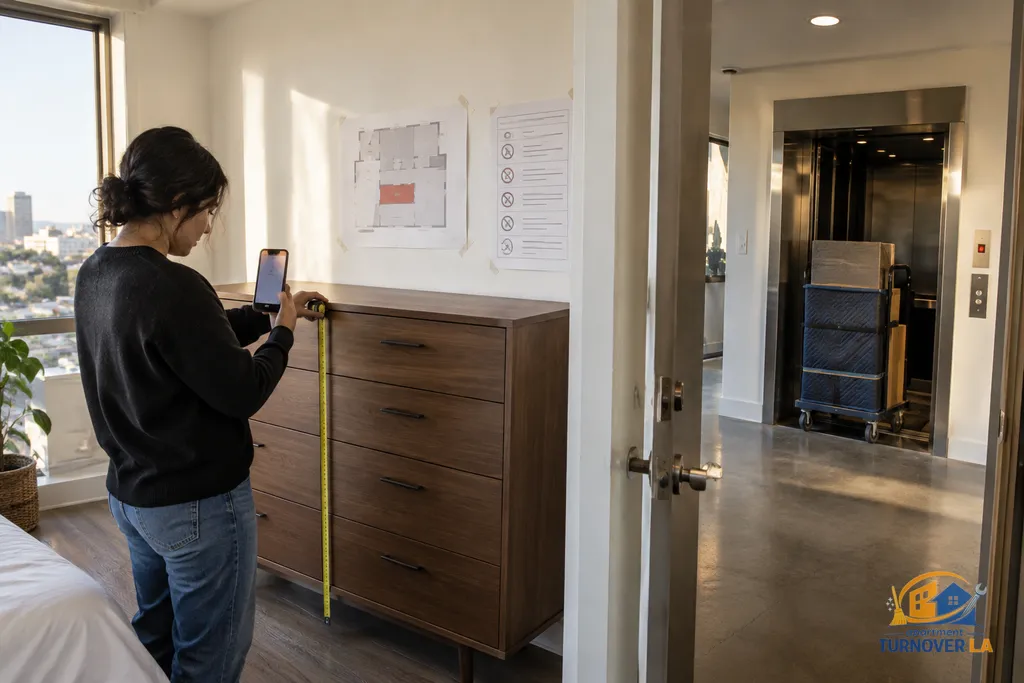
For turnover work, condition means more than whether the piece looks acceptable from across the room. Check upholstery seams, pet hair, smoke odor, bedbugs or other pest concerns, missing hardware, water damage, loose legs, and whether the item fits through the route out. A donation pickup can decline an item that creates a safety, sanitation, or resale problem. Photograph each piece before it leaves, especially when it was left behind by a former resident. That record separates a legitimate donation decision from a vague note that furniture was “removed.”
When should you skip donation pickup and arrange removal instead?
Skip the donation-first plan when the item is damaged, contaminated, incomplete, inaccessible, or likely to remain after your turnover deadline. A sectional that must be disassembled, a swollen particle-board cabinet, a mattress with staining, or furniture on an upper floor without confirmed elevator access can turn a simple pickup into a missed appointment.
This comes up often in older walk-up buildings in Hollywood and Koreatown, where stair turns are tight and loading space is limited. The furniture may be usable, but the building route can still make pickup impractical. Do not place it at the curb as a placeholder. That can create a building operations problem before anyone has accepted responsibility for it.
A paid unit cleanout and junk haul is often the better operational choice when the apartment must be empty for cleaners, painters, or an incoming resident. The point is not to discard usable furniture casually. It is to make the removal decision early enough that the vacancy schedule is not held hostage by a tentative pickup.
How do you set up a pickup without holding up the turnover?
Start the process while the outgoing resident still has possession, or immediately after a documented surrender of the unit. A good plan gives the donation option a chance to work without letting it block the rest of the make-ready scope.
- Create an item list with photos, dimensions, and a plain condition note for every large piece.
- Confirm that the pickup organization accepts each category, rather than assuming all furniture is eligible.
- Verify the pickup window, floor number, stairs or elevator route, parking conditions, and whether disassembly is required.
- Keep furniture in one accessible area without blocking egress, common hallways, or cleaning access.
- Set a firm cutoff date. If acceptance or pickup is not confirmed by that date, authorize the backup removal plan.
- Save confirmation messages, pickup receipts, and before-and-after photos in the turnover file.
The operational detail that matters most is the cutoff date. Many managers wait until the cleaners are at the door before asking what will happen to a sofa. That is too late. A clear cutoff lets you release the unit to the next trade without debate. Get instant quote in 30 seconds
Need the unit turned before the next tenant?
We do the move-out clean and send you a photo report you can attach to the deposit itemization.
From $225 · 48-hour turnaround
Get an instant quoteWhat does furniture removal cost in Los Angeles when donation is not an option?
Across Los Angeles, donation pickup for qualifying furniture may be free, while paid furniture removal is usually quoted as a variable truck-load service based on volume, stairs, distance, and disposal needs. That variability is why a low advertised starting price is not the same thing as a confirmed move-out removal scope.
TurnOver LA prices its unit cleanout / junk haul at $500. That is the useful comparison for a landlord or manager clearing a unit, not a promise that every single item can be donated. The price covers labor and the crew's own supplies. If a job needs materials, parts, fixtures, or other approved additions, those are priced at the on-site inspection and added to the final invoice only with your approval.
| Removal path | Best fit | Operational risk |
|---|---|---|
| Donation pickup | Clean, usable furniture with confirmed acceptance | The item can be declined or the pickup window can move |
| Tenant self-removal | Resident still has possession and transport | Work may remain after surrender |
| Paid cleanout | Deadline-driven vacancy or mixed-condition contents | Requires a defined scope and access plan |
If there are also abandoned bags, kitchen items, damaged furnishings, and debris, price and schedule the unit as a cleanout rather than trying to solve each piece separately.
Can a donation pickup delay a new listing or move-in?
Yes. Furniture left in the unit stops the practical sequence of cleaning, wall review, photographs, and showing preparation. In Los Angeles, vacancy loss can run about $80 to $200 per day depending on the submarket. A free pickup that slips by several days is not automatically the lower-cost option when it prevents a unit from being shown or completed.
The best sequence is removal first, then the base turnover work. Once the apartment is clear, a Make Ready service can handle the deep clean and 12-point photo report. Wall damage discovered behind a bookcase or headboard may need separate drywall patch work before touch-up paint can blend properly.
Do not ask a cleaning crew to work around a donation pile. It slows the work, hides floor and wall condition, and creates a second mobilization if the pickup falls through. For the same reason, do not book listing media before the furniture disposition is settled. Empty means empty, accessible, and ready for inspection, not “the truck may come tomorrow.”
How should a landlord handle furniture left behind by a tenant?
Treat left-behind furniture as a property and documentation issue before treating it as a donation opportunity. California rules have specific notice and disposition requirements for personal property left after a tenancy, and the facts matter: whether the tenancy ended, what was surrendered, the apparent value, and whether the owner can be contacted. Review California Civil Code §1950.5 for the security-deposit framework and use the California DCA Landlord-Tenant Guide for broader landlord-tenant guidance.
For a turnover file, photograph the unit before moving anything, inventory the furniture, retain relevant messages, and record the date of possession. Do not let a donation receipt substitute for the records you need to explain the disposition later. The process is especially important in rent-regulated units, where a rushed turnover can create avoidable disputes. For the cleaning and deposit side, see our guide to California's 21-day deposit return rule and our overview of normal wear and tear in California.
What should happen after the furniture leaves the apartment?
Walk the unit immediately after removal, not days later. Large furniture often hides wall scuffs, drywall anchors, floor impressions, dust lanes, missing blinds, and outlet damage. The first empty-room inspection should decide what needs to happen before cleaning begins.
Start with photos of every room and note any repair items by location. Then set the scope: wall patching, touch-up painting, appliance checks, lock work, cleaning, and final condition photos. A structured process is faster than bringing different vendors in as surprises appear. Our apartment turnover checklist lays out a practical room-by-room sequence, and what Make Ready means explains what is included after the unit is cleared.
Donation can be a sensible exit path for usable furniture. It should not become the critical path for vacancy work. Confirm the pickup, preserve the records, and use a cleanout fallback when the calendar matters. Get instant quote in 30 seconds