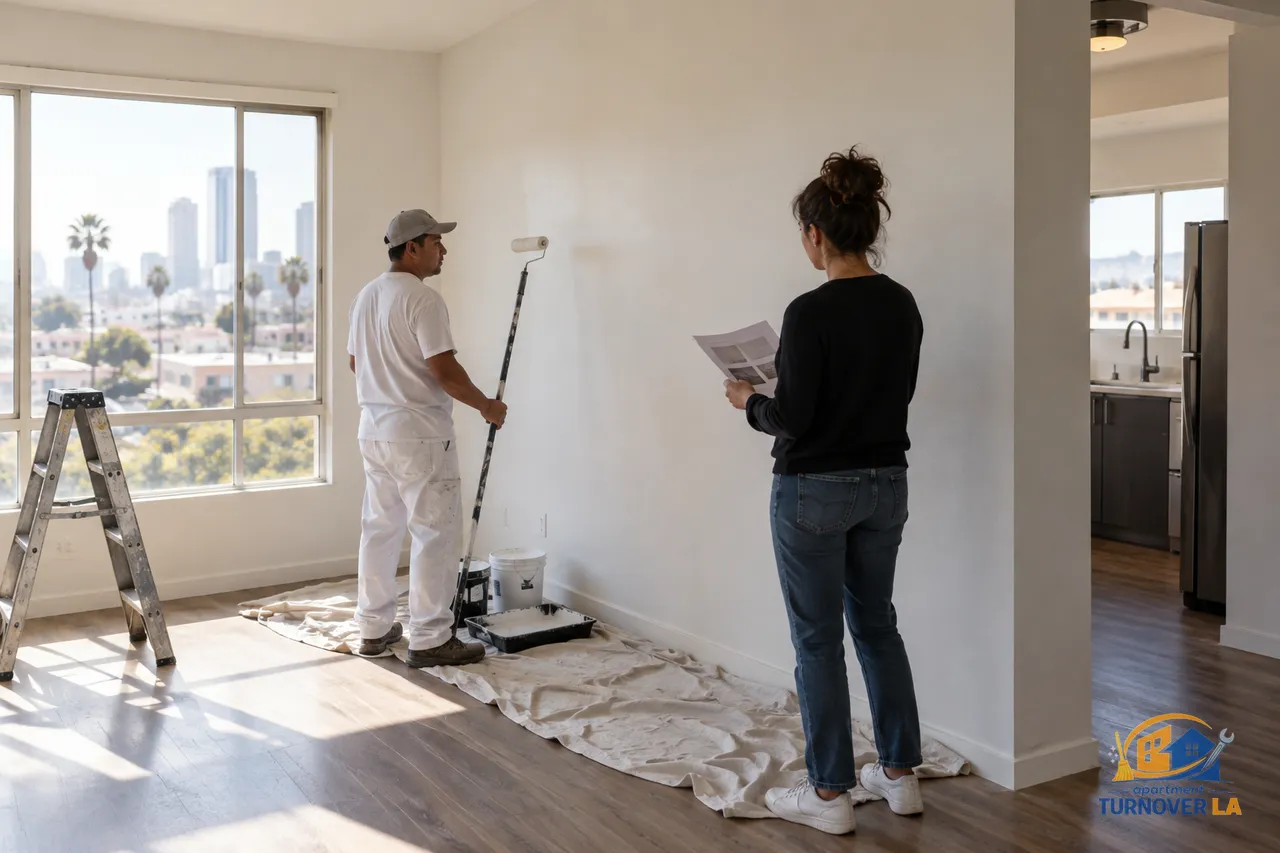
Quick answer: Ask painters to define every surface in the scope, explain their prep and repair process, identify who supplies paint, confirm access and timing, and set a final walk-through. For a known room repaint, TurnOver LA lists Repainting per room at $395 / room, with a 48-hour turnaround. A written scope matters more than a vague promise to make the unit look fresh.
Landlords should ask questions that turn a verbal estimate into a clear work plan. The goal is to know what will be painted, what preparation is included, what can change the invoice, and how you will inspect the finished unit before marketing it.
Get instant quote in 30 seconds
What exactly will the painter include in the scope?
Start by asking for a room-by-room and surface-by-surface scope. “Paint the unit” can mean walls only, or it can mean walls, ceilings, doors, trim, closets, cabinets, and touch-ups around patched areas. Those are different amounts of work, and they need different preparation. Ask the painter to distinguish between a full repaint and touch-up work, especially where the existing paint color or sheen is unknown.
Use the same written scope when you compare bids. It prevents one quote from appearing lower simply because it excludes closets, ceilings, or baseboards. For an occupied building, also identify common-area surfaces that are not part of the unit work. A useful scope should answer these five points:
- Which rooms and surfaces will be painted?
- Is the work a full repaint, touch-up, or both?
- Are closets, doors, trim, and ceilings included?
- What visible damage needs a separate repair decision?
- Who approves additions before the work begins?
A defined scope gives you a usable standard for the final walk-through, rather than relying on memory after the keys change hands.
How will the painter prepare the apartment first?
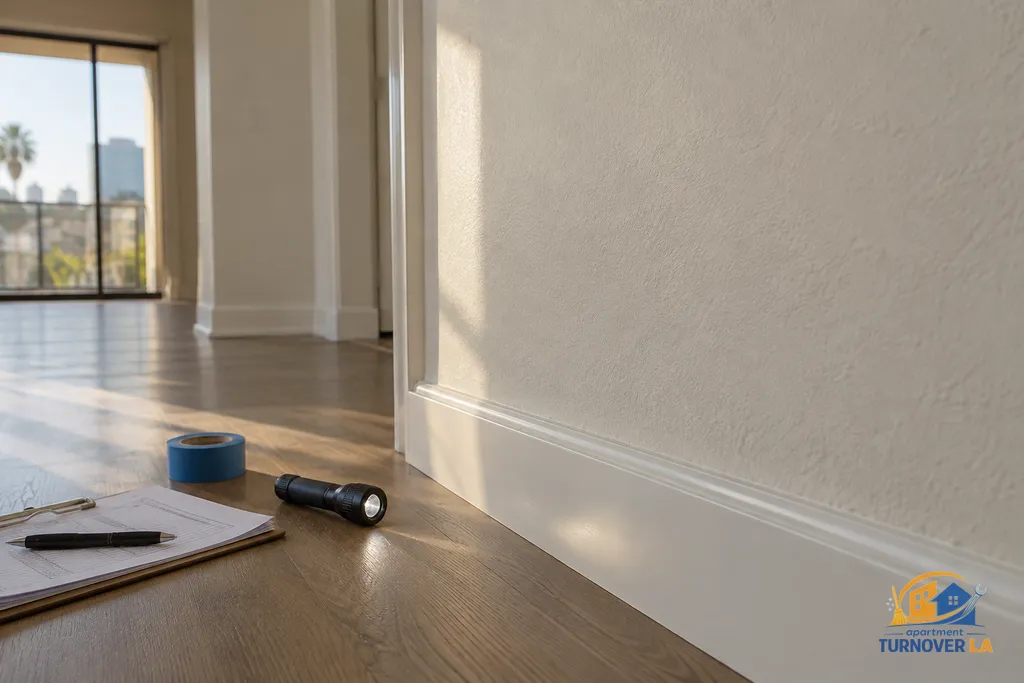
Preparation is the question that reveals whether a painter has planned for a turnover or only for applying a new coat. Ask how they will clean marks, protect floors and fixtures, handle loose paint, fill nail holes, sand rough areas, and mask adjacent surfaces. If a wall has grease, smoke residue, adhesive, or heavy scuffing, ask whether that condition changes the prep plan before scheduling the job.
Also ask how the painter will handle texture. A smooth wall, orange-peel texture, and a previously patched wall can each show flaws differently under rental listing photos and afternoon light. When a puncture or damaged section needs work beyond normal fill and sand, get it identified separately. TurnOver LA can address a drywall patch or repair before painting, and this guide to drywall patching in rental apartments helps clarify what to document before work starts.
Ask for the prep steps in writing. It is easier to approve the right repair before paint goes on than to debate a visible defect after the apartment is listed.
What should a landlord ask about price and change orders?
Ask what the quoted price covers, what conditions could add cost, and who can authorize a change. A good answer names the agreed work and gives you a process for anything discovered after inspection, such as concealed drywall damage or a surface that needs more work than expected. Do not accept a loose allowance without knowing what decision triggers it.
For a defined repaint, TurnOver LA lists Repainting per room at $395 / room. Use the apartment painting service page to request the appropriate scope rather than trying to convert a square-foot estimate into a rental turnover price. A 12-by-12 room, for example, may still vary in walls, trim, ceiling height, condition, and repair needs.
Ask the painter to separate labor from items that must be selected or purchased. With TurnOver LA, the quote covers labor and the crew's own supplies. Paint, parts, or fixtures needed for the job are priced at the on-site inspection and added to the final invoice only with your approval first.
Get instant quote in 30 seconds
Which paint and finish questions prevent a mismatch?
Ask the painter what paint product, color, and finish they expect to use, then confirm whether you have a unit paint record or an existing labeled can. “White” is not enough for touch-up work. A color can differ by product line, sheen, age, and prior coats. A mismatch can be more noticeable than the original scuff.
For each room, ask whether the intended finish matches the existing finish and whether one wall or all walls need repainting to blend properly. Ask about ceilings, too. Ceiling paint and wall paint often look different even when both appear white. For kitchens and bathrooms, ask the painter to identify any surface condition that needs to be addressed before coating, rather than treating new paint as a cure for moisture or grime.
Keep the final color and finish record with the unit file. It gives the next turnover crew something concrete to work from, whether the next job is a small mark removal or a complete repaint. If you are weighing an owner-performed job against hiring out, see whether it is cheaper to paint your own house interior in LA for the practical tradeoffs.
Need the walls done before you re-list?
Turnover painting, scuff removal and patching, with a photo record of the condition we left behind.
$395 per room · 48-hour turnaround
Get an instant quoteCan the painter work within the vacancy schedule?
Ask when the painter can inspect, when work can begin, how long the unit must remain clear, and when it will be ready for a final review. Access is part of the plan: confirm keys, parking instructions, gate codes, elevator rules, pets, tenant property, and any building hours before the crew arrives. A missed access window can move every task behind it, including cleaning and listing photos.
For a vacant apartment, sequence the work so repairs and painting happen before the final clean. This avoids fresh dust or paint debris landing on completed surfaces. In a Hollywood or Koreatown building with limited loading access, it also helps to assign one person to provide entry and receive the finished unit. Ask whether the crew needs the unit empty, and identify any items that should be moved or protected.
The point is not to promise a date before the condition is known. It is to establish who controls access and what must be ready before the painter arrives. That is the difference between a scheduled turnover task and an avoidable delay.
What should I ask about insurance, documentation, and communication?
Ask a prospective painter to explain what coverage they carry and how they document the job. You are not asking for a sales pitch. You are confirming who is responsible for the work, how you can verify current coverage, and whom to contact if the crew finds a condition that requires approval.
Ask for a single point of contact, the best way to receive approval requests, and photos of any newly discovered damage before extra work proceeds. For a landlord or small manager, photos matter because they create a record of the condition at the time of turnover. They can also help you distinguish painting work from a separate maintenance problem.
Be specific about resident privacy and building rules. If the unit is still occupied, ask the painter not to enter until you have provided lawful access and clear instructions. For security-deposit decisions, painting invoices do not by themselves determine what a former tenant can be charged. Review normal wear and tear in California and the rules in California Civil Code §1950.5 before treating turnover costs as tenant deductions.
How do I inspect the paint job before releasing the unit?
Set the final walk-through expectation before work begins. Ask the painter when the work can be inspected in normal room lighting and whether touch-ups found at that review will be handled before closeout. Walk each room from more than one angle, because roller marks, missed cut lines, and texture differences can show up only in side light.
Check that the agreed surfaces were completed, outlets and hardware are clean, floors are free of drips, and repaired areas blend as closely as the approved scope allows. Open closets, inspect behind doors, and look at baseboard lines rather than stopping at the center of each wall. Save a short photo record with the invoice and paint details.
If the apartment needs more than painting, coordinate the final steps as one turnover plan. The cost to paint a three-bedroom house interior article is useful when you are considering a broader paint scope, while a make-ready plan can keep cleaning and inspection from becoming separate scheduling problems. Clear questions at the front end lead to a simpler closeout.
A short painter interview protects the turnover schedule
The best questions are direct: what will you paint, how will you prepare it, what needs approval, when can you work, and how will we inspect the result? Put the answers in the scope before authorizing the job. That gives your staff, the painter, and the owner the same definition of complete.
For an LA apartment turnover, keep painting connected to the rest of the vacant-unit work. Confirm repairs before coatings go on, approve materials before they are purchased, and schedule the final clean after the work is complete. This process is practical whether you manage one unit or several.