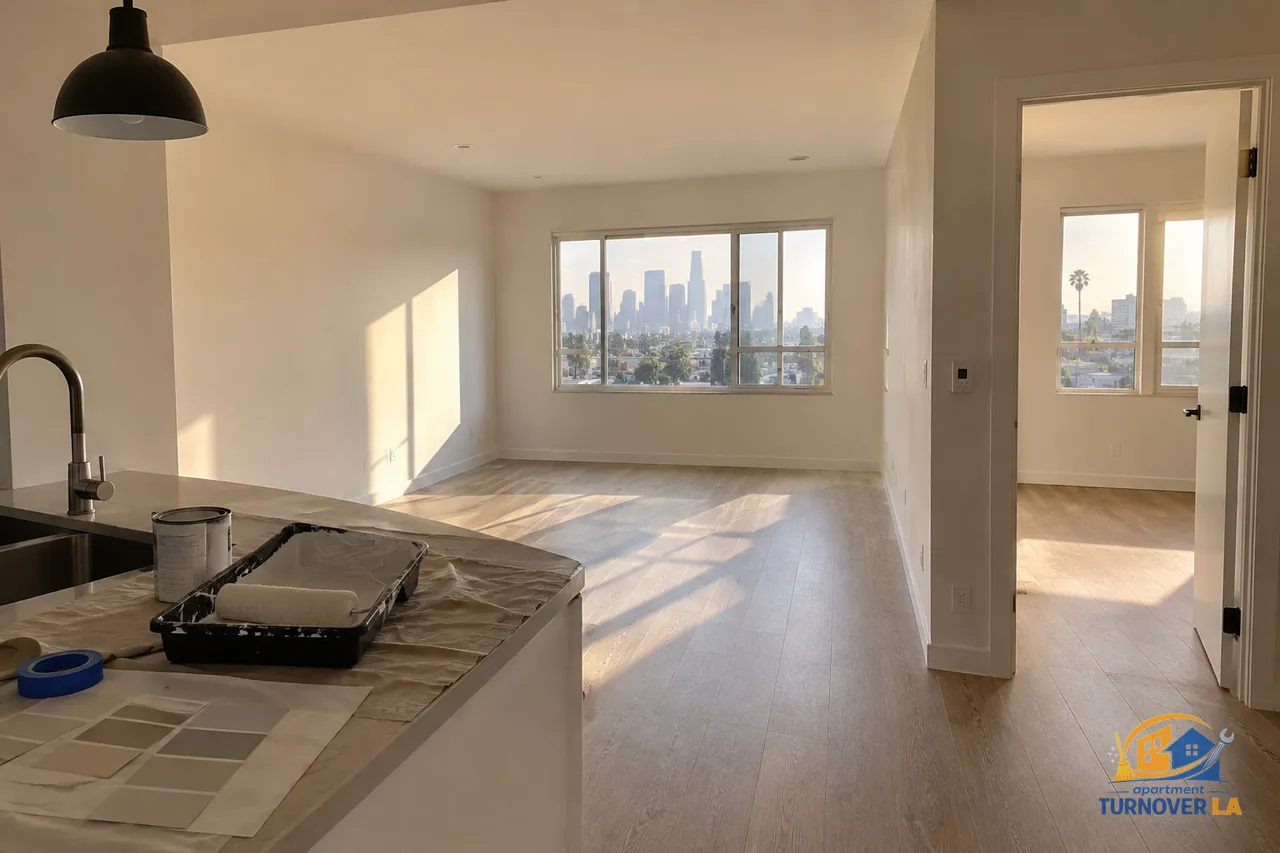
Quick answer: Most Los Angeles apartments are painted warm white, soft off-white, or light gray, usually with a white ceiling and durable neutral trim. These colors make vacancies look clean, work with different tenant furniture, and simplify future touch-ups. For a full color change, TurnOver LA charges $395 per room for repainting, with a flat 48-hour turnaround.
Los Angeles landlords usually get the best turnover result by matching a single neutral wall color across comparable units, rather than choosing a trendy color for each vacancy. The right choice depends less on the paint chip and more on whether the existing walls can be touched up without flashing, whether repairs need texture work, and how quickly the unit needs to be listed.
Get instant quote in 30 seconds
What color are most Los Angeles apartments painted?
Most LA rental walls are warm white, soft off-white, beige-white, or light gray. Warm white is often the safest operational choice because it reads clean in daylight and warmer artificial light, photographs without a blue cast, and does not make older beige tile or honey-toned cabinets look more yellow. Bright contractor white can work, but it can feel stark in older Hollywood, Koreatown, and Mid-City units with limited natural light.
Ceilings are typically white, while baseboards and door trim are white or a slightly brighter white in a more durable finish. The practical goal is consistency. A tenant moving from one unit to another should see a clean, neutral home, while the manager should be able to use the same labeled paint for routine repair work. For broader turnover sequencing after paint selection, use this apartment turnover checklist.
Why do landlords use neutral paint instead of trendy colors?
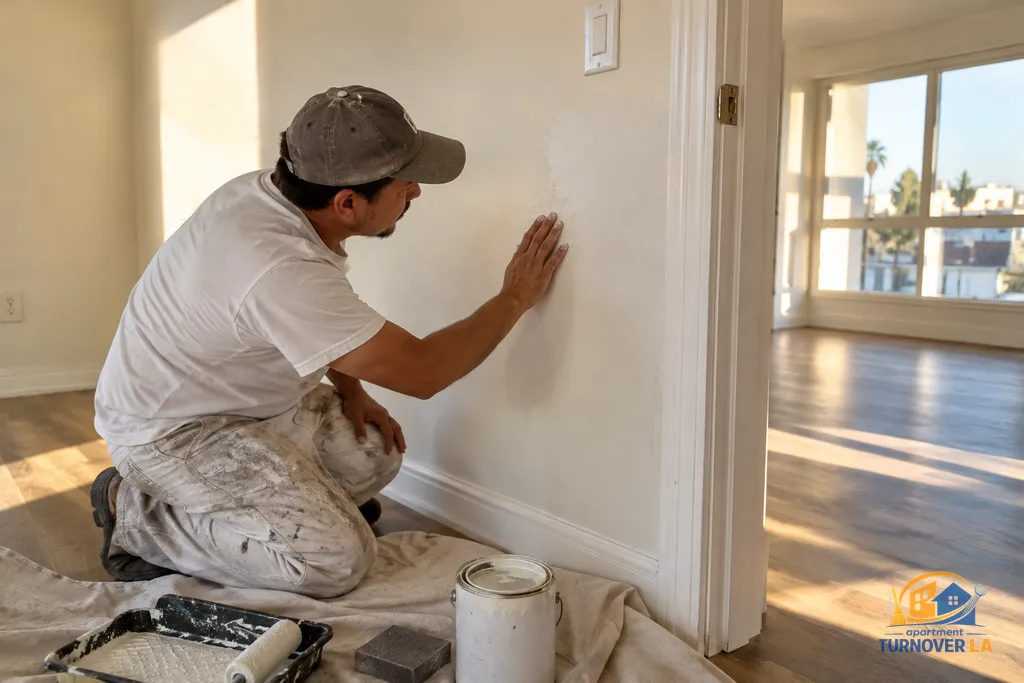
Neutral paint reduces decision time, makes units easier to market, and limits the cost of correcting inconsistent walls later. A saturated accent wall may appeal to one tenant, but it often requires multiple coats of primer and paint before the next listing. It can also show through when a maintenance technician makes a small patch using the unit's standard color.
The useful distinction is between a neutral that looks intentional and a generic gray chosen without checking the room. Cool gray can make a north-facing apartment feel flat. A soft warm white can look more open and cleaner in the same space. Check the fixed items first: cabinet color, countertop, flooring, tile, and window exposure. Then test the sample on more than one wall. In a vacancy, review it in morning daylight, late afternoon, and with the actual installed bulbs on. That prevents a paint decision that looks fine on a fan deck but dull in the listing photos.
Which paint finish works best on apartment walls?
For most apartment walls, an eggshell or low-sheen washable finish is the practical middle ground. It is more cleanable than flat paint and usually hides small wall irregularities better than a shinier satin finish. Flat paint can hide texture and patch edges well, but scuffs more easily and can burnish when wiped. Satin is durable, but its reflectivity makes roller marks, drywall patches, and uneven texture more obvious.
Use the finish consistently within a room. A touch-up with the right color but a different sheen will often flash under window light or a ceiling fixture. That is why a partial repair sometimes turns into a full wall or room repaint. Keep a labeled record with brand, color name, finish, and where the can was used. A clean label is more valuable at the next turnover than an unlabeled half-can in a storage room. For scuff-specific triage, see how to remove apartment wall scuffs.
When is a touch-up enough, and when should you repaint?
A touch-up is enough when the existing paint is known, the sheen matches, and the wall has isolated marks rather than broad wear or multiple repairs. It is not enough when the walls have sun fading, nicotine staining, grease, lots of filled nail holes, or prior touch-ups that are already visible. In those cases, touching up only the damaged spots can create a patchwork look that is more noticeable in rental photos than the original marks.
Across LA, a general-market single-room repaint commonly runs about $300 to $800, depending on prep, ceiling height, occupancy, and whether the painter supplies materials. With TurnOver LA, repainting per room is $395 / room. For a wall with limited damage, paint touch-up only is $200. Labor and the crew's own supplies are covered in the quote. Paint, parts, or fixtures needed for the job are identified at the on-site inspection and added only with your approval.
Get instant quote in 30 seconds
Need the walls done before you re-list?
Turnover painting, scuff removal and patching, with a photo record of the condition we left behind.
$395 per room · 48-hour turnaround
Get an instant quoteCan painters handle drywall repairs before painting?
Yes, but the repair needs to be finished before the final paint coat, and the texture has to match the surrounding wall. A small anchor-hole cluster and a fist-sized hole are not the same scope. The usual failure point is rushing from patch compound to paint before the surface is dry, sanded flush, and primed. Under side light, an unblended repair can show even when the color match is correct.
TurnOver LA prices a small drywall patch + texture at $150 / patch and a medium drywall repair at $240 / patch. Those are separate line items from a room repaint because the repair scope determines the prep time. A standalone repair can be booked through drywall repair service, while a repaint and repair scope belongs under apartment painting services. For a practical review of common rental-wall damage, see drywall patching in Los Angeles rentals.
How long does it take to paint an apartment between tenants?
A clean, empty room with minor prep can often be painted within a working day, but apartment schedules should allow for drying, patch cure time, second coats, trim work, and final inspection. A studio or one-bedroom with touch-ups only may move quickly. A unit with wall repairs, dark color coverage, cabinets to refinish, or smoke residue needs more time and should be scoped before promising possession to an incoming tenant.
TurnOver LA uses a flat 48-hour turnaround on every job, with no rush or same-day upcharge. That timeline helps only if access, approval, and material selections are ready. The efficient order is to inspect first, complete cleanout and repairs, paint, then do the final clean and photo report. Painting before drywall texture has cured or before junk is removed creates avoidable rework. For a bundled clean and condition record after paint, review the Make Ready service.
What should landlords document before choosing a paint color?
Document the unit's current condition before authorizing any paint work. Take wide photos of each room, then close photos of stains, chips, nail holes, door damage, and previous patch areas. Record the existing paint if it is known, including sheen. This creates a scope the painter can price accurately and gives the manager a record of what is ordinary use versus actual damage.
California security-deposit rules allow deductions for repair of tenant-caused damage beyond ordinary wear, but not for normal aging or routine turnover work. Review California Civil Code §1950.5 and the California DCA Landlord-Tenant Guide before assigning paint charges. In LA RSO properties, managers should also keep the unit file aligned with LAHD Rent Stabilization Ordinance requirements. A standardized neutral paint system makes this documentation easier because it separates normal refresh work from a specific, documented repair.
Build a paint standard that survives the next turnover
The best apartment color is the one your team can identify, match, maintain, and photograph consistently. Choose one warm white or soft off-white for most walls, one ceiling white, and a documented trim finish. Keep those choices consistent across like units unless fixed finishes require a different choice. That approach limits visible touch-ups, avoids unnecessary color changes, and shortens the approval cycle when a tenant gives notice.
A paint standard also helps protect vacancy time. In Los Angeles, an unlisted vacant unit can cost roughly $80 to $200 per day in lost rent depending on the submarket. Waiting on a color debate after the crew arrives is a preventable delay. Confirm the scope, document repairs, approve materials when needed, and schedule the repaint around cleaning and listing work.