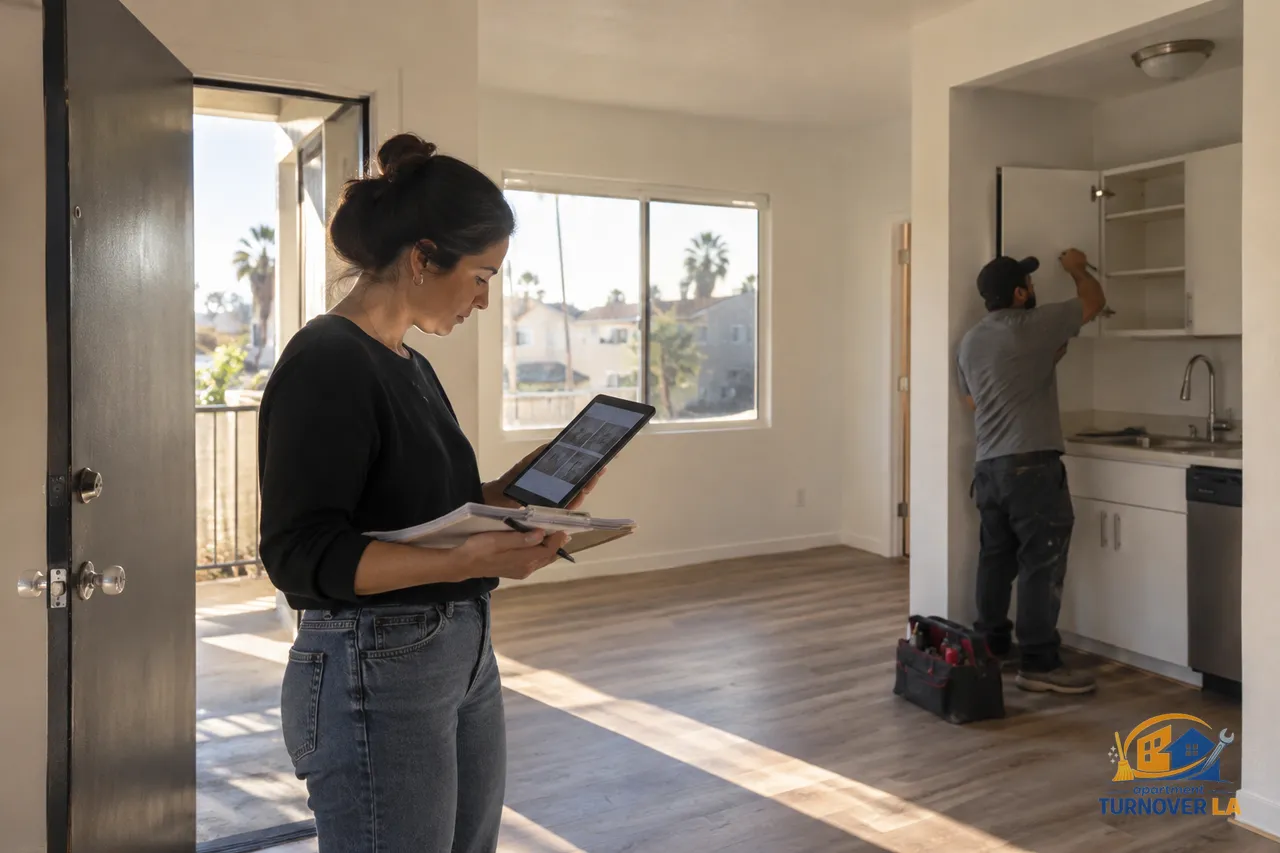
Quick answer: Red flags when hiring a handyman include no written scope, unclear materials approval, undocumented key access, vague completion timing, and no photo proof of repairs. For LA turnover work, confirm who can approve added parts before work starts. TurnOver LA offers a $125 general maintenance / safety visit, a $230 half-day handyman punch list, and a $425 full-day handyman punch list.
The biggest risk is not a crooked cabinet hinge or a wall patch. It is losing control of the scope, access, and signoff while a vacant unit sits unmarketed. A dependable handyman should be able to explain what will be checked, what is excluded, and how added work gets approved in writing.
Get instant quote in 30 seconds
Does the handyman provide a written scope before starting?
A verbal promise to "take care of the little stuff" is a red flag, especially in a turnover. Small work becomes expensive when nobody has defined the starting condition, the finish standard, or the limit of the assignment. Ask for a punch list that identifies the room, item, and expected repair: tighten kitchen cabinet pulls, reset a loose toilet seat, replace a failed smoke alarm, patch a nail-hole cluster, or adjust a sticking bedroom door.
The scope should separate inspection findings from approved work. A handyman may discover a damaged valve, rotted subfloor, or electrical issue after arrival. That is normal. Starting the repair without explaining the finding, likely next step, and approval needed is not. For a routine walk-through, a general maintenance and safety visit gives the owner a defined starting point instead of an open-ended task list. Keep the original move-out condition and the final scope in the unit file.
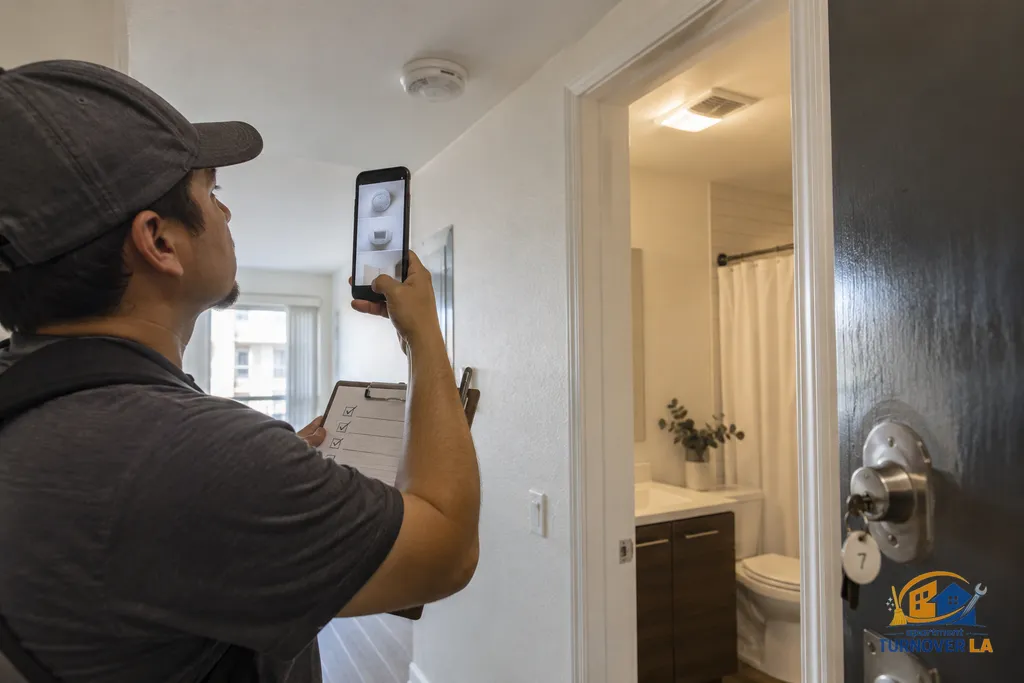
Are materials and added repairs approved the right way?
Be cautious when someone gives a low labor number but cannot explain how parts, paint, fixtures, or specialty repairs will be handled. In a turnover, the hidden cost is often not labor. It is an unapproved lockset, a mismatched paint purchase, a replacement faucet, or a repair that should have been evaluated by a qualified trade.
TurnOver LA quotes cover labor and the crew's own supplies. Materials a job needs, including paint, parts, or fixtures, are priced at the on-site inspection and added to the final invoice only with your approval first. That approval step matters when you are managing several units or an owner has limits on replacement choices.
Ask the handyman to document the issue, send the material option or estimate, and wait for a clear yes before buying or installing it. If they cannot tell you what requires approval, the invoice will be hard to audit after the keys have changed hands.
Is key access, entry, and closeout documented?
A handyman who treats keys casually can create a security problem that is larger than the repair itself. In an empty apartment, you need to know who entered, when they entered, which key or lockbox code they used, and whether every access item was returned. This is particularly important after a tenant move-out, when old keys, copied keys, and garage remotes may still be unaccounted for.
Use a simple access record and confirm the closeout before releasing the unit to cleaners, painters, leasing staff, or the next resident. If locks need attention, define whether the task is rekeying, a hardware replacement, or a smart lock installation. Those are different jobs with different parts and authorization needs. TurnOver LA can coordinate lock and security work when the turnover scope calls for it.
A red flag is any worker who says access documentation is unnecessary because the job is quick. Quick jobs still involve vacant-unit security.
Does the handyman understand the turnover sequence?
A capable repair person can still delay a unit if they work in the wrong order. Handyman tasks should be coordinated with cleaning, paint, junk removal, lock work, and final listing photos. For example, repairing drywall after the final clean creates dust. Replacing a bathroom vanity light after photos can leave the listing showing an outdated fixture. Changing locks before every vendor has access can slow down the entire turn.
A practical turnover sequence usually looks like this:
- Photograph move-out condition and write the initial punch list.
- Remove abandoned property and obvious debris.
- Complete repairs that create dust, debris, or access openings.
- Handle paint touch-up and allow it to dry.
- Recheck safety items, doors, windows, fixtures, and locks.
- Deep clean the unit and complete final photos.
- Release the unit for listing media and leasing.
This is why one-vendor coordination can matter more than the lowest isolated bid. See how sequencing affects vacancy time in our guide to using one vendor for cleaning, painting, and repairs. A handyman who cannot place their work in this order may create repeat visits and missed listing dates.
Get instant quote in 30 seconds
Need the unit turned before the next tenant?
We do the move-out clean and send you a photo report you can attach to the deposit itemization.
From $225 · 48-hour turnaround
Get an instant quoteShould a handyman know LA rental compliance issues?
Yes, although a handyman is not your attorney or housing compliance consultant. In Los Angeles, turnover documentation has practical value for owners of units subject to the LAHD Rent Stabilization Ordinance. Before-and-after records help establish what condition existed at move-out, what was repaired, and whether work was routine preparation or tenant-caused damage.
A warning sign is a vendor who tells you to charge everything to the former tenant without asking about condition, useful life, or ordinary wear. California security-deposit rules distinguish cleaning and repair charges from normal use. Review California Civil Code §1950.5 and maintain invoices, photos, and a dated scope. Our guide on normal wear and tear in California explains the owner-side distinction in plain terms.
Also ask the handyman to flag issues instead of quietly covering them up. Water staining, repeated GFCI trips, damaged handrails, and inoperable smoke alarms may need more than a cosmetic fix. Good turnover reporting identifies the issue and routes it correctly.
What should handyman pricing and invoices look like?
Across LA, handyman labor is commonly quoted around $75 to $150 per hour before materials, trip minimums, parking, or specialty-trade work. That market range is useful context, but an hourly quote alone does not tell you how much work will be completed. With TurnOver LA, the equivalent turnover work is offered as defined flat-scope options: $125 for a general maintenance / safety visit, $230 for a half-day handyman punch list, and $425 for a full-day handyman punch list.
| Scope | Typical LA market context | TurnOver LA flat price |
|---|---|---|
| General inspection or minor safety visit | Often billed by the hour, plus a minimum | $125 general maintenance / safety visit |
| Short turnover repair list | Hours can expand if scope is vague | $230 half-day handyman punch list |
| Larger punch list across several rooms | Hourly labor can require multiple visits | $425 full-day handyman punch list |
The red flag is not necessarily a higher quote. It is an invoice with no room-by-room work record, no explanation for added time, or no distinction between labor and owner-approved materials. Ask what happens if the task is complete early, what triggers added work, and whether completion photos are included. Compare scope before comparing totals.
How do you verify quality before releasing the unit?
Do not wait until a prospective renter points out the miss. Require a final walk-through against the original list, with clear photos of completed repairs. Focus on items that affect daily use and safety: door latches, window locks, cabinet attachment, outlet covers, smoke and carbon monoxide alarms, bathroom ventilation, toilet stability, and visible leaks beneath sinks.
For a turnover, quality also means the repair is ready for the next trade. A drywall patch should be textured and ready for paint, not merely filled. A tightened cabinet pull should not leave stripped holes. A repaired closet door should open and close without rubbing after the unit is cleaned. These details are where a low quote can turn into a leasing delay.
The California DCA Landlord-Tenant Guide is a useful reference for maintaining records around rental repairs and deposits. Pair that documentation with a final condition report. TurnOver LA's Make Ready service includes a deep clean and 12-point photo report, which helps confirm the unit's rent-ready condition after punch-list work is complete.
What is the safest way to hire a handyman for a turnover?
Start with a written, limited scope and make approval rules clear before anyone enters the unit. Confirm access, request progress documentation, authorize materials separately, and hold the final check until the punch list is complete. These controls are simple, but they address the problems that cause most turnover frustration: surprise charges, untraceable work, missing keys, and repeated visits.
For a small issue, use a defined safety visit. For a unit with multiple repairs, use a half-day or full-day punch list and send the move-out photos ahead of time. If the work reveals something outside the original scope, pause and approve the next step rather than letting a minor repair become an unplanned project.
A handyman should reduce turnover uncertainty, not add to it. The right hire leaves you with a completed scope, documented condition, and a unit ready for the next service in the sequence.