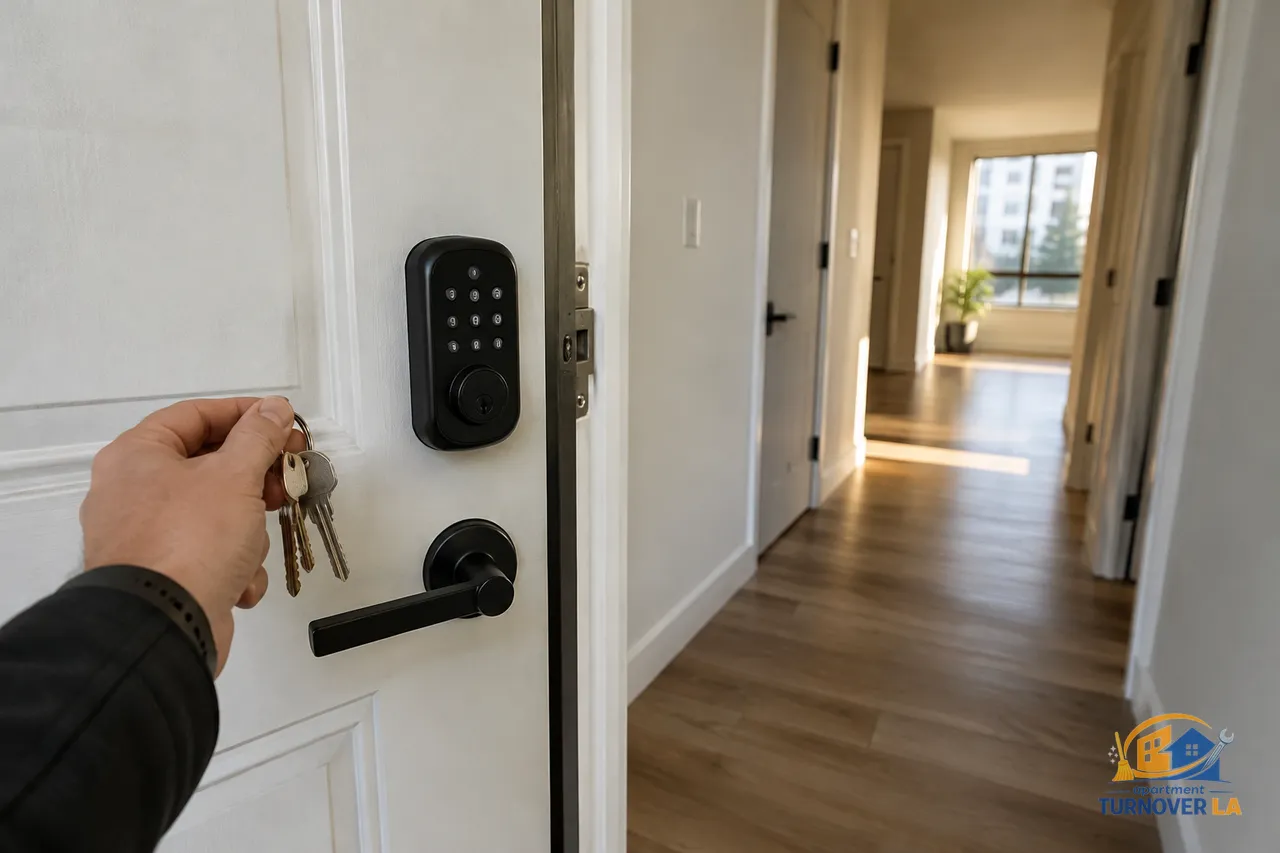
Quick answer: Professional smart lock installation labor commonly falls around $96.47 to $231 per lock as a general LA market benchmark. TurnOver LA charges $210 for a smart lock install, with the lock itself treated as a separately approved material. The final scope depends on door prep, existing hardware, and whether the deadbolt fits the door correctly.
For a rental unit, the installation cost is only one part of the decision. The lock has to work reliably, the prior resident's access has to be removed, and the owner or manager needs a clean record of who can enter. Get instant quote in 30 seconds
What does professional smart lock installation cost in LA?
Across LA, professional installation labor generally lands around $96.47 to $231 per lock, based on published installation cost benchmarks. That is labor context, not a promise that every door is standard. With TurnOver LA, a smart lock install is $210. The smart lock itself is a material, so it is priced after an on site inspection and added only with your approval.
That distinction matters in older apartments. A newer unit in Playa Vista may have a modern, correctly bored door and a compatible deadbolt already in place. A prewar building in Koreatown may have a loose strike, worn jamb, nonstandard backset, or a door that has been painted enough times to interfere with the bolt. Those conditions affect the work needed to get a secure latch and dependable lock operation.
For comparison, a conventional full apartment rekey for up to two locks is $150, while a smart lock is a hardware upgrade and installation project. Do not assume an electronic lock automatically solves the need for sound turnover access controls.
What is included in a smart lock installation?
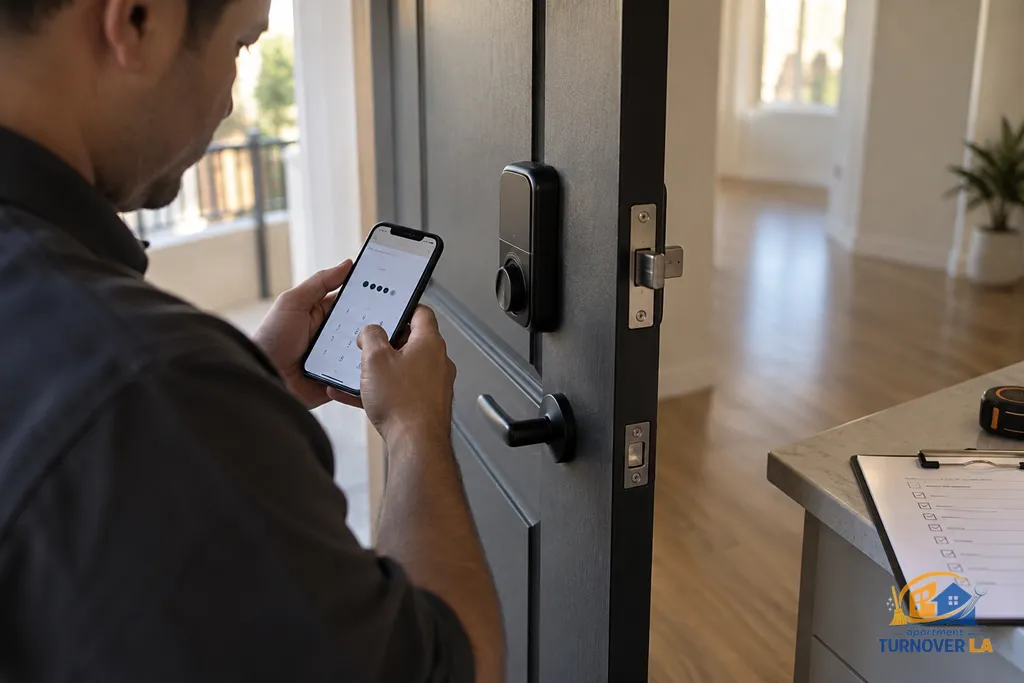
A proper installation starts with checking whether the door, deadbolt bore, latch, strike plate, and jamb work together. The technician removes compatible existing hardware, mounts the new smart lock, aligns the bolt, tests locking from both sides, and confirms that the mechanical key override works when the model has one. Basic installation is not the same as repairing a failing door or replacing unsuitable hardware.
The key operational question is whether the lock can complete its locking cycle without being forced. A bolt that rubs the strike plate may appear to work during a quick test, then drain batteries or fail when the door settles. In rentals, that becomes an after hours access issue, not a minor cosmetic defect.
If the inspection finds a damaged jamb, loose hardware, or a separate punch item, that work should be scoped separately. TurnOver LA's general maintenance / safety visit is $125, and a half-day handyman punch list is $230 when several small items need attention in the same vacant unit. Labor and crew supplies are included in the quote. Paint, parts, fixtures, and the lock are approved materials.
Can I install a smart lock myself in a rental?
Yes, if you own the unit, the door fits the lock manufacturer's requirements, and you are comfortable checking alignment rather than simply following the app setup. Many replacement smart deadbolts are designed to use an existing standard bore. DIY can be sensible when the old deadbolt operates smoothly, the door closes without pressure, and the new lock is compatible with the existing backset and door thickness.
The risk is not usually mounting the interior plate. It is missing an access or fit problem that shows up after the tenant moves in. Common mistakes include retaining an old user code, failing to test the physical key, letting the bolt bind against the strike, or giving the vendor account control instead of the owner account control. If the door needs patching, adjustment, or hardware repair, use a rental repair visit instead of forcing a new device onto a bad door.
For a managed building, document the work order, lock model, serial number if available, admin account holder, recovery method, and the date prior credentials were deleted. That file is as useful as the installation itself when staff changes.
How should you prepare a door before installation?
Start the vacancy walk with the door closed, not open. Turn the existing thumbturn and key several times, then check whether the bolt enters the strike without lifting, pushing, or pulling the door. Look for paint buildup around the latch edge, loose hinges, a cracked jamb, and screw holes that no longer hold. These are fast checks that prevent a smart lock from becoming a callback.
Next, confirm the incoming lock's required door thickness, backset, bore size, handing requirements, battery type, and whether it needs Wi Fi, Bluetooth, a bridge, or a hub. Keep the physical key path clear if the model includes one. A lock that works only through an app creates an avoidable problem during a dead battery, phone loss, or connectivity outage.
For an occupied building, also decide before installation who administers credentials. The building owner or property management company should hold the primary account, not a departing resident, a showing agent, or an individual maintenance worker. This is particularly important when a vacant unit is being shown repeatedly. Get instant quote in 30 seconds
Need the unit turned before the next tenant?
We do the move-out clean and send you a photo report you can attach to the deposit itemization.
From $225 · 48-hour turnaround
Get an instant quoteWhat are the pros and cons of smart locks for rentals?
The main benefit is controllable access. Instead of circulating copies of a key during make ready, showings, repairs, and move in, management can issue time limited or individual codes when the lock model supports it. That can reduce key handoffs and make it easier to confirm that an old resident's digital credential has been removed. Smart locks also help when a leasing agent needs access outside a maintenance window.
The tradeoffs are real. Batteries need monitoring, Wi Fi connected models can introduce account and privacy administration, and not every tenant wants to rely on a phone or keypad. Some locks have subscription or hub requirements that should be understood before purchase. A digital audit trail is useful only if someone owns the account and reviews it when necessary.
For turnover work, choose reliability over novelty. Install a model with a physical key override where appropriate, store recovery information in the unit file, and test the lock after the door is fully closed. If the unit needs broader turnover work first, pair the security task with a Make Ready service, which includes a deep clean and 12 point photo report.
Who is responsible for access after a tenant moves out?
The owner or manager is responsible for restoring control of the unit. A smart lock should not leave former tenants, vendors, or untracked staff with an active code or account invitation. Delete users, remove temporary codes, change the programming code where the model uses one, and verify that the mechanical key plan is current. Keep the record with the move out file.
Security work also connects to deposit documentation. California law allows certain deductions from a security deposit, but the facts and supporting records matter. Review California Civil Code §1950.5 before treating damage or missing hardware as a tenant charge. California's deposit rules and deadlines are separate from the operational need to secure a vacant unit quickly.
LA owners should also consider the applicable local rules for their property. The LAHD Rent Stabilization Ordinance governs covered properties in the City of Los Angeles, while Santa Monica has its own local framework. For a practical deposit timeline, see our guide to the California 21 day deposit return. Do not use a smart lock upgrade as a shortcut for unsupported tenant charges.
How do you schedule smart lock work into a turnover?
Schedule it after the unit is cleared enough to test the door and before listing activity begins. If painting is planned, protect the lock from overspray or install it after the final coat has cured. If the door needs repair, resolve alignment first. A security upgrade installed on a misaligned door can hide the actual problem for a day or two, then fail during a showing.
A clean sequence is: confirm possession, delete old credentials, inspect the door, complete repairs, install and test the new lock, photograph the completed hardware, and record the new access plan. This is especially useful when several vendors are entering a vacant unit. Our apartment turnover checklist covers the broader handoff sequence, including documentation tasks that are easy to miss.
TurnOver LA uses a flat 48 hour turnaround on every job, without a rush or same day upcharge. The right time to book is when you know the lock model and can provide access to the vacant unit. Get instant quote in 30 seconds
The practical cost decision for owners
A smart lock is worth pricing as a small security project, not just as a gadget install. The market labor benchmark of $96.47 to $231 per lock helps set expectations, while TurnOver LA's $210 smart lock install gives owners a fixed labor line item. Hardware, parts, and fixtures are separately inspected and approved before they are added.
The best result is a lock that closes cleanly, has a documented administrator, retains an appropriate backup entry method, and is installed at the right point in the turnover. That avoids repeated key collection, code confusion, and a preventable delay before a unit can be shown.