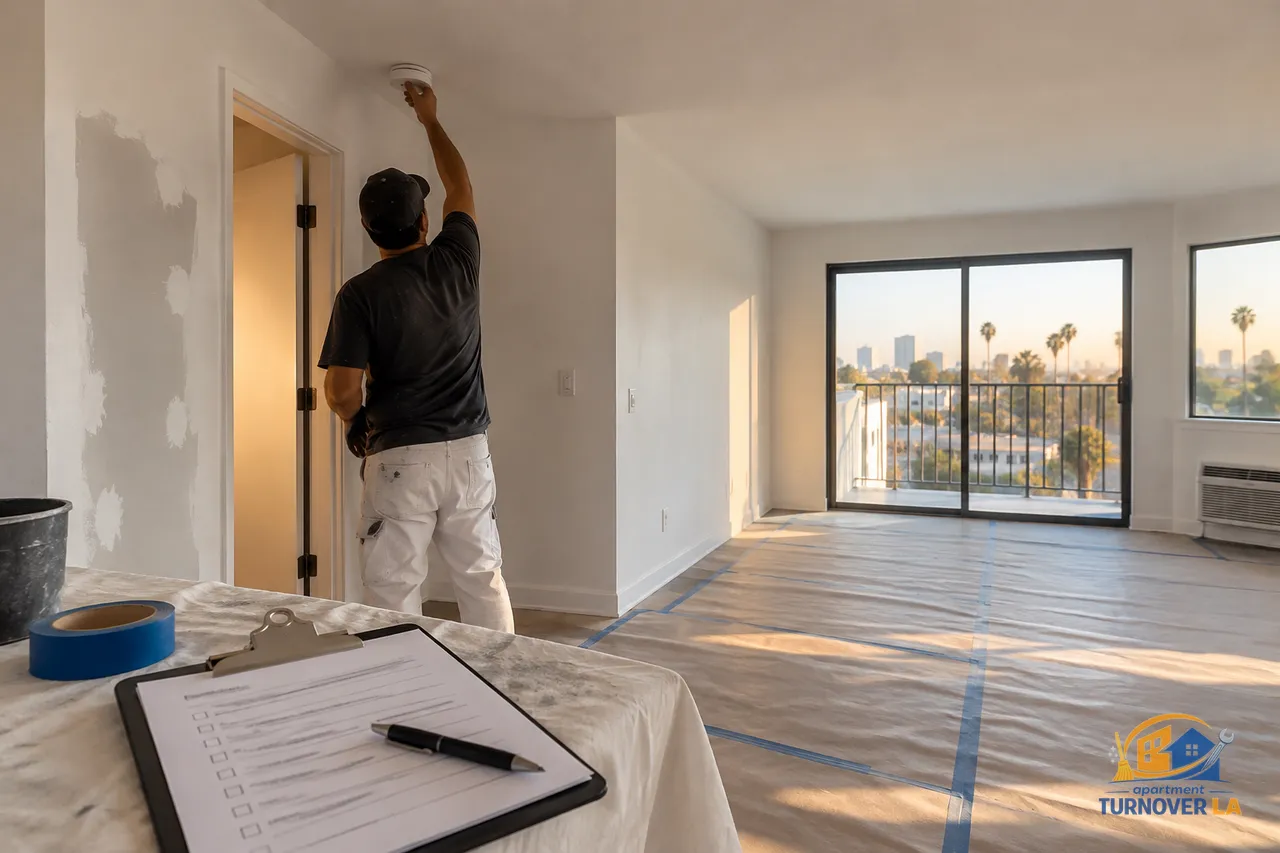
Quick answer: Landlords most often need five maintenance services between tenants: make ready cleaning, small repairs, paint and drywall work, lock rekeying, and safety checks. The right order is to inspect first, complete repairs before cleaning, rekey after vendor access ends, then document the finished unit. A structured turnover can keep a vacancy from turning into several extra days of lost rent.
The maintenance work landlords need most is not usually a major remodel. It is a repeatable set of turnover tasks that makes a unit safe, clean, secure, and ready to show. For a documented starting point between tenancies, Get instant quote in 30 seconds.
Which maintenance services do landlords need most between tenants?
The most common landlord requests are cleaning, punch-list repairs, paint touch-ups, drywall patches, lock work, and basic safety checks. These are the jobs that recur because every vacancy exposes the same wear points: greasy kitchens, scuffed walls, loose hardware, missing batteries, slow drains, and keys that have changed hands.
The priority is not simply which task looks worst. Address anything affecting habitability, security, water, electricity, or fire safety first. Then handle work that changes a prospect's first impression, especially odor, visible wall damage, dirty bathrooms, and damaged entry hardware. California landlords have ongoing repair duties, and the California DCA Landlord-Tenant Guide is a useful baseline for understanding those responsibilities.
For a standard vacancy, a Make Ready service combines the final deep clean with a 12-point photo report. That report is useful operationally because it gives the owner or manager a dated record of the unit's condition before the next resident receives keys.
What does make-ready maintenance mean for an apartment?
Make-ready maintenance means the coordinated work required to return a vacant apartment to rentable condition. It is more than cleaning, and it is not necessarily a renovation. The job starts with an inspection and ends with a unit that can be shown, leased, and handed over without a string of avoidable follow-up calls.
A practical make-ready sequence has five parts:
- Inspect the vacant unit and separate safety issues from cosmetic work.
- Remove abandoned property and complete any approved cleanout.
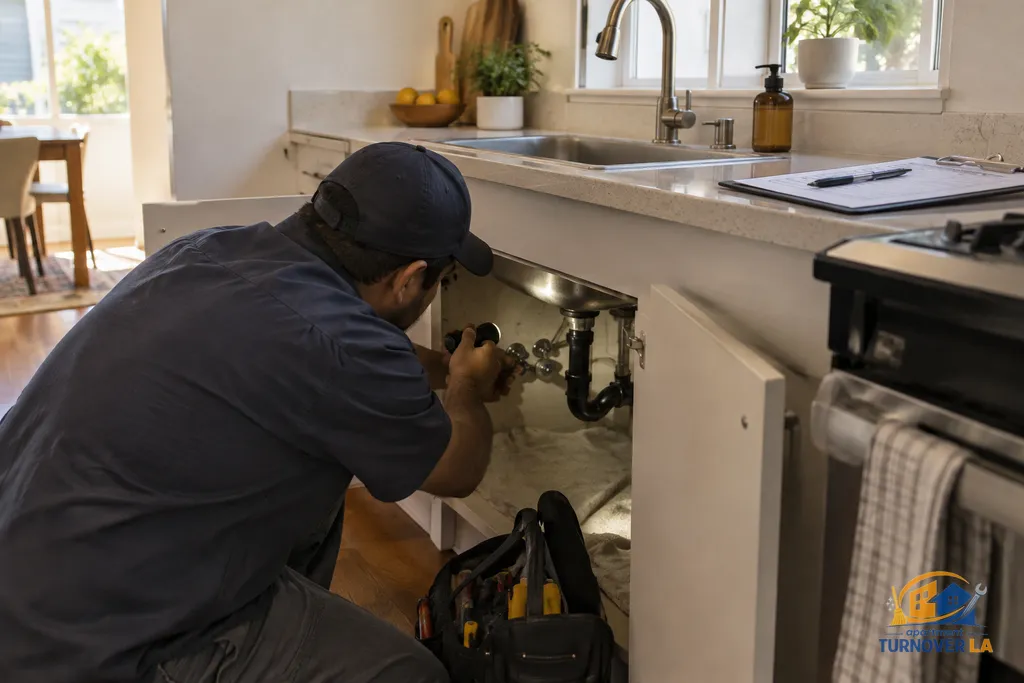
- Repair walls, plumbing fixtures, doors, outlets, appliances, and hardware.
- Paint or touch up after patches and repairs are complete.
- Deep clean, test access, photograph the condition, and release the unit for leasing.
This order prevents duplicated labor. For example, cleaning a bathroom before a plumber replaces a leaking supply line often means paying for a second clean. It also prevents a fresh paint touch-up from being damaged by a later drywall repair. For the cleaning portion, see TurnOver LA's deep cleaning service. For the broader scope, our guide explains what make ready means.
Which maintenance items must be handled before a new tenant moves in?
Handle health, safety, water, power, and entry issues before cosmetic items. A unit can be clean and still not be ready if the smoke detector is missing, a lock does not latch, an outlet is damaged, or an active leak is present. These are the defects most likely to create an immediate resident complaint and the hardest to explain away after keys are delivered.
Before move-in, confirm that smoke and carbon monoxide alarms are present and operational where required, doors latch and lock, windows close, toilets flush, sinks drain, hot water works, and obvious electrical hazards are addressed. Check appliance operation as well, particularly the range, refrigerator, garbage disposal, and bathroom exhaust fan. Document what was tested and what still needs an owner decision.
For deposit deductions, do not assume every turnover task is chargeable to the former tenant. California Civil Code §1950.5 distinguishes reasonable cleaning and repair deductions from ordinary wear. Review the practical distinction in our guide to normal wear and tear in California, and keep invoices, inspection notes, and before-and-after photos together.
How should landlords prioritize repairs, cleaning, and painting?
Start with defects that can worsen while the unit sits vacant, then move to work that blocks cleaning or leasing. Water intrusion, loose toilets, drain leaks, electrical issues, broken locks, and damaged doors come before paint. Drywall repair comes before touch-up paint. Painting comes before the final clean. Rekeying comes near the end, after the last contractor needs access.
A useful triage system is to tag every finding as one of three categories: move-in blocker, leasing objection, or monitor. A move-in blocker includes a leaking angle stop or an inoperable smoke alarm. A leasing objection includes a wall patch, stained grout, or a crooked cabinet pull. A monitor item might be a minor baseboard scuff that does not affect function or presentation.
This sequencing matters in Los Angeles, where vacancy loss commonly runs about $80 to $200 per day depending on submarket. A $150 small drywall patch that delays cleaning can cost more than the repair itself if it pushes a showing back by several days. Use a drywall repair crew before scheduling final cleaning, not after it.
Get instant quote in 30 seconds
Need the unit turned before the next tenant?
We do the move-out clean and send you a photo report you can attach to the deposit itemization.
From $225 · 48-hour turnaround
Get an instant quoteWhat do common landlord maintenance services cost in Los Angeles?
Across the general LA market, small turnover work is usually quoted by condition, access, and scope rather than one universal rate. A unit with a single wall scuff and a working lock is not the same job as one with damaged drywall, vendor debris, and multiple entry points. TurnOver LA uses the fixed catalog prices below for the listed labor scope, with a flat 48-hour turnaround on every job.
| Common turnover need | General LA market context | TurnOver LA catalog price |
|---|---|---|
| Basic inspection or safety visit | Scope-based quote, often driven by the number of findings | General maintenance / safety visit: $125 |
| Handyman punch list | Scope-based quote, based on time and parts needed | Half-day handyman punch list: $230 |
| Small wall damage | Scope-based quote, based on texture and paint match | Small drywall patch + texture: $150 / patch |
| Cosmetic paint work | Scope-based quote, based on prep and room condition | Paint touch-up only: $200 |
| Releasing a unit after vendor access | Scope-based quote, based on lock count and hardware | Full apartment rekey (up to 2 locks): $150 |
| Final clean and condition record | Scope-based quote, based on unit size and condition | Make Ready, 1 Bedroom: $255 |
The quote covers labor and the crew's own supplies. Paint, replacement parts, fixtures, and other job materials are priced at the on-site inspection and added to the final invoice only with owner approval first. For a fuller local cost breakdown, see apartment turnover costs in Los Angeles.
Why are locks and entry hardware a top landlord maintenance need?
Locks are one of the highest-priority turnover items because they are both a security issue and a clean handoff issue. Former tenants may have copies, contractors may have used keys during the vacancy, and a lock can appear functional while a deadbolt sticks or a strike plate no longer catches consistently. The new resident should not inherit uncertainty about who has access.
Rekey after cleaners, painters, handymen, and inspectors have finished their work. Doing it too early causes key handoffs, lockbox workarounds, and a greater chance that someone needs access after the unit has been secured. During the same visit, test the door sweep, hinges, latch alignment, peephole, and any smart-lock programming.
Across the general LA market, entry work is commonly priced by lock count and hardware condition. TurnOver LA lists a rekey first lock at $100, an additional lock rekey at $50 / lock, and a door knob / handle replacement at $100 / knob. Schedule lock rekeying and security work as the final access step, then photograph the completed entry condition for the file.
How can landlords prevent repeat maintenance calls after move-in?
The best way to reduce repeat calls is to treat the final inspection as a function test, not a walkthrough for appearance alone. Turn everything on that a resident will use in the first 24 hours. That includes faucets, drains, toilet flushes, lights, outlets, fans, appliances, locks, blinds, and HVAC controls. Note any item awaiting a part instead of hoping it will not be noticed.
A short punch list is usually cheaper than an emergency callback. Across the general LA market, handyman work is often quoted according to time, access, and the number of tasks. TurnOver LA lists a half-day handyman punch list at $230 and a full-day handyman punch list at $425. Those fixed labor scopes help when the unit has several small issues that are inefficient to dispatch separately.
Give the leasing team the final condition photos, a list of completed work, and any known follow-up item with an owner-approved timeline. That handoff is particularly important for managers overseeing multiple units, which is why TurnOver LA also supports property managers. One vendor schedule, one inspection sequence, and one final photo record reduce the usual gaps between maintenance, leasing, and ownership.
What is the simplest turnover plan for a landlord?
The simplest workable plan is inspect, repair, refresh, secure, document. It keeps the crew from undoing completed work and helps owners decide quickly which costs are maintenance, which are potential deposit deductions, and which are capital improvements. It also gives a leasing agent a clear release point instead of an uncertain promise that the unit is "almost done."
Start the inspection immediately after possession, with photos of every issue before work begins. Approve required materials during the on-site inspection. Complete repairs and paint before the final clean. Finish with a functional test, rekey, and photo report. If an item cannot be completed within the turnover window, document it and set the expectation before marketing the unit.
Landlords under local rent rules should also understand the rules that apply to their property. The LAHD Rent Stabilization Ordinance is a starting point for covered Los Angeles units, while statewide deposit limits are addressed in AB 12 (2023) security deposit cap. A clean turnover process does not replace legal compliance, but it creates the records needed to manage it.