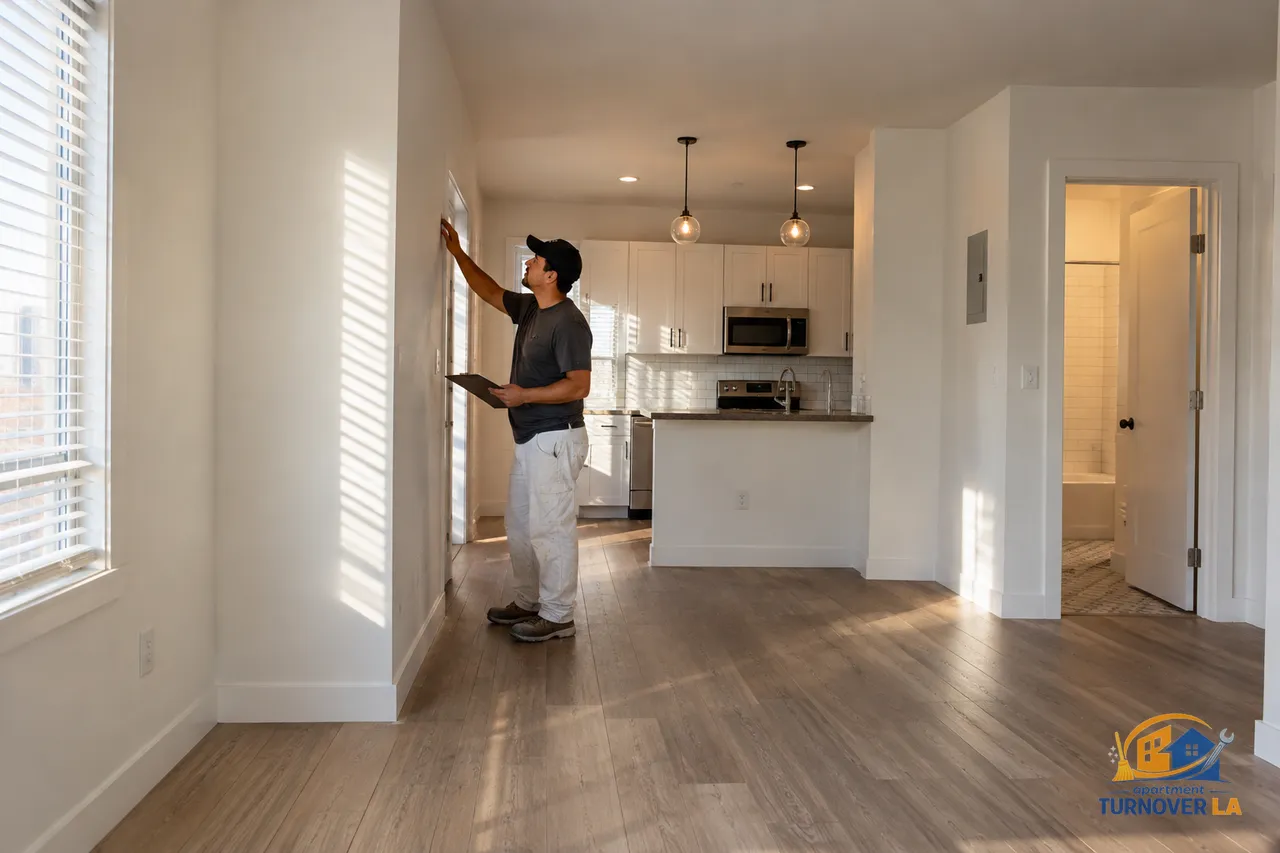
Quick answer: An apartment make ready job is the work required to reset a vacant rental for the next resident: inspect it, clean it, correct damage and safety issues, secure access, and document the final condition. At TurnOver LA, the base Make Ready includes a deep clean and 12-point photo report, with a standard 48-hour turnaround after the scope is confirmed.
An apartment make ready job is not simply a cleaning assignment or a maintenance ticket. It is a controlled handoff from the outgoing resident's condition to a unit the leasing team can show and deliver. In LA, the scope often changes after a walk-through reveals wall damage, deferred repairs, old locks, or abandoned property. Get instant quote in 30 seconds
What does an apartment make ready job actually include?
A complete make ready starts with a vacancy inspection and ends with a documented, move-in-ready unit. The core work is a detailed clean of the kitchen, bath, floors, interior surfaces, appliances, fixtures, and accessible storage areas. The crew also identifies what cannot be solved by cleaning, such as damaged drywall, failed caulk, loose hardware, burned-out lighting, or a door that does not latch correctly.
The job description should separate base work from corrective work. TurnOver LA's Make Ready service includes the deep clean and a 12-point photo report. Painting, repair, lock work, and removal of resident belongings are scoped when inspection shows they are needed. That distinction matters because a clean unit can still fail a move-in standard if the smoke detector is not working, the deadbolt is loose, or a cabinet hinge is missing.
A useful operational definition is this: the unit must be clean, safe, functional, accessible to the incoming resident, and supported by condition photos before keys change hands.
Which apartment maintenance tasks belong on the make ready list?
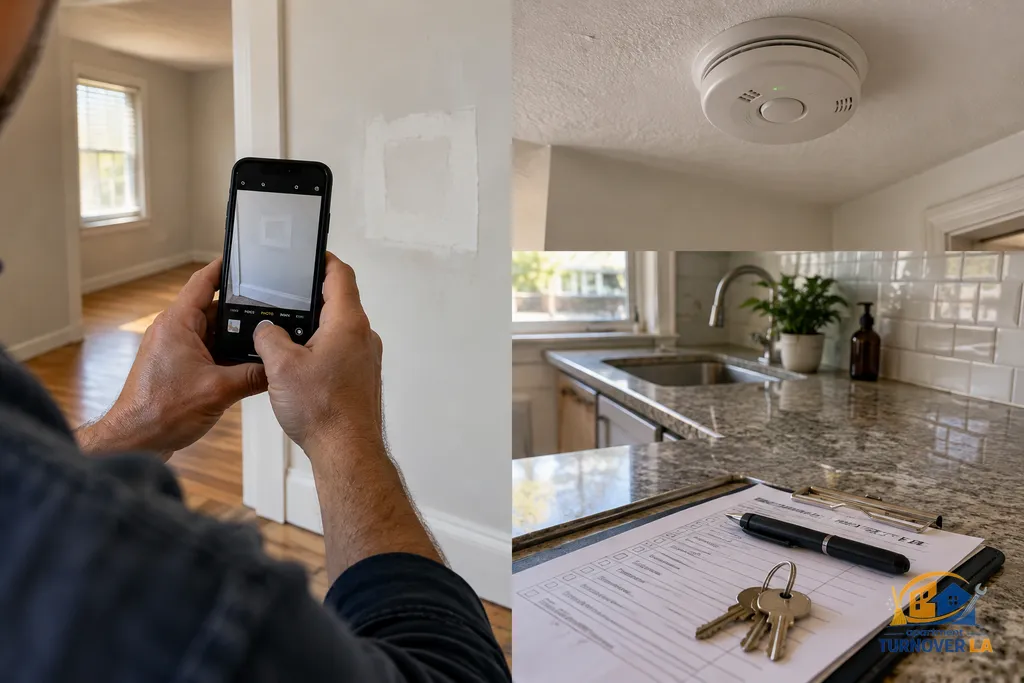
The most useful job descriptions name specific tasks instead of saying "perform general maintenance." A make ready technician or coordinated turnover crew commonly handles these six categories:
- Inspect lights, switches, outlets, smoke detectors, CO detectors, exhaust fans, doors, windows, and visible plumbing fixtures.
- Remove move-out debris and report items left behind before a cleanout is authorized.
- Deep clean the kitchen, bathroom, appliances, cabinets, floors, and interior glass.
- Patch wall holes, repair minor drywall damage, address scuffs, and identify rooms needing repainting.
- Tighten loose hardware, replace simple consumable items, and create a punch list for larger repairs.
- Rekey or replace locks, confirm keys work, and photograph the finished condition.
Not every task belongs to one person or one trade. A maintenance lead should know when a minor item can go to a handyman punch-list crew, when it needs a drywall repair specialist, and when a licensed trade or owner approval is required. Clear escalation rules prevent a technician from making an unauthorized repair that delays the turn.
How should the work be sequenced after a tenant moves out?
The correct sequence is inspection first, corrections second, final clean and documentation last. Starting a deep clean before the property manager decides whether to remove belongings or repaint a room creates repeat work. Likewise, changing locks before vendors have finished can complicate access unless the key plan is deliberate.
A practical LA sequence is: walk the vacant unit, photograph pre-work conditions, identify debris and damage, obtain approval for added materials or scope, complete repair and paint work, clean from high surfaces down to floors, test access and safety items, then take final condition photos. If paint is still curing or drywall dust remains, the unit is not ready for its final cleaning pass.
This sequencing is especially important in older Hollywood and Mid-City buildings, where a small wall repair can expose loose texture or an old hardware problem. TurnOver LA's crews provide their own labor supplies. Needed paint, parts, or fixtures are identified at on-site inspection and added only with approval. Get instant quote in 30 seconds
What can make an apartment fail a move-in inspection?
An apartment fails a move-in inspection when a resident can reasonably find a cleanliness, safety, function, or access problem on arrival. The obvious failures are visible grime, trash, food residue, stained fixtures, broken blinds, holes in walls, and nonworking lights. The failures that create more disputes are often smaller: a sticky lock, a toilet that runs after flushing, a missing outlet cover, a smoke detector without a working battery, or a closet door that comes off its track.
For a manager, the final inspection should not rely on a technician saying the unit is done. Compare the completed work against photos and test the items a new resident will use in the first five minutes: entry door, keys, lights, water, toilet, refrigerator, stove, and basic security.
Cleaning standards also need to be separated from damage claims. California's Civil Code §1950.5 governs permitted security-deposit deductions, while the condition needed to market a unit is an operational decision. See our guide to normal wear and tear in California before treating ordinary use as a chargeable repair.
Need the unit turned before the next tenant?
We do the move-out clean and send you a photo report you can attach to the deposit itemization.
From $225 · 48-hour turnaround
Get an instant quoteWho is responsible for repairs, cleaning, and final approval?
The property manager or owner is responsible for the decision standard, budget approval, and final acceptance. The make ready provider is responsible for completing the approved scope, flagging conditions outside that scope, and supplying usable documentation. A technician should not decide whether to charge a former resident, waive a repair, or replace a fixture without the manager's direction.
In a well-run turnover, the manager provides the move-out inspection notes, target availability date, access instructions, unit size, known problems, and any building rules. The vendor returns a defined scope, exceptions, photos, and confirmation of completed work. That creates a record that is useful to maintenance, leasing, and accounting.
For regulated units, turnover decisions can involve rules beyond the physical work. Review the LAHD Rent Stabilization Ordinance when applicable, and keep the repair scope separate from any rent or tenancy decision. The turnover crew can reset the apartment, but it does not determine legal compliance.
Why are final photos part of a real make ready job description?
Final photos turn a verbal completion notice into an operational handoff. They show the condition after cleaning and repairs, help a remote manager review the unit, and give leasing a current record before a prospect or incoming resident enters. They also reduce the common problem of discovering an overlooked issue after keys have already been released.
A useful photo set is not a handful of wide room shots. It should cover the main living area, kitchen surfaces and appliances, bathroom, bedrooms, flooring condition, repaired areas, key safety items, and entry hardware. TurnOver LA's 12-point photo report is designed around this handoff, not listing photography.
This is different from keeping a tenant's move-out evidence. For deposit accounting, managers should retain their own inspection records and follow the required timing and itemization rules. The California DCA Landlord-Tenant Guide is a useful reference, along with our guide to the California 21-day deposit return rule. The make ready photos document completed turnover work, while deposit documentation supports a separate legal process.
When does a make ready need added trades or a larger scope?
A base make ready needs added work when the vacancy condition goes beyond cleaning and routine inspection. Common triggers include nicotine residue, strong pet odor, heavy grease, large drywall holes, multiple rooms needing repainting, water damage, damaged flooring, missing fixtures, or furniture and trash left behind. The technician's job is to identify these conditions early enough for the manager to approve the right fix.
Do not bury those conditions in a generic maintenance note. Assign an owner, a repair method, and an approval point. For example, a small wall hole may be a defined patch, while repeated damage across a room may make repainting the more sensible choice. A unit with belongings left inside may require a separate cleanout authorization before cleaners can access all surfaces.
When odor is involved, cleaning alone may not solve the problem. Review how to remove smoke smell from an apartment or the guidance on pet odor removal in Los Angeles apartments before promising a leasing date. The operational goal is to find the source, not just mask it for a showing.
How does a manager close out the make ready and release the unit?
The closeout should happen before the leasing team advertises the unit as available. Confirm that the approved work is complete, review the final photos, verify keys and locks, resolve any exceptions, and record the actual ready date. If the unit will be shown immediately, the manager should also confirm that vendor access is over and the unit is secure.
A 48-hour standard only works when the scope, access, and approvals move quickly. The biggest avoidable delay is not the cleaning itself. It is waiting a day to approve paint, fixtures, or a repair that the initial inspection already identified. A single vendor workflow helps because cleaning, wall corrections, maintenance, and security items can be sequenced rather than scheduled as separate discoveries.
Use a consistent turnover checklist on every vacancy, including small studios. Our apartment turnover checklist covers the manager-side controls that sit around the physical work. When the work and documentation are complete, the unit can move from vacant inventory to leasing inventory with fewer surprises. Get instant quote in 30 seconds
The practical job description to use for an LA make ready
An apartment make ready role prepares vacant apartments for the next resident by inspecting condition, completing approved cleaning and basic maintenance, coordinating specialty repairs, verifying safety and access items, and documenting the finished unit. The job is successful when leasing receives a clean, functional, secure apartment with no unresolved punch-list items and a clear photo record.
For owners and managers, the important point is not whether one worker can perform every trade. It is whether someone owns the sequence, flags added scope early, and closes the loop before move-in. That is how a turnover stays within its target window instead of becoming a chain of callbacks after the unit is already promised.