Quick answer: Yes, California's $1,000 handyman limit can be legal, but it is not a blanket allowance for any small repair. The full project value, including labor and materials, must stay under $1,000, the work generally cannot require a permit, and an unlicensed worker cannot use employees on the job. Splitting one repair into smaller invoices does not make it legal.
A landlord can use an unlicensed handyman for a genuinely small, self-contained turnover task, such as a minor patch, hardware adjustment, or short punch list. The practical risk begins when several tasks are really one project, when materials push the value over the threshold, or when permit work is involved. Get instant quote in 30 seconds
Is the $1,000 limit for handyman work in California legal?
The limit is legal as a contractor-license exemption, not as a price cap that applies to every handyman. California generally allows an unlicensed person to perform work only when the entire project is valued at less than $1,000, including labor and materials. The work also cannot require a building permit, and the unlicensed person cannot employ others to perform it.
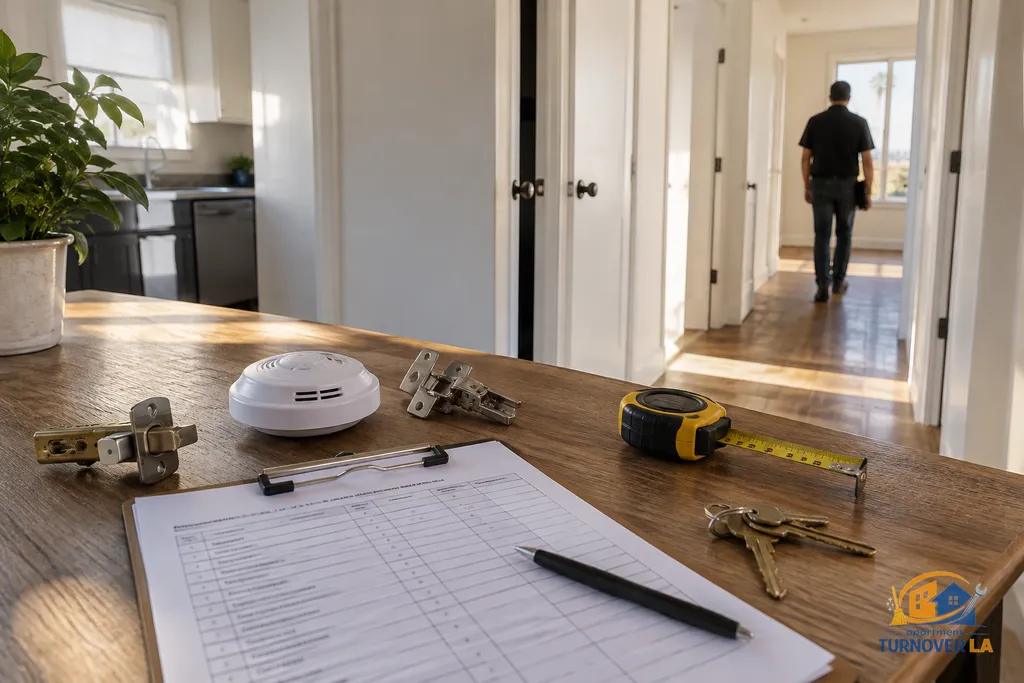
For a rental owner, the important word is project. Replacing a loose cabinet hinge, tightening a door strike, and changing a smoke alarm battery can be separate small tasks if they are separately requested and independently scoped. But calling a bathroom refresh three different jobs while one worker patches wallboard, replaces a fixture, paints, and repairs water damage is a weak position. The property condition and the scope, not the number of invoices, are what matter.
This is especially important in older LA buildings, where a simple-looking repair may expose moisture damage, electrical work, or a permit question. Stop and rescope before authorizing added work.
What counts toward the $1,000 handyman threshold?
Count the full value of the work, not just the handyman's labor charge. That means the labor, the parts, fixtures, paint, hardware, and other materials needed to complete the project. A landlord should also treat work that is plainly part of one planned repair as one scope, even if it happens over more than one visit.
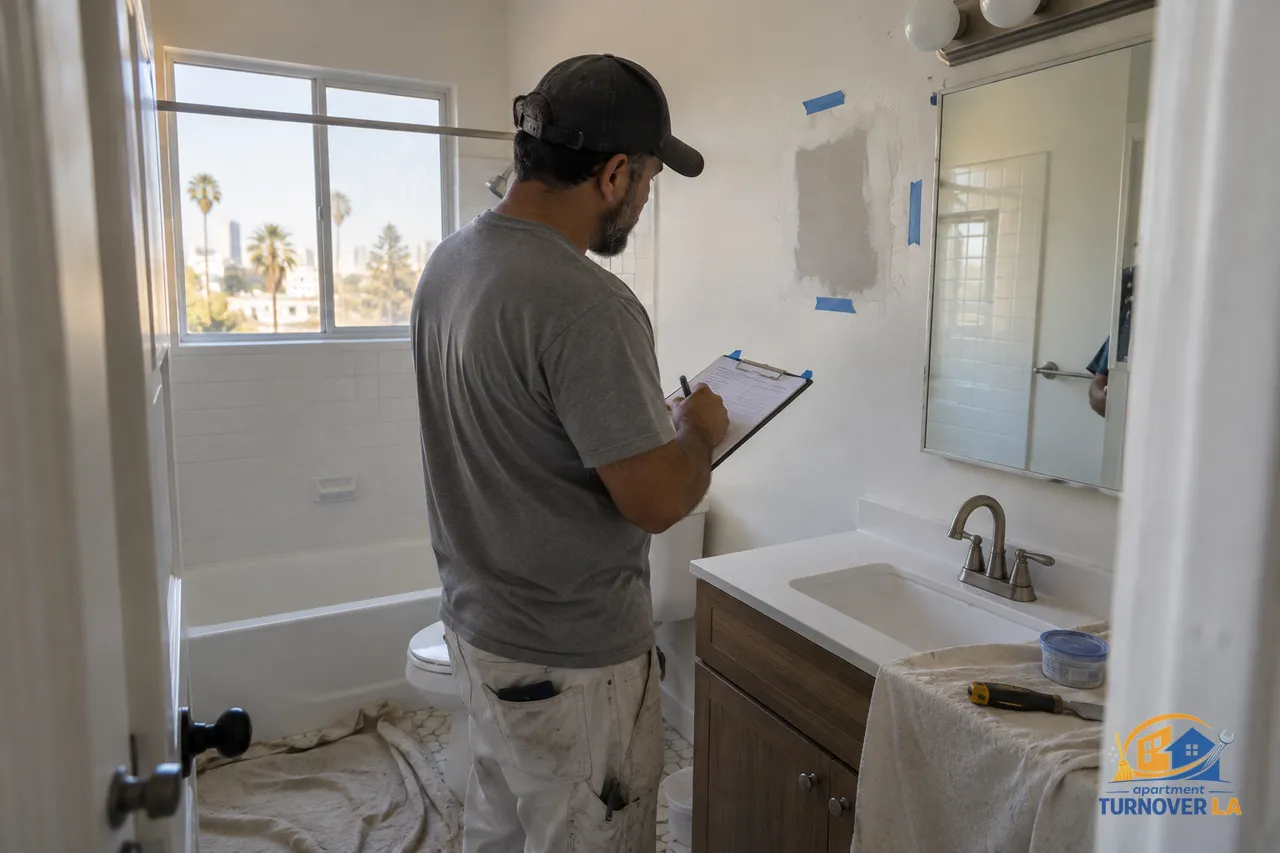
For example, a peeling drywall area above a shower may start as a small cosmetic patch. If the worker finds an active leak, damaged framing, mold-like growth, or failed waterproofing, the job is no longer just a patch. The appropriate next step is diagnosis and a properly scoped repair, not an attempt to stay below a number by excluding related work.
TurnOver LA quotes labor and the crew's own supplies up front. Job-specific materials, such as paint, parts, or fixtures, are identified at the on-site inspection and added only with the owner's approval. That separation helps an owner see the real project value before work expands.
When does a small apartment repair need a licensed contractor?
A repair needs a different level of review when it requires a permit, affects building systems, or reaches the license threshold as one project. Electrical alterations, plumbing changes, structural work, gas-related work, and significant water-damage repairs are common turnover examples that should not be treated as casual handyman items. Local building requirements can also apply even when a job looks minor.
Do not use the $1,000 rule to defer a safety decision. A loose outlet, a leaking supply line, a compromised bathroom wall, or a non-functioning smoke or carbon monoxide alarm deserves a proper scope first. For ordinary turnover maintenance that remains within a lawful small-job scope, a general maintenance and safety visit gives the owner a practical way to identify what can be completed now and what needs escalation.
Keep the work order, condition photos, material approvals, and final invoice with the unit file. That record matters for maintenance history, future budgeting, and any tenant dispute about a deduction.
How should landlords scope a legal handyman punch list?
Start with the condition of the unit, then separate maintenance items by trade and by cause. A useful turnover punch list does five things:
- Lists each defect separately, such as a sticking bedroom door or missing outlet cover.
- Notes whether the issue is cosmetic, safety-related, or potentially caused by a leak or system failure.
- Identifies any part or fixture that must be purchased.
- Flags work that may need a permit or licensed trade.
- Records the approved scope before the worker begins.
A short list is not automatically a handyman job. One water-damaged wall can involve plumbing, drying, drywall, texture, and paint. Conversely, several independent small adjustments may fit a lawful maintenance visit. TurnOver LA lists a general maintenance or safety visit at $125, a half-day handyman punch list at $230, and a full-day handyman punch list at $425. Those are service menu prices, but the owner should still approve any required materials and any expanded scope found on site.
Get instant quote in 30 seconds
Need the unit turned before the next tenant?
We do the move-out clean and send you a photo report you can attach to the deposit itemization.
Get an instant quoteWhat is a fair price to pay a handyman in Los Angeles?
A fair price is one tied to a defined scope, not a vague promise to "take care of a few things." In LA, owners should compare whether a quote includes the visit, basic labor, cleanup, materials handling, photos, and a clear limit on what happens if the work uncovers a larger issue. Hourly pricing can make sense for diagnostic work, but it can also create uncertainty when the punch list is not written down.
For a flat-scope alternative, TurnOver LA's half-day handyman punch list is $230 and its full-day handyman punch list is $425. Materials are not silently bundled into those labor figures. Paint, parts, and fixtures are priced after the on-site inspection and require owner approval before they are added to the final invoice.
For a one-off wall repair, the menu lists a small drywall patch plus texture at $150 per patch and a medium drywall repair at $240 per patch. See the related guidance on drywall patching in LA rental apartments before treating damaged wallboard as ordinary wear.
Do painters handle sheetrock and peeling shower drywall?
Many painters can patch small drywall damage and blend texture, but the right answer depends on why the wall is peeling. Drywall above a shower often fails because of recurring humidity, poor ventilation, a plumbing leak, or a prior repair that was not sealed correctly. Painting over a soft, stained, or actively damp area is not a repair.
A turnover crew should first check whether the wall is dry and stable, whether the bathroom fan functions, and whether there is evidence of a leak at the shower valve, plumbing wall, or ceiling above. Once the cause is addressed, patching and repainting can be scoped cleanly. TurnOver LA lists paint touch-up only at $200, repainting at $395 per room, and ceilings and baseboard or trim at $125.
The distinction matters in deposit accounting too. California's California Civil Code §1950.5 permits appropriate deductions, but landlords need support for the actual work and should separate tenant-caused damage from ordinary aging. Review normal wear and tear in California before assigning a repair cost to a departing resident.
What handyman services are most requested during turnovers?
The most common turnover requests are the small failures that block a ready-to-show unit: door adjustments, cabinet hardware, blinds, outlet and switch covers, toilet-seat or fixture hardware, smoke alarm checks, caulk touch-ups, and wall patching. These are not glamorous jobs, but they affect how a prospect sees the unit and whether the next inspection finds an avoidable issue.
The best workflow is to inspect immediately after possession, authorize the plainly scoped maintenance, and keep larger trades from waiting behind cosmetic work. At TurnOver LA, a maintenance punch list can be paired with a make-ready turnover clean and photo report, which is $225 for a studio, $255 for a one-bedroom, $335 for a two-bedroom, and $425 for a three-bedroom or larger unit. That package is separate from repair work, so owners can see what was cleaning versus maintenance.
Vacancy often costs LA owners roughly $80 to $200 per day depending on submarket. Fast decisions matter, but so does avoiding an unlicensed or underscoped repair that has to be redone.
How should a landlord document repairs and tenant charges?
Use before-and-after photos, a dated work order, invoices, material receipts, and notes explaining the condition found. If a tenant may be charged, document the difference between a new repair caused by the tenancy and maintenance that would have been needed anyway. A worn paint finish, aged caulk, or a fixture at the end of its useful life may not support the same charge as a fresh hole or avoidable breakage.
California deposit rules have timing and documentation requirements. The California DCA Landlord-Tenant Guide is a useful starting point, and our guide to the California 21-day deposit return rule covers the turnover timeline in plain terms. The 2024 changes under AB 12 (2023) security deposit cap also make accurate records more important because there is less room to absorb unclear deductions.
A legal handyman exemption is only one part of a sound turnover process. Scope the job honestly, approve materials before purchase, escalate permit or trade work early, and retain the paperwork. Get instant quote in 30 seconds