Quick answer: For a small apartment handyman in Los Angeles, expect a focused visit for safety items, minor repairs, fixtures, doors, cabinets, and a defined punch list. Across LA, a basic handyman visit commonly falls in the $100 to $250 general market range. TurnOver LA charges $125 for a general maintenance / safety visit, with a 48-hour turnaround and materials approved before billing.
A vacant apartment needs a different kind of handyman work than a homeowner's running task list. The goal is to clear conditions that hold up cleaning, photos, showings, or move-in, while documenting what still needs a licensed trade or owner decision. Get instant quote in 30 seconds
What does a small apartment handyman handle during turnover?
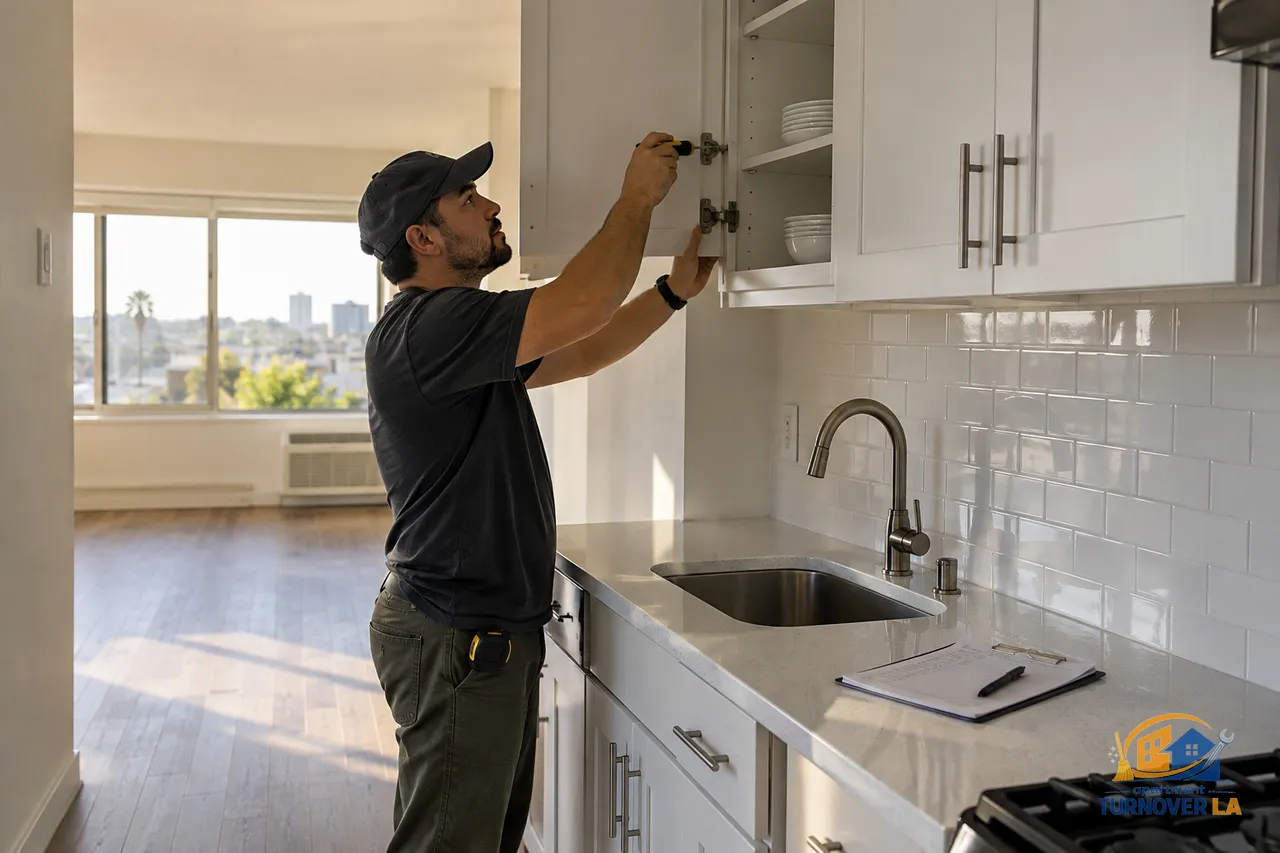
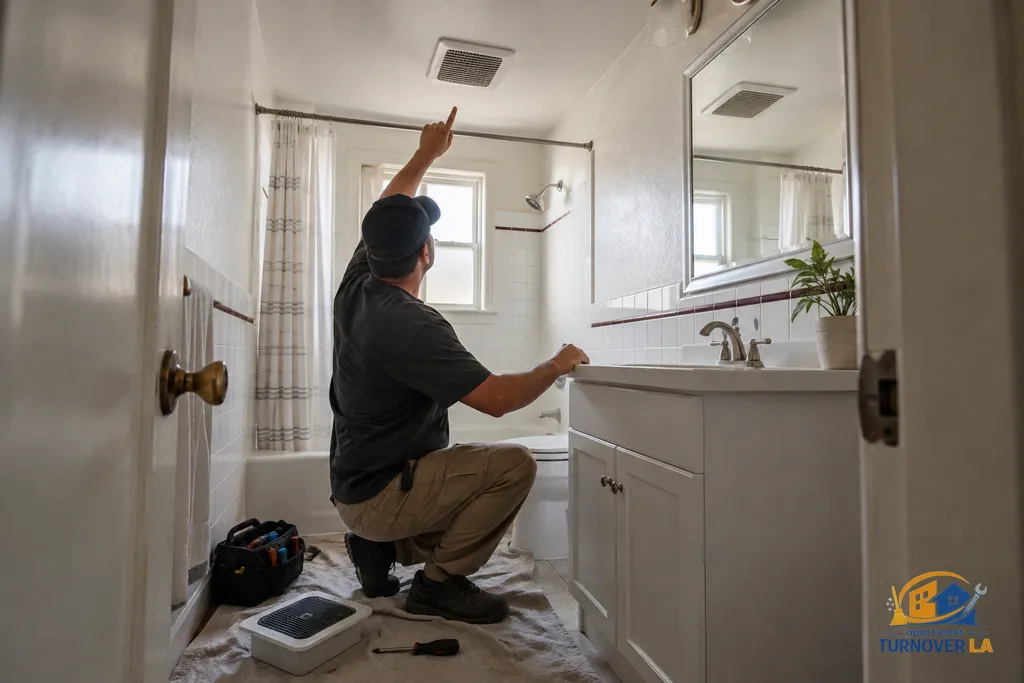
A turnover handyman handles the contained repairs that make a vacant unit functional, safe, and ready for the next step. That commonly includes adjusting sticking doors, tightening cabinet hardware, replacing worn door stops, checking smoke and carbon monoxide detector mounting, correcting loose switch plates, testing exhaust fans, addressing minor plumbing fixture issues, and noting visible water damage or electrical concerns for escalation.
The useful distinction is between a repair visit and a renovation. A repair visit closes a defined punch list. It does not treat every aging surface as a reason to remodel the unit. In older Hollywood and Koreatown buildings, crews often find several small issues that only become obvious once furniture, shower curtains, and tenant belongings are gone.
TurnOver LA's apartment repair crew works in turnover order: safety and access first, repairs that block cleaning second, then cosmetic items that affect photos and showings. That sequence prevents a cleaner or photographer from returning because a repair was completed too late.
When should a landlord schedule handyman work?
Schedule the handyman as soon as possession, access, and the initial move-out condition are confirmed. For a standard vacant unit, the most efficient order is inspection, cleanout if needed, maintenance and repairs, paint or drywall work, then final cleaning and listing preparation. Sending a handyman after the deep clean can create dust, wall debris, or fresh footprints that require a second cleaning visit.
For a unit with an uncertain move-out condition, start with a general maintenance / safety visit at $125. Across LA, comparable basic handyman visits commonly land in the $100 to $250 market range, depending on access, task count, parking, and whether the provider uses a minimum service charge. TurnOver LA's $125 visit is a defined turnover inspection and minor maintenance starting point, not a market estimate.
Use the apartment turnover checklist before the visit. It helps separate genuine repair items from cleaning issues, landlord upgrades, and conditions that may need to be evaluated under California's normal wear rules.
How much does small apartment handyman service cost in LA?
For a short list of small apartment repairs, LA market prices usually depend on time on site and the number of separate trades involved. A basic visit commonly ranges from $100 to $250 across the general LA market. A larger punch list commonly moves into a half-day or full-day charge, especially when it includes doors, hardware, fixture adjustments, cabinet repairs, and multiple rooms.
TurnOver LA publishes defined labor pricing for turnover work. Labor and crew supplies are included. Paint, parts, fixtures, and other job materials are inspected on site, then added to the final invoice only with owner approval.
| Scope | General LA market context | TurnOver LA price |
|---|---|---|
| Basic maintenance or safety visit | Commonly $100 to $250 | General maintenance / safety visit: $125 |
| Several small repairs in one unit | Often priced as a half-day labor block | Half-day handyman punch list: $230 |
| Broad punch list across a vacant unit | Often priced as a full-day labor block | Full-day handyman punch list: $425 |
| One small wall repair | Varies by texture and paint match | Small drywall patch + texture: $150 / patch |
A low quote is not useful if it leaves the repair scope vague. Ask what is included, what requires materials approval, and whether the provider can coordinate the next turnover step.
Which repairs should be handled before cleaners arrive?
Repairs that create dust, debris, leaks, or access problems should happen before the final clean. That includes drywall patches, loose cabinet doors, toilet or sink leaks, damaged trim, broken exhaust fans, and door hardware that prevents secure entry. It also includes any condition that makes a cleaner work around tools, open wall areas, or wet caulk.
A practical turnover sequence is:
- Photograph the unit condition at possession.
- Remove abandoned items and trash.
- Complete safety checks and maintenance repairs.
- Patch drywall and finish paint touch-ups.
- Perform the final deep clean.
- Recheck locks, lights, appliances, and access.
- Take listing photos after the unit is clean and complete.
For wall issues, review drywall patching in Los Angeles rentals before deciding whether a mark is a tenant charge, ordinary wear, or an owner repair. A small drywall patch + texture is $150 / patch with TurnOver LA. Across LA, that type of repair varies by texture matching and paint condition, so it is best reviewed on site rather than assumed from a photo.
Get instant quote in 30 seconds
Need the unit turned before the next tenant?
We do the move-out clean and send you a photo report you can attach to the deposit itemization.
From $225 · 48-hour turnaround
Get an instant quoteCan a handyman replace a toilet in a Los Angeles rental?
A handyman may be able to address a simple fixture task, but a landlord should not assume every toilet problem is suitable for general maintenance. A toilet replacement can involve shutoff valves, supply lines, flange condition, drainage issues, code questions, permits, or work that should be performed by a qualified licensed trade. The right decision depends on what is actually found after inspection.
For turnover operations, the safer approach is to report the condition precisely: toilet rocks at the base, tank leaks, shutoff valve is seized, flush is weak, or flooring is soft around the fixture. Those observations let the owner authorize the correct scope instead of approving a vague “bathroom fix.” If a repair involves a suspected leak behind a wall or below the floor, stop and escalate it.
California rules also matter when deciding what can be deducted from a tenant's deposit. Review California Civil Code §1950.5 and the California DCA Landlord-Tenant Guide before treating a maintenance condition as a tenant charge.
Why is a turnover punch list different from a homeowner task list?
A turnover punch list is tied to vacancy time, leasing readiness, and documented condition. A homeowner might combine shelf installation, furniture assembly, and decorative upgrades in one appointment. A landlord needs a tighter scope: restore access, address safety, correct functional defects, and remove visible issues that delay a showing or move-in.
That difference affects the work order. The best list identifies room, condition, priority, and approval status. “Fix bathroom” is not actionable. “Hall bath: exhaust fan does not run, vanity knob missing, tub diverter sticks” is actionable and can be assigned without a second walkthrough.
It also affects timing. Vacancy in LA can cost roughly $80 to $200 per day depending on submarket, so unresolved small repairs have a larger operational cost than their individual line items suggest. TurnOver LA keeps a flat 48-hour turnaround across jobs, without a rush or same-day upcharge. A Make Ready service can follow repairs when the unit needs a deep clean and a 12-point photo report before leasing review.
How should a landlord prepare the unit for a handyman visit?
Give the crew legal access, a concise room-by-room list, and approval boundaries before arrival. Confirm that the prior resident has surrendered possession, remove any valuable items, identify parking and entry instructions, and note whether water, power, or gas are active. In occupied units, notice and entry requirements are separate operational questions. The California Tenants Guide is a useful starting point for understanding landlord and tenant responsibilities.
For Los Angeles rental units subject to local rules, do not confuse a repair punch list with rent stabilization compliance. The LAHD Rent Stabilization Ordinance has its own requirements and should be reviewed when applicable.
Send photos when possible, but treat them as triage rather than a final diagnosis. A photo can show a cracked switch plate. It cannot reliably show whether a fan is wired, whether a cabinet has water damage, or whether a toilet valve is operable. On-site inspection protects both the owner and the crew from approving the wrong repair.
What should happen after the handyman finishes the punch list?
After repairs are complete, verify the unit in the same order a prospective renter will experience it: entry door, lights, switches, kitchen, bathrooms, closets, windows, and exit routes. Check that no tools, packaging, dust, or material scraps remain. If paint or drywall work occurred, schedule cleaning after the area has been completed, not while it is still drying or being sanded.
Keep the completed scope, before-and-after notes, material approvals, and invoices with the turnover file. That record is useful for maintenance history, owner review, and deposit accounting. It also helps prevent repeated work when a leasing agent flags a condition after photos are taken.
For a small apartment, the operational win is not simply finding someone who can tighten a screw. It is getting the right repair completed in the right order, with a clear scope and no surprise materials charge. Get instant quote in 30 seconds