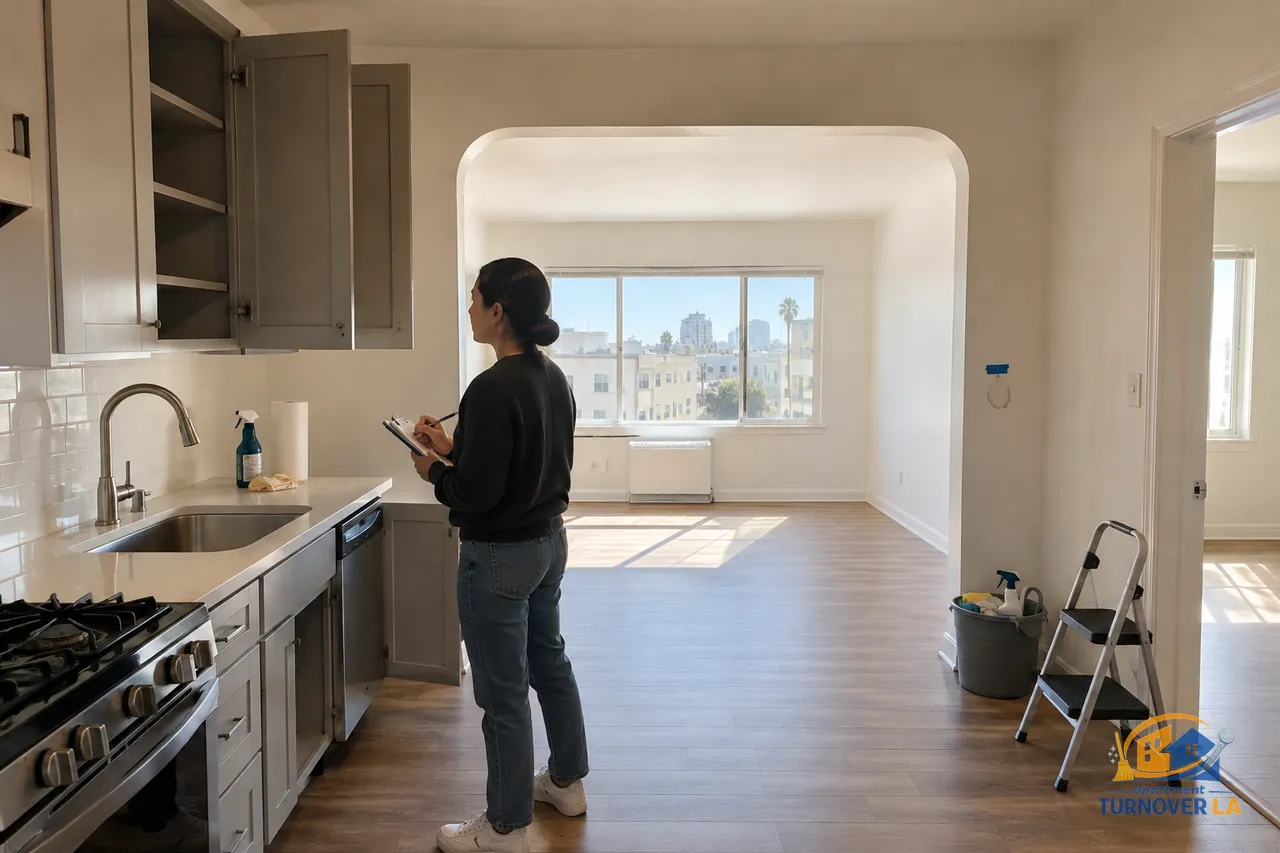
Quick answer: An apartment make ready checklist should cover move-out documentation, safety testing, cleaning, repairs, lock control, final photos, and leasing handoff. In Los Angeles, a basic one-bedroom make ready commonly falls in the $250 to $600 market range depending on condition and included work. TurnOver LA charges a flat $255 for a 1 Bedroom Make Ready, including a deep clean and 12-point photo report, with a 48-hour turnaround.
An effective checklist is not just a list of things to clean. It is the order of operations that lets a landlord separate tenant-caused damage, owner maintenance, and routine wear before the next applicant sees the unit. Start the turnover record at possession, then move from inspection to approval, work, verification, and listing. Get instant quote in 30 seconds
What should an apartment make ready checklist include?
Start with six categories: possession and documentation, life-safety checks, cleaning, repair decisions, security, and leasing handoff. Put the unit number, move-out date, inspection date, inspector, and vacant date at the top. Take wide shots of each room before work begins, then record condition issues by location. This creates a clean file when you are sorting deposit deductions under California Civil Code §1950.5.
For each observed issue, assign one status: clean, repair, replace, owner maintenance, or document for possible tenant charge. Do not ask a cleaner to decide whether a broken blind is chargeable, and do not ask a painter to diagnose a leak stain. That separation prevents repeat visits and contradictory invoices. A useful inspection list also identifies access needs, utility status, parking restrictions, keys received, and the deadline for the unit to be available for photography and showings.
What do you check before cleaning starts?
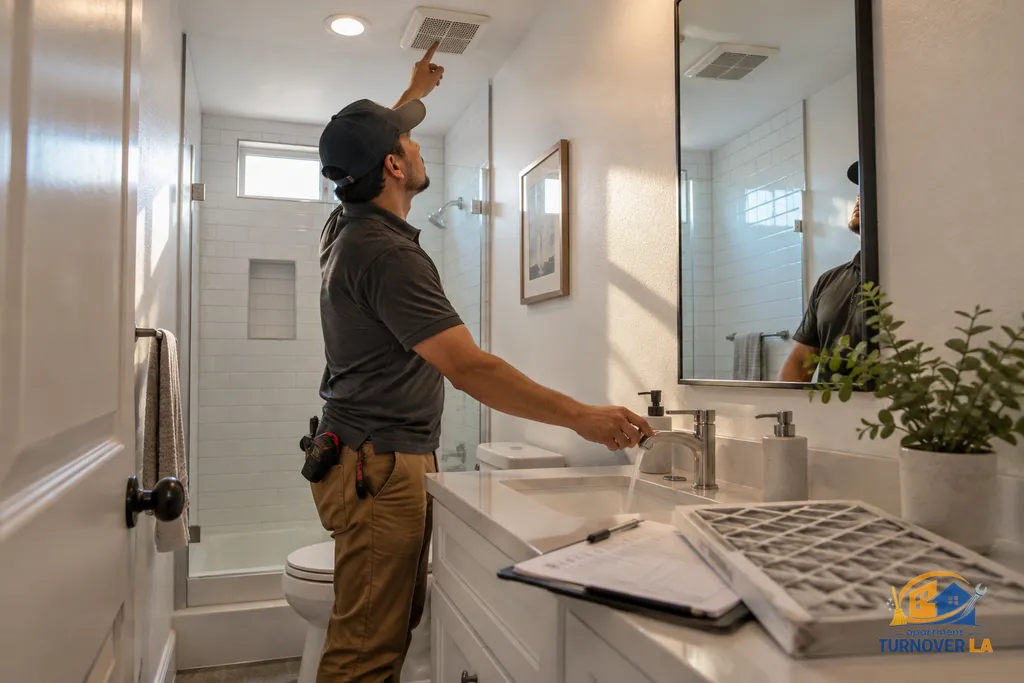
Walk the empty unit before anyone begins cleaning or patching. Open and close every window and interior door. Run each faucet long enough to see whether drains back up. Flush toilets, test garbage disposal and appliance functions, switch on every light, and look under sinks for active leaks. Photograph existing damage before a deep clean can make the cause less obvious.
Check smoke alarms and carbon monoxide alarms, then note missing batteries, damaged covers, or units that fail a test. Confirm that the electrical panel is accessible, the water heater area is clear, and required exits are not blocked. In older LA buildings, this first walk is where you often find a loose GFCI outlet, a slow kitchen drain, or a bathroom fan that has stopped moving air. Those are not cosmetic details. They can delay a move-in, trigger a maintenance callback, or create a safety issue after possession.
How should you prioritize cleaning, repairs, and painting?
Prioritize work by dependency, not by room. Repair a leak before cleaning the cabinet below it. Patch drywall before final floor detailing. Complete dusty work before the last bathroom and kitchen clean. Then schedule the final walkthrough after all vendors are out. This sequencing is the difference between one turnover and a cycle of touch-ups.
Use this five-step order:
- Remove abandoned property and obvious trash.
- Diagnose water, electrical, appliance, door, and window issues.
- Approve repairs and drywall work before cleaning begins.
- Complete painting and then deep clean the unit.
- Rekey, photograph, and perform a final function check.
A small wall hole may need a standalone drywall patch repair before paint. For broader punch items such as loose pulls, blinds, caulk, and door adjustments, a handyman punch list is usually the cleaner route. Keep work orders specific: identify the room, defect, approved remedy, and who verifies completion.
Which room-by-room checks prevent leasing callbacks?
In the kitchen, inspect inside cabinets, under the sink, behind appliances where accessible, and at the stove hood filter. Confirm burners, oven light, refrigerator shelves, disposal, and faucet flow. In bathrooms, test fan operation, toilet stability, drain speed, caulk condition, towel bars, mirror clips, and grout. A surface that looks clean but has a slow drain or failed fan will become a resident complaint quickly.
For bedrooms and living areas, inspect blinds, screens, closet doors, outlet covers, ceiling fixtures, baseboards, flooring edges, and wall marks in daylight. Check HVAC filter condition and note its size before the final walk. Our HVAC filter replacement turnover guide explains why this small item belongs on every vacancy checklist. For wall marks, distinguish washable scuffs from damage requiring paint by using the process in our apartment wall scuff removal guide. That distinction helps avoid approving paint work that a detailed clean could solve.
Need the unit turned before the next tenant?
We do the move-out clean and send you a photo report you can attach to the deposit itemization.
From $225 · 48-hour turnaround
Get an instant quoteHow do you handle tenant damage and normal wear?
Document first, decide second. California allows deductions for certain cleaning, repairs beyond ordinary wear, and restoration where appropriate, but the facts, age, condition, and supporting records matter. Faded paint, minor traffic wear, and ordinary aging are different from a fresh hole in drywall, unauthorized alterations, or excessive residue left after move-out. Review the California DCA Landlord-Tenant Guide and keep your inspection photos, invoices, and itemized notes together.
For LA rent-stabilized properties, build local compliance into the same file rather than treating it as an afterthought. The LAHD Rent Stabilization Ordinance is the appropriate starting point for property-specific requirements. Do not use a generic make ready form as proof that a charge is valid. The form should show what you found on the possession date, what was done, and what it cost. For a deeper breakdown, see normal wear and tear in California and the 21-day deposit return guide.
What does a practical LA make ready budget look like?
Across LA, a one-bedroom turnover commonly runs about $250 to $600 in the general market when cleaning and condition-dependent touch-ups are involved. That is a market context, not a TurnOver LA quote. With TurnOver LA, a 1 Bedroom Make Ready is a flat $255, including deep clean and a 12-point photo report, with a 48-hour turnaround. A Studio Make Ready is $225, a 2 Bedroom Make Ready is $335, and a 3BR or larger Make Ready is $425.
Add only the work the inspection supports. For example, a paint touch-up only is $200, a small drywall patch plus texture is $150 per patch, and a full apartment rekey for up to two locks is $150. Labor and crew supplies are covered in the quote. Paint, parts, and fixtures are identified at the on-site inspection and added to the final invoice only with approval first. Get instant quote in 30 seconds
Why should photos come after the final quality check?
Final photos are a turnover deliverable, not a substitute for inspection. Before photographing, recheck lights, blinds, fixtures, appliance doors, toilet flushes, faucet flow, cabinet interiors, and entry locks. Remove work bags, spare parts, cleaning bottles, and temporary signs. A photo set that shows a clean room but misses a nonworking outlet does not help leasing or maintenance.
The final walk should also confirm keys and access devices. Count keys received, identify keys issued to vendors, rekey when required by your policy, and record the final lock configuration. A first lock rekey is $100, while an additional lock rekey is $50 per lock. If the unit is truly ready, release the photo report, update the availability date, and hand the unit to leasing with known issues clearly disclosed. This closes the turnover rather than merely ending vendor work.
Turn the checklist into a 48-hour operating routine
A checklist works when it has owners and deadlines. Day one is possession, condition photos, safety testing, scope approval, and access control. Day two is repair completion, deep cleaning, final verification, and photo delivery. This sequence is especially useful when vacancy loss can run $80 to $200 per day depending on the LA submarket. A missed faucet leak or delayed rekey can cost more in vacancy than the item itself.
Keep one source of truth for each unit: initial condition photos, scope approvals, vendor notes, receipts, final photos, and leasing status. A Make Ready service is designed for the cleaning and documentation portion, but the checklist still needs a manager's decisions on charges, replacements, and release to market. Once the final check is complete, stop reopening completed rooms unless a new defect appears. Get instant quote in 30 seconds